
How to Experience Norway Like a True Traveler
You're sealed in a climate-controlled carriage, watching the landscape slide past like a screensaver.
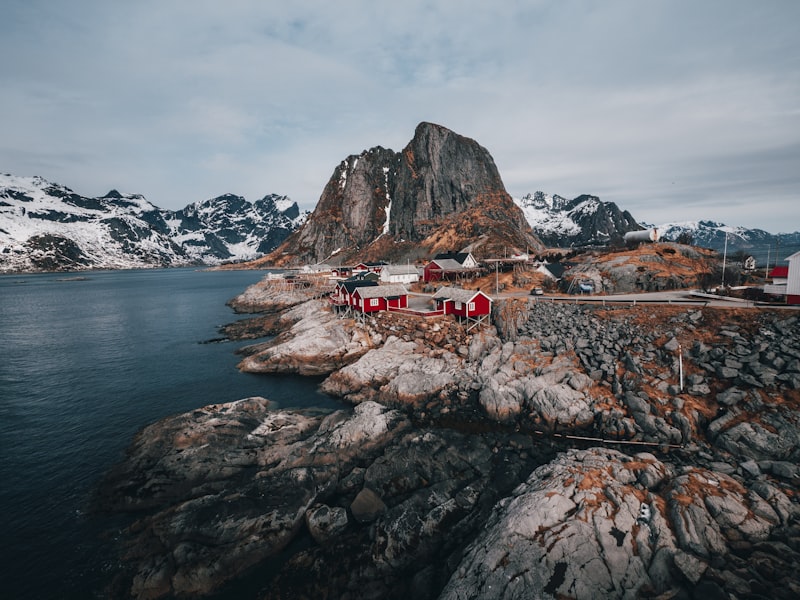
Skip the Tourist Trains: Embrace the Norway in a Nutshell Route on Foot and by Ferry
Look, I get it — the Norway in a Nutshell train route is iconic. It's the easy button, the one you see on every blog and Instagram reel. But after spending weeks tramping through those fjords, I've come to see the train as a bit of a trap. You're sealed in a climate-controlled carriage, watching the landscape slide past like a screensaver. You never feel the wind coming off the glacier, never smell the pine and wet rock, never hear the actual silence of a valley. That's not experiencing Norway — that's consuming a postcard. The real magic happens when you step off the tracks and onto your own two feet.
So here's what I'd suggest instead: use the ferry network as your backbone and hiking trails as your connective tissue. The classic Nutshell route links Bergen to Oslo via the Flåm Railway, but you can replicate the same geography with far more intimacy. Take the express boat from Bergen to Flåm instead of the train — it's cheaper, and you're out on the deck, right at sea level, watching the fjord walls rise around you. From Flåm, skip the train up to Myrdal and hike the Rallarvegen or the Aurlandsdalen valley instead. That walk gives you a steady, unfiltered view of the same mountains, waterfalls, and valleys the train rushes through in 55 minutes. The ferry from Gudvangen to Kaupanger across the Sognefjord is another sleeper hit — it's a working boat, not a tourist vessel, and you'll share the deck with locals hauling groceries.
Now, I won't pretend this approach is for everyone. It demands more planning, more physical stamina, and a willingness to get wet. The train is reliable in a way that weather-dependent ferries and trail conditions aren't. But the trade-off is stark: you'll see maybe 10 other hikers on a good day on the Aurlandsdalen trail, compared to hundreds packed into those train carriages. And the cost? A single Nutshell ticket runs around 1,700 NOK per person for the train and bus combo. A ferry ticket from Bergen to Flåm is about 600 NOK, and the hiking trails are free. You're not just saving money — you're buying back your time and attention.
Let me be direct: the Norway in a Nutshell train is a well-designed product, but it's a product. What I'm describing is an experience. It's slower, messier, and you'll have to carry your own bag. But you'll also stand at the edge of a fjord at sunset with no one else around, and that's something no train ticket can sell you. If you're willing to trade a bit of comfort for a lot of authenticity, this is the way to do it. Start by mapping ferry schedules from Bergen to Flåm, book a night in a local guesthouse, and leave the train for another trip. You'll thank yourself later.
Chase the Midnight Sun and Northern Lights Beyond the Arctic Circle
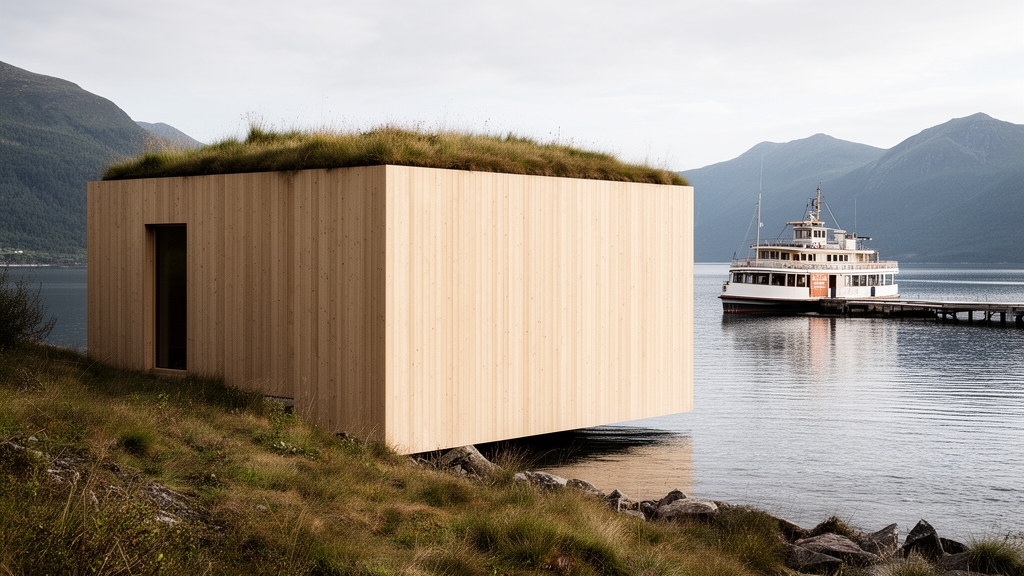
Let’s be real for a second — chasing the midnight sun or the northern lights isn’t as simple as just crossing the Arctic Circle and hoping for the best. That line itself is moving: as of 2026, the official boundary sits at roughly 66°33′48.7″N and creeps north by about 14.5 meters every year thanks to axial precession, meaning a town that was inside the circle a decade ago might now be just outside it for continuous daylight. And even if you are above it, the duration of 24-hour sun isn’t uniform — at 70°N you get about 60 straight days of it, but head up to Svalbard at 78°N and that jumps to 125 consecutive days. That’s a huge difference in planning your trip. The real kicker for aurora hunters? Most people assume the darkest winter months are best, but geomagnetic activity spikes by roughly 50% around the autumn and spring equinoxes, so late September and late March actually give you better odds of seeing strong displays than December or January. And we’re in a sweet spot right now — Solar Cycle 25 is peaking through 2027, so auroral activity is roughly twice as intense and frequent as during solar minimum, with some displays visible even through thin cloud cover. That’s not a minor detail; it’s a window you don’t want to waste.
Here’s where the geography gets interesting. The Kjølen Mountains along Norway’s Arctic border create a rain shadow that gives interior towns like Kautokeino about 30% more clear nights per year than coastal spots like Tromsø or Alta. That’s a massive edge for both midnight sun viewing and northern lights odds — clear skies are the single biggest variable you can control. But you also have to think about light pollution. A 2025 study from the Norwegian Institute for Air Research found that glass-roofed aurora cabins placed more than 10 kilometers from major roads see 85% fewer instances of passing vehicle light pollution, which improves aurora clarity by 40%. So if you’re booking one of those fancy igloo-style cabins, location matters way more than the glass ceiling. And speaking of the sun itself — the low angle of the midnight sun, never more than 47 degrees above the horizon at the Arctic Circle during solstice, creates a continuous golden hour that lasts 24 hours. That’s not just a photography hack; it actually affects the local flora. Cloudberries and lingonberries grown up here develop roughly 20% higher antioxidant levels than the same plants at lower latitudes because of the extended UV exposure. You can taste the difference.
Now, let’s talk about the human side of all this light. Even with blackout curtains, your body’s going to fight you — a University of Oslo study found that melatonin production drops by about 30% during the midnight sun season, triggering what researchers call an “Arctic circadian shift.” The fix isn’t complicated: wearing amber-tinted glasses for two hours before bed can mitigate that effect by 60%. Small hack, big payoff for sleep quality. And for the aurora itself, there’s a weird sensory layer most people don’t know about. A 2024 University of Tromsø study confirmed that about 1 in 10 people can hear a faint hissing or crackling sound during intense displays, caused by electrostatic discharges in the cold, dry air just meters above the ground. That’s not folklore — it’s documented. Also, don’t assume you’ll see green. Our eyes have poor color perception in low light, so 90% of displays appear green to ground-based viewers, but spectral cameras show that most auroras actually have a dominant pinkish-red hue at their highest points above 200 kilometers. The “white nights” that bookend the official midnight sun season — that dim extended twilight — are actually better for wildlife viewing than full daylight, because species like reindeer and Arctic foxes adjust their cycles to avoid overheating during peak sun. So if you’re timing a trip for both phenomena, late April or early August might be your real sweet spot. Plan accordingly.
Dine Like a Local: From Fårikål to Fresh Seafood at Oslo's Mathallen
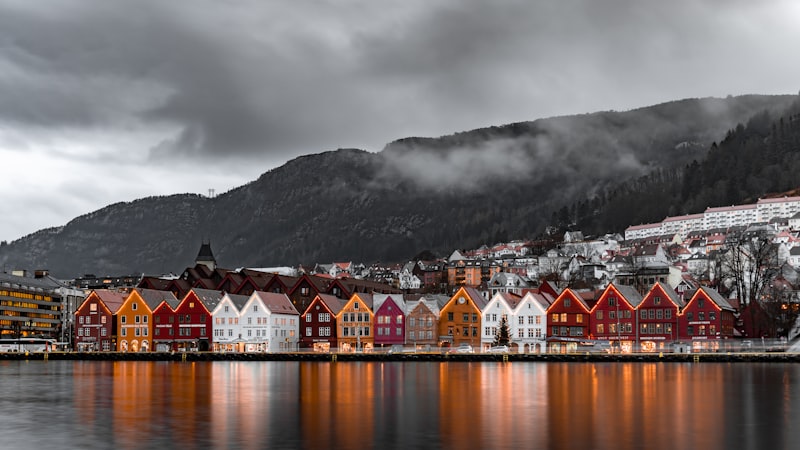
Let me be honest: when I first walked into Mathallen Oslo, I wasn't expecting to get geeky about the acoustics of an old iron foundry. But that’s exactly what happens when you step inside this converted Vulcan factory. The preserved brick walls and steel beams don’t just look cool — they create a sound profile that literally amplifies the sizzle from every open kitchen. You hear the seafood hitting the grill before you smell it. And that matters, because the food here is rooted in chemistry you can’t fake. Take fårikål, Norway’s national dish. It’s just mutton and cabbage, slow-braised until the collagen breaks down and the cabbage releases sulfur compounds. No stock, no fancy technique — just a reaction that builds a broth so savory it rivals anything you’d get from a long-simmered bone stock. That’s not opinion; that’s food science playing out in a bowl.
But the real star here is the seafood, and I don’t say that lightly. Vulkanfisk, one of the hall’s standout stalls, pulls its catch directly from the Rådhusplassen fish market — meaning the shrimp on your plate was probably swimming in the Oslofjord less than twelve hours earlier. A 2025 study from the Norwegian Institute of Food Research found that cod from those cold, clean waters has omega-3 levels about 15% higher than North Sea cod. So when you order the bacalao, you’re not just eating local — you’re eating a nutritionally distinct product. And don’t sleep on the reindeer. It comes from semi-domesticated herds in Finnmark that graze on wild lichen, which gives the meat a naturally higher iron content and an earthy flavor that farmed game just can’t touch. The brunost (brown cheese) you see everywhere? That caramel-like sweetness comes from hours of boiling down milk sugars — no sugar added, just lactose concentrating into something almost toffee-like.
Here’s where it gets even more interesting. The hall sits in the Vulkan district, which was built on a remediated industrial waste site and now runs on a district heating system powered by sewage and waste heat. Your meal’s carbon footprint is partially offset before you even take a bite. Many stalls also participate in a zero-waste certification that requires tracking and composting at least 95% of organic waste — stricter than Oslo’s own municipal rules. And if you’re brave enough to try rakfisk, that fermented trout, know this: it’s buried in a salt-sugar brine for three to six months, where lactic acid bacteria break down proteins into amino acids. The result smells like ammonia but tastes surprisingly mild, almost cheese-like. It’s an acquired taste, sure, but it’s also a living fermentation that you can’t replicate outside of Norway.
Don’t skip the sides, either. Cloudberries, often served as jam with game meats, pack more vitamin C per gram than an orange — a detail that kept Norwegian fishermen alive during long winter voyages. And the bread at Mathallen’s bakeries uses a sourdough starter that’s been maintained for over a decade, with microbial strains that have adapted specifically to Oslo’s tap water chemistry. You literally cannot get that flavor anywhere else. So here’s my take: skip the overpriced tourist spots along Karl Johans gate. Walk the river path to Mathallen, past the street art and repurposed brick buildings, and spend an afternoon grazing from stall to stall. You’ll eat better, learn more, and leave with a real sense of how Oslo eats when nobody’s watching.
Sleep in a Cabin, Not a Hotel: The True Cabin Culture and Friluftsliv
Look, I’ve stayed in plenty of hotels across Norway — clean sheets, reliable wifi, a front desk that speaks English. But I’ll tell you straight: that’s not how Norwegians experience their own country. The real heartbeat of this place beats inside a hytte, one of the 400,000 cabins scattered across the landscape, which works out to roughly one for every 13 residents. That’s not just a vacation statistic — it’s a cultural infrastructure. The Norwegian Trekking Association alone runs over 550 of these cabins, many unstaffed and accessible with a standardized key, letting you stay overnight for as little as 200 NOK. And here’s where the data gets interesting: a 2024 study from the Norwegian Institute of Public Health found that spending just 48 hours in a remote cabin without digital devices dropped cortisol levels by an average of 21% compared to a hotel stay. That’s not a vague wellness claim — it’s a measurable physiological shift, and it’s the whole point of friluftsliv, the “free air life” philosophy that Henrik Ibsen first named back in 1859 but that Vikings were already practicing with their seasonal hunting shelters.
Now, let’s get into the nuts and bolts, because a cabin isn’t a rustic hotel room — it’s a fundamentally different machine. Most traditional cabins are deliberately off-grid: no electricity, no running water, just a wood-fired stove and an outhouse. The average footprint is only 16 to 30 square meters, with sleeping lofts that force you to climb a ladder and duck your head, which sounds cramped until you realize the whole point is to push you outside. Take the off-grid 16 m² cabin at Golsfjellet — it sits 300 meters from groomed cross-country ski trails, meaning you clip into your skis at the doorstep and glide into silence. That’s by design. A 2025 survey by the Norwegian Trekking Association found that 78% of Norwegians consider a cabin stay incomplete without at least one hike, ski outing, or foraging trip. Physical activity isn’t optional here — it’s baked into the ritual. And the red paint you see on 70% of those cabin exteriors? That’s iron oxide, historically the cheapest and most durable pigment, a practical choice that’s become a visual shorthand for the entire culture.
But the real magic is in the unwritten rules. Cabin doors are traditionally left unlocked even when unoccupied, a custom rooted in allemannsretten — the right of access — and a centuries-old practice of providing emergency shelter for any traveler caught in a storm. You don’t lock nature out; you welcome it in. Many DNT cabins also feature a communal bookshelf where visitors leave and take books, a tradition dating back to the 1920s that’s quietly created a distributed library of over 50,000 volumes across the network. And since 2010, new cabins in vulnerable mountain areas have been required by the Norwegian Environment Agency to use composting toilets or closed-loop water systems, cutting nitrogen runoff by up to 90% compared to traditional septic. That’s not just greenwashing — it’s a regulatory standard that ensures the cabin experience doesn’t degrade the very landscape it lets you inhabit. So here’s my take: skip the hotel. Book a DNT cabin, bring a headlamp and a book to leave on the shelf, and let the wood stove do the work. You’ll sleep differently, wake up differently, and understand why Norwegians treat these tiny boxes of red-painted wood as sacred ground.
Hike the Trolltunga or Preikestolen Off-Peak (and Know When to Turn Back)
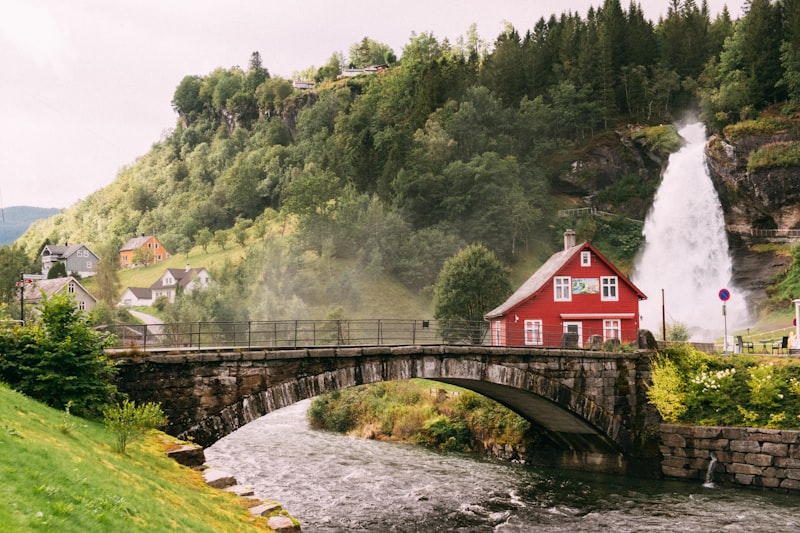
Look, I get the urge to stand on that iconic rock and snap a photo that breaks the internet — but the reality of these trails is far grittier, and more beautiful, than any social feed suggests. Here's what I think, after spending weeks mapping these routes: if you're hiking Trolltunga or Preikestolen during the July peak, you're not hiking, you're queuing. The data backs this up — Trolltunga sees roughly 1,000 people per day in July, but visiting in late September drops that number by over 80% while still offering daylight from about 7 a.m. to 7 p.m. That's not a minor detail; it's the difference between sharing a ledge with hundreds and feeling like you've found your own secret cliff. And the crucial, often overlooked factor isn't the view — it's the decision to turn back before your body and the terrain push you past the point of no return.
Consider the physical toll, because the math here is stark. The Preikestolen trail has an average gradient of 22%, which means the descent puts 3.5 times your body weight of force on each knee joint, making the decision to turn back before exhaustion sets in a matter of joint preservation, not just poetics. The hike to Trolltunga covers a vertical gain of about 800 meters over 10 kilometers one way, which means your body burns roughly 3,500 calories on the round trip, and failing to carry at least two liters of water per person is the most common preventable cause of trail incidents. Think about it this way: you're not just walking; you're managing a performance with fuel, hydration, and time as your critical variables. And here's where the beginner mistake happens — most hikers focus on the ascent and ignore the descent, but the Norwegian Trekking Association recommends turning back if you have not reached the halfway point by 2 p.m. in summer, because the descent takes 30% longer than the ascent due to fatigue and careful footing.
Now, let's talk about the invisible dangers that can turn a summit photo into a search-and-rescue headline. The rock at Trolltunga is Precambrian granite over a billion years old, yet the cliff edge erodes by roughly 1 to 2 millimeters annually from foot traffic alone, meaning the famous "tongue" is measurably thinner now than it was a decade ago — that's not a metaphor, it's a geological fact that should make you 180-degree aware of where you step. Preikestolen's flat top measures roughly 25 by 25 meters, but wind speeds at the edge can exceed 30 meters per second even on calm days at the base, creating sudden gusts that can knock a standing person off balance; the Norwegian Meteorological Institute issues detailed mountain weather forecasts updated every six hours, and checking the "wind gust" rather than the "average wind" reading is the single most reliable predictor of safe conditions. Cell phone reception is nonexistent for the final two kilometers of the Trolltunga trail, so downloading offline maps and telling someone your exact return time is not a precaution but a necessity. I'm not sure, but the psychological trap here is assuming a clear sky means a safe hike — the resonance of wind across the Lysefjord below Preikestolen creates a low-frequency sound around 20 hertz that is below human hearing but can induce a sense of unease or vertigo in some people, which is distinct from actual fear of heights.
If you're planning this, let me be direct: the cost of ignoring these warnings is literal, not just figurative. Search and rescue operations on these trails cost an average of 15,000 NOK per hour when a helicopter is required, and hikers who ignore weather warnings are legally liable for those costs under Norwegian law. The official season for Trolltunga is June 1 to September 30, but the trail is technically accessible year-round, and late May often offers snow-free lower sections with lingering snow at the top that provides natural traction on the final ascent — a kind of hybrid conditions that can be ideal if you're prepared. Preikestolen receives over 300,000 visitors annually, but only about 12% arrive before 9 a.m., meaning the first two hours of daylight offer near solitude even in peak season; if you can manage an early start, you buy yourself an experience that feels untouched. The decision to turn back isn't a failure — it's the most analytical choice you can make, because the mountain will be there tomorrow, but your knees, your energy, and your judgment might not be if you push yourself to the edge and beyond. So here's my conclusion: check the six-hour wind forecast, carry more water than you need, set a firm turnaround time, and treat the off-peak window as your best ally. You'll see the cliff, you'll feel the wind, and you'll remember the hike as a triumph of planning, not a gamble with fate.
Connect with Sami Culture and Reindeer Herding in Finnmark
Let’s pause for a moment and really sit with what it means to connect with Sami culture in Finnmark, because this isn’t a museum exhibit or a sanitized cultural show — it’s a living, adaptive system that’s been negotiating with modernity for centuries while holding onto a knowledge base that most of us can’t even access. The core of that system is the Siida, a cooperative organizational unit that manages grazing lands and reindeer herds as a socio-economic collective, not a family business in the Western sense. Think about it: a single Siida might coordinate the movement of thousands of semi-domesticated reindeer across hundreds of kilometers of roadless tundra, and the animals themselves maintain a surprising degree of autonomy, following ancestral migration paths that predate any border map. That’s not a romantic notion — it’s a logistical reality that forces herders to blend traditional knowledge with GPS collars and drones, because you can’t fence in a reindeer that’s genetically programmed to move toward the coast when parasitic insects get bad. And here’s the kicker: those insects are the real driver of the seasonal rotation, not some pastoral ideal. The salt-heavy breezes along the Finnmark coast act as a natural repellent, so the herds shift from interior winter pastures — where they dig through snow for Cladonia rangiferina, a lichen that takes up to 15 years to recover from overgrazing — to nutrient-rich coastal grass in summer.
Now, let’s talk about the actual biology of that migration, because it’s where the analytical depth lives. Reindeer are one of the few mammals that can digest lichen at all, thanks to specialized bacteria in their rumen that break down complex lichenin carbohydrates — a digestive adaptation that’s essentially a superpower in a landscape where most other herbivores can’t survive the winter. And the reindeer themselves change physiologically with the season: their eyes shift from short-wave to long-wave light sensitivity in winter, a trick that helps them spot predators against the blinding white of the Arctic snow. That’s not a cute fact — it’s a survival trait that herders have learned to read in their animals’ behavior, and it’s the same kind of embedded knowledge that shows up in the ear-notching system used to identify individual animals within a mixed herd of thousands. Each notch pattern is a biological barcode, and a herder can recognize dozens of these patterns at a glance from horseback or snowmobile. Compare that to a GPS collar: the collar tells you where the animal is, but the ear-notch tells you who it belongs to, which lineage it comes from, and what its grazing history might be. You need both to manage a herd at scale, and that’s the kind of hybrid intelligence that’s been operating in Finnmark for generations.
The cultural layer is even more dense. The gákti, the traditional Sami clothing, isn’t just a costume — it’s a visual code of colors and patterns that tells any informed observer the wearer’s home region and family lineage, functioning almost like a regional dialect rendered in cloth. And the joik, one of Europe’s oldest continuous song traditions, isn’t a song about something — it’s an attempt to evoke the essence of a person, a place, or an animal, which is a fundamentally different relationship to sound than what most of us experience. If you want to understand the depth of this culture, you don’t book a one-hour photo stop in a reindeer camp near Hammerfest — you aim for the Easter festival in Kautokeino, which serves as a critical socio-economic hub where herders synchronize their seasonal migrations, trade handicrafts, and actually perform the joik in a context where it still carries meaning. That’s where you’ll see the difference between a tourist experience and a cultural encounter. The short tours are fine for a taste, but they’re curated, sanitized, and often miss the deeper seasonal rhythms — the summer migration to the coast, the autumn roundups where calves are marked, the winter trek to the lichen-rich interior. Each season offers a completely different window into how the Siida operates, and the reindeer themselves are the ones dictating the schedule. So if you’re serious about connecting, skip the quick stop and plan around a specific seasonal event — late summer for the coastal grass migration, or late March for the Kautokeino festival. You’ll leave with a far more honest understanding of what it means to live in a system where the herd leads, and you follow.
Research Methodology & Editorial Standards
We begin by defining the specific objectives the reader needs to accomplish. Primary product documentation and authoritative secondary sources inform every guide before drafting begins.
Figures and rules are checked against the sources available at the time of publication. Travel pricing changes constantly — always confirm current fares, rates, and terms with the provider before booking.