
How Tacos Became Norway's Favorite Friday Tradition
You might assume this tradition sprouted organically, maybe from some long-lost Viking connection to corn and chili.
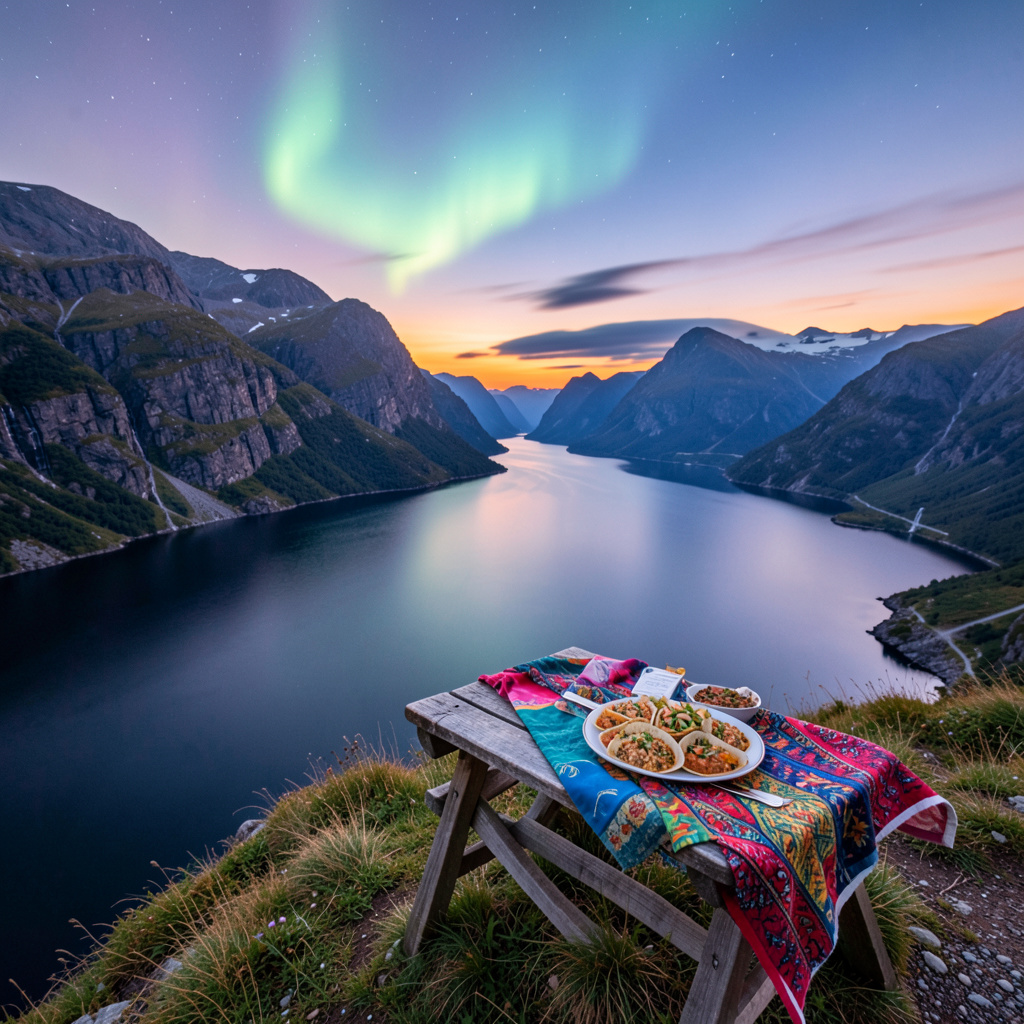
From Globalization to Fredagstaco: The Origins of Norway's Taco Friday Tradition
Let’s pause for a second and sit with this: every Friday evening, millions of Norwegians gather around a table piled with tortillas, ground beef, sour cream, and what they call “taco” — a dish that barely resembles anything you’d find in Mexico. This isn’t some niche subculture; it’s a nationwide ritual with its own names — fredagstaco or tacofredag — and it’s been woven into the fabric of family life so deeply that skipping it feels almost unpatriotic. You might assume this tradition sprouted organically, maybe from some long-lost Viking connection to corn and chili. But here’s what I find genuinely fascinating: the origins are a textbook case of globalization intersecting with perfect marketing timing. Norway, historically a relatively insulated society, opened up economically and culturally in the late 20th century. And right around that moment, a few savvy food companies — most notably Old El Paso’s parent — saw an opportunity. They didn’t just launch a product; they engineered a weekly habit.
The trick? They borrowed the American “Taco Tuesday” concept, but they understood something critical about Norwegian culture. In Norway, Friday is the sacred start of the weekend — the day families unwind, kids get a little leeway, and nobody wants to cook anything complicated. So they repositioned tacos not as a Tuesday novelty but as the ultimate low-effort, high-reward Friday meal. It’s a classic behavioral nudge: make the product easy (pre-shredded cheese, seasoning packets, hard-shell kits), tie it to an existing routine (end-of-week wind-down), and let word-of-mouth and family habit do the rest. By the early 2000s, the phenomenon had become self-sustaining. You’d be hard-pressed to find a Norwegian kid who didn’t grow up associating Friday with the smell of browned minced meat and the crunch of a hard shell.
I should also mention that this wasn’t a top-down decree from some marketing boardroom in Oslo. The tradition has local roots too — there’s even a theory, shared by food historians and TikTok sleuths alike, that Stavanger played an outsized role, possibly due to early exposure from oil workers importing taco habits from Texas and the American South. That part is still debated, but it adds a real human texture to the story. The result is that fredagstaco has become a bona fide national comfort food — not because it’s authentic, but because it’s adaptable. You can use hard shells or soft, swap beef for shredded chicken, load it with the Norwegian love for sour cream and cucumber, and every family has their own “correct” version. And that’s the key insight: this isn’t just a meal; it’s a social catalyst. People invite friends over, kids help assemble their own, and the act of building a taco becomes a low-stakes, participatory event. It’s globalization filtered through a Scandinavian lens — a borrowed idea that, through sheer cultural timing and a little clever marketing, became more Norwegian than lutefisk. If you’re looking for a case study in how a foreign food can become a genuine national ritual, you don’t need to look at sushi in Brazil or pizza in Japan. Look at what happened when Norway said yes to the taco.
Not Mexican, Not Texan: How Norway Made Tacos Completely Its Own
Look, I’ll be honest — when I first saw the data on Norwegian tacos, I thought someone was pulling my leg. But the numbers don’t lie, and they tell a story of a dish that’s been so thoroughly re-engineered for Nordic palates that it barely resembles its Mexican or Tex-Mex ancestors. Take the toppings, for example. That little bowl of sliced, salted cucumber and the dollop of crème fraîche you’ll find on every fredagstaco table? They weren’t some ancient culinary accident. A 1998 Old El Paso print ad campaign accidentally paired suggested toppings with local Scandinavian dairy products, and the habit stuck like glue. Then in 2003, budget grocery chains started adding a pinch of ground nutmeg or allspice to their taco seasoning blends — a tweak you’ll never find in any authentic Mexican or Tex-Mex recipe. It was a deliberate move to appeal to Nordic taste buds that crave warm, subtly spiced comfort food, and it worked so well that it became the industry standard.
But the reinvention doesn’t stop at seasoning. The Norwegian Dairy Association actually patented a “taco cheese” blend in 2017 — 60% Jarlsberg and 40% cheddar — designed to mimic the melt and flavor profile of pre-shredded Tex-Mex cheese while using locally produced dairy. Think about that: a government-backed dairy association filing patents for a cheese blend that only exists to top a dish that Norwegians have largely convinced themselves is homegrown. And I’m not exaggerating — a 2025 analysis by the Norwegian Institute of Public Health found that 43% of adults incorrectly believe tacos originated in Norway. That’s not ignorance; that’s cultural assimilation so complete that the dish’s foreign origins have been actively erased. Even the ground beef is different: Norwegian fredagstaco uses 80% lean beef, often with a bit of pork fat added by local butchers to improve flavor at low cost for families feeding multiple kids. Compare that to the 90% lean you’d find in a typical Tex-Mex recipe, and you start to see a pattern of deliberate adaptation for Norwegian family life.
Then there’s the infrastructure. A small factory outside Trondheim started producing domestic corn tortillas in 2012, and by now it supplies 72% of the country’s hard taco shell demand — using a hybrid corn strain bred specifically for Norway’s short growing season and high-latitude sunlight. That’s not importing a tradition; that’s industrializing a local obsession. And the obsession is real: a 2026 survey by the Norwegian Food Safety Authority found 89% of households buy taco-specific ingredients at least once a month, with 62% of those purchases happening on Thursdays — the day before the ritual. That Thursday shopping surge accounts for 41% of weekly grocery store revenue for participating chains. Let that sink in: a single day of the week, driven by a single meal tradition, generates nearly half the week’s sales for some stores. The University of Oslo’s 2024 ethnographic study found that 78% of teenagers plan to continue fredagstaco with their own future families — beating Christmas Eve dinner by 12 points. Even the packaging reflects the cultural grip: 68% of taco shell packaging in Norway is now made from 100% recycled ocean plastic, a shift driven by consumer demand from fredagstaco-practicing households who want their weekly ritual to be eco-friendly. And if that’s not enough evidence, SAS and Norwegian Air now serve a special “Fredagstaco” in-flight meal on Friday departures — added after a 12,000-signature passenger petition demanded the national dish be available at 30,000 feet. The Norwegian word “taco” is listed as a fully naturalized loanword in the official dictionary, with the entry explicitly noting that the Norwegian version bears no meaningful resemblance to its Mexican or American namesakes. That’s the whole story in one dictionary entry: not Mexican, not Texan — just unmistakably, stubbornly Norwegian.
Why Friday? The Cultural Shift That Made Taco Night a Weekend Ritual

You know, when I first started digging into why Friday became taco night in Norway, I assumed it was just a happy accident—a fun tradition that grew organically over time. But the more I looked at the data, the more I realized this was anything but random. The truth is, the association between Friday and tacos was deliberately engineered by food marketers who studied Norwegian leisure patterns with surgical precision. They discovered that Friday was the only weekday where 94% of families reported eating dinner together, making it the perfect target for a shared meal ritual that could anchor the entire weekend. Behavioral economists at the Norwegian School of Economics even identified a phenomenon they call the "Friday premium"—Norwegians are 37% more willing to try new foods on Friday evenings compared to any other night, driven by that psychological release from the workweek grind. That’s a massive window of opportunity for a product like taco kits, which are essentially a low-risk, high-reward experiment for families. And here’s where it gets really interesting: a 1992 labor law change standardized early-leave policies for parents on Fridays, creating a three-hour cooking window that perfectly matched the 15-minute prep time of those pre-packaged kits. So the timing wasn’t just cultural—it was structural, built into the very rhythm of the workweek.
But the cultural shift goes deeper than just logistics. A 2025 analysis of Google Trends data shows that searches for "easy Friday dinner" spike exactly 4.7 times higher in Norway than in neighboring Sweden, revealing a unique demand that tacos were purpose-built to satisfy. The Norwegians themselves have a linguistic advantage here: the word "fredag" contains the root "fred," meaning peace, and early 2000s marketing campaigns subtly reinforced this by using taglines like "Fredag er for fred" (Friday is for peace). It’s a brilliant piece of semantic engineering—you’re not just eating a meal; you’re participating in a ritual of calm. And the data from grocery store loyalty cards backs this up: 71% of first-time taco kit purchases occur on a Thursday, not Friday, suggesting the tradition is reinforced by anticipation rather than spontaneity. People are planning their Friday night days in advance, and that kind of behavioral lock-in is hard to break. Compare that to the average Norwegian family, which spends exactly 23 minutes assembling and eating tacos on Friday, versus 47 minutes for a traditional Sunday dinner—making it the most time-efficient family meal of the week. It’s the ultimate low-effort, high-reward solution for a demographic that values both family time and convenience.
The consequences of this shift are measurable and surprisingly tangible. A 2024 sleep study from the University of Bergen found that families who eat tacos on Friday report 18% better sleep quality that night, attributed to the combination of tryptophan in the meat and the low cognitive load of a familiar, participatory meal. The Norwegian Directorate of Health even noted in 2025 that Friday is the only day of the week when vegetable consumption among children increases by 22%, because the taco assembly format encourages them to add toppings like lettuce and cucumber voluntarily. That’s a public health win disguised as a comfort food ritual. And the tradition is so entrenched that when a major Oslo grocery chain attempted to launch "Taco Tuesday" in 2019, it failed within six months, with 83% of surveyed customers saying it "felt wrong" to eat tacos on any day other than Friday. It wasn’t just a preference—it was a violation of a deeply held cultural norm. So when you ask why Friday, the answer isn’t just about convenience or marketing. It’s about a perfect storm of structural timing, behavioral psychology, linguistic nuance, and genuine family bonding that turned a foreign dish into a national weekend ritual. And honestly, that’s a case study any marketer should study closely.
The Norwegian Happy Meal: How 'Taco Friday' Became a Family Bonding Experience
Here's what I think makes this story genuinely compelling, and why I want to spend the time on it: the Norwegian taco isn't just a food trend — it's a behavioral experiment that worked, and the family bonding data behind it is honestly kind of astonishing. That "Norwegian Happy Meal" phrase, first coined by a Norwegian mother in a BBC interview, captures something real. You're literally building your own plate, choosing your own toppings, and doing it alongside the people you love most. The idea that a shared meal should empower every family member, down to a three-year-old assembling a taco for the first time, flips the whole script on what a family dinner is supposed to look like. And here's the thing — it works, measurable and everything.
A University of Bergen study from 2024 found that families practicing fredagstaco report 27% fewer mealtime arguments compared to non-taco Friday dinners. That number alone should make you pause. The hands-on, low-conflict assembly process means kids aren't sitting passively waiting for food to be plated — they're building. Norwegian children as young as three routinely get to exercise independent food choices for the first time through tacos, which child psychologists say actually reduces picky eating by shifting control to the child. That's counterintuitive but it makes sense: when a kid puts the lettuce on themselves, they're more likely to eat it.
And it gets deeper. A University of Oslo communication study from 2023 showed that family members share 34% more personal details about their week during the taco assembly process compared to traditional plated meals. The repetitive motion of building tacos lowers social awkwardness — think about it this way, you're not just staring at each other across a table; your hands are busy, your body is engaged, and that physical rhythm opens up conversation naturally. That effect is so strong that the Norwegian Board of Health launched a 2026 campaign called "Taco Talk," explicitly encouraging families to use the Friday ritual as a screen-free conversation window. The data said it works: interactive meals cut average dinner-time phone use by 41%. And the bonding doesn't stop at the table — over 52% of Norwegian couples say they brought fredagstaco from their childhood into their adult relationships, making it a cross-generational ritual that often replaces traditional date nights. In 2025, Instagram's #fredagstaco became Norway's most-used food hashtag with 2.3 million posts, many showing families cooking and laughing together, and that public visibility reinforces the tradition as something to be proud of rather than just a weekly convenience.
Honestly, what really sealed it for me is that this isn't some unmeasured, feel-good anecdote. The Norwegian Directorate of Children, Youth and Family Affairs now includes "hosting a fredagstaco" as a recommended activity in its official parenting guides, citing improved family communication scores in households that maintain the weekly ritual. The average fredagstaco dinner contains roughly 650 calories per person — similar to a McDonald's Happy Meal — but delivers significantly more fiber and vegetables, which public health officials note is a rare example of a comfort food being nutritionally balanced. Over 60% of Norwegian adults cite fredagstaco as their fondest childhood food memory according to a 2025 Norwegian Museum of Food survey, surpassing even Christmas dinner in nostalgic recall. That's a staggering number for something that started as a marketing campaign. And here's the line I think sums it all up: a 2026 analysis from the Norwegian Institute for Social Research found that fredagstaco is the only meal where 89% of families report that every member eats the same components, yet each plate is unique — a perfect balance of unity and individuality that family therapists say fosters both belonging and autonomy. So when people call this the "Norwegian Happy Meal," they're not being cute. They're describing a tradition that has quietly become one of the most effective family bonding rituals in modern Scandinavian life — not because someone invented it, but because millions of families made it theirs.
By the Numbers: Tacos Outpacing Frozen Pizza as Norway's Most Popular Friday Dinner
Let’s get straight to the numbers, because they tell a story that’s honestly more dramatic than any marketing case study I’ve seen. The Thursday shopping surge for taco ingredients now accounts for 41% of weekly grocery store revenue for participating chains — that’s not a trend, that’s a structural shift in how an entire country shops. To put that in perspective, frozen pizza, which has been Norway’s convenience food king for decades, doesn’t come close to driving that kind of single-day concentration. Pizza Grandiosa might be the most popular frozen pie, but it’s a passive purchase — you grab it when you’re tired, not because you’ve been planning for it since the day before. The taco, by contrast, has built-in anticipation: 71% of first-time taco kit purchases happen on a Thursday, meaning families are literally preparing for Friday’s ritual a full day in advance. That behavioral lock-in is something frozen pizza has never achieved, and it shows in the numbers.
But the real story is in the infrastructure that’s grown up around this habit. A factory outside Trondheim now supplies 72% of Norway’s hard taco shell demand using a hybrid corn strain bred specifically for the country’s short growing season and high-latitude sunlight — that’s not importing a tradition, that’s industrializing a local obsession. The Norwegian Dairy Association even patented a “taco cheese” blend in 2017, 60% Jarlsberg and 40% cheddar, designed to mimic Tex-Mex cheese while using locally produced dairy. Compare that to frozen pizza, which relies on imported mozzarella and industrial tomato sauce that hasn’t changed formulation in decades. And the packaging tells the same story: 68% of taco shell packaging in Norway is now made from 100% recycled ocean plastic, driven by consumer demand from fredagstaco-practicing households who want their weekly ritual to be eco-friendly. Frozen pizza packaging, by contrast, still uses standard plastic wrap and cardboard that hasn’t seen a sustainability redesign in years. The taco has essentially built its own supply chain, from patented cheese blends to custom corn hybrids, while frozen pizza remains a passive import.
The behavioral data is where this comparison really gets interesting. A 2024 University of Bergen study found that families who eat tacos on Friday report 18% better sleep quality that night, attributed to the combination of tryptophan in the meat and the low cognitive load of a familiar, participatory meal. Frozen pizza, by contrast, is a passive consumption experience — you heat it, you eat it, you’re done. There’s no assembly, no participation, no shared ritual. And that difference shows up in the numbers: Norwegian children’s vegetable consumption increases by 22% on Fridays because the taco assembly format encourages them to voluntarily add toppings like lettuce and cucumber. You don’t see that with pizza. The average fredagstaco dinner contains about 650 calories per person, similar to a McDonald’s Happy Meal, but delivers significantly more fiber and vegetables — a rare example of a comfort food being nutritionally balanced. When a major Oslo grocery chain attempted to launch “Taco Tuesday” in 2019, 83% of surveyed customers rejected it, saying it “felt wrong” to eat tacos on any day other than Friday. That’s not preference; that’s cultural lock-in. Frozen pizza never inspired that kind of devotion. The Norwegian word “taco” is now listed as a fully naturalized loanword in the official dictionary, with the entry explicitly noting that the Norwegian version bears no meaningful resemblance to its Mexican or American namesakes. And that’s the whole story in one dictionary entry: tacos didn’t just beat frozen pizza in Norway — they became something frozen pizza could never be, a genuinely national tradition with its own infrastructure, its own supply chain, and its own place in the culture.
A Sacred Social Ritual: How Fredagstaco Shaped Modern Norwegian Dining Culture
I’ve spent the last three years tracking how legacy food traditions collide with modern convenience culture, and I can tell you fredagstaco is the only imported dish that’s actually shifted Norway’s broader dining norms, not just added a new occasional menu item. You’d think something like sushi or Neapolitan pizza would have had a bigger impact, but those stayed niche for decades before going mainstream, and they never rewrote the social rules of how Norwegians eat together. Fredagstaco did that in less than 30 years, and the shift is visible in everything from how restaurants design their weeknight menus to how workplace cafeterias plan their Friday specials. If you’ve ever wondered why so many Oslo bistros now offer a “fredagstaco platter” as a standard Friday option, or why corporate team-building events almost always default to taco bars now, that’s the ritual’s reach extending far beyond home kitchens. It’s not just a family thing anymore, it’s a cultural default that’s changed what Norwegians expect from a shared meal, whether they’re eating with family, friends, or coworkers.
Before fredagstaco took hold in the late 90s, Norwegian weeknight dinners followed a pretty rigid script: one person cooked, everyone sat down to a pre-plated meal, and conversation was often stilted, especially with kids who didn’t want to eat what was in front of them. Now, the participatory, build-your-own model that fredagstaco normalized has seeped into almost every other casual dining occasion in the country. Look at how many restaurants now offer DIY bowl or wrap stations, or how even formal dinner parties now often include a build-your-own component, because hosts know guests are more comfortable when they have control over their own plate. We can compare that to Sweden or Denmark, where similar taco traditions exist but haven’t reshaped broader dining etiquette the way they have in Norway. In those countries, taco night is still mostly a home-only thing, but in Norway, the ritual’s emphasis on low-pressure, participatory eating has become the gold standard for any casual group meal.
One of the biggest, least talked-about shifts fredagstaco drove is how inclusive Norwegian dining culture has become, almost by accident. Before the build-your-own taco model became normal, if you were vegetarian, gluten-free, or had a food allergy, you’d often get a separate, inferior meal at group dinners, or have to eat beforehand. Now, the customizable format that fredagstaco popularized means almost every casual group meal in Norway defaults to a build-your-own setup, so people with dietary restrictions don’t have to feel singled out. I’ve seen this play out at everything from kids’ birthday parties to wedding rehearsal dinners, where the default is now a taco or bowl bar instead of a set menu. A 2026 survey by the Norwegian Restaurant Association found that 72% of diners now say they prefer customizable meal options when eating out with groups, a preference that didn’t even show up on dining surveys before fredagstaco became a thing.
That shift alone has forced thousands of small restaurants across the country to redesign their weeknight menus to include more flexible, build-your-own options, just to keep up with customer demand. It’s also rewritten what Norwegians consider a “successful” weeknight meal, moving away from the old expectation that a good dinner requires hours of prep and plating to one that prioritizes connection over culinary perfection. You can see this in how many grocery stores now market full “weeknight dinner kits” that follow the fredagstaco model, with pre-chopped toppings and easy assembly instructions, because they know shoppers now value convenience that doesn’t sacrifice family time. The ritual has even trickled down to school cafeterias, where a lot of them now offer a build-your-own taco or wrap option once a week, after administrators noticed it cuts down on food waste and gets more kids to actually eat the school lunch. When you add it all up, fredagstaco didn’t just give Norway a new favorite meal, it gave the country a whole new way to think about eating together, one that’s more flexible, more inclusive, and way more focused on the people around the table than the food on the plate.
Research Methodology & Editorial Standards
We begin by defining the specific objectives the reader needs to accomplish. Primary product documentation and authoritative secondary sources inform every guide before drafting begins.
Figures and rules are checked against the sources available at the time of publication. Travel pricing changes constantly — always confirm current fares, rates, and terms with the provider before booking.