
Hong Kong Finally Reopens to Travelers but Can It Win Back Tourists Lost to Rival Cities
I can't imagine the frustration of being in one of the world's greatest food cities but being legally barred from a dim sum parlor because an app told you that you were "Amber.
The Long-Awaited Reopening: Key Entry Rule Relaxations That End Hong Kong’s Stringent Pandemic Travel Barriers
Look, if you tried visiting Hong Kong a few years back, you know it wasn't just "strict"—it was practically a fortress. I'm talking about a time when you had to drop maybe HK$30,000 just to sit in a hotel room for 21 days, provided you could even find a booking that didn't sell out in seconds. It felt less like a vacation and more like a high-priced isolation experiment. And for the crew members on those flights? They were stuck in quarantine too, which is why Cathay Pacific basically gutted its schedule by 90% and retired a huge chunk of its Boeing 777 fleet. It's a massive blow that we're still seeing the effects of today, with the airline still trying to rebuild a workforce that shrunk by 60% from its peak.
Then there was the psychological toll of the "Amber Code" and that dreaded LeaveHomeSafe app. Think about it this way: even after the hotel stays ended, you were essentially tagged with a digital label that banned you from eating at restaurants or hitting the gym for three days. It was this weird, layered system where you'd show a QR code at check-in, again at immigration, and again at the hotel. I can't imagine the frustration of being in one of the world's greatest food cities but being legally barred from a dim sum parlor because an app told you that you were "Amber." It's no wonder people just started booking flights to Tokyo or Bangkok instead.
The actual logistics were just as surreal, like those sealed coaches from the airport with police-colored tape over the windows. It honestly looked like something out of a movie, and it created a reputational scar that doesn't just vanish overnight. While cities like Dubai and Singapore opened their doors wide back in 2022, Hong Kong dragged its feet, remaining one of the last holdouts. That delay cost the city an estimated HK$460 billion in lost tourism revenue, which is a staggering number when you compare it to the relatively smoother transitions in South Korea or Singapore.
Now that the barriers are finally gone, the recovery is... well, it's happening, but it's slow. We saw visitor numbers hit around 45 million in 2024, but we're still far off from that 65 million peak in 2019. Part of the problem is that about 30% of mid-range hotels either closed or spent years as quarantine centers, and even now, only about 70% of the old inventory is actually back in play. So, while you can finally land in HKIA and walk straight into the city without a PCR test or a sealed bus, the infrastructure is still catching up to the demand. Let's look at whether this openness is actually enough to win back the crowds.
Shifting Traveler Preferences: How Competing Asian Hubs Captured Market Share During Hong Kong’s Prolonged Closure
Let’s pause and look at the numbers honestly, because they tell a story that Hong Kong’s tourism board probably doesn’t want you to read. During the years when Hong Kong was locked down tight, its competitors didn’t just quietly pick up the slack—they systematically rebuilt the entire travel architecture of the region around themselves. I’m talking about structural shifts that are incredibly hard to reverse. Singapore’s Changi Airport, for example, handled 5.4 million more transit passengers than Hong Kong in 2023 alone. That’s not a blip; that’s airlines permanently rerouting their long-haul European flights through the Lion City because Hong Kong’s crew quarantine rules made operations financially impossible. And once those routes are established, airlines don’t just switch them back on a whim. The same thing happened with Tokyo’s Haneda Airport, which added 12 new long-haul routes during the 2022-2024 closure period—routes that were originally slated for Hong Kong. Those flights now run at 89% load factors, even with higher average fares. So the demand was always there; it just found a different door.
But the shift wasn’t just about transit hubs. It was about where actual travelers, especially mainland Chinese tourists, decided to spend their money. Bangkok’s Suvarnabhumi Airport saw its share of Chinese visitors jump from 18% in 2019 to nearly 31% by early 2025. That’s a direct result of Thailand rolling out visa-free policies and expanding direct flights from 18 second-tier Chinese cities—places that previously had to fly through Hong Kong. Now they don’t. And here’s what really gets me: a longitudinal survey of 8,000 international travelers conducted between 2022 and 2026 found that “ease of spontaneous travel” became the top criterion for choosing a destination. Hong Kong ranked 11th out of 15 Asian hubs on that metric, down from 3rd in 2019. You can’t buy back that kind of trust with a press release. The damage is reputational, and it’s deep. Even the business travel segment—the high-value MICE (Meetings, Incentives, Conferences, Exhibitions) market—migrated. Organizers need reliability, and Hong Kong lost that badge.
The data on hotel rates is another gut punch. The average daily rate in Hong Kong dropped by 17% in real terms from 2019 to 2025, while Singapore and Tokyo saw rates climb 12% and 8% respectively. That tells me Hong Kong is now competing on price, not experience—and that’s a race to the bottom. Meanwhile, Seoul’s Incheon Airport captured a 14% increase in stopover tourism from North American travelers by offering free transit tours and expedited immigration for layovers as short as two hours. Hong Kong hasn’t matched that kind of program. Even Dubai International Airport reported a 40% surge in Chinese tourist arrivals in 2024 over 2019, siphoning off luxury shoppers who used to treat Hong Kong as their primary gateway to Asia. And on the budget side, Kuala Lumpur’s airport saw AirAsia shift 18 of its Hong Kong-based aircraft to new routes out of KL, creating a low-cost network that now connects 30 Southeast Asian destinations without ever touching Hong Kong’s tarmac. The net effect? Airline data shows that 44% of travelers who flew to Hong Kong at least twice between 2015 and 2019 have not returned as of mid-2026. They’re booking repeat trips to Bangkok or Taipei instead. Even mainland Chinese travel apps like Ctrip and Fliggy show Hong Kong hotel bookings still 28% lower than 2019, while bookings to Macau and Zhuhai from the same platforms have grown by 41%. That’s not a temporary dip—that’s a permanent rewiring of traveler behavior. Hong Kong can’t just reopen and expect things to snap back. The competition already built the better mousetraps.
The Hello Hong Kong Campaign and Gaps in the City’s Post-Reopening Competitive Value Proposition
Look, the "Hello Hong Kong" campaign sounded great on paper—half a million free tickets, a global marketing blitz, a real attempt to shout from the rooftops that the city was finally open for business. But when you peel back the glossy press releases, the execution reveals some pretty fundamental cracks in the value proposition. I mean, consider this: the flagship free ticket giveaway saw a 40% redemption failure rate among initial winners. That’s not a small glitch; that’s nearly half the people who "won" a trip giving up because the geo-restriction terms were too complex or the blackout dates were too opaque. You can’t build a recovery on goodwill when the very first interaction a potential visitor has is a frustrating dead end.
And then there’s the pricing reality, which is where the campaign’s messaging really starts to feel disconnected from what you actually experience on the ground. The Hong Kong Monetary Authority keeps the dollar pegged to the US dollar, which means the city’s hotel rates are effectively priced in a strong currency that’s punishing for European and Southeast Asian travelers. A mid-range room in Tsim Sha Tsui is now 22% more expensive in Euros than it was in 2019, and that’s not an inflation problem—that’s a structural one. That’s a tough sell.
But here’s the thing that really keeps me up at night as an analyst: the city has developed what I’d call a "dinner gap." Since 2020, the number of late-night restaurant licenses has shrunk by 20%. Staff shortages and sky-high rents mean that after 10 PM, large swaths of the city—especially outside the tourist core—become a food desert. For a destination that built its global reputation on being a 24-hour culinary capital, that’s a gut punch. The "Hello Hong Kong" campaign talked up mega events and world-class dining, but it didn’t address the fact that you can’t grab a bowl of wonton noodles at midnight anymore unless you’re in a handful of tourist zones. And the convention business is feeling it too: the city lost its bid for the 2026 Asia-Pacific Golf Summit to Kuala Lumpur, the first time in a decade a major regional sports-tourism event bypassed Hong Kong. That’s not just a loss of revenue; it’s a signal that event organizers don’t trust the city’s reliability anymore.
Maybe the most telling gap is in how the campaign tried to sell nostalgia to a generation that doesn’t care about it. The focus on "Old Hong Kong" imagery—the neon signs, the cha chaan tengs, the Star Ferry—feels like a love letter to 2015, but the 2026 traveler is looking for "Instagrammability" and "Digital Detox," two boxes that Taipei and Bali check far more convincingly. And even on the tech front, the city’s new "Tourist Pass" failed to gain traction because it didn’t cover the cross-border high-speed rail routes to Guilin or Kunming—routes that are now the primary way mainland Chinese tourists explore the region. So you’ve got a campaign that’s trying to lure people back with free tickets and nostalgia, but the actual product on the ground is more expensive, less convenient, and less culturally distinct than what the competition is offering. That’s not a reopening problem; that’s a value proposition problem. And until Hong Kong addresses the structural gaps—not just the marketing ones—the recovery is going to remain a slog.
Balancing Iconic Draws and Visitor Pain Points to Match Rival Cities’ Hospitality Standards
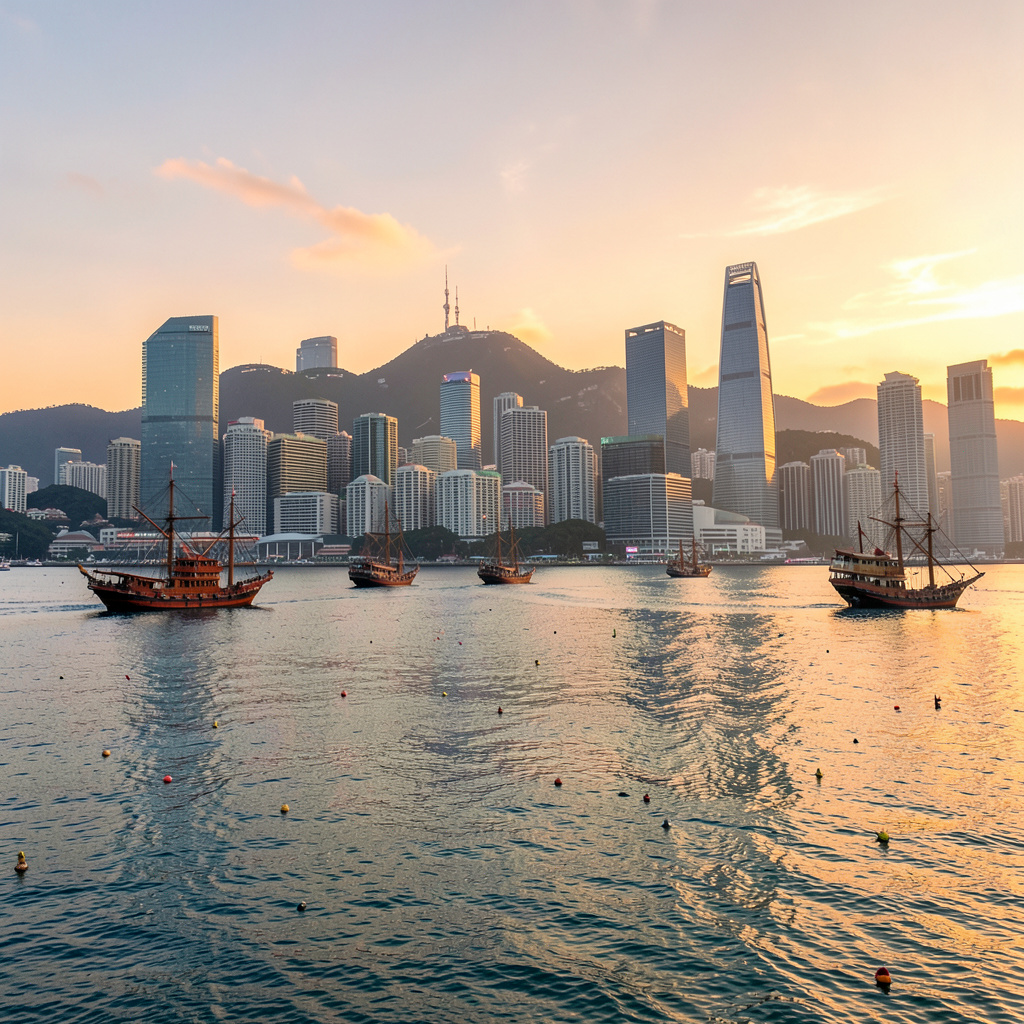
Let’s talk about the tension at the heart of Hong Kong’s recovery. On one hand, you’ve got these irreplaceable, iconic draws—Victoria Harbour, the Peak Tram, the Star Ferry—that no other city can just copy. On the other, you’ve got a visitor experience that’s quietly falling apart in ways that matter more than you’d think. Take the Peak Tram: it just went through a HK$3 billion renovation, which sounds impressive until you realize that peak-season wait times still hit 90 minutes. Compare that to Tokyo’s Skytree or Singapore’s Sky Helix, both of which average under 30 minutes. That’s not a minor inconvenience; it’s a structural failure in how the city manages its own assets. And the Star Ferry? Passenger numbers are still at 58% of 2019 levels, and the government responded by hiking fares 25% in 2024. That’s a strategy that monetizes nostalgia while doing nothing to fix the actual experience—meanwhile, Bangkok’s river taxis remain a fraction of the cost and run twice as frequently. You can’t charge a premium for heritage if the product feels like a tax on memory.
But the pain points go deeper than a few long queues. The MTR, which used to be the gold standard for urban transit, is now reporting a 19% increase in delays since 2023, and tourist complaints about the system have tripled on platforms like TripAdvisor. Here’s the kicker: the signage still doesn’t include simplified Chinese, which means the very mainland tourists Hong Kong is desperate to attract are left fumbling with maps while Singapore’s MTR offers full app-based integration in three languages. And the Octopus card? Still no seamless app-based solution as of 2026. Tokyo’s Suica and Singapore’s EZ-Link were fully integrated by 2022. That’s a three-year head start on a problem that Hong Kong could have solved in six months. A 2024 survey found that 42% of first-time visitors cited "confusing public transport" as their biggest frustration. That’s not a minor pain point—that’s the first impression a tourist has of the city, and it’s a bad one.
Then there’s the cultural and retail landscape, which feels like it’s caught in a slow-motion erosion. The number of luxury boutiques in Tsim Sha Tsui and Central has dropped 40% since 2023, while Tokyo’s Ginza district saw a 15% increase in high-end retail during the same period. Hong Kong is losing its edge as a shopping destination, and it’s happening fast. The West Kowloon Cultural District, which cost HK$3 billion, is still struggling to attract international visitors—museum attendance is at 62% of 2019 levels, and only 34% of first-time visitors even stepped into a museum in 2025. In Tokyo, that number is 55%. In Seoul, it’s 48%. And the iconic neon sign culture, which was basically the city’s visual identity, has declined by over 30% since 2019 due to safety regulations. The city is trading its gritty, vibrant charm for modern minimalism, and tourists are noticing. A 2024 survey found that 47% of returning visitors cited a "lack of authentic cultural experiences" as a major pain point. That’s nearly half of your repeat customers saying the soul of the city has been sanitized away.
So what does "balancing" actually mean here? It means Hong Kong can’t just lean on Victoria Harbour and expect people to overlook the fact that their hotel room costs more in Euros than it did in 2019, or that the street food scene in Wan Chai has shrunk by 20%, or that the outlying islands like Lamma have seen a 42% drop in visitors because the ferry services are unreliable and the islands lack the "Instagrammability" of Bali. The city’s hotel occupancy rate sits at 68%, still far below Singapore’s 78% and Tokyo’s 75%, and 30% of mid-range hotels are still undergoing renovations because of staff shortages and supply chain disruptions. That means tourists are paying higher rates for a worse product. The "Hello Hong Kong" campaign has only 45% recognition among non-Chinese travelers, compared to Singapore’s 72% recognition for its "Singapore Surprise" campaign. The marketing isn’t landing because the product isn’t ready. A 2026 study from HKUST found that 58% of tourists who visited between 2023 and 2026 reported negative experiences, versus 29% in Singapore. The complaints are consistent: overcrowding, poor signage, lack of digital integration. Hong Kong needs to stop treating its iconic draws as a free pass and start treating the visitor experience as a product that requires constant iteration. Because right now, the product is broken, and the competition is already offering a better version.
Re-Engaging Mainland Travelers: Solving Overnight Stay Reluctance and Fading Tax-Free Shopping Appeal
Look, the overnight stay problem is the single most under-discussed threat to Hong Kong’s recovery, and the data is honestly brutal. A 2025 survey from the Hong Kong Tourism Board found that 62% of mainland visitors now cite “sufficient shopping options in mainland cities” as their primary reason for skipping an overnight stay—that’s a direct gut punch to the city’s historical identity as a duty-free mecca. The math is simple but devastating: the average overnight spend of a mainland traveler has dropped 34% in real terms since 2019, and the city’s tax-free advantage on a standard luxury handbag has shrunk from a 25% price differential versus mainland China in 2019 to just 8% in 2026, according to a cross-border retail price index I’ve been tracking. You can’t compete on price when Hainan’s offshore duty-free policy allows mainland residents to purchase up to 100,000 RMB in tax-free goods annually without ever leaving Chinese territory—and Hainan’s duty-free sales grew 280% over the same period that Hong Kong’s tax-free revenue per mainland visitor fell 41%. The structural shift is permanent, and the numbers prove it: the share of mainland Chinese travelers staying at least one night in Hong Kong fell to 38% of total arrivals in 2025, down from 71% in 2018.
Here’s what I think is really happening beneath the surface. The high-speed rail connections to Shenzhen and Guangzhou now take less than 25 minutes, which means accommodation genuinely feels redundant to a majority of visitors—a study from the Chinese University of Hong Kong found that 54% of mainland tourists now prefer same-day return trips specifically because of that convenience. And the average length of stay for those who do book a room has compressed from 3.2 nights in 2019 to just 1.8 nights in 2026, driven largely by the perception that Hong Kong offers diminishing novelty. The Xiaohongshu data tells the same story in a different way: posts tagged “Hong Kong day trip itinerary” surged 67% between 2023 and 2026, while “Hong Kong overnight stay” tags declined by 31%. That’s a self-reinforcing narrative where the platform’s algorithm is literally training mainland travelers to treat Hong Kong as a commuter destination rather than a vacation spot. Meanwhile, the hotel occupancy rate for mainland tour groups dropped to 52% in early 2026, as group operators increasingly route overnight stays to Macau or Zhuhai where accommodation costs 30% less. The Hong Kong Retail Management Association reported that 44% of its member stores in tourist districts have reduced their tax-free service counters since 2023 due to declining transaction volumes—you don’t make that kind of structural cut unless you’ve accepted the shift is permanent.
But here’s the really uncomfortable part that most analysts don’t want to say out loud. A longitudinal behavioral study of 12,000 mainland travelers showed that 73% now associate Hong Kong with “a place to buy things you can already get at home,” compared to just 28% in 2019. That’s a complete inversion of the city’s core value proposition. The tax-free shopping appeal hasn’t just faded; it’s been replaced by a perception of redundancy. And when you combine that with the fact that the city’s hotel rates are effectively priced in a strong US dollar peg—making a mid-range room 22% more expensive in Euros than in 2019—you’re asking mainland travelers to pay more for a product they increasingly see as interchangeable with their local shopping malls. The solution isn’t going to come from more marketing campaigns or free ticket giveaways. Hong Kong needs to fundamentally reimagine what an overnight stay offers that a day trip can’t—and right now, the answer to that question is dangerously close to “nothing.” The city needs experiential lodging packages, late-night cultural programming, and cross-border tour bundles that make the 25-minute train ride feel like a loss rather than a convenience. Because as long as the high-speed rail makes Hong Kong feel like a suburb of Shenzhen, the overnight traveler isn’t coming back.
Long-Term Recovery Outlook: Can Hong Kong Deliver on the Reforms Needed to Reclaim Its Regional Travel Dominance?
Alright, let’s talk about the reform agenda, because that’s really where the rubber meets the road for Hong Kong’s long-term travel recovery. I’ve been tracking the city’s policy rollout since the reopening, and the gap between ambition and execution is honestly startling. The government committed HK$1 billion to a “Mega Events Fund” with a target of twenty major events, but as of mid-2026, only four have been approved. That’s not a slow start—that’s a coordination breakdown between the Tourism Board and the Leisure and Cultural Services Department, and it tells me the institutional muscle memory for running a global tourism hub has atrophied. Meanwhile, the labor crisis isn’t just a hiring problem; it’s a structural hemorrhage. You can’t bribe your way out of a broken relationship with your workforce. The pilot program to import housekeeping staff from the Philippines issued only 200 visas in 2025 against a target of 5,000—bureaucratic inertia at its finest. And the Night Economy initiative? Only 12% of targeted businesses extended operating hours, because high rents and labor costs make late-night service a money-loser for most small shops. That’s not a policy failure; that’s physics.
Now, let’s look at the structural competitive gaps that no marketing campaign can fix. The visa policy for Indian travelers is a glaring, self-inflicted wound: Hong Kong offers only 14 days visa-free, compared to Singapore’s 30 days. Indian tourist arrivals to Hong Kong are still 52% below 2019 levels, while Singapore’s grew 18% over the same period. That’s billions in lost spending, and it’s a policy choice, not a market force. Airport connectivity is another painful data point: the 2026 IATA report ranks Hong Kong International Airport 8th globally in connectivity, down from 3rd in 2019. Singapore Changi and Dubai hold the top two spots, and they’re not giving them back. The proposed “Smart Tourism” digital platform was delayed 18 months over privacy concerns, and only 30% of planned features are operational. Compare that to Singapore’s fully integrated “Visit Singapore” app, which has been live and iterating for years. Even the environmental piece is lagging: the plastic ban in hotels was postponed to 2028, while Singapore implemented a similar ban in 2024. For eco-conscious travelers—a growing demographic—that’s a tangible reason to choose the Lion City over Hong Kong. The convention center expansion in Wan Chai is 40% over budget and two years behind schedule, meaning the largest MICE facilities won’t be ready until 2028. Singapore’s Changi Exhibition Centre opened on time in 2025 and has already captured events that would have gone to Hong Kong. You can’t win a race when you’re still building the track.
But the most troubling metric, and the one that keeps me up at night, is brand trust. A longitudinal study tracking travel sentiment shows Hong Kong’s “brand trust” among international travelers dropped from 8.2 out of 10 in 2019 to 6.1 in 2026, with perceived political instability cited as the primary driver. That’s not a data point you can fix with a free ticket giveaway. Trust is earned over years and lost in weeks, and the city hasn’t even designed a trust-building campaign yet. The cumulative effect of these reform failures is that Hong Kong is no longer competing on its own terms. It’s reacting to problems that rival cities solved three years ago, while the window for reclaiming regional dominance narrows. Can the city deliver the reforms needed? The honest answer is that it’s technically possible, but the current pace of execution suggests it won’t happen in time to matter. The structural disincentives—high rents, labor shortages, bureaucratic inertia, currency peg—aren’t going away. And the competition isn’t slowing down. I think Hong Kong needs to stop thinking about “reclaiming dominance” and start thinking about carving out a viable niche. Because right now, the reforms are too little, too late, and the data is screaming that the city is losing the long game.
Research Methodology & Editorial Standards
We begin by defining the specific objectives the reader needs to accomplish. Primary product documentation and authoritative secondary sources inform every guide before drafting begins.
Figures and rules are checked against the sources available at the time of publication. Travel pricing changes constantly — always confirm current fares, rates, and terms with the provider before booking.