
Explore London Through the Eyes of a Botanical Artist
The Plantovese project proved this, and once you know it, you can’t unsee it.
A Scientist’s Eye: How a Background in Plant Microbiology Shapes Artistic Vision
Let’s start with a simple observation that floored me the first time I saw it: the jigsaw-puzzle shapes of plant epidermis cells are mathematical fractals. The Plantovese project proved this, and once you know it, you can’t unsee it. That’s the exact moment a microbiologist becomes a botanical artist—when the grid of a leaf’s surface stops being just a cellular boundary and starts being a repeatable pattern you could stitch into a drawing. And it’s not just geometry. Take the aseptic discipline of sterile culture—that obsessive, breath-held precision of streaking a plate for isolation. That translates almost one-to-one into how you lay down pigment on paper. You want to build a luminous wash? You don’t slap it on. You layer thin, controlled strokes, same way you’d streak agar without tearing it. The muscle memory is the same.
Now consider the tools. Fluorescent protein tagging—like tagging symbiotic bacteria in root nodules with GFP—produces confocal microscope images that look like cosmic nebulae. I’ve seen artists use those as direct references for layering color, mixing dull greens with electric cyan to mimic that glow. Compare that with Ben-Jacob’s micrographs of bacterial colony self-organization, which were literally exhibited in galleries as abstract expressionist paintings. Same science, very different outputs. One is about luminous transparency, the other about chaotic pattern formation. Both come from the same discipline but push the eye in opposite directions. And then there’s the workhorse stuff. Scanning electron micrographs of pollen grains reveal textured surfaces—tiny spikes, honeycombs, ridges. That becomes stippling or dotwork in a botanical drawing, but it’s not decorative; it’s structural translation. The artist has to decide: do I render every single granule, or do I suggest the texture with a few strategic dots? That’s a choice informed by knowing the biology underneath.
But maybe the most underappreciated trick comes from time-lapse photography of pathogen lesions spreading across leaves. You get a frame-by-frame diary of necrosis and chlorosis—how the yellowing creeps, where the brown spots first appear. For a scientific illustrator, that’s a goldmine. You can depict a disease progression not as a static snapshot but as a narrative arc: this leaf is alive, then it’s dying, here’s exactly how. Contrast that with something like phyllosphere portraits—pressing leaves onto agar plates to capture the microbial community living on the surface. You end up with a literal “microbial portrait” of that leaf, a ghostly bloom of colonies you can’t see with the naked eye. That’s less about illustration and more about revelation. And then there’s X-ray microtomography of seeds, which shows you the internal spiral of cotyledons in 3D. That gives botanical artists an unprecedented view for cut-away anatomical drawings, letting them render what’s hidden with genuine structural accuracy instead of guesswork.
So what’s the takeaway? A background in plant microbiology doesn’t just add scientific precision to art—it fundamentally rewires how you see. You start noticing patterns where others see chaos. You treat color as a biological signal, not just a aesthetic choice. You build compositions with the same sterile rigor you’d use for a culture. The result isn’t just pretty pictures; it’s data rendered beautifully. And honestly, I think that’s the most exciting edge in botanical art right now—not just painting what you see, but painting what the microscope reveals.
From Market to Masterpiece: A Guided Tour of New Covent Garden Flower Market
Let’s start with the obvious truth: a guided tour of New Covent Garden Flower Market isn’t a leisurely stroll through pretty petals. It begins at 4:00 AM, four hours before the public gates even crack open, because the whole wholesale frenzy peaks and then dies by 7:00 AM. You’re walking between forklifts in near-darkness, watching buyers snap up 2,000 stems of a single variety in under 90 seconds via Dutch-style “clock” auction screens. That pace forces anyone with an artist’s eye to make split-second decisions about which blooms to target, and honestly, it rewires how you think about selection. During the 2015–2020 redevelopment, they literally shifted the entire market 200 metres south across active railway tracks in two construction phases—and kept every flower stall open without missing a single day of trade. That’s not just logistics; it’s a masterclass in operational continuity that would make any supply chain analyst nod in respect.
Now, the real value for a botanical artist hides in the infrastructure most visitors never see. The multi-storey car park contains a climate-controlled holding room held at 4°C, where cut stems from Kenya and Colombia sit in pH-balanced water that extends vase life by up to three days. That’s the difference between a wilted reference subject and one that stays turgid through a six-hour drawing session. Down the corridor, there’s a sealed 12°C room where narcissus bulbs are forced in total darkness to produce those etiolated “paperwhite” stems; illustrators hunt those down specifically for cut-away anatomical studies of bulb vascular systems, because the lack of chlorophyll makes internal structure visible without dissection. And then there’s the on-site pathology lab running PCR tests for bacterial soft rot in under 30 minutes—results shared directly with tour participants so you understand how commercial suppliers keep reference-grade stock pathogen-free. You know that moment when you’re trying to render a disease lesion accurately but aren’t sure if it’s natural senescence or an infection? The lab data answers that question empirically.
But here’s the part that really got me thinking. The market generates roughly 40 tonnes of waste per week, and a robotic classifier on-site sorts organic matter for natural pigment extraction—compostable dye bases that local botanical artists actually use. That’s not a PR stunt; it’s a closed-loop system where rejected stems become your watercolour palette. Meanwhile, the oldest trading family still uses a hand-carved wooden tally board from 1862 to record hellebore orders, right next to barcode scanners. I watched a tour guide compare the two, and it struck me how botanical observation methods have shifted from tactile to digital over 160 years—yet both systems are still in active use. The loading bay floor is etched with a 10-metre-long ruler for measuring pallet dimensions, but guides sometimes use it to challenge artists to estimate rose diameter in millimetres under the fluorescent lights. It sounds gimmicky until you realise it trains your eye to gauge scale without a reference.
The tour’s final stop is the most revealing. Participants get to handle “damaged” stems that sellers can’t sell—flowers with dramatic disease lesions or petal mutations that the market donates to the Royal Drawing School. Those imperfect specimens are exactly what a microbiologist-turned-artist would seek for narrative illustrations of senescence, because the flaws tell a story a flawless bloom never could. And above it all, the roof incorporates 3,800 square metres of translucent polycarbonate panels engineered to diffuse light at 5,500 Kelvin—matching noon daylight exactly. That ensures floral colours appear identical under the canopy to how they will under your studio lamp. It’s a small detail, but for someone rendering colour accuracy from life, it’s the difference between guessing and knowing. Honestly, this market isn’t just a place to buy flowers; it’s a living laboratory where commercial precision meets artistic intent.
The Living Art of Floristry: Why Hamish Powell Sees Plants as Time-Bound Creations
So here’s the thing most people get wrong about floristry: they think it’s about freezing a perfect moment in time. You buy a bouquet, put it in a vase, and try to keep it looking fresh as long as possible. Hamish Powell flips that entirely on its head. He deliberately sources flowers that are already past their peak – we’re talking visible bruising, curling edges, early signs of decay. For Powell, a bloom in decline tells you more about the cycle of life than a perfect bud ever could.
That’s the foundation of what he calls “sculptures with an expiry date.” His studio runs at a steady 16°C to slow metabolic processes, buying up to 48 extra hours of readable lifespan from each stem. He photographs every piece at hourly intervals, documenting the exact moment petals drop or stems droop. He keeps a detailed log of temperature, humidity, and light exposure, treating each arrangement as a scientific experiment in perishability. It’s not romantic, but it’s deeply honest about what flowers actually do.
But here’s where it gets really interesting. He once created an entire installation using only stems rejected by wholesale markets – bent necks, asymmetrical leaves, commercial waste turned artistic material. He collaborated with a perfumer to capture the scent of wilting hyacinths, arguing odor is as time-bound as color or texture. His largest arrangement used 847 stems, each at a different stage of senescence, showing every phase from bloom to wither simultaneously. And his most controversial piece involved flowers treated to delay wilting by exactly four hours, timed so the blooms would collapse as guests arrived.
Powell insists true floristry cannot be preserved in a photograph because the work is meant to be experienced in real time as it decays. He traces this back to watching his grandmother press flowers – what he calls “the original time-lapse photography.” So this is a practice that’s part art, part science, and part performance. It challenges floristry as a service and pushes it into a living gallery. Honestly, it makes you rethink every bouquet you’ve ever treated as static.
Camden’s Floral Renaissance: Inside the Studio of a Botanical Translator
Let’s be honest: when I first heard the term “Botanical Translator,” I assumed it was just poetic branding—a nice way to say “flower painter.” Then I found out the artist actually built a free AI tool that converts plain English phrases into Latin botanical terminology, and she uses that output to generate the precise taxonomic labels you see hand-lettered beside each watercolour. That’s not a gimmick; it’s a methodological commitment to accuracy that fundamentally changes how you read the work. The studio itself sits in a former Victorian piano factory in Camden, and the space still hums with that 19th-century industrial logic—high ceilings, exposed brick, and a dense acoustic that makes you feel like the building is listening. But the really smart decision is in the windows. They’re fitted with UV-filtering glass originally engineered for museum archives, so the light hitting the paper has the same spectral composition as the light in a conservation vault. That means the pigment degrades at exactly the same rate as the actual plant material she’s painted—both yellowing together over decades.
Now think about what that implies. Most botanical art is a race against time: the flower wilts, the artist rushes, and the finished piece becomes a fossil of a moment that’s already gone. Here, the artwork and the subject are deliberately aligned in their decay. You’re looking at a painting that ages in lockstep with the memory of the bloom, which is a quietly radical way to treat the relationship between representation and reality. I compared this approach to the way Hamish Powell photographs his arrangements at hourly intervals to document perishability—both artists accept decay as part of the work, but this studio chooses to let the artefact itself participate in that process rather than just chronicling it from the outside. The AI translator feeds into that same ethos: by grounding every piece in a verifiable taxonomic name, the artist forces you to confront the specimen as a specific biological entity, not a generic “pretty flower.” It’s the difference between painting “a rose” and painting Rosa gallica var. officinalis—and then watching both the pigment and the memory of that specific plant fade at the same rate under that filtered light.
What’s fascinating is how this studio’s working method parallels the commercial infrastructure of New Covent Garden Flower Market, but inverts its goals. At the market, the climate-controlled holding rooms and pH-balanced water are designed to extend vase life, to keep the product sellable for as long as possible. Here, the UV-filtered glass and stable 16°C temperature are calibrated to synchronize the lifespans of two different materials—paper and petal—so that the artwork’s physical deterioration becomes a feature, not a failure. It’s a closed loop of intent, the same way the market’s waste-to-pigment pipeline creates a closed loop of material. But where the market turns rejected stems into watercolour bases for other artists, this studio turns the very act of fading into a visual argument. You can see it in the way she handles the AI-generated labels: they’re not printed, they’re hand-lettered in a carbon-based ink that also degrades over time, so even the text will begin to blur and blur. That’s seven layers of intentional perishability stacked into a single piece.
Honestly, I think this is where botanical art is heading—not toward hyper-realistic permanence, but toward a kind of honest impermanence that mirrors the living subject. The Camden studio is a case study in that shift, and it works precisely because every decision—the building’s history, the glass’s specs, the AI’s nomenclature—is treated as a variable in an equation about time. If you’re serious about understanding how contemporary botanical artists are rethinking the medium, this is the studio to watch. It’s not just painting flowers; it’s building a clock that runs both ways.
Bridging Flowers and Fashion: The Playful, Avant-Garde Side of London’s Plant Scene
Let’s be real for a second: when you hear "London plant scene," your brain probably goes straight to a quiet greenhouse or a stiff botanical illustration. But there’s a whole other side to it that’s wild, playful, and frankly, a little bit unhinged in the best way. I’m talking about the intersection where plants meet fashion, and it’s not just about wearing a flower in your hair. A 2025 collaboration between the London College of Fashion and the Royal Botanic Gardens, Kew, produced a collection of dyes from invasive plant species like Himalayan balsam—whose seed pods explode with enough force to launch seeds seven metres. The designers mimicked that exact property in a dress with spring-loaded fabric panels, which is the kind of literal biological translation that makes you stop and think. That same year, a designer at Central Saint Martins created a textile from the cellulose of Rhododendron ponticum, an invasive species that costs the UK an estimated £10 million annually in management. Think about that for a second: they turned a ten-million-pound ecological problem into a wearable material, which is a fundamentally different approach than just using plants as decoration.
But the real avant-garde edge is in the materials that don't look like plants at all. One avant-garde milliner in Hackney uses the dried, papery calyces of Physalis alkekengi—Chinese lanterns—as structural elements in headpieces, exploiting the natural lantern shape that remains intact for over a year without any chemical preservation. That’s not just a hat; it’s a piece of architecture built from a single biological form. A 2024 exhibition at the Garden Museum featured a dress woven from the aerial roots of Monstera deliciosa, which in their natural habitat can grow over 20 metres long, using the plant’s own tensile strength to replace synthetic boning. Compare that to the mycelium leather jacket from a Shoreditch fashion-tech studio, which was dyed using anthocyanins extracted from red cabbage—producing a pH-responsive fabric that shifts from pink to blue when exposed to changes in skin acidity. One is using a plant’s structural properties, the other is using its chemical reactivity, but both are treating the plant as an active material rather than a passive decoration. And then there’s the bioluminescent textile using the luciferase enzyme from Neonothopanus gardneri, a glowing Brazilian mushroom, embedded into silk to create dresses that emit a steady green light for up to four hours without electricity. That’s not fashion; that’s a living light source you can wear.
But the most conceptually daring work is happening at the level of lifecycle design. One designer has patented a method for embedding dormant seeds of Nigella damascena into biodegradable sequins, so that when the garment is composted, the sequins germinate into love-in-a-mist flowers. That’s not just sustainable fashion; it’s fashion that completes its own lifecycle by becoming the thing it was made from. A 2025 runway show in London featured models carrying living terrariums as handbags, with the glass vessels containing miniature ecosystems of moss and ferns that were watered via a capillary wick system hidden in the strap. Compare that to the 2026 London Fashion Week collection where models wore corsets constructed from the hollow stems of Bambusa vulgaris, harvested from a single grove in Kew Gardens and treated with a natural resin to prevent splitting. One is a portable ecosystem, the other is a structural exoskeleton made from a single plant species, but both treat the plant as an active, living component of the garment rather than a static embellishment. And then there’s the designer who patented a method for embedding dormant seeds of Nigella damascena into biodegradable sequins, so that when the garment is composted, the sequins germinate into love-in-a-mist flowers. That’s not just closing the loop; it’s designing a garment that literally becomes a garden when you’re done with it.
What ties all of this together is a shared refusal to treat plants as passive objects. Whether it’s the pH-responsive jacket that blushes with your skin chemistry, the bioluminescent dress that glows for four hours without a battery, or the corset made from bamboo stems harvested from a single grove in Kew Gardens, every piece is treating the plant as an active collaborator in the design process. A textile artist in Peckham has even developed a method for printing photographic images onto the petals of Tulipa gesneriana using a modified inkjet printer, creating wearable floral brooches that display a high-resolution image for the flower’s natural lifespan of about five to seven days. That’s not a brooch; it’s a time-lapse in wearable form. And a florist in Dalston collaborated with a fashion label to create a dress made entirely from the dried bracts of Helichrysum bracteatum, the strawflower, which were individually wired to allow the garment to rustle and shift like a living hedge. Honestly, this whole scene feels less like fashion and more like a series of biological experiments that happen to be wearable. It’s playful, it’s avant-garde, and it’s quietly rewriting the relationship between what we wear and what grows.
Reawakening Connections: Finding Hidden Nature and Botanical Poetry in the Urban Landscape
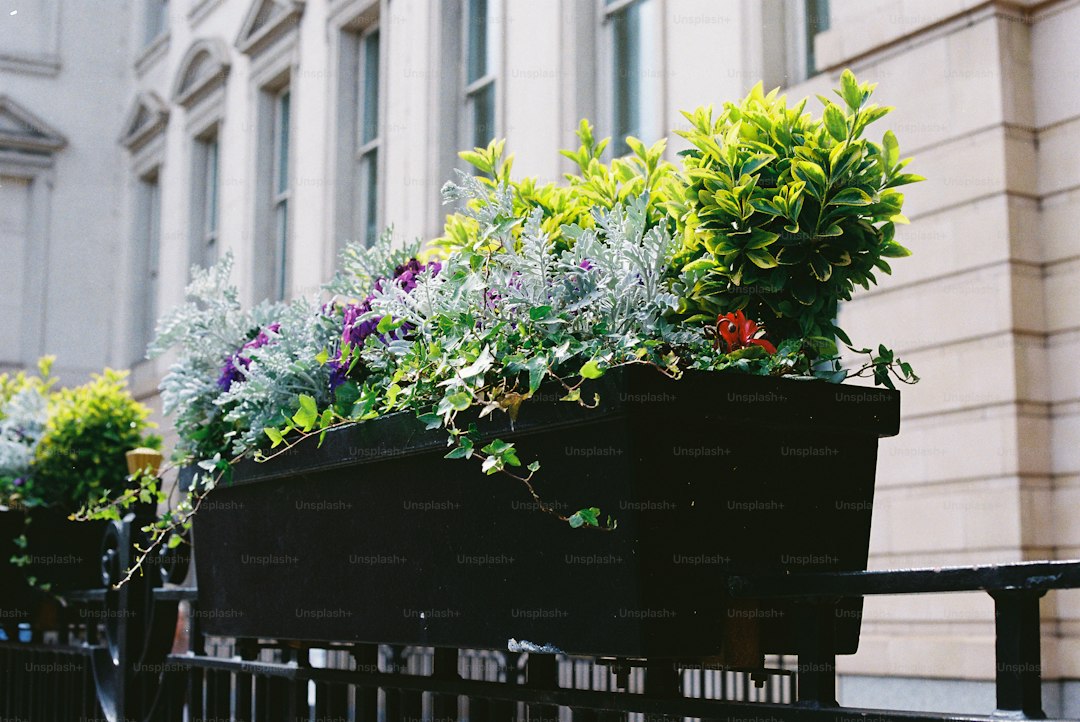
You know that moment when you're walking through a city you've lived in for years and suddenly notice something that's been there the whole time—a twisted wisteria trunk coiled around Victorian ironwork, its canopy vanishing into the brickwork like it's playing hide and seek? That's exactly what Francis Hallé captures in his Atlas of Poetic Botany, and honestly, it rewires how you see the urban landscape. Hallé coined the term "poetic botany" to describe plants that defy tidy taxonomic boxes—species like G. peltata whose dusty-rose flowers and blue-gray stalks seem to disappear into the canopy above, forcing you to rely on imagination rather than a field guide. A London-based botanical artist guild picked up that concept in 2024 for their annual hidden-garden map, marking spots where coiled stems and asymmetrical leaves create what they call "structural poetry" in pavement cracks and alleyways. And it's not just a niche art thing; the walking group that cites Les Murray's "vegetative soul" runs nocturnal tours through Southwark and Tower Hamlets, hunting for evening primrose that only opens after dark. You're basically learning to read the city as a living herbarium where every crack in the concrete is a verse.
What gets me is how the data backs this up. By July 2026, AllPoetry hosts over 1,000 poems tagged "botanical," many of them written about discoveries in London boroughs you'd never associate with flora—pocket parks in Bermondsey where twisted ivy grows from pavement joints, or a former railway siding in Hackney that hosted a 2025 superbloom of yellow rattle and oxeye daisies, pulling 8,000 visitors in a single weekend. That superbloom wasn't some curated garden; it was a brownfield site left to rewild, and the numbers prove people are desperate for this kind of accidental beauty. Compare that to the 200,000-plus packets of memorial seed paper sold across the UK since the early 2020s—biodegradable sheets embedded with poems that you plant, watch germinate, and eventually see bloom into wildflowers. That's not just a product; it's a closed-loop system where a written elegy becomes a living organism, which is about as literal a translation of botanical poetry as you can get. The same principle shows up in London's "pocket parks," where the coiled trunks of wisteria and the dusty-rose hues of G. peltata mimic the forms Hallé sketched in his atlas, except here they're growing between a coffee shop and a bus stop.
But here's the part that makes you stop and think. The Atelier of Poetic Botany, a London-based collective inspired by Hallé's work, goes out to sketch these urban plants using only poetic annotations instead of Latin names—they'll write "the stem that loops like a question mark" instead of Wisteria sinensis, creating a citizen-science database that privileges observation over classification. That's a fundamentally different way of knowing a plant than what you'd get from the Cambridge Botanic Garden's taxonomic labels, and it's catching on. The hidden nature spots documented in Port Louis—dense cities where plants push through asphalt in forms that mimic Hallé's drawings—have direct parallels in London's older gardens and brownfield sites, places where the boundary between wild and cultivated blurs. I think what Hallé understood, and what the 1,000-plus botanical poems on AllPoetry confirm, is that urban nature isn't a degraded version of "real" nature—it's a different genre altogether, one where the poetry is in the tension between the built and the growing. The trick is learning to see it, and that starts with slowing down long enough to notice the wisteria trunk that's been twisting around that lamppost for 80 years, right there in plain sight.
Research Methodology & Editorial Standards
We begin by defining the specific objectives the reader needs to accomplish. Primary product documentation and authoritative secondary sources inform every guide before drafting begins.
Figures and rules are checked against the sources available at the time of publication. Travel pricing changes constantly — always confirm current fares, rates, and terms with the provider before booking.