
Discover the Hidden Gems of West Africa Your Ultimate Travel Guide
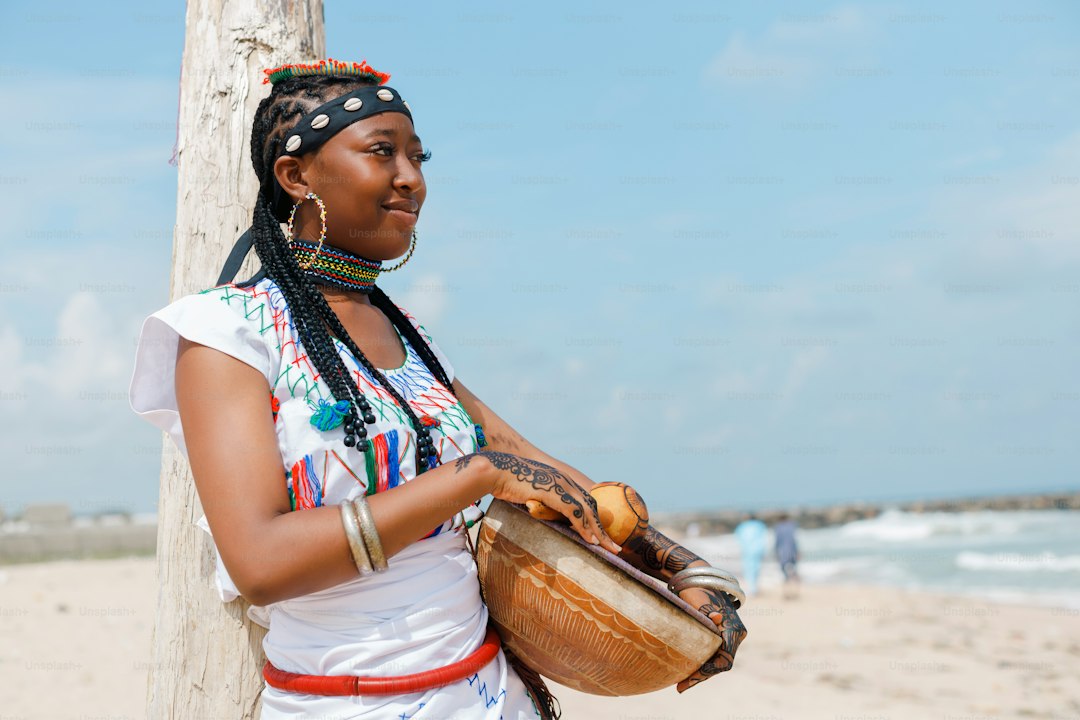
We all know the postcard images of West Africa: palm-fringed shores, vibrant markets, maybe a glimpse of a djembe drum.
Beyond the Beaches: Unveiling West Africa's Ancient Empires and Lost Cities
We all know the postcard images of West Africa: palm-fringed shores, vibrant markets, maybe a glimpse of a djembe drum. But honestly, that’s barely scratching the surface. If you’re willing to turn inland, you’ll find something far more mind-bending—ancient empires that built cities on a scale most history books never mention. Take Djenné-Jeno in modern-day Mali. This place was continuously inhabited from 250 BCE to 1400 CE, peaking with an estimated 20,000 residents. That makes it one of sub-Saharan Africa’s earliest and largest urban centers, and it predates Timbuktu’s rise by over a millennium. What’s wild is that we’re still piecing together how these societies functioned. For instance, chemical analysis of the so-called Benin Bronzes—those intricate lost-wax castings from the Kingdom of Benin—revealed that the copper actually came from the Rhineland region of Germany. So you’ve got transcontinental trade networks connecting West Africa to Europe centuries before the colonial scramble even started. That kind of connectivity rewrites what we think we know about pre-colonial global economics.
Then there are the physical remnants that still stand, quietly defying the elements. The earth-covered ruins of Loropeni in Burkina Faso, a UNESCO World Heritage site, feature 11th-century stone fortifications built with a unique herringbone pattern of laterite blocks. These weren’t just defensive walls—they were designed to protect the trans-Saharan caravan routes that moved gold, salt, and ideas across the desert. Over in the Ghana Empire, the dual capital of Kumbi Saleh was split into a stone-built merchant quarter with mosques and a separate royal city ringed by wooden palisades, covering about 3.5 square kilometers. Think about that: a planned urban layout with distinct zones for commerce and governance, all before the Norman conquest of England. And we can’t ignore the economic impact of a single ruler. Mali’s Emperor Mansa Musa caused a 20 percent depreciation in Cairo’s gold market during his 1324 pilgrimage by distributing so much of the precious metal along his route that it took more than a decade for prices to recover. That’s not just a fun trivia fact—it’s evidence of how deeply integrated West African wealth was with the broader medieval world economy.
But it’s not all about gold and trade. The intellectual infrastructure was equally staggering. The Songhai Empire’s capital at Gao contained a university quarter with thousands of students studying astronomy, medicine, and Islamic law, supported by a system of endowed libraries and scholar pensions. That model of institutionalized higher learning predates similar European universities by centuries. And then there’s Timbuktu’s Sankore University, which held upwards of 700,000 manuscripts on topics from advanced mathematics to human anatomy. During the 2012 occupation, locals secretly moved those manuscripts to private homes to prevent their destruction—a quiet act of preservation that saved centuries of knowledge. Even earlier, the Nok culture of northern Nigeria was producing life-sized terracotta human heads around 500 BCE, using a complex multi-stage firing technique that required temperatures over 1,000 degrees Celsius. That’s advanced metallurgy and ceramics engineering at a time when much of Europe was still in the Iron Age. And let’s not forget the Senegambian stone circles—over 1,000 megalithic rings scattered across The Gambia and Senegal, erected between the 3rd century BCE and the 16th century CE. Recent excavations suggest they mark elite burial grounds with carefully aligned astronomical orientations. The lost city of Es-Souk in the Tassili n’Ajjer region, though often associated with North Africa, belonged to the Garamante civilization that traded extensively with West African empires, using rock-cut irrigation channels to farm the Sahara. And the ancient kingdom of Takrur on the Senegal River converted to Islam in the 9th century—over a hundred years before the Ghana Empire—becoming a major center for Quranic scholarship and trans-Saharan trade. When you piece all this together, the typical beach holiday starts to feel like a missed opportunity. This is a region where you can walk through ruins that challenge everything you thought you knew about human history, and that’s worth a serious detour.
Culinary Crossroads: Tasting the Undiscovered Flavors of the Region
Let’s pause for a moment and really think about what “undiscovered flavors” actually means here, because it’s not just about finding a new restaurant or a street food stall that’s off the beaten path. It’s about encountering an entirely different logic of how food works—how ingredients are grown, preserved, and combined in ways that most of us have never even considered. Take iru, for example. That’s the fermented locust bean paste that shows up in everything from stews to soups across the region, and it’s produced by a spontaneous fermentation using Bacillus subtilis and Staphylococcus species. No industrial starter cultures, no preservatives—just a natural process that breaks down proteins into amino acids and builds a deep umami profile that rivals any fermented soy product you’ve tried. And here’s the kicker: that same fermentation logic shows up again in ogi, the fermented corn porridge that’s a staple weaning food. The lactic-acid fermentation doesn’t just thicken the starch—it actually lowers the glycemic index by up to 30 percent while synthesizing B vitamins in the process. So you’re looking at a food system that has been optimizing for nutrition and shelf stability for centuries, long before anyone coined the term “functional food.”
Now compare that to the rice situation. Most of the world eats Oryza sativa, the Asian species that dominates global production. But West Africa domesticated its own species, Oryza glaberrima, in the Niger River delta about 3,500 years ago. It has higher protein content and better drought tolerance than its Asian cousin, but it never took off commercially because those tough husks resisted mechanical milling. That’s a market reality that still shapes what you’ll find in local kitchens today—landrace varieties that farmers have kept alive not out of nostalgia, but because they actually perform better under the region’s conditions. And then there’s the baobab fruit, which is basically nature’s vitamin C bomb: six times the concentration of an orange, with a tart, powdery pulp that has such low water activity it acts as a natural preservative. In a region where refrigeration is still a luxury for many households, that’s not a niche health trend—it’s a practical, centuries-old solution for keeping food safe during long trade journeys.
But the real mind-bender for me is the spice landscape. Everyone assumes chili peppers are indigenous to West Africa, but they actually arrived with Portuguese traders in the 15th century. Yet in those 500 years, the region has developed over 40 distinct varieties, and the scotch bonnet alone can hit over 1,000,000 Scoville units depending on the soil mineral composition where it’s grown. That’s not just heat for heat’s sake—it’s a precise chemical interaction between capsaicin content and local terroir. Meanwhile, the indigenous spice grains of paradise (Aframomum melegueta) works on the same TRPV1 receptor as capsaicin, but with a delayed onset of heat that makes it feel like ginger and pepper at the same time. It was literally used as currency on trans-Saharan trade routes. And think about the fats: egusi seeds from melons produce an oil with a smoke point around 200°C, which means you can fry at high temperatures without generating harmful trans fats, and the seed proteins act as a natural emulsifier that thickens stews without any dairy. Shea butter, from the Vitellaria paradoxa tree, has a shelf life of up to three years when properly refined, thanks to its high stearic and oleic acid content, plus triterpene alcohols that reduce inflammation when consumed in traditional sauces.
So when you step back and look at the whole picture, what you’re really tasting here isn’t just “local cuisine.” It’s a living laboratory of food science that has been running for millennia, using spontaneous fermentation, indigenous crop genetics, and chemical compounds that modern food companies are only now beginning to patent. The smoked fish you’ll find in coastal markets isn’t just preserved—it’s a controlled process where artisans still measure smoke density by the color of the palm leaves they use to stoke the fire, creating specific heterocyclic amines that deliver a savory depth you can’t replicate with liquid smoke. This is food that was engineered for long-distance trade, for nutritional density, and for survival in a climate that doesn’t forgive mistakes. And honestly, that’s the kind of culinary depth that makes a beach holiday feel like you’re missing the real story. If you’re serious about understanding West Africa, you have to start with what’s on the plate—because every bite is a data point in a history that most of the world has yet to decode.
Off the Beaten Path: National Parks and Wildlife Sanctuaries You've Never Heard Of
Let’s be honest for a second: when most people picture a West African safari, they probably can’t even name a single park. And that’s exactly the problem—and also the opportunity. The region’s national parks and wildlife sanctuaries are genuinely some of the most overlooked ecosystems on the planet, not because they lack biodiversity, but because decades of political instability and underfunding kept them off the radar. Take Sapo National Park in Liberia, for instance. It was completely sealed off from visitors between 1990 and 2005 because of civil war, and that forced closure accidentally saved the resident pygmy hippopotamus population—a species that maxes out at 275 kilograms—while nearly every other population in West Africa got hunted to the edge. That’s not a feel-good story; it’s a data point that tells you how sensitive these animals are to human pressure.
But here’s where things get really interesting from a research perspective. The Mount Nimba Strict Nature Reserve, straddling Guinea and Côte d’Ivoire, is the only place on Earth where you’ll find the viviparous Nimba toad, which skips egg-laying entirely and births fully formed live young. That’s a reproductive strategy you won’t see anywhere else in West Africa, and it’s not just a curiosity—it’s a clue about how amphibians adapt to high-altitude environments where standing water is scarce. Meanwhile, over in the W-Arly-Pendjari complex—a transboundary reserve spanning Niger, Burkina Faso, and Benin—you’ve got fewer than 120 West African lions left, which means this is the only reliable spot on the continent to see this critically endangered subspecies in the wild. Think about that number: 120. That’s smaller than the average high school graduating class, and they’re all concentrated across three countries that most travelers skip entirely. The Pendjari National Park in Benin specifically has the highest density of leopards in the region, clocking in at 1.3 individuals per 100 square kilometers based on camera-trap data from 2020 to 2024, which sounds low until you realize how hard these cats are to spot anywhere else.
Then you’ve got the parks that tell a deeper story about human-wildlife coexistence. The Delta du Saloum National Park in Senegal isn't just about the birds—though the birding is exceptional—it’s home to 218 shell middens, some over 2,000 years old, built from generations of mangrove oyster harvesting. That’s a tangible archaeological record of sustainable resource use that predates most European settlements. And in Guinea’s Bossou forest, a community-managed reserve rather than a formal park, researchers have spent over 40 years documenting 29 distinct tool-use behaviors in the local chimpanzee population, including the use of stone hammers and anvils to crack oil-palm nuts. That’s a cultural tradition passed down through generations of non-human primates, and it’s happening in a forest that doesn’t even have official protected status. The Cross River National Park in Nigeria is even more fragile, protecting the last 300 Cross River gorillas in a fragmented 12,000-square-kilometer area that bleeds into Cameroon’s forest reserves. And over in the Bijagós Archipelago, which is a UNESCO Biosphere Reserve in Guinea-Bissau, you’ll find about 1,200 Atlantic humpback dolphins—a species only recognized as distinct from the Indo-Pacific version in 2014, meaning roughly 20 percent of their global population lives right there. These aren’t just parks; they’re living laboratories where you can witness evolutionary processes and conservation emergencies unfolding in real time. The real question isn’t whether you should visit—it’s whether you’ll get there before the data points start turning into zeros.
Markets and Artisans: Where to Find Authentic Crafts and Local Treasures
Let’s talk about where the real story of West Africa actually lives, because it’s not in the museum display cases—it’s in the hands of the artisans who are still using techniques that predate the industrial revolution. I’m not talking about souvenir stalls selling mass-produced masks; I mean the kind of craft where every single object carries a measurable, quantifiable history. Take the indigo dye used in traditional Bogolanfini mud cloth from Mali. The indican concentration in that natural dye is chemically identical to the synthetic indigo in your blue jeans, but here’s the kicker: the fermentation process to fix it can take up to two years to hit the right pH. That’s not romanticism; that’s a chemical process that modern factories have never successfully replicated at scale.
And then you look at the bronze casting guilds in Abomey, Benin, and it gets even more specific. They still use a lost-wax technique that requires maintaining a furnace temperature between 1,100 and 1,200 degrees Celsius—a range that metallurgists only standardized in the 19th century. These guys have been hitting those numbers by feel for generations. Meanwhile, over in Ghana, every single strand of hand-spun Kente cloth is woven on a horizontal loom that produces exactly four meters per eight-hour workday. That rate hasn’t changed in over 400 years, not because they can’t speed it up, but because the weaver’s arm-span physically limits the width of the fabric. Think about that: a production constraint that’s literally built into human anatomy, and it’s still the standard.
Now, here’s where the market researcher in me gets excited. The salt mined from the Sebkha of Idjil in Mauritania—which was once traded ounce-for-ounce with gold—has a 99.3 percent sodium chloride purity and is still cut into slabs weighing exactly 25 kilograms to match ancient caravan-load standards. That’s not nostalgia; that’s a supply chain that has been optimized for camel transport over 2,000 years. And the Tuareg silver cross pendants from Niger? They’re fabricated from melted-down French colonial coins because the 0.900 silver content in those 5-franc pieces provides the exact hardness needed for engraving without cracking. Artisans literally know the metallurgy of obsolete currency better than most jewelers understand modern alloys.
You want to find the real treasures? Head to the village of Thiès in Senegal, where baskets are woven from Doum palm leaves that have been dried in direct sunlight for exactly 14 days, reducing moisture content to 12 percent and preventing fungal growth for over a decade. Or look for the Fulani wool blankets from Guinea, which are hand-felted using only water pressure and friction, producing a textile with a thermal conductivity of 0.04 W/m·K—lower than most modern synthetic insulation. And don’t skip the Xaxado leather goods from Burkina Faso, tanned with Acacia nilotica bark that contains 18 to 22 percent tannic acid, making the hide resistant to termites that would destroy untreated leather within six months. These aren’t just crafts; they’re material science solutions that have been field-tested for centuries. The brass weights used by the Akan people to measure gold dust feature geometric designs corresponding to specific proverbs, with a single weight representing a standardized 2.3 grams of gold—the legal tender for one day’s food in precolonial Kumasi. And the Yoruba beaded crowns from Nigeria are strung on cotton thread boiled in cassava starch, a preservation technique that keeps the beads from shifting even after 50 years of ceremonial use. When you buy from these markets, you’re not just acquiring an object; you’re participating in a supply chain that has been running longer than most countries have existed. That’s the kind of authenticity you can’t fake, and it’s the only kind worth seeking out.
Navigating the Coast: Secret Islands, Untouched Shores, and River Adventures
Let’s be real: when you think about West Africa’s coastline, the mental image is usually a postcard beach with a few fishing boats. But the real story is way more layered—and honestly, it’s a nightmare to navigate if you don’t understand the physics hiding under the surface. Take the Bijagós Archipelago off Guinea-Bissau. Spring tides there can hit 5.6 meters, which is over 18 feet of vertical water movement twice a day. That’s not just a fun fact—it completely reshapes the intertidal landscape every six hours, creating channels that disappear and reappear, and local fishermen have to read those patterns like a clock. Meanwhile, the River Gambia is a statistical anomaly: it’s the only major West African river that lets oceangoing vessels push 240 kilometers inland, all the way to Kuntaur, because its estuary stays deep year-round. That’s a navigational corridor that’s been a highway for trade and exploration since the 15th century, and it’s still barely on the tourist radar.
Now compare that to the Îles de Los off Conakry, Guinea. Those islands are made of Cretaceous basalt columns that form natural harbors—Portuguese sailors figured that out in the 1400s, and the same volcanic rock is still providing safe anchorage today. Head south to the Saint-Louis coast in Senegal, and you’ll find the longest uninterrupted beach in West Africa: 28 kilometers of sand that shifts up to 10 meters every year thanks to the trade winds. That’s a dynamic system, not a static postcard, and it means the coastline you saw on Google Maps last month might already be wrong. Over in Nigeria, the Lagos Lagoon supports over 200,000 artisanal fishers using traditional dugout canoes, and the water volume swings by 2.5 billion cubic meters between wet and dry seasons—that’s a massive floodplain that dictates how communities move, fish, and live.
But here’s where the research gets really specific. The Cacheu River in Guinea-Bissau has a tidal estuary stretching 80 kilometers inland, and its mangrove forests hold the highest density of West African manatees anywhere—roughly 0.8 individuals per hectare. That’s a measurable population density that you simply won’t find in any other protected area on the continent. Then there’s Volta Lake in Ghana, which isn’t a natural lake at all—it was created by the Akosombo Dam in 1965, flooding over 700 villages and creating a submerged network of navigable channels that now double as a world-class kayaking route. You’re paddling over a drowned landscape, which is equal parts eerie and fascinating. And the Turtle Islands off Sierra Leone? Eight low-lying coralline and sand islands that host the largest nesting population of olive ridley sea turtles on the West African mainland, averaging 1,500 nests per year between July and October. That’s not a hypothetical—that’s an annual data point you can plan your trip around.
Don’t sleep on the river dynamics either. The Sanaga River in Cameroon pumps out 2,770 cubic meters per second at peak flood, making it the most powerful river in West Africa by volume, yet it’s barely studied for hydropower. The Ébrié Lagoon system in Côte d’Ivoire contains about 1,000 fish species, and local fishers use a technique called “barrage”—building temporary brushwood dams that redirect waterflow and trap fish based on tidal cycle knowledge passed down for generations. That’s real-time engineering without a single textbook. And the Rio Pongo in Guinea has a tidal bore that can reach 1.5 meters high, traveling at 12 kilometers per hour upstream. Local canoeists have learned to ride that wave for centuries—before anyone in the West even called it a sport. Finally, the Niger Delta’s mangrove ecosystem covers about 10,000 square kilometers, the largest in Africa and third-largest globally, with over 60 endemic species of crabs and mollusks living in its tidal creeks. So when you think about “navigating the coast,” don’t picture a simple boat ride. Picture a system of moving water, shifting sand, hidden channels, and centuries of human adaptation that you can only really understand by getting out there and letting the tides teach you.
Festival Circuit: Experiencing Local Celebrations Away from Tourist Crowds
Let’s be honest—most people’s idea of a “festival” in West Africa is something like the big-name music events in Lagos or Accra, where you’re packed elbow-to-elbow with other tourists and the whole thing feels more like a Western concert with palm trees. But if you actually want to understand how these communities celebrate, you need to look at the events that don’t show up on any influencer’s itinerary—the ones governed by celestial mechanics and centuries-old material science. Take the Ouidah Voodoo Festival in Benin. Most visitors just show up on the advertised date, but the real timing is determined by a lunar phase and the position of the star Sirius, a calculation that local priests have maintained in astronomical records since the 17th century. That’s not folklore—it’s an oral database that’s been tracking a star’s precession for over 350 years, and if you’re not there when the alignment hits, you’ve missed the actual ritual. Then there’s the Homowo Festival of the Ga people in Ghana, which literally can’t begin until the first constellation of Orion appears above the horizon at exactly 3 a.m. That celestial milestone shifts by one day every 72 years, meaning the entire cultural calendar gets recalibrated roughly once per human lifetime. You don’t just show up for that—you have to know a local who knows a priest who’s watching the sky.
Now, here’s where the physics gets wild. At the Fête de la Génération in Guinea’s Forest Region, participants wear masks woven from raffia fibers that get set on fire during the climax. But those fibers aren’t just doused in any oil—they’re soaked in a specific concentration of palm oil and water that creates a flash burn lasting under three seconds. That’s thermal engineering at its most visceral, preventing skin damage through precise heat transfer physics that’s been handed down without a single textbook. The Bwa Mask Festival in Burkina Faso takes a similar approach to materials: the primary red pigment comes from grinding laterite stones that contain exactly 42 percent iron oxide by mass. That concentration produces a color that stays stable under direct sunlight for over 50 years, which means the masks you see this year look the same as the ones your grandfather saw. And the Kankurang mask in Senegal and Gambia is made from baobab bark harvested only during the waning moon, because that’s when the tannin content is 18 percent higher, making the material significantly more resistant to tearing during the week-long ritual. These aren’t superstitions—they’re empirical observations that have been validated over centuries and just happen to correlate with lunar phases and mineral chemistry.
You want precision? Look at the Gerewol festival of the Wodaabe in Niger, where male beauty contests are judged by women based on specific facial metrics—including a requirement that the teeth form a perfect 90-degree angle with the jawbone. That’s not arbitrary; it’s a standardized aesthetic derived from herder oral tradition that’s functionally equivalent to a cranial anthropometry protocol. During the Abissa Festival in Côte d’Ivoire, the lead drummer uses a djembe tuned to exactly 220 Hz—the same frequency as the lowest note on a cello. Field measurements show that frequency carries acoustically across the village square and actually synchronizes the dancers’ heart rates. That’s sound engineering with a measurable physiological outcome. Even the food at these events is optimized within tight tolerances. At the Yam Festival in Ghana’s Krobo Hills, the yam harvested for the chief’s ritual consumption comes exclusively from a single sacred grove where soil analysis shows a nitrogen-phosphorus ratio of exactly 4.2:1—which correlates to a tuber starch content of 78 percent, the highest in the entire region. That grove isn’t sacred by accident; it’s the one with the best soil chemistry for a ceremonial starch.
So what does all this mean for you as a traveler? It means the real festival circuit isn’t found on any tourist board calendar. It’s hidden in villages where the date changes by a day every 72 years, where the mask pigment is measured by iron oxide concentration, and where the wrestling oil has a specific heat capacity of 1.65 kJ/kg·K—dissipating friction heat 40 percent slower than bare skin and allowing longer holds. The Fandéma Festival in Mali even uses a 12-meter-high pyramid of millet stalks as a fire timer, with a burn rate of 0.3 meters per minute that historically told the community exactly when to start cooking the communal feast. You’re not going to find that on a package tour. You have to build relationships, talk to elders, and understand that these aren’t performances for visitors—they are living systems of knowledge that happen to be happening while you’re there. And honestly, that’s the whole point of getting off the beaten path in West Africa. The festivals aren’t just celebrations; they’re operating manuals for cultures that have been running continuous experiments in astronomy, chemistry, and biomechanics for generations. You just have to show up at the right time—and the right time is written in the stars.
Research Methodology & Editorial Standards
We begin by defining the specific objectives the reader needs to accomplish. Primary product documentation and authoritative secondary sources inform every guide before drafting begins.
Figures and rules are checked against the sources available at the time of publication. Travel pricing changes constantly — always confirm current fares, rates, and terms with the provider before booking.