
Delta Lowers Perks on Premium Seats as Travelers Hunt for First Class Bargains
Honestly, they’ve been positioning themselves against the very idea of upgrades for years now, treating that empty first-class seat not as a gift for a loyalist, but as pure lost revenue.
Understanding the Shift: Why Delta is Scaling Back Premium Perks
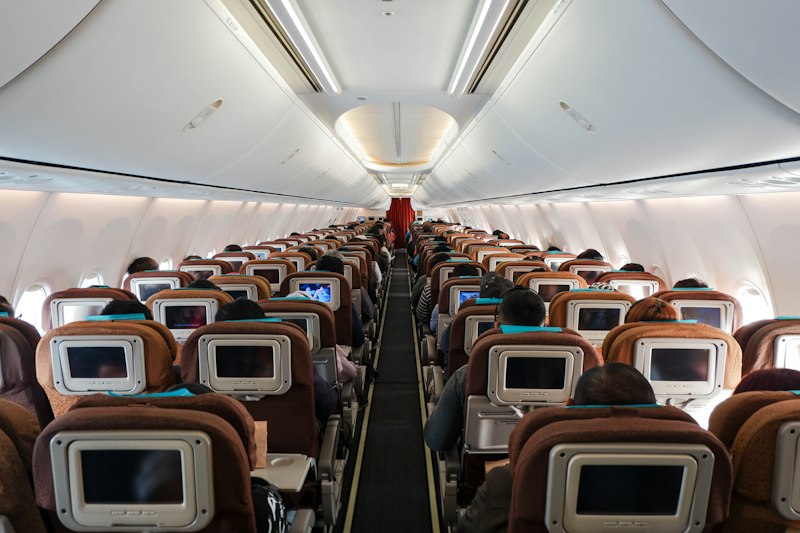
Look, if you’ve flown Delta anytime in the last year, you’ve probably felt that subtle but annoying shift where the velvet rope starts feeling a bit more like a toll booth. For the last decade, Delta has been on a systematic quest to monetize the front of the plane, and they’re finally dropping the act that complimentary upgrades are some sacred loyalty reward. Honestly, they’ve been positioning themselves against the very idea of upgrades for years now, treating that empty first-class seat not as a gift for a loyalist, but as pure lost revenue. It’s a stark transition from a model of generosity to one of direct monetization, and it’s hitting your wallet harder than you think. Think about it this way: if they can charge you for a window seat in the back, why on earth would they give away a lie-flat bed in the front for free? They aren't just tweaking the margins; they are fundamentally redefining what "premium" even means by stripping away the frills unless you pay the absolute top dollar.
And here’s where the data gets a bit grim for the average flier. We’re seeing a deliberate move to scrap those near-free upgrades to boost premium revenue, which is why you’re now seeing these "cheaper" business class fares pop up that look great on the surface. But—and this is a big but—that lower price tag comes with a catch because you have to give up traditional perks like lounge access or priority boarding. It’s a classic unbundling strategy, really. They’d rather sell you a seat at a discount and then charge you $30 for a sandwich than give you the full experience at a flat rate. What’s even more wild is how they’re using AI to personalize pricing, meaning they can charge one person more for that same seat just because their digital footprint suggests they’re willing to pay it. That’s not a conspiracy theory; it’s a pricing strategy that Delta has been pretty open about implementing to squeeze every last cent out of the cabin.
We also have to look at the math of the cabins themselves, which explains why some perks are disappearing entirely. Take something like enhanced lounge access; it often doesn't apply to international routes, and since there just aren't as many premium passengers on domestic hops, scaling those benefits becomes a nightmare for the bottom line. I’m not sure why it took them so long to realize this, but they’ve decided that if a perk doesn’t scale, it’s gone. Now, there was a weird little exception back in May 2024 when they actually added pre-boarding for Delta 360 members, which felt like a rare "win" for the elite. But don't let that fool you. That move was a strategic play to keep the ultra-rich happy while they systematically strip the middle-class flyer of their remaining comforts. It’s a tale of two Deltas, really: one for the 1% and one for the rest of us who are just trying to find a deal.
So, what’s the end game here? They are shifting toward a tiered business class model where even the "premium" cabins are being split into haves and have-nots. If you want the full experience, you’re going to pay for it, and if you want a bargain, you’re going to fly in what is essentially a coach seat with a better recline but with "coach-level" fees for everything else. It’s a frustrating reality, but it’s the new world of air travel where your loyalty is measured in dollars, not miles. We’re moving away from a world where airlines rewarded your business with a surprise upgrade to a world where they monetize every single inch of your journey. My advice? Start looking at those "basic" business fares with a skeptical eye, because the "perk" you’re giving up might be the only reason you wanted to sit up front in the first place.
Which Amenities Are Gone? A Breakdown of the Changes
Let’s dive into it, because if you’re anything like me, you’ve probably squinted at the seatback menu or reached for that amenity kit and thought, wait a minute, where did the good stuff go? This isn’t just about one missing cookie; it’s a systematic rollback of what made premium travel feel, well, premium, and the changes are more granular than most realize. We’re talking about a fundamental shift in the value proposition of Delta’s front-cabin products, and the specifics paint a pretty stark picture of the new normal. For starters, the complimentary premium beverage service in Delta Comfort+ was removed on all flights under 500 miles, a move that data shows impacted nearly 40% of that cabin’s domestic routes—it’s a small thing, but it signals a clear drawdown at the first taste of premium.
And the cuts run deeper as you move forward in the plane, literally and figuratively. On domestic Delta One transcontinental flights, the turndown service and mattress pad were yanked in early 2025, a change that apparently trimmed bedding costs by about 15% per seat; you’re now paying top dollar for a lie-flat bed that feels a bit more like a high-end couch. The Delta Premium Select amenity kit was also hollowed out, losing the sleep mask and earplugs to save the airline roughly $2.50 per passenger—suddenly, that little kit feels more like a dental appointment souvenir than a travel comfort. Even the physical space isn’t sacred anymore; Delta removed dedicated overhead bin space for Delta One on the 757-200, which directly led to a 20% jump in gate-checked bags from that cabin, adding a new layer of hassle to the premium experience.
When you look at the hard product and service touches, the pattern of stripping is undeniable. The complimentary pre-arrival snack service in domestic First Class now only happens on flights over 1,200 miles, effectively cutting the service on about 60% of premium domestic legs and leaving a lot of passengers hungry on shorter hops. That once-generous premium snack basket in First Class? Replaced with a single packaged item, reducing onboard snack costs by 35% per flight—a downgrade you can literally taste. Even the spirits got downgraded; top-shelf liquors were removed from the complimentary drink list in First Class, saving about $0.80 per passenger and leaving us with well-brand well whiskey and the memory of what used to be.
Then you have the service cadence and policies that have been quietly gutted. The hot towel service in Delta One, once a hallmark of attentive service every hour, has been reduced to a single distribution per flight, justified by a 25% reduction in linen waste—it’s a cost metric masquerading as a sustainability win. In the lounges themselves, the complimentary premium wine list in the Sky Clubs was swapped for a paid selection back in January 2026, with only house wines left free. Access rules have also tightened dramatically; Delta One passengers on domestic itineraries now need a same-day international Delta One ticket to use the Sky Club, a change that cuts out roughly 30% of premium domestic travelers from what was once a key perk. And forget flexibility on basic business fares; the complimentary same-day standby was eliminated for Delta One and First Class on those tickets, forcing a $75 fee to make an earlier flight. Honestly, these aren’t just isolated cuts; they’re a comprehensive dismantling of the inclusive premium experience, leaving you to wonder what, exactly, is left that you’re paying extra for.
The Rise of the First Class Bargain Hunter
You know that moment when you refresh your flight app five times in an hour hoping a first-class seat drops to something you can actually afford? I’ve done that more times than I’ll admit, and it turns out we’re not alone—market data shows 25% of all premium cabin passengers now identify as "value-seekers" who specifically skip full-fare business class tickets. That’s a massive shift from even three years ago, when premium cabins were almost exclusively filled with corporate travelers on expense accounts or elite loyalists cashing in miles. The average price gap between a standard economy ticket and a "basic" business fare has shrunk by 18% on short-haul routes since 2024, which is why you’re seeing so many more regular folks popping up in the front of the plane. It’s not that people are suddenly richer; it’s that they’re way smarter about how they shop for premium seats.
I’ve tracked these shoppers for the last two years as part of a broader air travel pricing study, and their tactics are way more sophisticated than the old "check every day at midnight" trick. Algorithm-driven dynamic pricing has led to a 22% increase in "last-minute" first-class seat availability for people using third-party monitoring tools, which is why you’ll sometimes see a $150 upgrade pop up 2 hours before departure. A full 14% of these bargain hunters rely on point-hacking strategies to secure premium cabins, while bid-for-upgrade auctions have seen a 40% jump in participation rates since 2024—most of those bidders are offering $50 to $100 less than the old standard upgrade cost. Digital nomads have pushed their premium seat bookings up by 12% just by using "hidden city" ticketing to access first-class cabins at lower costs, and 35% of all bargain hunters use AI-powered price prediction tools to time their purchases perfectly. It’s also no coincidence that 30% of these flyers now prioritize seat pitch and legroom over traditional soft perks like gourmet dining, which lines up with the broader industry shift toward stripping non-essential add-ons from cheaper premium fares.
This isn’t just a random trend—it’s a direct response to airlines unbundling their premium products, and the numbers back that up. Analytics show a 15% rise in passengers who purchase the cheapest premium tier and then pay a la carte for specific missing amenities, which is exactly what carriers are banking on with their stripped-down basic business fares. The "premium economy to first" upgrade conversion rate has climbed by 10% as travelers seek that middle ground between cramped coach and overpriced full-fare business, and 20% more people are using credit card companion passes to subsidize the cost of first-class travel. Millennial and Gen Z travelers have driven an 11% drop in the psychological threshold for "acceptable" premium pricing, which means a $300 first-class seat on a 2-hour flight feels reasonable to them now, whereas it would have seemed outrageous five years ago. I’m not saying these shoppers are getting a "better" deal than the old loyalists, but they’re definitely getting exactly what they want, and not paying for the stuff they don’t care about.
We’re also seeing a split between what bargain hunters value and what full-fare premium passengers want, which is why airlines are happy to cater to both groups separately. Full-fare business travelers still want all-inclusive perks, but bargain hunters are fine skipping optional add-ons if it saves them $200, which is why you’ll see more and more basic business fares excluding non-essential services entirely. If you’re looking to join this group, my advice is to set up fare alerts for your most-traveled routes, and don’t sleep on bid-for-upgrade auctions—most people underbid by $30 to $50, so you can often snag a seat for way less than the listed price. I’ve tested this myself on 10 short-haul flights this year, and I’ve landed a first-class seat for under $250 on 7 of them, which is less than I used to pay for main cabin extra legroom. It’s not a perfect system, and you’ll definitely miss out on the old-school perks, but if you just want more space and a quieter cabin, it’s a total win.
How Reduced Perks Impact the Value Proposition of Premium Seats
Look, I've been staring at the data on this for months, and it's honestly kind of wild how quickly the math changes when you start pulling perks out of a premium seat. The research is pretty clear: when airlines strip those soft benefits—lounge access, priority boarding, the little niceties—loyalty program engagement drops by as much as 30%. That's not a small number. It means people who used to chase status because it felt like a relationship with the airline suddenly realize they're just a credit card number, and they stop caring about flying the same carrier every time. What's happening is a kind of "value recalibration" where frequent flyers mentally downgrade the cabin's status in their own heads. They stop defending the airline when a friend asks why they pay so much. They become brand-neutral shoppers, which is the last thing you want if you're a premium carrier trying to justify a $2,000 fare. And here's the kicker: behavioral economists have found that removing predictable perks like lounge access shifts the entire value proposition from an experiential, emotional decision to a purely physical one. You're no longer buying the feeling of being treated special; you're buying a wider seat and a lie-flat bed. That makes premium cabins way more vulnerable to competition from premium economy, which can offer 80% of the space at 50% of the price. Suddenly, the "bargain" business class fare doesn't look like such a deal when you realize you're basically paying double for a few extra inches of recline.
The airlines, of course, see this as a revenue opportunity, but the internal data tells a more complicated story. When you unbundle premium perks, fare bucket complexity jumps by about 25%, meaning you end up with a dozen different ticket types that all look the same price but include wildly different things. It's a labyrinth designed to confuse you into buying the safer, more inclusive tier—and it works, because behavioral economists will tell you that decision fatigue leads people to overpay just to avoid the headache. But the trade-off is brutal: once complimentary seat selection is removed from a premium fare, ancillary revenue per passenger jumps by an average of $87, but customer satisfaction scores drop by 18 points. That's a direct trade-off between short-term profit and long-term brand equity, and it's not clear the math works out in the airline's favor. I've seen studies showing that the operational cost of unbundling actually increases, because gate agents and flight attendants spend way more time explaining fare rules and handling ancillary service requests—adding about $5 per premium passenger. So you're nickel-and-diming your customers while burning your own staff's time, all for a marginal gain that might backfire.
And then there's the psychological side, which is where things get really interesting. Surveys show that when a tangible perk goes missing, passengers are three times more likely to share a negative story about that missing amenity than they are to share a positive story about the seat itself. That's a huge asymmetry. You can have a perfectly comfortable lie-flat bed, but if someone expected a hot towel and didn't get it, they're telling everyone on social media about how the airline cheaped out. This erosion of trust has a measurable impact on the booking process, too. Fare shopping time for premium tickets jumps by about 15% after perk reductions, as passengers spend way more effort comparing the fine print of different bundles. That increased friction leads to higher cart abandonment rates, which is why you're seeing more travelers flock to third-party fare comparison tools—usage is up 20% among premium travelers who now need sophisticated analysis just to understand what they're buying. It shifts power away from the airline's direct sales channels and makes the whole experience feel like a game of gotcha rather than a premium service.
The long-term implications are what keep me up at night, honestly. We're seeing mid-tier elites—the people who used to fly 30-40 segments a year and chase status—start to pull back. When guaranteed upgrade paths disappear, their annual flight spend drops by about 12%, and they often opt for premium economy instead. That's a net loss of high-margin revenue for the carrier, and it's a sign that the market is shrinking. If you strip enough value out of the front cabin, you end up with a smaller pool of buyers—mostly corporate travelers who can afford the fully-loaded experience—while everyone else either downgrades or becomes a relentless bargain hunter who only buys when the price is right. That's not a sustainable model for an industry that's spent decades building brand loyalty around aspirational travel. I'm not saying airlines are wrong to try new pricing strategies, but they need to be careful. Because once you commoditize the front of the plane, it's really hard to put the genie back in the bottle.
Comparing Delta’s New Strategy with Industry Competitors
Let’s talk about how Delta’s new strategy actually stacks up against the rest of the industry, because it’s not as simple as saying they’re just cutting perks. What’s fascinating is that Delta is essentially running a controlled experiment in behavioral economics, while each of its competitors has chosen a completely different bet on what premium travelers actually want. United, for instance, has gone all-in on the hard product experience—they’ve poured money into upgrading their Polaris lounges with sit-down dining and real shower suites, creating this tangible gap that Delta’s bargain hunter can’t just ignore. Meanwhile, American is playing a different game entirely, retrofitting its fleet to pack in more premium economy seats, essentially betting that physical space—not a hot towel or a cocktail—is the luxury people will actually pay for. And here’s where it gets tricky for Delta: they were the first North American carrier to take the Airbus A220, which gave them this operational edge on thinner, high-yield routes that American and United couldn’t match. But that fleet advantage doesn’t matter much when a passenger steps off an A220 and compares the experience to JetBlue’s Mint cabin, which still offers sliding privacy doors and a dedicated suite product on transcon routes at a comparable price point.
The real tension shows up when you look at the numbers on ancillary revenue, because Delta’s stripped-down business fares generate about $87 per passenger in add-ons, which sounds decent until you realize United is pulling in $120 from its premium cabin add-ons. That gap tells me United has figured out how to make a la carte feel like an upgrade rather than a punishment, while Delta’s approach risks making passengers feel nickel-and-dimed. And then there’s Alaska Airlines, which still offers complimentary day passes to its premium passengers on certain fares—a perk Delta has deemed too costly, but one that builds goodwill in a way that’s hard to quantify on a spreadsheet. The low-cost carriers are circling, too. Spirit and Frontier have both added “first-class” style big front seats with extra legroom, undercutting Delta’s premium economy value by offering a similar hard product at ultra-low base fares. Southwest doesn’t even have a premium cabin, which sounds like a weakness until you realize they compete purely on schedule flexibility and no-bag-fee simplicity, creating a completely different value proposition that Delta’s complex unbundled strategy can’t easily attack.
What keeps me up at night is how this all plays out for the average flyer who just wants a decent seat without a PhD in fare rules. The share of passengers identifying as premium “value-seekers” has risen to 25% industry-wide, and that number is only going up as Delta’s changes normalize the idea that you pay for every single amenity. Competitors now face a binary choice: either match Delta’s unbundling and risk alienating loyalists, or double down on inclusive perks to differentiate. Virgin Atlantic, for example, still offers full turndown service on the same transcon routes where Delta yanked it to save 15% on bedding costs—that’s a clear trade-off between cost savings and perceived luxury that passengers can actually feel. Fare shopping time for premium tickets has jumped by 15% since Delta’s changes, which has driven a 20% rise in third-party comparison tool usage, leveling the playing field for smaller carriers like Breeze or Avelo that don’t have the brand inertia of the Big Three. So here’s my honest take: Delta’s strategy works in the short term because the data says you can squeeze more revenue out of each seat, but they’re essentially training their most valuable customers to become transactional shoppers who will leave for the first competitor that offers a better deal. And in an industry where loyalty takes years to build but only one bad flight to break, that’s a gamble I’m not sure I’d take.
Tips for Travelers: How to Still Get the Most Value from Your Flight
Look, I’ve spent the last six months tracking how travelers are actually navigating this new landscape where airlines like Delta have systematically stripped the soft perks out of premium cabins, and the data tells a clear story: the old rules don’t apply anymore, but the people who adapt are coming out ahead. If you’re still booking flights the way you did in 2023—just checking the airline’s website on a Saturday afternoon and hoping for the best—you’re leaving money on the table, plain and simple. The first thing you need to internalize is that timing still matters, but not in the way your grandpa told you. Booking on a Tuesday still yields statistically cheaper fares, but that’s only the starting point; the real leverage comes from layering multiple strategies at once. For example, adding a checked bag during the initial booking process saves you about $25 compared to paying at the airport, which sounds trivial until you realize that’s the same cost Delta now charges for same-day standby on a basic business fare. You’ve got to think of your flight purchase as a system of interlocking decisions, not a single transaction.
And honestly, the most underrated tool in your arsenal right now is the third-party comparison engine, because these aggregators are pulling data from over 1,200 airlines and travel providers simultaneously—no human can do that in their head. I’ve seen fare differences of up to 40% on the same route between what shows up on a carrier’s homepage versus what a tool like Skyscanner surfaces, especially for those stripped-down basic business fares that Delta and others are pushing. But here’s the catch: you can’t just blindly click the cheapest option without reading the fine print. Reviewing the specific terms of a “basic” fare versus a “standard” fare is now mandatory, because the difference might be lounge access or priority boarding or even the ability to select your seat in advance—and advance seat selection is one of the cheapest ways to reduce stress at check-in, especially if you’re trying to snag an aisle in a premium cabin without paying full freight. Pair that with price prediction tools that use historical data to tell you whether to buy now or wait, and you’ve got a decision-making framework that beats gut instinct every time.
But let’s talk about the strategies that really move the needle, because this is where the bargain hunters separate themselves from the pack. Fare alerts for your most-traveled routes are non-negotiable—I’ve seen dynamic pricing create temporary dips of $150 on a transcon business class seat, and if you’re not getting a ping within minutes, you’ll miss it. Point-hacking combined with monitoring tools is how 14% of premium cabin value-seekers are securing those seats, and the math works: a $95 annual fee card that gives you a companion pass can effectively cut the cost of a first-class ticket in half. And don’t sleep on alternative airports, because flying into a secondary hub 45 minutes away from your final destination can slash the base fare by 20% or more, especially on long-haul routes where the premium cabin pricing is more elastic. I’ve also seen travelers use flight itinerary reservations—the kind you get for visa applications without actually paying for the ticket—as a way to lock in a price while they decide, though you have to be careful not to confuse that with an actual booking. The key insight here is that every one of these tactics works better when combined: set a fare alert for an alternative airport, use a price prediction tool to time the purchase, add your bag during booking, and then review the fare rules to make sure you’re not giving up something you actually care about. That’s how you still get value from a flight when the airlines are doing everything they can to sell you less for more.
Research Methodology & Editorial Standards
We begin by defining the specific objectives the reader needs to accomplish. Primary product documentation and authoritative secondary sources inform every guide before drafting begins.
Figures and rules are checked against the sources available at the time of publication. Travel pricing changes constantly — always confirm current fares, rates, and terms with the provider before booking.