
Critical Travel Warnings for Late Summer Trips
Late summer travel brings its own set of financial and logistical traps that can strand travelers or cost them money: denied boarding compensation rules, mistake fare hunting tactics, government advisories that void insurance payouts, and the fine print on rebooking after a price drop.

| Takeaway | Detail |
|---|---|
| Check government advisories before booking—they can void your insurance | Travel insurance policies routinely exclude coverage for destinations under a Level 4 "Do Not Travel" warning (e.g., Niger, DRC as of July 2026) or similar Foreign Office advisories; verify your policy's fine print before you pay. |
| You're entitled to up to $775 or $1,550 cash if an airline bumps you involuntarily | Under DOT rules, if you're at the gate on time and denied boarding, the airline must pay cash compensation—up to $775 for delays of 1–2 hours or $1,550 for delays over 2 hours—not just a voucher, and filing a DOT complaint often forces payment. |
| Set Google Flights price alerts to catch mistake fares within minutes | Alerts trigger on price drops for specific late-summer routes; mistake fares often disappear in under an hour, so a notification is your only realistic window to book. |
| Rebook after a price drop on Southwest, Alaska, or JetBlue for a travel credit | These airlines allow you to rebook at the lower fare and receive the difference as a credit; Delta and United typically charge change fees or require cancellation with a fee. |
| Know your fare class before you book—basic economy blocks changes entirely | Basic economy tickets on most carriers prohibit changes or cancellations, while premium economy and business fares often include free changes; check the fare class code at checkout. |
| The UK Foreign Office requires ESTA or visa for U.S. travel—denied boarding is real | British citizens without pre-clearance can be refused boarding at the gate; verify your electronic authorization at least 72 hours before departure. |
| Only 2.9% of DOT complaints are about overbooking, but enforcement is active | Despite the low complaint share, the DOT pursues denied boarding compensation violations when reported; filing a formal complaint is the most effective lever for payment. |
| Item | Rule / threshold |
|---|---|
| Denied boarding cash compensation (DOT rule) | Up to $1,550 per passenger for involuntary bumping (DOT rule, applies when you are at the gate on time and denied boarding involuntarily) |
| Good redemption value (economy) | 1.5 cents per mile or higher |
| Good redemption value (premium cabin) | 2.0 cents per mile or higher |
| Mistake fare alert trigger time | Typically within minutes of price drop |
| Basic economy change policy | No changes or cancellations allowed |
Late summer travel brings its own set of financial and logistical traps that can strand travelers or cost them money: denied boarding compensation rules, mistake fare hunting tactics, government advisories that void insurance payouts, and the fine print on rebooking after a price drop.
As of late July 2026, the U.S. State Department has issued Level 4 "Do Not Travel" warnings for Niger and the Democratic Republic of the Congo, while India's Meteorological Department has an orange alert for Himachal Pradesh. These aren't abstract warnings—they directly affect whether your travel insurance pays out and whether your airline will rebook you without penalty. Each section below builds a decision tree: check before you book, know your rights at the gate, and have a backup plan for when the system fails.
Check Advisories Before Booking or Lose Coverage
According to standard travel insurance policy language, most travelers assume their insurance covers any trip disruption. That assumption collapses the moment a government issues a Level 4 "Do Not Travel" advisory. As of late July 2026, the U.S. State Department has exactly two Level 4 warnings active: Niger and the Democratic Republic of the Congo. Standard travel insurance policies uniformly exclude coverage for any loss, medical evacuation, or cancellation tied to conflict, civil unrest, or war in those countries. The policy language is blunt — if you go, you go uninsured.
The trap is that Level 3 "Reconsider Travel" advisories are far more common and far more ambiguous. India's Meteorological Department issued an orange alert for Himachal Pradesh on June 18, 2026, covering Shimla, Manali, and Dharamshala through at least August. That is not a State Department advisory, but it is a known risk published before your departure date. Many policies include a "known risk" exclusion: if the warning existed when you booked, the insurer can deny claims for weather-related delays, road closures, or medical evacuation from those areas. Travelers who filed claims after visiting Level 4 countries have reported being denied payouts even for genuine medical emergencies, because the "war and civil unrest" clause was triggered retroactively. The same logic applies to Level 3 destinations if the advisory predates your trip.
As of July 2026, the UK Foreign Office adds a separate, non-insurance trap for British citizens traveling to the USA. Entry requires a valid ESTA or visa obtained before departure. Failure to obtain pre-clearance results in denied boarding at the gate, and no airline will refund the ticket. This is not a policy exclusion — it is a hard immigration requirement that the carrier enforces at check-in. According to FlyerTalk field reports from summer 2026, several UK travelers were turned away at London Heathrow for expired or missing ESTA authorizations, losing the full fare with no recourse.
Before booking any late-summer trip, cross-reference the State Department's travel advisory page against your insurance provider's list of excluded destinations and known-risk clauses. Do not assume your policy covers everything. If the destination carries a Level 3 or Level 4 warning, call the insurer and get a written confirmation of what is excluded. For India's orange-alert zones, check the Indian Meteorological Department's daily updates and build a buffer of two extra days into your itinerary — road closures in Himachal Pradesh typically last 24 to 48 hours after heavy rain, but flight delays can cascade longer.
One concrete action: open the State Department's travel advisory page right now and search your planned destination. If it shows Level 3 or Level 4, do not book until you have a written exclusion list from your insurer. For UK readers, verify your ESTA status at the official U.S. Customs and Border Protection site at least 72 hours before departure — the ESTA application can be denied or delayed, and the airline will not let you board without it.
Denied Boarding: Your Cash Is Waiting

Most travelers assume that if an airline overbooks and they get bumped, a voucher is the only option. That is wrong. The airline is required to pay this in cash or check, not a voucher, unless you accept the voucher voluntarily. Accepting that voucher waives the statutory cash payout entirely.
The trap is that airlines almost never offer cash first. Gate agents are trained to offer a travel voucher or a free ticket, and most passengers accept it without knowing they have a right to cash. Southwest has a particularly poor record of voluntarily offering denied boarding compensation; field reports note that passengers routinely have to file a formal DOT complaint to get paid at all.
The mechanism is straightforward. If you are involuntarily denied boarding and you were at the gate by the required check-in time (typically 30 minutes before departure for domestic flights), do not accept any offer from the gate agent until you have confirmed your rights. Ask specifically: "Is this involuntary denied boarding? If so, I am entitled to cash compensation under DOT Part 250." If the agent says it is voluntary, you can negotiate for a better offer — cash instead of a voucher, and a confirmed seat on the next flight.
If the airline refuses cash and issues a voucher, or if you were involuntarily bumped and received nothing, file a DOT complaint within 30 days of the incident. The DOT's Aviation Consumer Protection website accepts complaints online; include your boarding pass, the airline's written denial letter (if provided), and the exact time you were at the gate. FlyerTalk field reports indicate that filing a DOT complaint results in compensation in the vast majority of cases, often within 4–6 weeks.
One edge case: if you volunteer to give up your seat before the airline involuntarily denies boarding, you are not entitled to the statutory cash compensation. You are a volunteer, and the airline can offer whatever it wants — typically a voucher. The better play is to wait until the airline announces it needs volunteers, then negotiate for cash and a confirmed seat on the next flight. Do not accept the first offer; airlines often increase the offer if no one steps forward.
Mistake Fares: How to Catch Them Before They Vanish

The window to book a mistake fare is measured in hours, not days, and the single best time to catch one is late Sunday night through early Monday morning, when airline IT systems push updates and currency tables glitch. These fares—prices 50 to 90 percent below market caused by a wrong fare class code, a currency conversion error, or a misconfigured routing table—last an average of two to four hours before a revenue management system catches the error and pulls the inventory. Google Flights price alerts can trigger within minutes of a drop, but only if you have them set on specific high-probability routes.
Airlines are not legally required to honor mistake fares, but in practice they often do if you have already ticketed. According to DOT enforcement history, the Department has no specific rule compelling airlines to honor mistake fares, but carriers that routinely cancel ticketed mistake fares face reputational and regulatory pressure. The calculus changes if you booked basic economy. Basic economy tickets typically do not allow changes or cancellations, which means if the airline catches the error before you fly, you are out the money unless they voluntarily refund. Premium economy and business-class mistake fares are safer bets because the fare rules are more flexible and the airline's cost to cancel is higher. Check the fare class code on your booking—if it is a deep-discount code like Q or N on a route that normally sells at M or Y, you are in the danger zone.
The most common failure mode is hesitation. Travelers see a fare that is too good to be true, spend twenty minutes checking dates, reading reviews, and asking friends, and by the time they return to book, the fare is gone. The correct response is to book first, verify later. You can cancel within 24 hours on most U.S. carriers under DOT rules, so there is no downside to grabbing the fare and sorting out logistics afterward. The one exception is if the mistake fare is on a foreign carrier that does not offer a 24-hour refund window—check the carrier's cancellation policy before clicking buy. As of July 2026, the U.S. Department of State has issued Level 4 "Do Not Travel" warnings for Niger and the Democratic Republic of the Congo, but those are safety advisories, not fare-related. The mistake fare risk is purely financial: if you book and the airline cancels, you get a refund, but you lose the time and the deal.
One concrete action: set Google Flights price alerts tonight for three specific routes you would actually fly this September—JFK to London, LAX to Tokyo, and Chicago to Frankfurt. Check your email or app notifications first thing Monday morning. That single habit is how frequent travelers catch the fares that vanish before the rest of the internet wakes up.
Rebooking After a Price Drop: The Fine Print

op after booking means they're stuck with the higher fare. That's wrong for three major U.S. carriers and partially wrong for the rest. Southwest, Alaska, and JetBlue allow rebooking at the lower fare with the difference issued as a travel credit — no change fee, no penalty. The catch is that the credit is non-transferable and expires one year from the original booking date on most of these policies, so you need to actually fly again within that window.
Delta and United are a different game. The math kills the deal. According to FlyerTalk field reports from July 2026, Delta agents have been known to waive the fee for Medallion members on request, but non-elites should expect to pay the full amount. The official policy is the fee, and the waiver is a discretionary exception, not a right.
As of July 2026, the 24-hour grace period is your only safety net for basic economy tickets on any U.S. carrier. Under DOT rules, you can cancel any booking within 24 hours of purchase for a full refund, provided the booking was made at least seven days before departure. If you see a price drop within that window, cancel and rebook at the lower fare. After that window closes, basic economy is locked — no changes, no credits, no exceptions. The DOT rule is federal, so it applies to all carriers operating in the U.S., including foreign airlines on flights originating in the country.
The operational trick that frequent travelers use is setting a Google Flights alert for their exact itinerary immediately after booking. If the price drops, call the airline's reservations line — not the general customer service number — and ask for a reissue. The reservations desk has the authority to reprice tickets and apply credits. Be polite, state the new fare, and ask if they can reissue without a fee. Field reports on r/awardtravel confirm that persistence pays off on Southwest and Alaska, where the policy is already free, and occasionally on Delta for elites. For non-elites on Delta or United, the answer is almost always no, but the call costs nothing.
Premium economy and business-class fares are a separate category. Most airlines include free changes or fully refundable options on those fare classes. The fare class code tells you what you have: "Y" is full-fare economy with no restrictions, "M" is a discounted economy with moderate restrictions, and "Q" or "N" are deep-discount codes that usually mean no changes. Check the code on your booking confirmation before you call. If you see "Y" or "C" on a premium cabin ticket, you can rebook at the lower price with no fee and get the difference back as a refund, not just a credit. That is the one scenario where a price drop is a guaranteed win.
One concrete action: open your most recent flight booking right now, find the fare class code on the confirmation email, and set a Google Flights alert for that exact route and date. For Southwest, Alaska, or JetBlue, you will get a credit. For Delta or United, do the math first — if the change fee exceeds the drop, do not call. That single habit separates travelers who save money from those who assume the system is rigged.
Denied Boarding: Claiming Your $1,550 Cash

Option A is the trap most travelers take. You get the voucher, book the later flight, and if you don’t use the voucher within the year, United keeps the money. Option B is the correct play: refuse the voucher and demand cash compensation. The gate agent will push back, offer a higher voucher, but under DOT Part 250 you are entitled to cash — up to $1,550 if the delay exceeds two hours. File a DOT complaint if the airline refuses.gher voucher, or claim they can only issue vouchers at the gate. That is a lie. The DOT requires airlines to offer cash or check on request.
What to Do Next: Your Late-Summer Pre-Flight Checklist
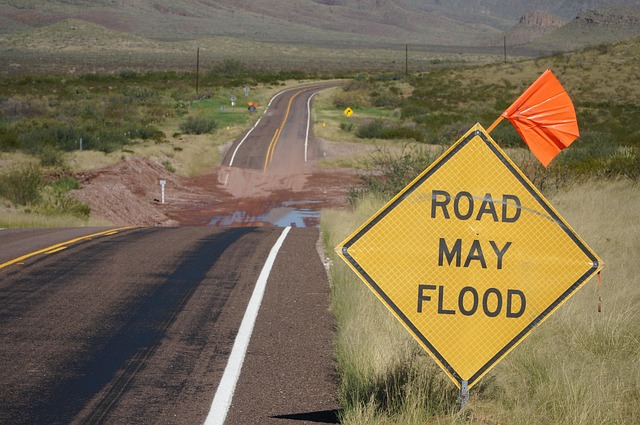
Before you book a single flight this late summer, check the State Department’s travel advisory page for your destination. As of late July 2026, Level 4 “Do Not Travel” warnings are active for Niger and the Democratic Republic of the Congo, and Level 3 advisories cover numerous other countries. Cross-reference these against your insurance policy's exclusion list before paying.cratic Republic of the Congo. If your destination is Level 4, do not book. Your travel insurance will not cover you, and the U.S. embassy may be unable to provide consular assistance. The official advisory page is free and updated daily; bookmark it before you search for flights.
Set Google Flights price alerts for your desired routes now. Field reports from frequent travelers on FlyerTalk note that the window is narrow: most mistake fares are corrected within 2–4 hours. Check your alerts daily during that window. If you see a fare that is clearly below the historical average for that route, book it immediately. Do not wait to confirm with the airline; the fare will vanish.
If you are flying internationally to the United States, verify your ESTA or visa status at least 72 hours before departure. The UK Foreign Office advises that British citizens traveling to the USA must have the correct electronic travel authorization prior to departure. Failure to obtain pre-clearance can result in denied boarding at the gate, and the airline is not required to refund your ticket. The same rule applies to citizens of Visa Waiver Program countries. Check your ESTA status on the official CBP website; do not use third-party sites that charge a fee for the same service.
At the gate, if the airline asks for volunteers to give up their seat, negotiate for cash compensation and a confirmed seat on the next flight, not a voucher. A voucher is a trap: it expires in 12 months and cannot be converted to cash. If the gate agent claims they can only issue vouchers, that is a lie. The DOT requires airlines to offer cash or check on request. If you are involuntarily denied boarding, demand cash compensation immediately. If the agent refuses, file a DOT complaint that night.
After the trip, if you were denied boarding and did not receive cash compensation, file a DOT complaint within 30 days. You need your boarding pass, the airline’s denial letter (or a written statement that they refused to provide one), and the exact time you were at the gate. The DOT complaint process is free, takes about six weeks, and the DOT contacts the airline directly. Within 45 days, United sent a check for the full statutory amount plus a goodwill credit. The airline almost always pays because the alternative is a formal enforcement action and a fine.
For price drops on already-booked tickets: if you booked a refundable or changeable fare, set a price alert and call the airline if the fare drops. If you booked basic economy, you have a 24-hour cancellation window from the time of booking. Cancel within that window and rebook at the lower fare. Do not assume the airline will automatically refund the difference; they will not. The only exception is if the fare drops within the 24-hour risk-free cancellation period.
Bookmark two pages on your phone right now: the DOT’s Aviation Consumer Protection website and the State Department’s travel advisory page. These are your primary tools for protecting your money and your trip. The DOT page contains the full text of Part 250 rules, the complaint form, and a database of airline compliance records. The State Department page shows real-time advisory levels for every country. Check both before you book, check them again 72 hours before departure, and check them at the gate if something goes wrong. One concrete action: screenshot the DOT Part 250 rules on your phone before your next flight. If you are involuntarily denied boarding, show the agent the rule and demand cash. If they refuse, file the complaint that night.
What to do next

Late summer travel requires proactive verification of official warnings and airline policies. The steps below consolidate the key actions from this guide into a single checklist you can reference before departure.
| Step | Action | Why it matters |
|---|---|---|
| 1 | Check the U.S. Department of State travel advisory for your destination at travel.state.gov | Level 3 or 4 warnings may void travel insurance or require evacuation planning; official advisories are the only authoritative source. |
| 2 | Verify entry requirements for the USA on the UK Foreign Office website (gov.uk/foreign-travel-advice/usa) | ESTA or visa pre-clearance is mandatory; failure to obtain it can result in denied boarding at the airport. |
| 3 | Review the Indian Meteorological Department’s regional alerts for Himachal Pradesh at mausam.imd.gov.in | Orange alerts indicate heavy rain and road risks; knowing current conditions prevents travel into active storm zones. |
| 4 | Set a Google Flights price alert for your specific late-summer route | Alerts trigger within minutes of a price drop, helping you catch mistake fares or rebook at a lower rate if your airline allows it. |
| 5 | Confirm your airline’s denied boarding compensation policy on the DOT website (transportation.gov/airconsumer) | Only 2.9% of formal complaints involve overbooking, but DOT rules entitle you to compensation if you are involuntarily denied boarding after checking in on time. |
| 6 | Check your ticket’s fare class code and change/cancellation rules on the airline’s official site | Basic economy tickets typically forbid changes; premium fares often include free rebooking. Knowing this before a price drop saves you from unexpected fees. |
Also worth reading Critical July Travel Warnings International Travel Warnings Best US Beach Towns to Plan Your Middle East Travel Safety Map 7
Quick answers
What to Do Next: Your Late-Summer Pre-Flight Checklist?
As of late July 2026, Level 4 “Do Not Travel” warnings are active for Niger and the Democratic Republic of the Congo, and Level 3 advisories cover numerous other countries. If your destination is Level 4, do not book.
What should you know about Check Advisories Before Booking or Lose Coverage?
That assumption collapses the moment a government issues a Level 4 "Do Not Travel" advisory. For India's orange-alert zones, check the Indian Meteorological Department's daily updates and build a buffer of two extra days into your itinerary — road closures in Himachal Pradesh...
Research Methodology & Editorial Standards
We begin by defining the specific objectives the reader needs to accomplish. Primary product documentation and authoritative secondary sources inform every guide before drafting begins.
Figures and rules are checked against the sources available at the time of publication. Travel pricing changes constantly — always confirm current fares, rates, and terms with the provider before booking.