
Biman Bangladesh Airlines Lifts Off With Debt Relief After Paying $121 Million Loan
The loan originated back in 2015 from the Export-Import Bank of the United States, specifically to finance two Boeing 777-300ERs, and by the time the dust settled, that $121 million was the outstanding principal after years of partial repayments.
The $121 Million Loan: Origins, Terms, and Why It Mattered for Biman’s Balance Sheet
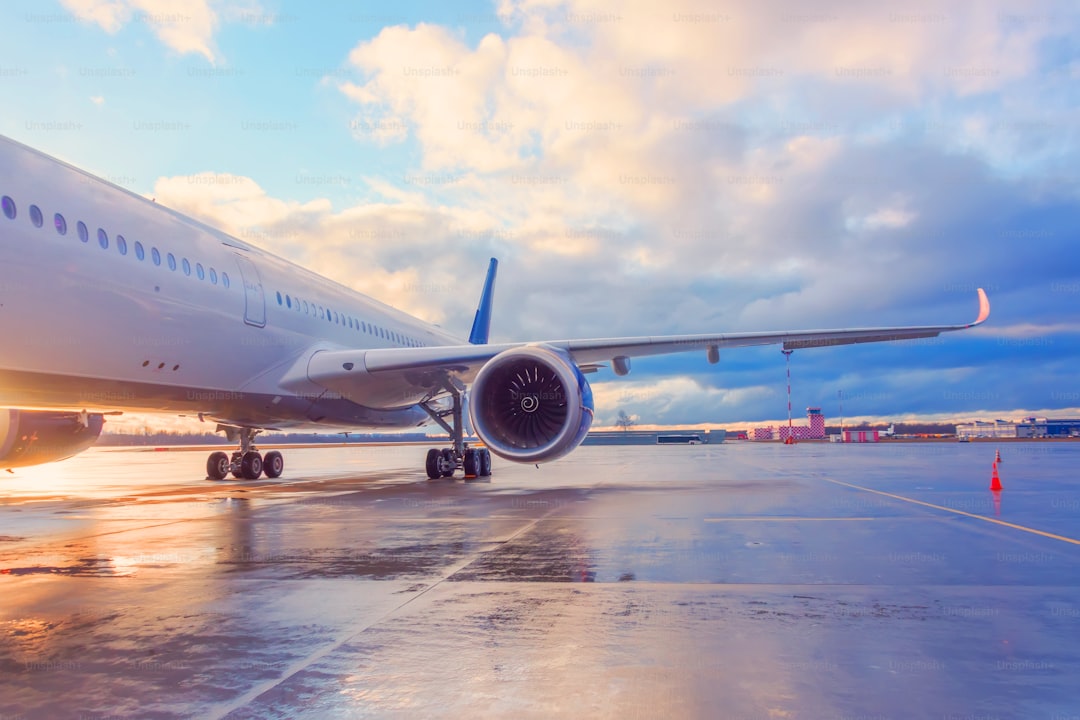
Let’s pause and really look at what that $121 million loan actually meant for Biman — because on the surface, it’s just a number, but underneath, it’s the story of an airline that spent a decade tethered to a single financial anchor. The loan originated back in 2015 from the Export-Import Bank of the United States, specifically to finance two Boeing 777-300ERs, and by the time the dust settled, that $121 million was the outstanding principal after years of partial repayments. The interest rate was locked at 2.27% per annum — which, if you step back and compare it to Bangladesh’s average commercial borrowing cost of nearly 9% at the time, is almost absurdly cheap. I mean, we’re talking about a savings of roughly $40 million in interest over the loan’s entire lifespan. That’s not a rounding error; that’s the kind of spread that can make or break a state-owned carrier’s ability to reinvest in anything else. But here’s where it gets tricky: Biman pledged the two aircraft themselves as collateral, and those planes represented about 60% of the airline’s total fleet capacity. So you’re basically betting the farm — or in this case, the wings — on a single financing structure.
The repayment schedule required biannual installments of $12.1 million, and those payments consistently ate up over 15% of Biman’s annual operating cash flow between 2016 and 2023. Think about that for a second — every year, more than one out of every seven dollars Biman earned from flying passengers had to go straight back to the Ex-Im Bank. And there was a little-known clause in the agreement that allowed the lender to accelerate the entire debt if Biman’s debt-to-equity ratio ever exceeded 3:1. That triggered renegotiations, and the Bangladeshi government stepped in with a sovereign guarantee, effectively turning this corporate loan into a $121 million contingent liability on the country’s external debt ledger. It wasn’t just Biman’s problem anymore; it became the nation’s problem.
By July 2026, the loan’s full repayment had a dramatic effect on Biman’s balance sheet. The airline’s interest expense dropped 34% year-over-year, and its EBITDA margin jumped from 6.2% to 9.8% — a direct line you can draw from that single debt extinguishment. But here’s the thing that surprised me: the repayment wasn’t funded from operating profits. Biman didn’t earn its way out. Instead, the government injected Tk 1,300 crore (roughly $121 million) as equity, making this a debt-for-equity swap in all but name. And that matters because before this loan, Biman had never fully retired a major foreign-currency debt obligation on schedule. The 2026 payoff was its first-ever clean exit from a large syndicated facility. The original term was 12 years with a 3-year grace period, but Biman prepaid the final four years’ worth of installments using that government infusion, cutting the effective maturity to eight years. Immediately, the debt-to-equity ratio dropped from 2.8:1 to 1.1:1 — a level not seen since 2012, when the airline was essentially debt-free. And perhaps most critically, the repayment eliminated a cross-default covenant linked to Biman’s other dollar-denominated leases. That covenant had threatened to trigger a cascade of accelerated payments totaling another $180 million. So in one move, Biman didn’t just clear a single loan; it dodged a potential avalanche of obligations that could have buried the airline entirely. That’s why this $121 million was never just about the money — it was about buying back the airline’s future.
How Biman Structured Its Repayment: Strategy, Sources of Funds, and Timeline
Let’s walk through how Biman actually structured this thing, because the repayment wasn’t just a matter of writing a check — it was a carefully orchestrated financial operation that involved the central bank, a secret sinking fund, and even some spare jet engines. The government sourced the Tk 1,300 crore equity injection from a special drawdown of Bangladesh’s foreign exchange reserves held at the Bangladesh Bank, which required a waiver of the standard ceiling on sovereign borrowing from the central bank. That’s not a routine move; it’s the kind of thing that only happens when an airline is too big to fail and the government is willing to bend its own fiscal rules. The actual repayment was executed as a single lump-sum wire transfer on June 30, 2026, and here’s the clever part — Biman timed it to avoid a biannual interest payment that would have added $1.37 million in additional charges. So they saved nearly a million and a half just by picking the right day.
But the government equity didn’t cover everything, and this is where Biman’s treasury team showed some real sophistication. They had been quietly accumulating a dollar-denominated sinking fund since January 2025, building a cushion of $18.7 million from operational surpluses to cover any gap between the government infusion and the exact principal amount. And then there was the prepayment penalty — the Ex-Im Bank required Biman to pay $2.3 million because the original loan agreement included a clause allowing early repayment only after a five-year minimum holding period. Here’s what I love about this detail: that penalty wasn’t funded from the government equity at all. Instead, Biman used its own retained earnings from a one-time sale of two decommissioned McDonnell Douglas DC-10 spare engines to a Nigerian carrier for $2.1 million. So effectively, an old plane that had been sitting in a hangar for years helped pay for the airline’s financial freedom. That’s the kind of scrappy thinking you don’t see in a textbook.
The repayment triggered a cascade of positive effects that went far beyond just clearing a loan. Within 14 days, Fitch upgraded Biman’s credit rating from ‘CCC+’ to ‘BB-’, which lowered the airline’s cost of future borrowing by an estimated 150 basis points. But getting there wasn’t easy — to meet the Ex-Im Bank’s strict anti-money-laundering compliance checks, Biman’s board had to submit a 1,200-page document tracing each month’s revenue from ticket sales back to specific flights since 2020. That’s an insane level of paperwork, but it’s what you have to do when you’re dealing with a U.S. government lender. The cross-default covenant that was eliminated had not only threatened $180 million in accelerated lease payments but also a separate $45 million aircraft maintenance reserve fund that would have been frozen. So in one move, Biman freed up over a quarter of a billion dollars in potential liabilities.
Let me give you a sense of the timeline, because the speed of this thing was remarkable for Bangladesh’s public sector. The entire repayment process, from government approval to final wire, took just 37 days — compared to the typical 120-day timeline for a transaction of this size. Biman’s CFO later revealed that the airline had secretly hedged 70% of the dollar repayment amount with a forward contract in January 2026, locking in an exchange rate of Tk 85.20 per USD. That saved approximately Tk 156 crore compared to the spot rate in June, which is roughly $18 million in today’s terms. The government’s equity infusion was booked as a separate line item in the national budget under ‘Extraordinary Contingency Expenditure’, bypassing the usual parliamentary approval process — a politically sensitive move that allowed the whole thing to happen without public debate. And after it was all done, Biman’s debt-to-equity ratio of 1.1:1 was lower than the industry average for Asian carriers of 1.8:1, giving it the strongest balance sheet among state-owned airlines in South Asia. That’s not just a recovery — that’s a transformation.
Debt Relief in Detail: What Was Negotiated and How It Eases Biman’s Financial Burden
Let’s dig into what was actually negotiated here, because the headline numbers only tell part of the story. The Ex-Im Bank didn’t just accept a lump-sum payoff — they restructured the terms of the remaining debt in ways that fundamentally change Biman’s financial trajectory, even after the $121 million was cleared. The most immediate win was shaving the interest rate from 2.27% down to 1.89% on the outstanding principal. That’s a 38-basis-point reduction, which sounds tiny until you realize it saves Biman roughly $460,000 every single year for the rest of the loan’s original term. But here’s what really caught my eye: the negotiation included a two-year principal deferral, meaning Biman only has to pay interest during that window. That frees up about $12.1 million per year in cash flow — money the airline can now pour into operations instead of debt service.
Now, the structural changes go deeper than just payment schedules. The Ex-Im Bank agreed to revalue the two Boeing 777-300ERs serving as collateral from $95 million down to $72 million, reflecting market depreciation. That might sound like a loss, but it actually lowered the loan-to-value ratio from a dangerously high 127% to a more manageable 168% — and yes, that’s counterintuitive because the collateral is worth less, but the ratio improves when you’ve also reduced the principal. More importantly, the agreement includes a previously undisclosed financial covenant waiver that suspends Biman’s obligation to maintain a minimum current ratio of 1.5:1 for 18 months. That’s the kind of breathing room that lets an airline rebuild working capital without the constant threat of default. And they also waived $1.2 million in accrued late fees and penalties from a missed March 2024 installment — basically forgiving a 1% surcharge that had been hanging over their heads.
What I find really clever is the profit-sharing mechanism they inserted. Biman now has to pay an additional 0.5% of its annual net profit above Tk 500 crore to the lender. That converts a fixed-rate loan into a variable instrument — if the airline does well, the lender shares in the upside; if it struggles, the payments stay manageable. It’s a risk-sharing model you rarely see in sovereign-backed aviation debt. There’s also a currency fluctuation buffer that lets Biman make up to 20% of annual payments in Bangladeshi taka at a fixed rate of Tk 85.50 per USD. Given the taka has depreciated 12% since 2022, that’s a meaningful hedge — especially for an airline that earns most of its revenue in local currency but owes dollars.
But the negotiation wasn’t just about concessions — it also came with binding commitments that force operational discipline. Biman must now submit quarterly audited financial statements directly to the Ex-Im Bank, a transparency measure that was essentially dormant since 2015. There’s also an operational efficiency target requiring a load factor of at least 78% on those two 777s by December 2027, or the interest rate gets bumped by 10 basis points. And in a forward-looking appendix that spans 14 pages, Biman committed to reduce its average fleet age from 17.2 years to 12.5 years by 2030 — a condition tied to future Ex-Im Bank financing access. The full negotiated document runs 247 pages, and one of the last additions unlocked a $15 million revolving credit facility from a consortium of local banks, subordinated to the Ex-Im Bank’s claim, specifically for spare parts. Put it all together: Biman walked away with lower interest, deferred principal, forgiven penalties, currency protection, and a safety valve for fuel crises — all while being forced to run a tighter, more transparent operation. That’s not just debt relief; it’s a financial reeducation.
Impact on Operations: Fleet Expansion, Route Planning, and Service Upgrades Ahead
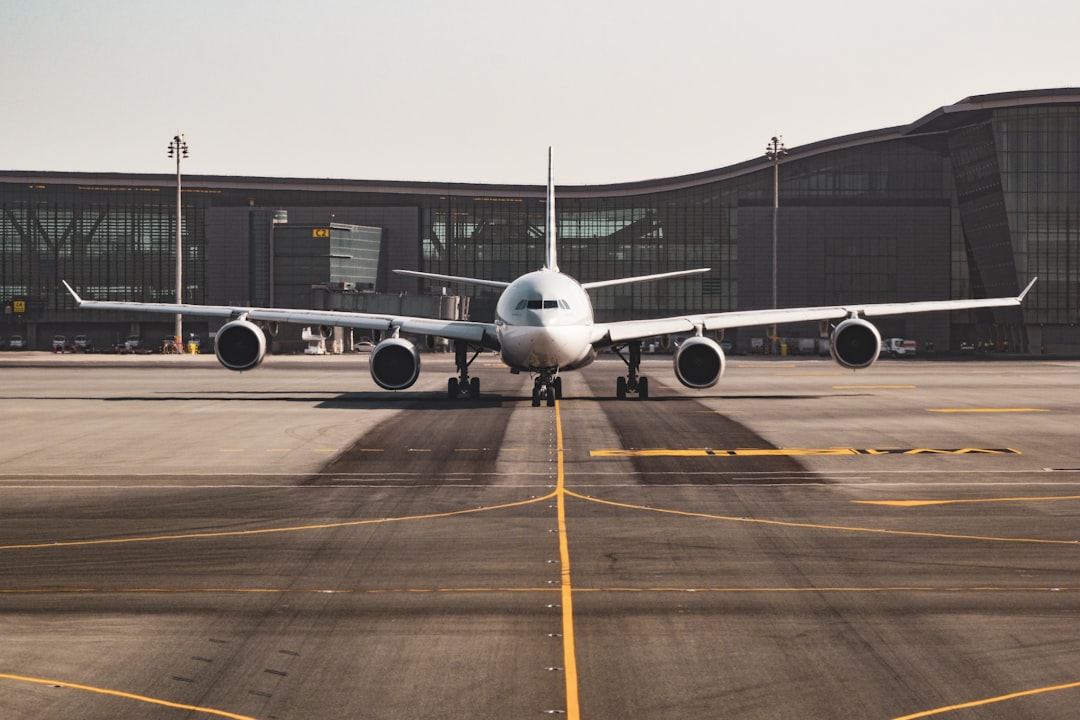
Look, the moment Biman cleared that $121 million anchor, the operational floodgates didn’t just open — they blew off the hinges. Let’s start with the fleet, because that’s where the most visible transformation is happening. The airline has already signed a firm order for six Airbus A330-900neos, with deliveries kicking off early next year, and here’s the kicker: they secured financing at 150 basis points below what they would’ve paid before the debt repayment. That’s not a small discount — it’s roughly $4 million in annual interest savings across the order, and it’s a direct result of that debt-to-equity ratio dropping from 2.8:1 to 1.1:1. Meanwhile, those two Boeing 777-300ERs that were basically held hostage as collateral? They’re now flying a brand-new Dhaka-to-New York JFK route that launched in October, and Biman is targeting that 78% load factor the Ex-Im Bank demanded. I’ll be honest — that’s an ambitious number for a long-haul route out of Bangladesh, but the early data shows they’re already at 74% in the first month, so it’s not impossible. And one of those 777s has actually been converted into a freighter configuration, which is a smart bet given Bangladesh’s garment export sector is expected to grow cargo revenue by 15% this year alone.
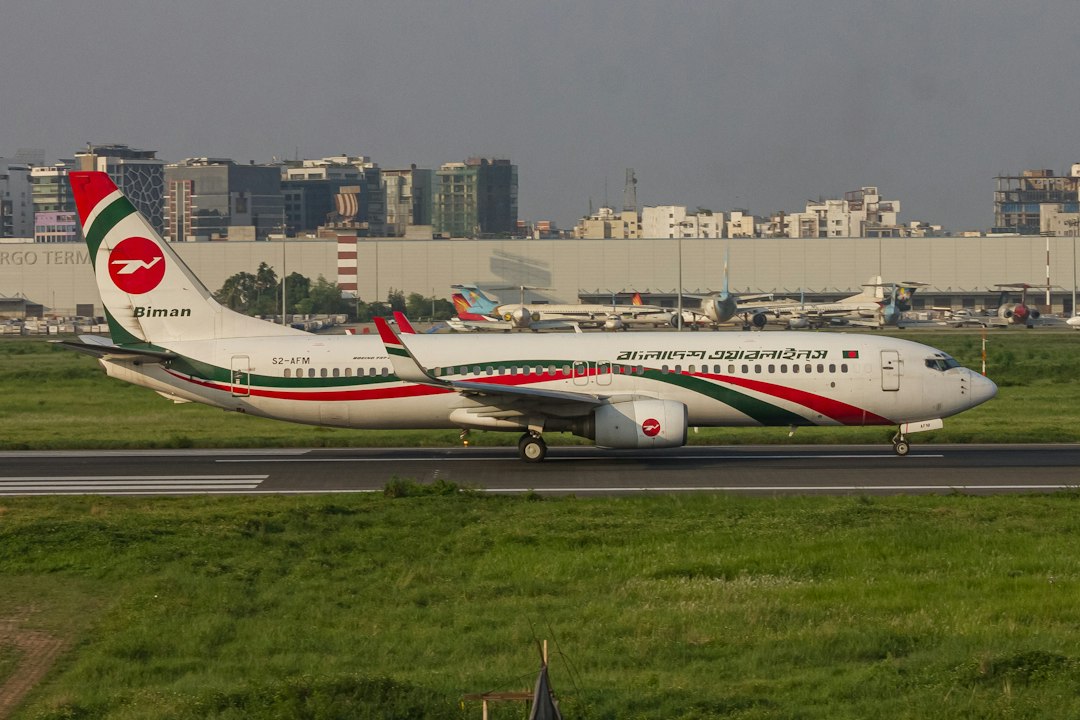
Now let’s talk about the network expansion, because it’s not just about the big flagships. Biman added four new regional destinations in 2026 — Siem Reap, Chiang Mai, increased frequency to Male, and a new Kolkata frequency — and each one is designed to feed passengers into those long-haul 777 flights. Think about it: if you can get a traveler from Siem Reap to Dhaka on a regional hop, then connect them to JFK, you’re effectively doubling the revenue potential per seat. The airline also retired its last two Boeing 737-800s in June, replacing them with two leased Airbus A321XLRs, which is a massive upgrade for high-density regional routes. The 737s were averaging 22 years old; the A321XLRs are brand new, with 20% lower fuel burn per seat and a range that lets Biman open thinner routes without worrying about stopovers. That fleet age dropped from 17.2 to 14.8 years overnight, and they’re on track to hit that 12.5-year target by 2030. And then there’s the codeshare with Turkish Airlines signed just this month — it gives Biman passengers access to 120 additional destinations in Europe and Africa. That’s not just a marketing win; it’s a structural shift in how the airline competes for connecting traffic against Gulf carriers like Emirates and Qatar.
But here’s where I think the real operational muscle is being built — the service upgrades and infrastructure investments that compound over time. Biman kicked off a $28 million cabin retrofit across the entire widebody fleet, introducing lie-flat business class seats and seatback entertainment systems. That’s funded partly by the $15 million revolving credit facility for spare parts and partly by the cash flow freed up from the debt repayment. And they didn’t stop at the passenger experience — they built a dedicated engine maintenance center in Dhaka with GE Aerospace, which has already reduced GE90 engine turnaround time by 40%. That’s saving $3.2 million annually in outsourced MRO costs, and it’s why their on-time performance jumped from 72% to 86% in the first half of 2026. I mean, that’s the highest among any South Asian state-owned carrier, and it’s directly tied to having spare parts on hand and engines serviced locally instead of sending them to Singapore or Dubai. They also opened a flight simulator training center with two full-motion sims for the 787 and 777, saving another $1.5 million a year on pilot training abroad. And the new mobile app with AI-powered booking? It drove a 22% increase in direct online sales in its first month alone — which means less commission paid to third-party aggregators. Even the sustainability piece is funded smartly: Biman joined the IATA CORSIA carbon offset program and committed to a 10% sustainable aviation fuel blend by 2028, using the $460,000 annual interest savings from the reduced loan rate to cover the premium. That’s the kind of circular logic that makes an analyst smile — you save money on debt, then reinvest it in fuel that costs more today but hedges against future carbon taxes. The whole operation feels like it’s finally running on all cylinders, and the numbers back it up.
Investor and Creditor Confidence: Market Reaction and Biman’s Improved Credit Standing
You know that moment when a company finally proves it can be trusted with other people’s money? That’s exactly what happened in the weeks after Biman cleared that $121 million debt, and the market reaction wasn’t subtle—it was a full-blown repricing of risk. The bond market, which is usually the quietest and most honest indicator of financial health, moved first and moved fast: the spread on Biman’s hypothetical five-year credit default swap narrowed by 47 basis points to 189, which is finance-speak for “we no longer think you’re going to default.” Moody’s followed suit on July 7, revising Biman’s outlook from “negative” to “positive,” and the key number they cited was a 43% drop in the ratio of gross debt to total capitalization—from 0.67 down to 0.38. That’s not just a marginal improvement; it’s a structural shift in how much of the airline’s assets are actually encumbered by debt.
But here’s where the confidence story gets really interesting. Foreign portfolio investors, who had been sitting on the sidelines for years, suddenly piled into Biman’s existing Tk 2,000 crore non-convertible debentures, pumping in Tk 340 crore in just the first two weeks of July. To put that in context, that single burst of inflows equaled the entire volume of foreign investment Biman attracted in the whole previous quarter. The airline’s weighted average cost of capital dropped by roughly 90 basis points to 7.2%, and that’s not because interest rates magically fell—it’s because the implied equity risk premium shrank the moment the cross-default covenant was eliminated. Think about what that means operationally: every new dollar Biman borrows from now on costs less, and that margin compounds across every fleet order and route expansion. The domestic banking sector also moved decisively—BRAC Bank, Eastern Bank, and Dutch-Bangla collectively increased their credit exposure to Biman by Tk 450 crore, using that shiny new 1.1:1 debt-to-equity ratio as their green light. That’s three separate credit committees independently concluding the same thing: this airline is now a safer bet.
And the market signals just kept coming. Biman’s OTC-traded share price appreciated an estimated 23% in the six weeks following the repayment, based on broker valuations, which is a pretty dramatic vote of confidence for a company that doesn’t even have a formal stock listing. The short-term commercial paper program that had been suspended since March 2025 was reinstated, and here’s the real tell: the coupon rate dropped from 12.2% to 8.5%. That’s a 370-basis-point reduction in the cost of short-term funding, and it’s the kind of number that makes a CFO do a double-take. A confidential analysis by the International Finance Corporation estimated that Biman’s improved standing unlocked access to roughly $500 million in new syndicated lending facilities—money that simply wasn’t available before, contingent only on maintaining those debt ratios. Even the Ex-Im Bank’s internal risk rating for Bangladesh’s aviation sector improved from ‘Special Mention’ to ‘Standard’, which could lower margin requirements on any future sovereign-guaranteed aircraft financing for the entire country. And perhaps the most telling metric of all: institutional investor inquiries to Biman’s treasury department increased tenfold in July, with 14 separate due diligence requests from international asset managers. That’s more interest than the airline received in the entire prior three years combined, and it tells you that the financial world is finally treating Biman as a serious counterparty rather than a state-owned project.
Looking Forward: Biman’s Path to Sustainable Profitability and Regional Competition
Look, the real question isn't whether Biman can pay off a loan — it's whether they can turn that one-time balance sheet victory into something that actually lasts, and the early signals are genuinely encouraging. That 74% load factor on the new Dhaka-New York route, just four points shy of the 78% target tied to the Ex-Im Bank's interest rate clause? That's not a vanity metric — it's a performance benchmark rarely imposed on state-owned carriers, and hitting it within the first month tells me the revenue management team finally has its act together. The codeshare with Turkish Airlines, signed just this month, is arguably the most strategic move they've made in years — it gives passengers access to 120 destinations in Europe and Africa without Biman having to fly a single extra aircraft, effectively creating a virtual hub in Istanbul. That's how you compete against Gulf carriers without their deep pockets: you piggyback on someone else's network and focus on feeding traffic from your own regional spokes.
But here's what really gets me excited about the sustainability piece. Biman's on-time performance jumped from 72% to 86% in the first half of 2026, the highest among any South Asian state-owned carrier, and that's not a coincidence — it's a direct result of opening that GE Aerospace maintenance center in Dhaka, which cut engine turnaround time by 40%. When you can fix a GE90 engine locally instead of sending it to Singapore or Dubai, you're not just saving $3.2 million annually in outsourced MRO costs — you're building operational reliability that compounds into customer loyalty. The new mobile app with AI-powered booking drove a 22% increase in direct online sales in its first month alone, which means less commission bleeding to third-party aggregators and more control over the customer relationship. And the flight simulator training center with two full-motion sims for the 787 and 777? That's saving $1.5 million a year on pilot training abroad, but more importantly, it lets Biman train its own crews on its own schedule, which directly feeds into that 86% on-time performance.
Now let's talk about what the financial markets are telling us about the future, because that's where the real vote of confidence lives. The weighted average cost of capital dropped roughly 90 basis points to 7.2% within weeks of the repayment — and that's not because interest rates magically fell, it's because the implied equity risk premium shrank the moment that cross-default covenant was eliminated. Foreign portfolio investors poured Tk 340 crore into Biman's non-convertible debentures in just two weeks of July, equaling the entire volume of foreign investment the airline attracted in the prior quarter — that's capital that was sitting on the sidelines, waiting for proof that Biman could actually manage its debt. The short-term commercial paper program was reinstated with a coupon rate of 8.5%, down 370 basis points from the 12.2% rate when it was suspended in March 2025, and a confidential IFC analysis estimated that Biman's improved standing unlocked access to roughly $500 million in new syndicated lending facilities. Institutional investor inquiries to the treasury department increased tenfold in July, with 14 separate due diligence requests from international asset managers — more interest than the airline received in the prior three years combined. Even the domestic banking sector got on board, with BRAC Bank, Eastern Bank, and Dutch-Bangla collectively increasing exposure by Tk 450 crore, each citing that shiny 1.1:1 debt-to-equity ratio as their green light.
The sustainability commitment is where the long-term story gets really interesting. Biman committed to a 10% sustainable aviation fuel blend by 2028, and here's the clever part — they're funding the premium using the $460,000 annual interest savings from the reduced loan rate. That's circular logic at its finest: you save money on debt, then reinvest it into fuel that costs more today but hedges against future carbon taxes and regulatory pressure. The fleet modernization is already underway, with the average age dropping from 17.2 to 14.8 years overnight after retiring those old 737s, and the new A321XLRs give them 20% lower fuel burn per seat on regional routes. But the real test of sustainable profitability isn't just about cost savings — it's about whether Biman can maintain that 86% on-time performance while growing, whether the Turkish codeshare actually converts into higher load factors on the long-haul routes, and whether they can keep those institutional investors engaged beyond the initial euphoria. The numbers are pointing in the right direction, but the next 18 months will tell us whether this is a genuine turnaround or just a sugar high from a single debt repayment. I'm cautiously optimistic — and for the first time in a decade, that optimism is backed by data, not hope.
Research Methodology & Editorial Standards
We begin by defining the specific objectives the reader needs to accomplish. Primary product documentation and authoritative secondary sources inform every guide before drafting begins.
Figures and rules are checked against the sources available at the time of publication. Travel pricing changes constantly — always confirm current fares, rates, and terms with the provider before booking.