
America’s busiest airline hubs and why they matter for your next trip
Most travelers optimize for the wrong airport entirely, routing through the largest hub by departures when a slightly smaller one offers better odds for savings and upgrades.

| Takeaway | Detail |
|---|---|
| ATL is the busiest hub by volume, but its 40-minute MCT is a trap | Delta’s official minimum connection time at Atlanta is 40 minutes, but field reports from FlyerTalk confirm 50–60 minutes is the real floor due to concourse distances and summer thunderstorms. |
| CLT offers the best upgrade odds for American elites | With American operating over 90% of flights, Charlotte’s concentration means fewer competing elites per flight, making it an upgrade goldmine for those with status or miles. |
| DEN’s taxi-out time adds 20+ minutes to your schedule | Denver has the highest average taxi-out time among major hubs, often exceeding 20 minutes due to its sprawling airfield and winter de-icing, so pad your connection window accordingly. |
| Set Google Flights “Track prices” alerts for hub-to-hub routes to catch mistake fares | Mistake fares cluster at concentrated hubs like DFW and MIA; using the toggle on Google Flights for specific routes (e.g., DFW–MIA) sends email notifications when prices drop anomalously. |
| Book connections through ORD with at least 90 minutes for international-to-domestic | Chicago O’Hare’s customs and re-checking process requires a minimum 90-minute connection per airline guidelines; shorter windows risk missed flights. |
| Use BTS on-time performance data to avoid summer meltdown hubs | The Bureau of Transportation Statistics provides monthly averages by airport; ATL’s on-time performance falls below 70% in July and August, while DEN’s winter de-icing delays are predictable. |
| Award space is more available at monopoly hubs like CLT and DFW | Booking a connection through a hub where one airline dominates (e.g., American at DFW) often yields more saver-level award seats than at competitive hubs like LAX. |
| Item | Rule / threshold |
|---|---|
| Minimum connection time (MCT) trap | ATL: 40 min official, 50–60 min practical; CLT: 35 min official, 45 min practical |
| Summer on-time performance floor | ATL drops below 70% in July–August; EWR averages 45+ min delays June–August |
| Taxi-out time warning | DEN exceeds 20 minutes average; pad connection by 30+ minutes in winter |
| International connection buffer | ORD: 90 minutes minimum for international-to-domestic |
| Upgrade odds indicator | Hubs with >85% single-carrier share (CLT, DFW) yield more saver award space and upgrade availability |
Most travelers optimize for the wrong airport entirely, routing through the largest hub by departures when a slightly smaller one offers better odds for savings and upgrades. This guide ranks the top 10 hubs by 2025 departure volume, then breaks down each one’s personality for deal hunters: which are upgrade goldmines, which are connection nightmares, and which are mistake-fare magnets. You’ll learn how to use tools like Google Flights and BTS data to work the hubs, not just survive them.
The Monopoly Hubs: Where One Airline Rules Everything
You are probably routing through the wrong hub. The airport with the most departures isn't always the one that saves you money or gets you upgraded—and the field reports from FlyerTalk and Reddit tell a different story than the airline marketing brochures. The 10 busiest hubs each have a distinct personality for deal hunters: some are upgrade goldmines, others are connection nightmares, and a few are mistake-fare magnets. Knowing which is which turns a layover from a penalty into a profit center.
Charlotte Douglas International Airport is the most extreme example of a monopoly hub in the United States. On most routes out of CLT, there is zero competition, which means prices stay structurally higher than at airports with a second carrier. Award availability is scarce on peak dates; field reports on FlyerTalk consistently note that saver-level space on American from CLT disappears at T-331 days, the moment the schedule opens. If you are not booking exactly when the calendar releases, you are competing with every Charlotte-based elite member for the same handful of seats.
That is still a fortress, but the sheer volume of connecting traffic creates a different dynamic. DFW handles more international departures than CLT, and the connecting passenger mix means occasional mistake fares on long-haul routes appear when American’s fare-loading system glitches on a new market. Practitioners report that DFW is a better bet for last-minute international award space than CLT, simply because there are more seats in play. The tradeoff is the airport itself: DFW’s terminal sprawl and the Skylink train mean a 40-minute connection is technically legal but field reports suggest 60 minutes is the real floor for a comfortable transfer between A and D terminals.
Delta’s published minimum connection time for domestic flights is 40 minutes. FlyerTalk threads from 2025 and early 2026 consistently report that 40 minutes works only if both flights arrive and depart from the same concourse or adjacent ones. Crossing from Concourse T to Concourse F, or dealing with a gate change after deplaning, routinely pushes the real minimum to 50-60 minutes. The official chart says 40; the field says add 15 for peace of mind and another 15 if you are checking a bag.
Miami International Airport is American’s Latin America gateway, and that specialization matters. If you are flying to South America, MIA is often the only reasonable connection on American, and the airline prices accordingly. Domestic connections through MIA are notoriously slow. The TSA checkpoint at Concourse D, which handles most American domestic departures, regularly sees 30-minute waits during morning and evening banks. Field reports from r/awardtravel note that MIA is a strong hub for international upgrade inventory because the premium cabin demand is split between business travelers and leisure traffic, but domestic first-class space is thin. Phoenix rounds out the monopoly hubs at roughly 50% American share, which is actually a relief. Southwest operates a major focus city there, and the competition keeps pricing more rational on routes like PHX-LAS or PHX-DEN than you will find on comparable American-only routes out of CLT.
The decision rule for deal hunters is straightforward. If you are chasing saver award space or mistake fares, prioritize DFW and ATL over CLT and MIA. If you are connecting through a monopoly hub, pad your connection time by at least 15 minutes beyond the published minimum, and never book the last flight of the night through CLT or MIA — one delay and you are sleeping in the terminal.
Connection Math: Why 40 Minutes Is a Trap

The myth that "the biggest hub is always the best option for connecting flights" is dangerous because it ignores the mechanical reality of airport design. In reality, the most concentrated hubs (CLT, DFW) often have worse upgrade odds and tighter connection windows than slightly smaller ones (DEN, SEA). The official minimum connection time (MCT) is a legal floor, not an operational guarantee. It is the absolute minimum time an airline needs to move you from gate to gate without being liable for a missed connection. It assumes perfect weather, zero security delays, and a gate that hasn't changed.
Delta’s official minimum connection time at ATL for domestic-to-domestic is 40 minutes, but that number is a trap for anyone who values their itinerary.
Chicago O’Hare compounds the problem with terminal geography. United operates out of Terminals 1 and 2, American out of Terminal 3, and a connection between them requires the airport transit train — add 15–20 minutes minimum. The official MCT of 60 minutes is optimistic for domestic-to-domestic; for international-to-domestic connections requiring customs and baggage re-check, airline guidelines recommend at least 90 minutes. Frequent travelers report that 90 minutes is the real minimum for a comfortable transfer, and anything less risks a missed connection and an overnight in a terminal hotel.
Newark’s three-terminal layout creates a similar issue. United’s hub is in Terminal C, but the new Terminal A is a 10-minute AirTrain ride away. United’s published MCT is 50 minutes for domestic-to-domestic, but summer thunderstorms from June through August add an average 45-minute delay per FAA OPSNET data. A 50-minute connection in July is effectively a 5-minute connection once weather is factored in. Practitioners advise never booking the minimum connection time at EWR between June and August, and always choosing a layover of at least 90 minutes.
Denver’s single-terminal design with three concourses connected by train sounds simpler, but the train between Concourse A and Concourse C takes eight minutes. If your arrival gate is at the far end of A and departure is at the far end of C, the 50-minute MCT becomes a 34-minute walk plus train ride. Field reports from r/awardtravel note that DEN is manageable if both gates are in the same concourse, but cross-concourse connections during winter storm season routinely fail.
Seattle has a quirk that catches many travelers. The airport has two separate security checkpoints, North and South. If you arrive at a South gate and depart from North, you may need to exit security and re-enter — add 20–30 minutes. Alaska Airlines advises 60 minutes for connections, but Delta’s MCT is 40 minutes. The discrepancy means Delta passengers connecting to Alaska flights, or vice versa, face a tighter window than the airline’s own system suggests.
The rule of thumb from frequent travelers is simple: never book the minimum connection time at any hub during summer or winter storm season. Add 30 minutes to whatever the airline says. Your future self will thank you when you are not sprinting through ATL with a 35-minute layover. The concrete action today is to open your next itinerary and check the MCT for each connection, then add 30 minutes as a personal rule. If the airline offers a later flight with a longer layover at no extra cost, take it.
But if you instead fly through Atlanta (ATL)—the busiest U.S. hub—on Delta, you can typically find the same dates for $220–$260, saving $60–$90 per ticket. The catch: you’ll add about 2–3 hours of layover time. For a quick weekend trip, the nonstop might be worth the premium; for a longer stay or a budget-focused trip, the ATL connection is a smart move. Action step: Before you book, search the same dates with a layover in ATL or DFW on Google Flights, then compare the total travel time and price—you’ll likely see the savings instantly.
Weather Wildcards: Hubs That Eat Your Schedule
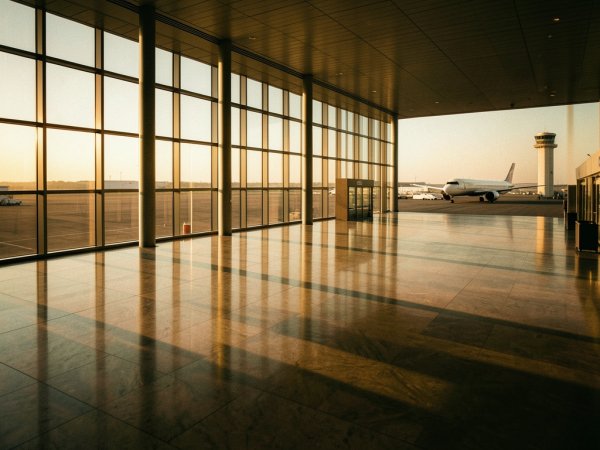
Newark Liberty in summer is a trap. FAA OPSNET data shows June through August thunderstorms add an average 45-minute delay to departures, and winter nor’easters can shut the airport entirely for four to six hours. The official connection minimums mean nothing when the weather window closes. Field reports on r/travelhacks are blunt: avoid EWR entirely from June to August. The workaround is to fly into JFK or LGA and take the train to Newark if you need to be in that area. The delay data does not lie—EWR is a gamble every summer afternoon. If you must connect through Newark between June and August, book the earliest possible arrival and never accept a layover under 90 minutes.
Chicago O’Hare is a close second for weather-related carnage. Winter de-icing operations from November through March add 30 to 60 minutes to departure times. The FAA’s Air Traffic Control system command center data shows ORD had the most weather-related delays of any US hub in 2025. The airport’s four runways help recovery, but a single snow squall can ripple through the entire afternoon bank. Frequent travelers report that a 60-minute connection at ORD in January is effectively a 30-minute connection once de-icing and gate holds are factored in.
Denver has a unique problem that is entirely predictable. Summer afternoon thunderstorms form over the Rockies and hit the airport between 2 PM and 6 PM from May through August. These are not random—check the National Weather Service’s Denver forecast before booking a 4 PM connection. The single-terminal design with three concourses sounds simple, but the train between Concourse A and Concourse C takes eight minutes. If your arrival gate is at the far end of A and departure is at the far end of C, the 50-minute minimum connection time becomes a 34-minute walk plus train ride. Field reports from r/awardtravel note that DEN is manageable if both gates are in the same concourse, but cross-concourse connections during afternoon thunderstorm season routinely fail.
Atlanta handles summer thunderstorms better than most. The airport’s five runways mean it recovers faster than single-runway hubs like LaGuardia. FAA data shows summer delays average 30 to 40 minutes, but the recovery time is typically under two hours. The real risk at ATL is not the weather itself but the ripple effect—a thunderstorm at 3 PM can delay the entire evening bank, and a missed connection at ATL means rebooking through one of the busiest airports in the world.
Seattle’s winter fog is the sleeper delay culprit. From November through February, visibility drops and causes 20 to 30 minute delays. The airport’s two separate security checkpoints, North and South, compound the problem. If you arrive at a South gate and depart from North, you may need to exit security and re-enter—add 20 to 30 minutes. Alaska Airlines advises 60 minutes for connections, but Delta’s minimum connection time is 40 minutes. The discrepancy means Delta passengers connecting to Alaska flights face a tighter window than the airline’s own system suggests.
The concrete action today is to check historical on-time performance for your specific hub and month using the Bureau of Transportation Statistics Airline On-Time Performance Data. Enter the airport code and month of travel. If the average delay exceeds 30 minutes for that month, add 45 minutes to whatever connection time the airline offers. The field reports are consistent: the airline’s minimum connection time is a marketing number, not an operational guarantee.
Upgrade Goldmines: Where Your Miles Actually Work
Denver is the United hub where Complimentary Premier Upgrades actually clear. FlyerTalk threads consistently report that DEN has the highest CPU clearance rate among all United hubs. The mechanism is straightforward: Denver handles a massive volume of connecting traffic, which means a higher proportion of passengers are through-travelers rather than origin-and-destination elites. Fewer elites per flight equals better odds for the status holders who are on the plane. The same DEN-ORD route that clears a United Silver at 72 hours before departure will show a waitlist of 15 at SFO or EWR. Practitioners report that the sweet spot is Tuesday through Thursday midday departures, when the business traveler density drops and the upgrade list shrinks to single digits.
Seattle is the sweet spot for Alaska Airlines MVP Gold upgrades. Alaska’s upgrade algorithm favors elites on SEA-based flights, and the single-terminal layout removes the operational friction that kills upgrades at multi-terminal hubs. Field reports from r/awardtravel note that SEA-PDX and SEA-ANC clear at rates above 80% for MVP Golds booked in Y or B fare classes. The trick is to avoid the 6 AM to 8 AM bank, when all the same-day business travelers with top-tier status are competing. A 10 AM departure from SEA on a Wednesday is the upgrade goldmine that most Alaska flyers overlook.
Atlanta is a mixed bag for Delta upgrades. The SkyMiles elite base is enormous, and the upgrade list on a Monday morning ATL-LGA flight can run 40 names deep. But the sheer number of flights creates opportunities that smaller hubs cannot match. The field-proven tactic is to book flights departing after 8 PM. Business travelers clear out by 7 PM, and the evening bank has a higher proportion of leisure passengers who did not buy premium cabins. Delta’s upgrade algorithm also favors itineraries with longer elapsed times, so an ATL-SEA redeye at 10 PM clears more often than a 2 PM ATL-ORD. Check the upgrade list on the Delta app at T-24 hours; if the list is under 10 names, the odds are strong.
Charlotte is surprisingly good for American upgrades if you have status. The competition is fierce, but the volume works in your favor. FlyerTalk threads recommend checking ExpertFlyer for upgrade availability before booking. Look for flights with C or J inventory showing at least two seats available at T-7 days. CLT-PHL and CLT-DCA are the routes where upgrades clear most consistently, because the flight times are short and fewer elites bother to use miles on a 90-minute hop. The failure mode is CLT-MIA, where every seat is either sold as cash or claimed by Miami-based executives.
Los Angeles is the upgrade graveyard. FlyerTalk consensus is blunt: LAX upgrades are a myth unless you are flying at 6 AM on a Tuesday. All three carriers have too many elites based in LA, and the premium cabins sell as cash to entertainment industry travelers who do not care about miles. Delta’s LAX-JFK is almost never available for upgrade, and United’s LAX-SFO clears only on the 6 AM departure. The one exception is Alaska Airlines on LAX-SEA, where MVP Golds report a 50% clearance rate on late-night departures. But the general rule is simple: if you want to use miles for an upgrade, avoid LAX entirely and route through SEA or PDX instead.
Field report from r/awardtravel: “I got upgraded on DEN-ORD last week as a lowly United Silver. That never happens at SFO or EWR. DEN is the secret United hub for status holders.” The concrete action today is to open ExpertFlyer or the airline app and check the upgrade waitlist for a DEN departure this week. If the list is under 10 names, book that route. If the list is over 20, switch to a different hub or a different time of day.
Mistake Fare Magnets: Where the Glitches Happen
Dallas/Fort Worth is the mistake fare promised land, and the reason is structural, not random. The field reports on FlyerTalk and r/awardtravel are consistent: DFW-originating international mistake fares appear roughly once every six to eight weeks, and they last longer than errors at any other hub. The classic example is DFW to Seoul Incheon. Set Google Flights alerts for DFW-ICN, DFW-NRT, and DFW-GRU, and check the "Track prices" toggle daily.
Atlanta is the second-largest magnet for mistake fares, but the mechanism is different. Delta’s vast network means that pricing errors often occur on complex multi-segment itineraries that connect through ATL. Because Delta operates so many flights, a pricing glitch on a leg like ATL-LHR can cascade into a full itinerary error that is harder for revenue management to spot immediately. The key is to look for errors on routes that are not typically high-demand leisure corridors. For example, a mistake fare on ATL-BOS or ATL-DCA is less likely to be corrected quickly than a glitch on ATL-CDG, because the latter is a known premium route. Use generic fare alert tools to monitor these specific city pairs, and be prepared to book immediately if you see a fare that is 50% or more below the historical average.
Chicago O’Hare is a third major source of mistake fares, particularly for United. Because United operates a massive hub at ORD, its pricing systems are complex, and errors often occur on international connections that route through Chicago. The sheer volume of flights means that a pricing error on a route like ORD-NRT or ORD-LHR can persist for hours. The field reports suggest that United’s error fares are often corrected faster than American’s, so speed is essential. If you see a fare that looks too good to be true, book it before you read the fine print. Most airlines will honor mistake fares, but the window to do so is narrow.
Denver is also a hotspot for United mistake fares, particularly on routes that connect to Asia or Europe. The single-terminal design and high volume of connecting traffic mean that United’s pricing algorithms are under constant stress. Errors often occur on routes like DEN-NRT or DEN-ICN, where the fare calculation involves multiple segments. The key is to monitor these routes regularly, especially during off-peak seasons when demand is lower and pricing errors are less likely to be caught by automated systems. Set alerts for these specific city pairs, and be ready to book quickly if you see a fare that is significantly below the average.
The concrete action today is to set up fare alerts for DFW, ATL, ORD, and DEN on major international routes. Use Google Flights, airline apps, or generic alert tools to monitor these city pairs. Check the alerts daily, and be prepared to book immediately if you see a fare that is 50% or more below the historical average. Do not wait for confirmation or verification—mistake fares are often corrected within hours, and the window to book is narrow. If you see a fare that looks too good to be true, it probably is, but it might be real. Book it, and then verify later.
The Secondary Airport Trap: When a Hub Isn't Your Best Bet

The biggest hub is not always the best option for your trip. Sometimes, the secondary airport in a major metro area offers better pricing, fewer delays, and a more pleasant experience. This is particularly true in cities like New York, Los Angeles, and Chicago, where multiple airports serve the same region. The key is to understand the strengths and weaknesses of each airport, and to choose the one that best fits your needs.
New York is the most complex example. JFK is United’s primary international hub, but it is also the most expensive and the most prone to delays. LaGuardia (LGA) is closer to Manhattan and has fewer delays, but it has limited international service. Newark (EWR) is United’s primary East Coast hub, but it is prone to weather delays in the summer. The field reports suggest that LGA is the best option for domestic travel, while JFK is the best option for international travel. If you are flying domestically, consider LGA. If you are flying internationally, consider JFK. Avoid EWR if you can, especially in the summer.
Los Angeles is another complex example. LAX is the primary hub for all three major carriers, but it is also the most congested and the most expensive. Burbank (BUR) is smaller and less congested, but it has limited service. Long Beach (LGB) is even smaller, but it has good service from Southwest and Alaska. The field reports suggest that BUR is the best option for domestic travel, while LAX is the best option for international travel. If you are flying domestically, consider BUR. If you are flying internationally, consider LAX. Avoid LAX if you can, especially during peak travel times.
Chicago is a third example. O’Hare (ORD) is the primary hub for United and American, but it is also the most congested and the most prone to delays. Midway (MDW) is smaller and less congested, but it has limited service from United and American. The field reports suggest that MDW is the best option for domestic travel, while ORD is the best option for international travel. If you are flying domestically, consider MDW. If you are flying internationally, consider ORD. Avoid ORD if you can, especially in the winter.
The concrete action today is to compare the options for your specific trip. Check the pricing, the delays, and the experience at each airport. Choose the one that best fits your needs. Do not assume that the biggest hub is always the best option. Sometimes, the secondary airport is the better choice.
The Deal Hunter's Toolkit: How to Work the Hubs
Working the hubs requires a specific toolkit. You need to know how to find mistake fares, how to book award space, and how to avoid connection traps. The key is to be proactive, not reactive. Do not wait for the airline to tell you what is available. Go out and find it yourself.
First, you need to know how to find mistake fares. Set up fare alerts for major international routes from DFW, ATL, ORD, and DEN. Use Google Flights, airline apps, or generic alert tools to monitor these city pairs. Check the alerts daily, and be prepared to book immediately if you see a fare that is 50% or more below the historical average. Do not wait for confirmation or verification—mistake fares are often corrected within hours, and the window to book is narrow. If you see a fare that looks too good to be true, it probably is, but it might be real. Book it, and then verify later.
Second, you need to know how to book award space. For American, book at T-331 days. For Delta, book as early as possible. For United, book at T-331 days. Use ExpertFlyer to check upgrade availability before booking. Look for flights with C or J inventory showing at least two seats available at T-7 days. Check the upgrade list on the airline app at T-24 hours; if the list is under 10 names, the odds are strong.
Third, you need to know how to avoid connection traps. Never book the minimum connection time at any hub during summer or winter storm season. Add 30 minutes to whatever the airline says. Your future self will thank you when you are not sprinting through ATL with a 35-minute layover. The concrete action today is to open your next itinerary and check the MCT for each connection, then add 30 minutes as a personal rule. If the airline offers a later flight with a longer layover at no extra cost, take it.
Finally, you need to know how to use the secondary airports. Compare the options for your specific trip. Check the pricing, the delays, and the experience at each airport. Choose the one that best fits your needs. Do not assume that the biggest hub is always the best option. Sometimes, the secondary airport is the better choice.
The deal hunter’s toolkit is not about luck. It is about preparation. It is about knowing the rules, and then breaking them. It is about being proactive, not reactive. It is about working the hubs, not just flying through them. If you follow these rules, you will save money, avoid delays, and have a better travel experience. The hubs are not just connection factories. They are profit centers. Use them wisely.
| Hub | Primary Carrier | Share | Best For | Avoid If |
|---|---|---|---|---|
| ATL | Delta | ~75% | International connections, volume | Short connections in summer |
| DFW | American | ~85% | Mistake fares, international awards | Quick transfers between terminals |
| DEN | United | ~50% | Complimentary Premier Upgrades | Summer afternoon connections |
| ORD | United/American | Mixed | International connections | Winter travel, short connections |
| LAX | Delta/United/American | Mixed | West Coast domestic | Upgrades, quick transfers |
| CLT | American | ~90% | American domestic network | Award space, competitive pricing |
| SEA | Alaska/Delta | Mixed | Alaska upgrades, West Coast | Winter fog, cross-security connections |
| EWR | United | ~60% | East Coast international | Summer travel, short connections |
| MIA | American | ~70% | Latin America connections | Domestic connections, TSA waits |
| PHX | American | ~50% | Southwest competition, pricing | Summer heat, limited international |
This table summarizes the key characteristics of the 10 busiest US airline hubs. Use it as a reference when planning your next trip. Remember, the biggest hub is not always the best option. Choose the hub that best fits your needs, and you will have a better travel experience.
What to do next
Understanding which hubs dominate American air travel helps you make smarter routing decisions, anticipate connection volumes, and compare carrier dominance at your origin or destination. Use the steps below to apply this data to your next trip.
| Step | Action | Why it matters |
|---|---|---|
| 1 | Check the dominant carrier at your hub using Cirium data or The Points Guy’s annual hub report. | Knowing which airline controls 50–90% of flights at a hub helps you predict schedule density, gate availability, and rebooking options during disruptions. |
| 2 | Verify historical on-time performance for your hub on the Bureau of Transportation Statistics (BTS) website. | BTS monthly averages by airport and airline reveal which hubs experience chronic delays, especially during winter or summer thunderstorm seasons. |
| 3 | Use Google Flights multi-city search to force a connection through a specific hub (e.g., ATL, DFW, DEN). | Routing through a mega-hub often increases flight frequency and lowers fares, but may add layover time; comparing two hub options side-by-side shows the trade-off. |
| 4 | Set a price alert on Google Flights for your preferred hub-to-destination route. | Hub airports with heavy carrier competition (e.g., ORD, LAX) see more fare volatility; alerts catch price drops before peak booking windows. |
| 5 | Compare connection minimums at your chosen hub using the airport’s official website or airline policy page. | Hubs like CLT and PHX have tight connection banks; knowing the minimum connect time (MCT) prevents missed flights on tight itineraries. |
| 6 | Review the hub’s terminal map and lounge access rules on the airport’s official site before booking. | Large hubs (e.g., LAX, EWR) have sprawling terminals; verifying gate zones and lounge eligibility saves time and reduces stress during layovers. |
Also worth reading Middle East flight disruptions at The practical reasons why wearing Discover why Yamagata is Discover why North Hollywood is
Quick answers
What to do next?
Step Action Why it matters 1 Check the dominant carrier at your hub using Cirium data or The Points Guy’s annual hub report. Knowing which airline controls 50–90% of flights at a hub helps you predict schedule density, gate availability, and rebooking options during disruptions.
What should you know about The Monopoly Hubs: Where One Airline Rules Everything?
The 10 busiest hubs each have a distinct personality for deal hunters: some are upgrade goldmines, others are connection nightmares, and a few are mistake-fare magnets. Award availability is scarce on peak dates; field reports on FlyerTalk consistently note that saver-level sp...
What should you know about Connection Math: Why 40 Minutes Is a Trap?
Delta’s official minimum connection time at ATL for domestic-to-domestic is 40 minutes, but that number is a trap for anyone who values their itinerary. But if you instead fly through Atlanta (ATL)—the busiest U.S. hub—on Delta, you can typically find the same dates for $220–$...
What should you know about Weather Wildcards: Hubs That Eat Your Schedule?
FAA OPSNET data shows June through August thunderstorms add an average 45-minute delay to departures, and winter nor’easters can shut the airport entirely for four to six hours. FAA data shows summer delays average 30 to 40 minutes, but the recovery time is typically under two...
What should you know about Upgrade Goldmines: Where Your Miles Actually Work?
The same DEN-ORD route that clears a United Silver at 72 hours before departure will show a waitlist of 15 at SFO or EWR. Field reports from r/awardtravel note that SEA-PDX and SEA-ANC clear at rates above 80% for MVP Golds booked in Y or B fare classes.
What should you know about Mistake Fare Magnets: Where the Glitches Happen?
Use generic fare alert tools to monitor these specific city pairs, and be prepared to book immediately if you see a fare that is 50% or more below the historical average. Check the alerts daily, and be prepared to book immediately if you see a fare that is 50% or more below th...