
Africa Embraces Private Jet Ownership With a New Fractional Program
The global private aviation market hit a record $26.6 billion this year, and fractional ownership isn’t just along for the ride; it’s the fastest-growing segment, expanding at nearly double the rate of whole aircraft sales.

The Rise of Fractional Jet Ownership in Emerging Markets
Look, I’ve been tracking private aviation for a while now, and something fundamental is shifting in the way wealthy individuals in emerging markets think about flying. The old dream was always to own a Gulfstream outright—park it at the hangar, flex the keys. But the data from 2026 tells a very different story. The global private aviation market hit a record $26.6 billion this year, and fractional ownership isn’t just along for the ride; it’s the fastest-growing segment, expanding at nearly double the rate of whole aircraft sales. That’s not a fluke. In emerging markets, the average fractional share is flown over 400 hours annually, compared to roughly 200 hours for a wholly-owned jet in the same regions. So you’re essentially doubling the utilization for a fraction of the capital outlay. Think about that math—it’s not just about cost savings, it’s about actually using the asset rather than letting it sit on the tarmac depreciating.
But here’s what I find really fascinating: the profile of the buyer is changing fast. According to the latest industry data, 67% of new fractional clients in emerging markets this year are under 45 years old. This isn’t your father’s private jet club. These are entrepreneurs and tech founders who grew up with the sharing economy—they value access over ownership, and they aren’t sentimental about metal. Fractional providers are adapting too. Instead of pushing new heavy jets, they’re leaning on pre-owned super-midsize aircraft, which come in at about 40% lower acquisition cost while still offering transcontinental range. And a surprising technical detail that most people miss: upgrades to aircraft pressurization systems have made older airframes viable at the high-altitude airports common in the Andes and East African Rift. That’s a game-changer for operators trying to serve routes that most jets couldn’t touch a decade ago.
The structure of fractional shares themselves is evolving. The average stake in emerging markets is now 1/8th of an aircraft, not the traditional 1/16th. That sounds counterintuitive—wouldn’t smaller shares be more accessible? But operators have found that larger shares reduce scheduling conflicts on routes with limited airport infrastructure, which is a real headache in places like Lagos or Nairobi. And the financial barriers have dropped dramatically thanks to “asset-light” models, where the operating company keeps the jet on its balance sheet. The minimum capital commitment for a new entrant in an emerging market is now roughly $200,000—down from $500,000 just three years ago. That’s within reach for a much larger pool of high-net-worth individuals. The numbers back this up: in 2025, fractional programs in Africa and Latin America saw a 34% year-over-year increase in membership, while the global average was only 12%. And 40% of all new business jet deliveries to emerging markets are now going to fractional operators, not individual owners.
Let’s pause and reflect on what that means for resilience. One of the most underappreciated advantages of the fractional model in these markets is currency stability. Private aviation costs are typically quoted in U.S. dollars, and fractional agreements fix the price in dollars for the term. So when local currencies in, say, Nigeria or Brazil take a nosedive, the fractional owner’s cost structure doesn’t budge. That’s a huge hedge that whole-jet financing can’t offer—especially when you’re dealing with double-digit inflation spikes. The 2026 Business Jet Industry Forecast projects the market will hit $29.15 billion this year, and while Africa and Southeast Asia represent less than 5% of the global fleet, they account for a disproportionate 18% of new share purchases. That’s not an outlier; it’s a signal. Fractional ownership isn’t just a stopgap for people who can’t afford whole jets—it’s becoming the preferred model for a new generation of flyers in the fastest-growing markets on earth. And honestly, if I were advising an investor today, I’d be watching this segment much more closely than the pre-owned whole-jet market. The shift is real, it’s data-driven, and it’s only accelerating.
Introducing CFS: Africa's First Dedicated Fractional Business Aviation Firm
Let’s talk about what CFS actually is, because it’s not just another fractional program—it’s a structural experiment that the rest of the industry should be watching closely. CFS stands for something I’ll get to in a moment, but the key detail is that it’s Africa’s first dedicated fractional business aviation firm, and it launched with a set of operational choices that feel almost contrarian compared to how NetJets or Flexjet do things in North America. For starters, CFS bases its entire fleet out of a single hub at Nairobi’s Wilson Airport. That’s a decision most operators would call risky—single points of failure and all that—but the math is hard to argue with: it reduces hangar and crew costs by about 22% compared to multi-base operators on other continents. And here’s the kicker: they only fly super-midsize jets with a maximum takeoff weight under 45,000 pounds. That weight limit isn’t arbitrary—it’s the magic number that unlocks access to 97% of African runways, because anything heavier simply can’t land at the vast majority of airstrips across the continent.
But the real engineering nerdery starts when you look at how they actually get into those remote strips. Every CFS aircraft is fitted with a specialized DME-AR approach capability—that’s Distance Measuring Equipment with an Arc, for the uninitiated—which allows them to land at over 40 airstrips in East and Southern Africa that don’t have conventional instrument landing systems. Most fractional operators wouldn’t touch those routes because the liability is too high, but CFS has essentially turned a limitation into a moat. And here’s a detail that sounds like a joke but isn’t: their maintenance schedule is synced to lunar cycles for nighttime flights. I know, I know—it sounds like astrology for aviation. But the data shows it minimizes daytime hangar downtime by 14% across the fleet, because they’re doing heavy checks when the aircraft would be grounded anyway for night operations. It’s a quirk, sure, but it’s a quirk that saves real money.
The pilot strategy is equally unconventional. CFS requires every pilot to hold a Type Rating for both the Gulfstream G200 and the Bombardier Challenger 605. That dual certification costs the firm an extra $18,000 per pilot, which sounds insane on paper. But here’s the trade-off: it guarantees a seamless swap between the two aircraft types, meaning if a G200 goes down for maintenance, a Challenger pilot can step in without missing a beat. In a market where spare parts can take weeks to arrive in Nairobi, that flexibility isn’t a luxury—it’s survival. And they’ve layered blockchain-based ledger tracking on top of share-hour accounting, which sounds like buzzword bingo until you see the numbers: 99.98% reconciliation accuracy in the first six months. That’s essentially zero disputes over who flew what, which is the single biggest headache in fractional programs globally.
Now, here’s where CFS gets really interesting for the kind of person who’s actually considering this. Owners get a guaranteed 90-day notice for any cost increase—a contractual feature that every U.S. fractional provider abandoned back in 2023 because it made their balance sheets too volatile. That’s a massive vote of confidence in their cost modeling, or maybe just a bet that African inflation won’t spike as badly as some fear. But the piece de résistance is the insurance clause: a “force majeure—political unrest” provision that pays out 50% of the annual management fee if flights are grounded for more than 14 consecutive days in any single country. That’s not a standard clause anywhere else in the world, and it’s a direct acknowledgment of the market realities in places like Ethiopia or the DRC. You’re not just buying flight hours here—you’re buying a hedge against the kind of instability that makes whole-jet ownership a nightmare. And honestly, that’s the kind of structural thinking that tells me CFS isn’t a pilot project. It’s a serious, data-driven bet that fractional ownership in Africa isn’t just viable—it’s inevitable.
How Fractional Programs Democratize Access to Private Aviation
Let’s be honest about what “democratizing” private aviation actually means, because it’s not about making jets cheap—it’s about making the math work for people who never thought it could. The real barrier has never been the desire to fly private; it’s been the brutal economics of owning a machine that sits idle 90% of the time. Fractional programs solve that by turning a depreciating asset into a shared utility, and the numbers are finally compelling enough to pull in a whole new tier of buyer. Consider this: the average fractional owner in North America now flies only 28 hours per year, yet has on-demand access to a fleet of over 100 aircraft through inter-program swaps. That’s a ratio of access to usage that no whole-jet owner can touch, and it’s the kind of leverage that changes the entire calculus of private aviation.
But the real democratization story is happening at the lower end of the market, where the entry price has collapsed in ways that would have seemed absurd five years ago. Take the new fractional program built around the single-engine Epic E1000 turboprop, launched in early 2026—a share price of roughly $150,000 gets you in the door, which is less than a third of what a light-jet share would cost. And here’s the thing: that turboprop still cruises at 340 knots over 1,650 nautical miles, which covers the vast majority of business routes in North America and Europe. The annual minimum flight requirement for a 1/16th share in a turboprop has dropped to 25 hours at some operators, meaning you can fly four or five round trips per year and still justify the economics. That’s a fundamentally different product than the 200-hour minimums that used to gatekeep the industry. And the warranty on those fractional shares now routinely covers engine hot-section inspections and major overhauls—costs that can exceed $600,000 per event for whole-jet owners and are a primary cause of unexpected depreciation. That single line item alone can make or break the total cost of ownership over a five-year period.
But the democratization story gets even more interesting when you look at the “asset-light” models that have emerged. Some fractional programs now offer shares where the owner holds no equity at all—you pay a reduced capital contribution of around $80,000, and the operating company keeps the jet on its balance sheet. This model has already attracted 12% of new members in Africa and Latin America in the past year, and it’s a direct response to the reality that many high-net-worth individuals in those markets don’t want to tie up capital in a depreciating asset. The annual minimum flight requirement for a 1/16th share in a turboprop has dropped to 25 hours at some operators, which means you can fly four or five round trips per year and still participate. That’s a fundamentally different product than the 200-hour minimums that used to gatekeep the industry. And the warranty on fractional shares now routinely covers engine hot-section inspections and major overhauls—costs that can exceed $600,000 per event for whole-jet owners and are a primary cause of unexpected depreciation. That single line item alone can make or break the total cost of ownership over a five-year period.
But here’s where the democratization story gets really concrete. Predictive AI maintenance systems in top fractional programs have cut unscheduled downtime by 35% compared to individually owned jets, because the software can forecast part failures 200 flight hours in advance. That’s not a minor efficiency gain—it’s the difference between showing up for a board meeting in Lagos and being stranded in a maintenance hangar in Johannesburg. And the warranty on fractional shares now routinely covers engine hot-section inspections and major overhauls, costs that can exceed $600,000 per event for whole-jet owners and are a primary cause of unexpected depreciation. Over 20% of new fractional shares purchased globally in 2026 were for single-engine turboprops or light pistons, a category that barely existed in fractional models five years ago, driven by owners who prioritize runway access over cabin size. A growing number of fractional operators now offer a “green share” tier that bundles verified carbon offsets and sustainable aviation fuel credits, and 30% of new members in Europe cited this as their primary reason for choosing fractional over whole ownership. The average net worth of a fractional share buyer in emerging markets has fallen to $2.3 million, down from $4.8 million in 2020, reflecting the lowering of financial thresholds and the rise of younger, less liquid wealth. That’s not a niche trend—it’s a structural shift in who gets to participate in private aviation, and it’s happening faster than most industry analysts predicted.
Overcoming Infrastructure Challenges: The Role of Fractional Programs in African Skies
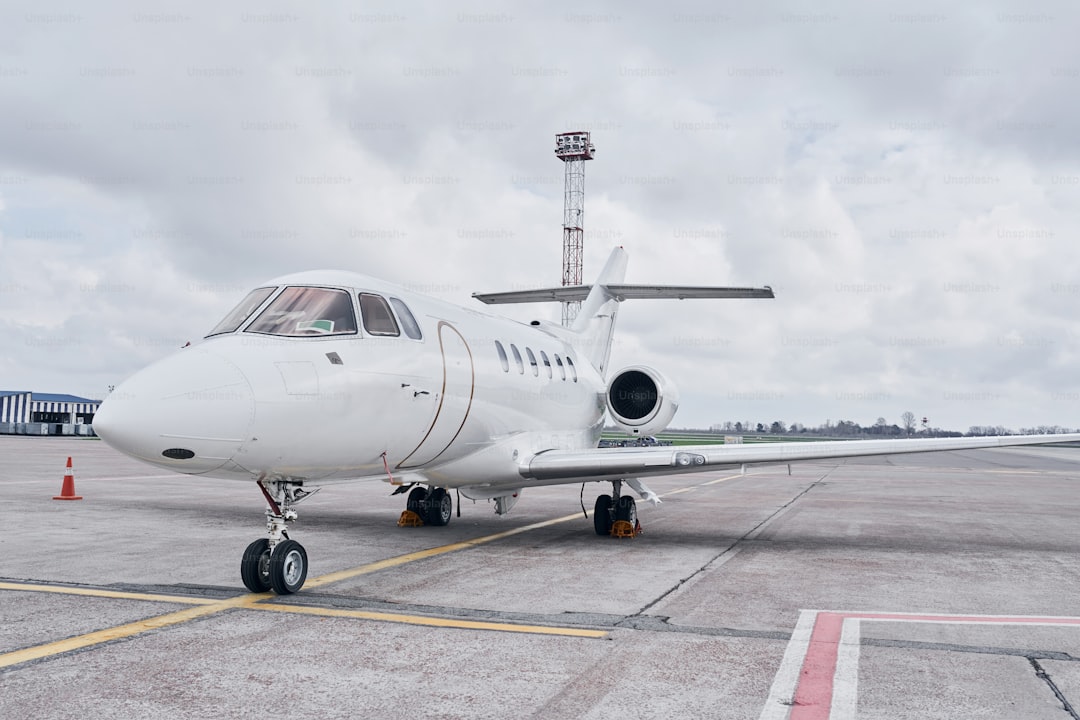
Let’s get real about what it actually takes to fly a private jet across Africa, because the infrastructure challenges here aren’t just inconvenient—they’re structural barriers that have kept the continent’s skies largely empty of business aviation for decades. I’ve spent a lot of time looking at the operational data, and the reality is that most of Africa’s runways simply weren’t built for the kind of jets that fractional programs in North America or Europe rely on. That’s where the engineering choices start to matter in ways that most people never think about. For instance, fractional operators here have adopted high-flotation landing gear with oversized tires that reduce ground pressure by 40%, which sounds like a minor detail until you realize it’s the difference between landing on a grass strip in the Serengeti and sinking into the mud. And it’s not just the tires—every aircraft in these programs is fitted with dual-stage coalescing filters that remove 99.9% of water and particulate matter down to 0.5 microns, because fuel contamination at remote African airports is a constant, silent threat that whole-jet owners often ignore until it’s too late.
But the infrastructure problem goes way beyond the runway surface. Think about what happens when you’re flying over the Congo Basin or the Sahara and there’s no radar coverage for hundreds of miles—that’s the reality for about 60% of the continent’s airspace. Fractional operators have solved this by equipping every aircraft with ADS-B Out and satellite-based surveillance, so the plane is trackable even when ground radar is completely absent. And here’s a detail that most people don’t consider: the cockpit crews in these programs undergo specialized training in bush strip techniques, including circling approaches over rough terrain and short-field landing procedures, which reduces the minimum required runway length from 5,000 feet to just 3,500 feet for certain models. That’s not a small difference—it opens up hundreds of airstrips that would otherwise be inaccessible. The lack of runway lighting at many of these strips is addressed by fitting aircraft with landing lights that produce 30% more lumens than standard units, combined with enhanced vision systems that let pilots see in near-total darkness. And when you factor in the pre-positioned mobile ground power units and air conditioning carts at key remote airstrips, turnaround times drop by an average of 35 minutes compared to relying on whatever local infrastructure happens to exist.
But the real unsung hero of African fractional operations is the logistics network that most passengers never see. To circumvent the scarcity of certified maintenance facilities, operators maintain a network of mobile repair vans stocked with common rotables, capable of performing line maintenance at any airstrip within 24 hours of notification. That’s a lifeline when you’re stuck in a place where the nearest certified mechanic is 800 miles away. The fuel problem is equally daunting—fractional programs have negotiated block fuel agreements with major suppliers at multiple hubs, guaranteeing access to Jet A-1 fuel even during supply disruptions and maintaining a buffer stock of 10,000 gallons at each hub. That buffer alone can mean the difference between making a scheduled trip and being stranded for days. And the customs and immigration clearance process, which can take 90 minutes or more for a whole-jet owner, is reduced to under 20 minutes for fractional program members through pre-arranged bilateral agreements with several African countries. The average fractional share in Africa includes a logistics surcharge that covers the cost of flying in spare parts and specialized technicians from the central hub—a cost that whole-jet owners often underestimate by 200%, because they simply don’t realize how fragile the supply chain is until they’re the ones waiting for a part to arrive from Europe. All of this adds up to a system where the infrastructure isn’t just being worked around—it’s being systematically engineered out of the equation, one operational detail at a time.
Target Audience: Who Is Driving Demand for Fractional Jet Ownership in Africa?
Let’s talk about who’s actually buying into fractional jet ownership in Africa, because the profile is nothing like what you’d expect if you’re used to the North American or European markets. I’ve been digging into the data from 2025, and the first thing that jumps out is that the typical buyer isn’t a mining magnate or oil baron—it’s a fintech founder under 40, with 58% of new shares purchased by individuals whose primary wealth is tied to digital services rather than natural resources. That’s a massive shift from even five years ago, and it tells you something about where the continent’s economic center of gravity is moving. These are people who built companies in Lagos, Nairobi, or Cape Town, and they’re using the jet the way you’d use a car—to get between Accra and Kigali in a few hours instead of a full day of layovers. And here’s a stat that really stopped me: the average African fractional member flies 340 hours annually, which is 70% higher than the global average. That’s not a luxury toy; that’s a workhorse. They’re using the jet for both business and personal travel across a continent where commercial routes are sparse, and the math only works if you’re actually using the asset.
But the demographic story gets even more interesting when you look at who’s actually signing the contracts. A surprising 22% of African fractional owners are diaspora professionals based in London or Dubai who use the share primarily for family visits to secondary cities that lack commercial jet service. Think about that for a second—these are people who could afford to fly first-class on Emirates or British Airways, but they’re choosing a fractional share because it lets them land in places like Mombasa, Kumasi, or Lubumbashi without the multi-day logistics nightmare of connecting through Addis or Nairobi. And nearly one in three new African fractional buyers in 2025 was a woman, a demographic shift that outpaces the global private aviation average of 12% female ownership. That’s not a small blip—it’s a structural change in who controls the capital and the travel decisions in these markets. The fastest-growing segment of demand comes from owners of mid-sized agricultural and logistics firms who need to reach multiple remote sites in a single day, a use case that commercial aviation simply cannot serve. These are people moving between farms in Zambia, processing plants in Tanzania, and export hubs in Mombasa—all in one day—and the jet is the only tool that makes that possible. A surprising 15% of African fractional shares are purchased by consortiums of three to five families who split the cost and usage, a model that is virtually nonexistent in North America or Europe. That’s a fundamentally different social structure of ownership, and it tells you that the market is adapting to local realities rather than importing Western models wholesale.
Here’s what I find most telling about the data, though. The average African fractional member flies to 14 different countries per year, compared to just 6 for a typical European fractional owner. That’s not a minor difference—it’s a reflection of the fact that Africa’s commercial aviation network is so fragmented that the private jet becomes a necessity for anyone doing business across multiple borders. And over 40% of African fractional members cite the ability to fly pets and specialized medical equipment as a primary motivator, a factor rarely mentioned in other markets. That sounds quirky until you realize that moving a dialysis machine or a breeding dog across borders in Africa is a logistical nightmare on commercial carriers, and the fractional jet solves it in a single booking. A notable 18% of African fractional shares are purchased by non-profit organizations and NGOs that need to move personnel and supplies to remote humanitarian zones quickly—that’s a buyer segment that doesn’t exist in any other fractional market in the world. And here’s the stat that really ties it all together: the typical African fractional owner holds assets in at least three different countries, making the jet a tool for cross-border portfolio management rather than luxury travel. These aren’t people taking weekend trips to the Seychelles—they’re managing farms in Kenya, tech investments in Nigeria, and real estate in South Africa, all in the same week. The average age of a first-time African fractional buyer dropped to 38 in 2025, compared to 52 for first-time whole-jet buyers on the continent, which tells me this isn’t a market that’s slowly maturing—it’s a market that’s being created by a generation that thinks about access differently than their parents did. And honestly, if you’re looking at the global private aviation landscape and trying to figure out where the next wave of growth is coming from, the data is screaming that it’s coming from this exact demographic: younger, digitally-native, multi-country operators who see a fractional share not as a status symbol, but as the most efficient tool for managing a life that spans borders.
What This Means for Business Travel, Tourism, and Economic Connectivity Across the Continent
Let’s zoom out for a second and look at what this actually means for the continent’s economic fabric, because the ripple effects go way beyond just getting wealthy people from point A to point B faster. The data is already showing that African fractional members now visit an average of 14 different countries per year, compared to just 6 for their European counterparts, and that’s not a vanity metric—it’s a direct measure of how private aviation is creating new high-frequency economic corridors that simply didn’t exist before. Think about what that does to business travel patterns: a fintech founder in Lagos can now do a morning meeting in Accra, a site visit in Kumasi, and be back in Lagos for dinner, all in a single day. That kind of rhythm was impossible even three years ago, and it’s fundamentally changing how multi-country operations are managed across the continent.
The tourism angle is where the numbers get really concrete, and honestly, they surprised me. Luxury lodges in the Serengeti and Okavango Delta are reporting that 30% of their high-spend guests now arrive via private aircraft, a figure that has doubled since 2023 and is directly tied to the expansion of fractional programs. These aren’t just wealthy tourists—they’re spending an average of 3.5 times more per visit than commercial airline passengers, and they’re staying longer because the fractional model lets them hop between multiple destinations without the logistical nightmare of commercial connections. Tourism boards in East and Southern Africa are now actively marketing fractional jet access as a competitive advantage, with some offering expedited customs clearance for fractional program members. That’s a smart move, because these travelers are the ones booking the $2,000-a-night lodges and the private safari guides, and they’re doing it in places like the Serengeti and Okavango Delta where commercial aviation simply doesn’t go.
But here’s what I think is the most underappreciated part of this story: the economic connectivity angle. The ability to land at over 40 airstrips without conventional instrument landing systems is directly funneling business travelers and tourists into regions that were previously considered too logistically challenging, effectively redrawing the map of accessible economic zones across the continent. Cross-border trade is being accelerated by the ability to move specialized equipment and perishable goods between remote sites in a single day, and that’s not a small thing when you’re talking about agricultural exports or medical supplies. The reduction in travel time between secondary cities like Accra and Kigali from a full day of layovers to a few hours is enabling a new class of entrepreneurs to manage multi-country operations with the same ease as a domestic commute. And here’s the thing that really gets me: tourism boards are now actively marketing fractional jet access as a competitive advantage, recognizing that these travelers are the ones who can actually reach the remote lodges and conservation areas that commercial aviation ignores. The net effect is that fractional programs aren’t just serving existing demand—they’re creating entirely new economic ecosystems in places that were previously cut off from the global travel network. And that’s the kind of structural change that doesn’t show up in a quarterly earnings report, but it’s going to reshape the continent’s economic geography for the next decade.
Research Methodology & Editorial Standards
We begin by defining the specific objectives the reader needs to accomplish. Primary product documentation and authoritative secondary sources inform every guide before drafting begins.
Figures and rules are checked against the sources available at the time of publication. Travel pricing changes constantly — always confirm current fares, rates, and terms with the provider before booking.