
Why Uzbekistan Is Becoming The Must Visit Destination For Travelers Seeking Ancient History
That kind of craftsmanship is rare today, but you can still feel that weight of history when you walk through the square.
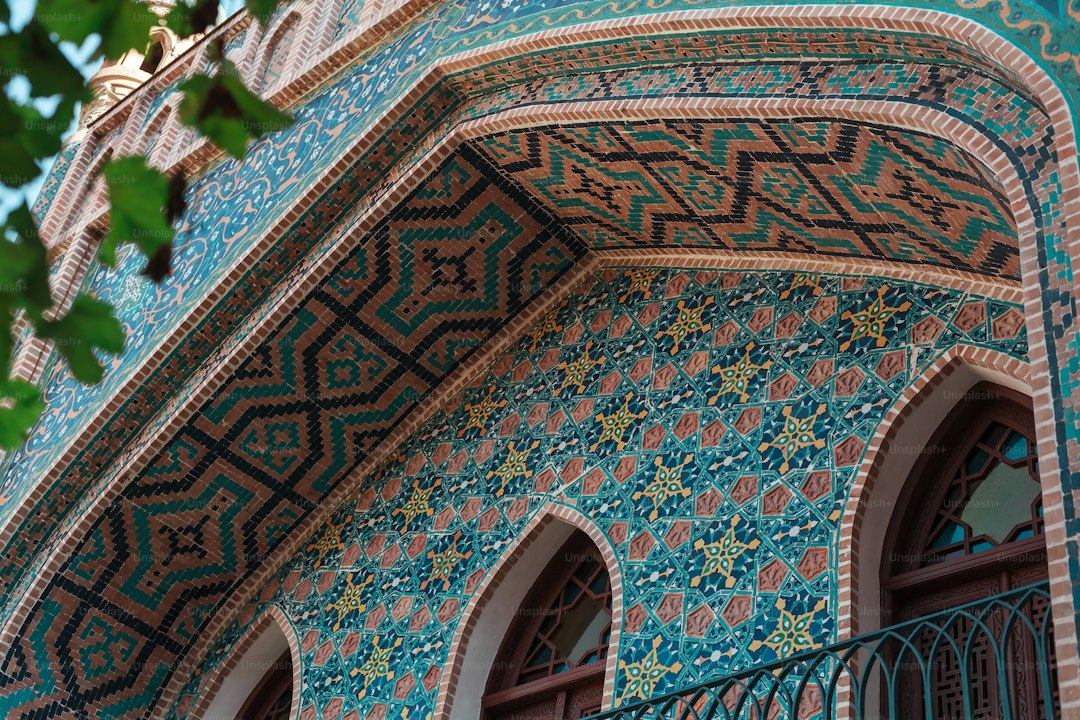
Stepping Into History: Why Samarkand and Bukhara Define the Silk Road
If you’re planning a trip to Uzbekistan, you’ll quickly realize that Samarkand and Bukhara aren’t just stops on a map; they’re the literal heart of human ingenuity from a bygone era. I’ve spent time digging into the architecture here, and honestly, the sheer durability of these sites is mind-blowing. Think about the Gur-e-Amir mausoleum in Samarkand, which features a double-shell dome design that eventually became the blueprint for the Taj Mahal. Then you have Bukhara, where artisans mastered brick-on-brick masonry using over 15 distinct geometric patterns that seem to change as the desert sun moves across them. It makes you wonder how they managed such precision without modern tools, right?
The secret, it turns out, is in the chemistry. Researchers have found that the mortar used in these structures was mixed with organic additives like egg whites and camel milk, creating a foundation with enough seismic resilience to last over eight centuries. It’s wild to think that the Kalyan Minaret was so structurally sound when it was finished in 1127 that even Genghis Khan was apparently intimidated enough to leave it standing while he destroyed the rest of the city. That kind of craftsmanship is rare today, but you can still feel that weight of history when you walk through the square. The Registan, for instance, is designed as a massive acoustic chamber where the proportions allow a voice to carry to thousands without any help from speakers.
But it’s not just about the big monuments; it’s about the science tucked away in the details. In Samarkand, you can still see the remnants of an observatory where scholars calculated the length of the stellar year with a degree of accuracy that’s shockingly close to what we use today. Meanwhile, the soil near Bukhara holds traces of ancient botanical hybridizations, proving the city was once a high-tech lab for things like the Damask rose. Even the paper-making process in the nearby Konigil village uses mulberry bark to create a material that is still famously more durable than parchment. When you visit these spots, don’t just look at the blue tiles—look at the engineering and the trade secrets that built them.
Beyond the Classics: Exploring Offbeat Wonders in the Uzbek Interior
If you're willing to head off the main tourist circuit, you’ll find that the true character of this region exists far beyond the postcard-perfect squares of the Silk Road. I’m thinking specifically of the Savitsky Museum in Nukus, where Igor Savitsky saved over 40,000 pieces of Russian avant-garde art from Soviet censors by hiding them in plain sight. It’s an incredible story of defiance that turned a remote outpost into a world-class gallery. Then you have the petroglyphs at Sarmishsay, where over 5,000 carvings track thousands of years of shifting climates and lost species. It’s not just art; it’s an empirical record of how this environment has transformed since the Neolithic period.
The contrast between these cultural touchstones and the harsh reality of the landscape is something you really have to see to understand. Consider the ship graveyard in Muynak, where the receding Aral Sea has left vessels stranded over 100 kilometers from the current water line. It’s a sobering look at the environmental consequences of 20th-century irrigation projects. On the flip side, you can find brilliant engineering in the Nuratau Mountains, where the accidental 1969 formation of the Aydar-Arnasay lake system created a massive, unplanned wetland that supports millions of migratory birds. It’s a fascinating example of how nature sometimes reclaims a space in ways that defy human intent.
When I look at the architectural remains in places like Termez or the fortress of Ayaz-Kala, I’m always struck by how these structures were built to last for millennia. The Fayaz Tepe monastery shows us just how deeply Buddhism was rooted here in the 1st century, while the mud-brick defenses of the Khorezmian civilization demonstrate a level of durability that modern construction still struggles to match. Even the pottery in Rishtan tells a story of chemistry, using ash-based ishkor glazes that synthetic alternatives simply can't replicate. It’s these small, hyper-local innovations—like the gravity-fed karez water systems or the polyphonic singing preserved in Boysun—that prove history isn't just something you read about in a textbook. It's still breathing out here, if you're willing to go look for it.
The Modern Renaissance: How Uzbekistan is Becoming Accessible to Global Travelers
If you’ve been watching the travel world lately, you’ve probably noticed that Uzbekistan is quietly shifting from a "bucket list" daydream into a genuinely accessible reality. I’ve been looking at how they’re handling the logistics, and frankly, the transformation is impressive. The most obvious change is the high-speed rail network, which has effectively shrunk the map; you can now zip from the bustling capital of Tashkent to the legendary streets of Samarkand in about two hours. It’s a massive upgrade from the days when cross-country travel felt like an endurance test. Honestly, being able to cover that much history in a morning commute changes the entire rhythm of the trip.
But it’s not just about the trains; the administrative side of things has finally caught up to the modern world, too. They’ve rolled out a streamlined digital visa process that’s cut through the red tape that used to keep so many of us away. When you combine that with a recent, massive expansion in direct flight paths connecting Tashkent to major hubs in the Middle East and East Asia, you start to see why the country is suddenly seeing such a surge in international arrivals. It feels like the country is actively inviting the world in, rather than just tolerating it. Even their metro system, which was once a collection of off-limits, photography-banned bunkers, has been opened up as a genuine cultural attraction. You can now walk through those ornate, cathedral-like stations and actually document what you see, which is a small but significant shift in how they view their own history.
There’s also something really smart happening behind the scenes regarding how they handle all this new attention. I’m impressed by the way they’re using 3D laser scanning to monitor the structural health of ancient mud-brick fortresses, which is a stark contrast to the old-school, guessing-game approach to preservation. They’re even using satellite imagery to keep tabs on oasis ecosystems, ensuring that the spike in tourism doesn't actually degrade the very sites people are coming to see. It’s a refreshing, data-driven approach to heritage that feels grounded and responsible. I’m not sure every country puts this much effort into the long-term math of tourism, but if you’re looking for a destination that manages to balance deep, 2,200-year-old history with the kind of infrastructure that makes a trip stress-free, this is about as good as it gets.
Architectural Marvels: The Art and Controversy of Restoring Ancient Wonders
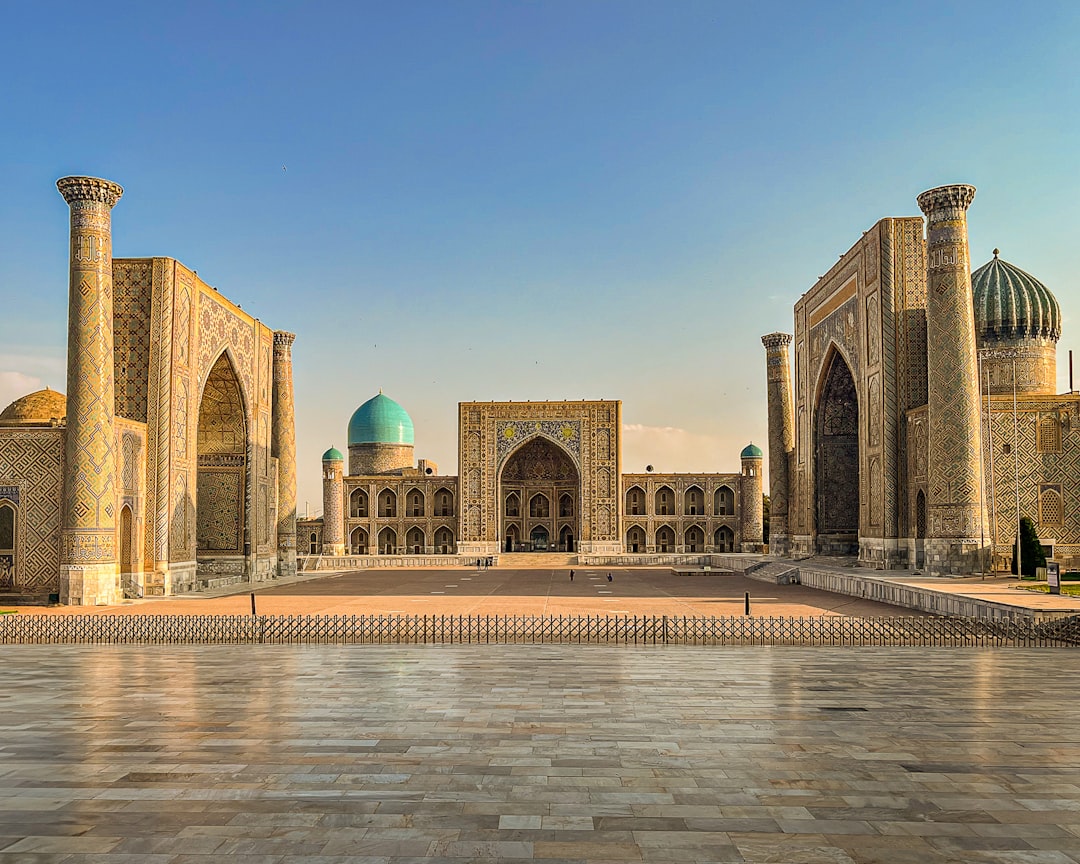
Restoring these ancient sites is a complete minefield, and honestly, the tension between making them look pretty for tourists and actually keeping them alive is something we need to talk about. When you look at the restoration work in places like Samarkand, the biggest issue is the reliance on modern materials like reinforced concrete; it sounds sturdy, but it actually traps moisture inside, which slowly eats away at the original mud-brick cores from the inside out. You’ve also got the problem of machine-made tiles being used to replace the originals, which often ruins the subtle, 15th-century color palettes that were originally achieved using crushed semi-precious stones. It’s a massive debate, and many experts argue that slapping on thick, synthetic grouts just triggers chemical reactions that dissolve the very historic plaster we’re trying to save.
If you lean into the academic side of this, you’ll find that a lot of these heavy-handed renovations actually clash with the Venice Charter, which is basically the gold standard for saying we should preserve original fabric rather than just chasing a polished, new-build look. The shift to industrial bricks is another point of failure, as these don't expand and contract at the same rate as the old terracotta, leading to nasty cracks in the masonry. Plus, if you don't account for how desert sand moves moisture through a wall—what we call capillary action—you end up with salt crystallization that pushes tiles right off the surface. It’s a bit of a tragedy when you realize that modern "fixes" are often accelerating the decay they were meant to stop.
But here’s the interesting part: technology is finally starting to offer a path forward that doesn't involve wrecking the history. Researchers are now using ground-penetrating radar to see exactly what’s under the surface before anyone touches a trowel, and they're testing reversible, organic binders that mimic the old lime mortars instead of forcing synthetic junk into the pores. We’re also seeing 3D-printed, biodegradable polymers being used to bridge gaps in structures, which is smart because they can be removed later without leaving a permanent scar. It’s a total shift in philosophy, moving away from "fixing" things to just letting them breathe while keeping them standing. It’s a messy process, but seeing that data-driven, cautious approach makes me feel a lot better about the future of these monuments.
A Millennia-Long Crossroads: Uncovering the Cultural Layers of Uzbekistan
If you’ve ever stood in a place that feels like the center of the world, you know it’s a heavy, singular experience, and that’s exactly what hits you when you start peeling back the layers of Uzbekistan. We aren't just talking about a few old walls; we’re looking at a true crossroads where genetics, trade, and belief systems collided thousands of years before the Silk Road even got its name. Think about the burial sites in the Fergana Valley, where DNA evidence shows Scythian nomads and local farmers were mixing as far back as the 4th century BCE, essentially building a melting pot that defined this region’s genetic identity. And it wasn't just people moving through—it was ideas, like the Greco-Bactrian ivory rhytons that blend Hellenistic myths with local zoomorphic art in a way that feels surprisingly modern. It’s wild to realize that the 7th-century murals at Afrasiyab show Korean envoys arriving in Samarkand, proving our historical maps of trade reach were way too small.
Let’s pause for a moment to consider the sheer engineering grit required to keep a society alive in a place that’s mostly desert. You have the Khorezmian civilization, which built gravity-fed hydraulic systems moving water over 30 kilometers just to keep urban centers blooming in the middle of nowhere. Then look at Kampir-Tepe, where they were layering reed mats between mud bricks to act as seismic dampers—a level of structural awareness that honestly makes our modern, rigid construction methods look a bit naive. Even the ochre cave art at Zaraut-soy has stuck around for 8,000 years because the local sandstone chemistry just happens to be a perfect preservation chamber. It’s these kinds of details—like the sexagesimal math used by Timurid astronomers to track planets with better accuracy than their European peers—that remind me how much we’ve forgotten about the technical brilliance of the past.
But the real magic is how this isn't just trapped in the dirt; it’s still living in the culture today. You can hear it in the Shashmaqam musical tradition, where performers memorize hundreds of pieces that trace their rhythms all the way back to pre-Islamic Zoroastrian chants. It’s like listening to a ghost of a civilization that never actually died, just shifted form. Or look at the ikat silk weavers, where the complexity of an abrbandi pattern acts as a literal mathematical indicator of social status, turning a piece of fabric into a data point from a bygone economy. Even the isolated mountain dialects still hold onto shards of ancient Sogdian that haven't changed for a thousand years. It’s a lot to take in, but when you look at how these layers of trade, science, and art stack up, it’s clear that this isn't just a destination for history buffs—it’s a masterclass in human resilience that we’re only just starting to fully decode.
Planning Your Journey: Tips for Navigating the Heart of Central Asia
Planning a trip to Central Asia feels like you're stepping into a different dimension of time, but you’ve got to be smart about how you actually move through it. Honestly, the first thing you need to wrap your head around is the sheer scale of the desert, especially if you're traveling in June when daytime highs smash past 40 degrees Celsius and then plummet by 20 degrees once the sun sets. I always recommend using the high-speed Afrosiyob train to cover the distance between cities; it hits speeds of 250 kilometers per hour, which turns a grueling desert trek into a simple two-hour hop. Just keep in mind that with current 2026 airspace closures over the Middle East, those flight paths into Tashkent are taking longer northern routes, so buffer your itinerary accordingly.
You’ll find that the logistics have become surprisingly modern, despite the ancient setting. I’m a huge fan of how they’ve moved toward QR-code payments in urban markets, which saves you from hauling around massive stacks of som, and the e-visa system is now impressively fast, usually hitting your inbox within three working days. But when you’re booking your transit, don’t bother with paper tickets; just stick to the centralized rail apps that sync with your ID, as the whole process is automated now. It’s a complete departure from the bureaucratic headaches we used to deal with a decade ago, and it really lets you focus on the actual experience rather than fighting with red tape.
If you’re planning to head into the mountains, just know that the experience is a bit more demanding than a standard city tour. Areas like the Nuratau range are heavily protected by environmental zoning to keep the soil stable, so group sizes are strictly limited to prevent erosion—think of it as a way to ensure the landscape stays pristine for everyone else coming after you. It’s also worth noting that behind those beautiful, traditional facades of modern hotels in the Fergana Valley, engineers have tucked away some serious base-isolation tech to handle the region’s seismic realities. It’s that blend of high-tech preservation and raw, ancient history that makes this place so fascinating to navigate. Honestly, if you pack for the temperature swings and lean into these new digital tools, you’ll find that the heart of the Silk Road is a lot more accessible than you’d ever guess.
Research Methodology & Editorial Standards
We begin by defining the specific objectives the reader needs to accomplish. Primary product documentation and authoritative secondary sources inform every guide before drafting begins.
Figures and rules are checked against the sources available at the time of publication. Travel pricing changes constantly — always confirm current fares, rates, and terms with the provider before booking.