
Why Paul Rudd is wrong about airplane mode and your inflight connectivity
You know, it’s funny how we still treat that little airplane mode toggle like some kind of magical switch keeping us from falling out of the sky.
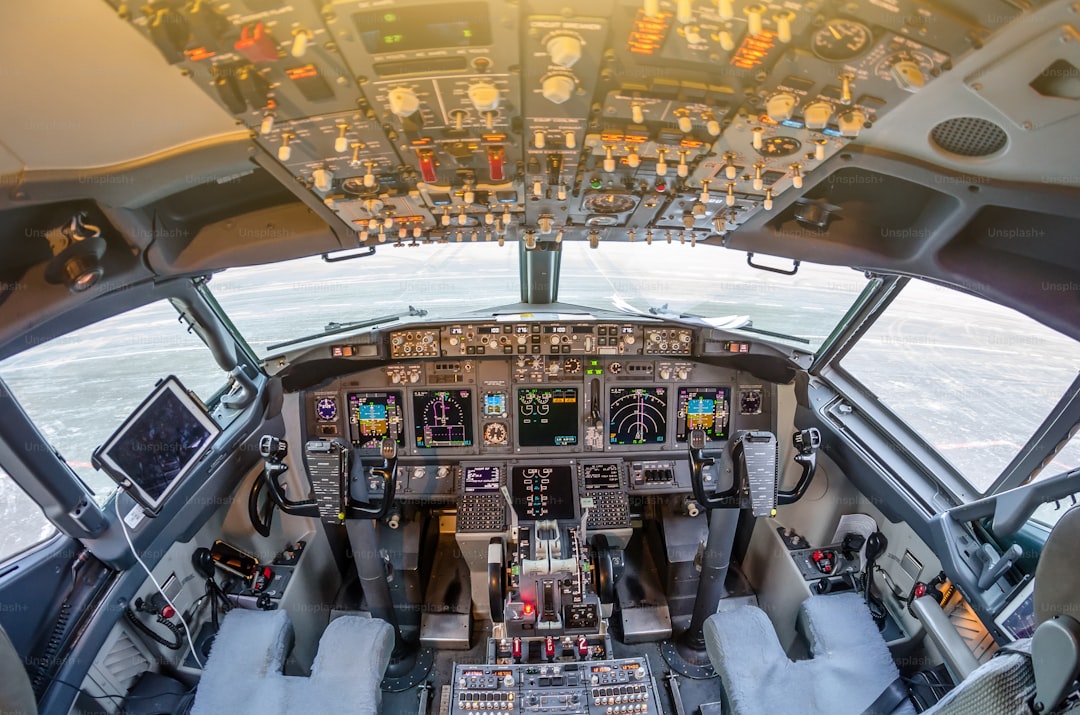
The Science Behind Airplane Mode: Beyond the Hollywood Myth
You know, it’s funny how we still treat that little airplane mode toggle like some kind of magical switch keeping us from falling out of the sky. Honestly, I think the real reason we keep it around is just pure, old-fashioned caution. While Hollywood loves the idea of a rogue smartphone bringing down a 747, the hard reality is that modern avionics are actually incredibly well-shielded against electromagnetic interference. The biggest problem isn't necessarily the plane itself, but the ground networks. When you’re cruising at 30,000 feet, your phone starts frantically trying to connect to every cell tower in sight. Because you're moving so fast, you end up triggering a signaling storm as your device tries to hand off its connection to hundreds of towers in a single minute, which can just overwhelm the infrastructure on the ground.
But we have to talk about the hardware in your pocket, too. If you’ve ever had a phone with a dying battery, you’ve probably noticed it gets weirdly hot or acts up; those aging components can sometimes leak unintended electromagnetic emissions. Aviation regulators are pretty much terrified that a malfunctioning device could bleed noise into communication frequencies, making it impossible for pilots to hear clearly. It’s not about the plane failing, but about keeping that channel between the tower and the cockpit crystal clear. Plus, we’re dealing with a massive variety of uncertified hardware in every cabin, and the FAA prefers to keep a wide buffer rather than betting on everyone having perfectly functional, high-quality gear.
Then there’s the whole 5G conversation, which is a bit more nuanced. Newer cellular bands operate dangerously close to the frequencies that radar altimeters use for landing. When you’re trying to land in low visibility, that precision is everything, and we really don’t want a bunch of phones potentially messing with those readings. It’s also worth noting that if you actually left your cellular data on during a flight, your battery would be dead before you even hit your cruising altitude because your phone would be working at full power to reach those distant ground towers. The fuselage of the plane does a decent job of blocking some of that signal, but the regulatory world moves slow, and they aren't going to scrap these rules just because the tech has gotten better.
At the end of the day, no commercial crash has ever been tied to a passenger’s personal electronic device. It really comes down to this: airplane mode is part safety precaution, part way for flight crews to keep us from being distracted during the critical phases of flight. The engineering is robust enough that you probably wouldn't cause a disaster, but until the regulations catch up to the current reality of our connected world, we’re stuck with the toggle. It’s a bit of a relic, sure, but it’s a standard we’ve all agreed to keep just in case. So next time you flip that switch, just think of it as a small trade-off for a safer, quieter flight for everyone.
Why Your Smartphone Won't Actually Bring Down a Modern Aircraft
Let’s dive into why your smartphone isn’t going to send a plane into a tailspin, because honestly, the science behind this is fascinating once you look past the myths. Modern aircraft cabins are built with what we call Faraday shielding, a metallic skin that effectively traps and blocks electromagnetic energy from leaking out or interfering with the guts of the plane. Think of it as a giant, grounded cage that keeps the sensitive flight computers safely isolated from whatever your phone is doing. Plus, aircraft avionics are designed with insane levels of redundancy; even if one system were theoretically nudged by a signal, you’ve got secondary and tertiary backups ready to take over in a heartbeat. It’s really a testament to how hardened these systems are, especially when you consider they’re built to withstand massive energy spikes like lightning strikes, which make your tiny phone’s output look like a drop in the ocean.
Here’s the reality: your phone’s maximum power output is capped at about 0.6 watts, which just isn’t enough to disrupt hardened aviation hardware. In fact, modern digital avionics are light-years ahead of the old analog stuff, using advanced filtering that essentially treats any stray electromagnetic noise from your device as invisible chatter. We’ve also seen a shift toward in-flight connectivity, where specialized pico-cells inside the cabin handle your signal at extremely low power levels, preventing your phone from working overtime to reach a distant ground tower. Even those radar altimeters—the ones that worried everyone during the 5G rollout—are getting hardware upgrades with better band-pass filtering to reject interference. It’s a physical, engineering-based solution that essentially closes the door on any potential signal overlap during those final, critical minutes of a landing.
So, if the tech is so robust, why are we still flipping that switch? It really comes down to a policy of total risk aversion rather than a confirmed danger. Regulatory agencies like the FAA aren't keeping airplane mode around because they’re afraid of a catastrophe; they keep it because there’s zero operational benefit to letting devices search for ground towers at 30,000 feet. The real issue is the cumulative effect—if hundreds of phones simultaneously ramped up to full power while searching for a signal, it could create a dense wall of radio frequency noise that’s just unnecessary to deal with. We’ve had decades of real-world performance data, including millions of flights where someone inevitably forgot to toggle the setting, and not a single incident has ever been tied to a passenger device. It’s a simple, outdated precaution for a modern, connected world, but until the rulebook changes, we’ll keep hitting that toggle—not because we’re keeping the plane in the air, but because it’s a standard we’ve all agreed to keep just in case.
The Real Reason Airlines Require Airplane Mode: Frequency Interference
Let’s dive into why this actually matters, because honestly, the idea that a single passenger’s phone could knock a jet out of the sky is pure fiction. When you’re cruising at 30,000 feet, the real concern isn't the aircraft’s avionics—which are shielded against high-intensity radio fields anyway—but the massive headache you’re causing for cellular networks on the ground. Think about how your phone works: it’s constantly pinging towers to maintain a handshake. At that altitude and speed, your device is essentially trying to "talk" to dozens of towers simultaneously, creating what we call a signaling storm. This congestion can overwhelm control channels, degrading service quality for everyone on the ground who actually needs that bandwidth.
And it gets more technical when you look at how these devices behave under duress. Your phone is programmed with adaptive power control, meaning it’s designed to crank up its transmission signal whenever it senses a weak connection. If you leave cellular data on, your device is essentially shouting into the void, trying to reach a tower that’s miles below you. This constant, high-power searching creates an unnecessary background of radio noise that network operators would much rather avoid. While aviation communication bands operate in the VHF range specifically to prevent overlap, there’s always a tiny, theoretical risk of intermodulation—where multiple signals interact to create a stray frequency that could technically bleed into sensitive cockpit bands.
But really, the biggest hurdle is just the sheer volume of uncertified hardware in a typical cabin. Regulators aren't going to spend years testing every single smartphone model to see if it meets some new standard of electromagnetic compatibility. It’s much easier to keep a blanket rule than to manage a case-by-case certification nightmare. Plus, when airlines offer onboard Wi-Fi, they’re managing that connection through an aircraft-specific base station; having your phone’s cellular radio fighting to override those protocols just creates a mess for the cabin’s connectivity. So, while your phone won't crash the plane, keeping it in airplane mode is really just a polite way of ensuring the ground networks don't get swamped and the cabin’s own systems can do their job without interference.
The Evolution of Inflight Connectivity: How Wi-Fi Changed the Rules

Let’s pause for a moment and reflect on how we actually got here, because the jump from "no signal" to "full-blown streaming" at 30,000 feet wasn't just a simple software update. Honestly, it’s been a massive engineering climb that started with air-to-ground systems, which were basically just glorified cell towers pointing their beams toward the sky. Back then, your plane had to constantly hand off its connection to ground stations as it moved, and if you were flying over the ocean, you were completely out of luck. It was a clunky, limited setup that felt like browsing the web on a dial-up connection, and the weight of those early modems and antennas actually hit airlines where it hurt—their fuel bills.
But then the industry shifted toward satellite technology, which changed the game by allowing for consistent coverage regardless of whether you were crossing a desert or an ocean. We moved from older Ku-band systems to the much faster Ka-band, allowing us to push way more data through the pipe than we ever could before. Think about it this way: we went from struggling to load a single email to having enough bandwidth to actually stream video. A huge part of that came from switching to spot-beam technology, which focuses data on specific geographic patches rather than broadcasting signal wastefully across the entire globe.
And you’ve probably noticed that the hardware on top of the plane has changed, too. We’ve moved away from those heavy, mechanical, gimbal-mounted antennas that were always dragging down efficiency to sleek, phased array antennas. These things are wild because they don't have moving parts; they use electronic beam-steering to lock onto satellites in milliseconds. Now, we’re seeing hybrid systems that automatically switch between ground networks and satellites, ensuring the most stable connection possible without you ever feeling a hiccup.
What’s even cooler is how we’re managing the chaos inside the cabin now that everyone has a tablet and a phone. With the jump to Wi-Fi 6, the onboard network can finally handle high-density traffic without choking, using tech like Orthogonal Frequency Division Multiple Access to keep your data flowing smoothly. Plus, we’re seeing low-earth orbit satellites, which are so much closer to us that the lag, or latency, is basically gone compared to the old geostationary satellites. It’s not just about the signal getting there; it’s about how we cache content on the plane’s own server to give you instant access to movies without putting extra stress on the satellite link. It’s a total transformation, and frankly, it’s why we’re no longer just disconnected travelers waiting to land.
Navigating the Regulatory Lag: Why Rules Still Outpace Technology
Let’s dive into why this feels like such a slog, because honestly, the gap between the tech in your pocket and the rules in the cockpit is massive. Regulatory bodies currently rely on standards from the Radio Technical Commission for Aeronautics that were last overhauled before we even had high-bandwidth mobile devices. Think about that for a second; we’re essentially trying to manage modern connectivity with a rulebook that predates the smartphone boom. The certification process for new avionics components often drags on for five to seven years, creating a huge delta between the gear you carry and what’s legally allowed to operate on the plane.
It gets even messier when you realize that international aviation authorities struggle to harmonize these rules because radio frequency spectrum allocation is governed by individual national sovereignty. You end up with a fragmented patchwork of connectivity laws where your phone's status might change just by crossing a border. Meanwhile, the administrative weight required to change flight deck protocols is so heavy that it often takes multiple election cycles just to push through a minor technical update. Manufacturers of in-flight entertainment systems are stuck in this loop too, keeping proprietary software locked for over a decade just to avoid the nightmare of a multi-million dollar recertification process.
Then there is the issue of our testing protocols, which haven't evolved to handle the ultra-wideband signals we use today. We are still operating on a precautionary principle that prioritizes the stability of legacy analog navigation aids over newer, digitally-shielded tech. Even worse, current rules focus almost entirely on your phone's power output while ignoring the growing pile of ambient IoT devices—like smartwatches or trackers—that we all carry now, which could collectively generate more noise than a single smartphone. Because there is no modular path for certification, even a tiny hardware tweak in a cabin network triggers a full airworthiness review. It’s a classic case of the system being designed for a world that simply doesn't exist anymore.
Staying Connected at 30,000 Feet: Practical Tips for Modern Travelers
Let’s be honest, staying connected at 30,000 feet used to feel like a gamble, but we’re finally moving into an era where high-speed internet is becoming a baseline expectation rather than a premium perk. As we look toward 2026 and 2027, major carriers are aggressively rolling out free, high-capacity Wi-Fi across their fleets, and it’s a massive win for those of us who need to stay productive or just want to stream without the dreaded buffering wheel. The real game-changer here is the shift toward low-earth orbit satellite constellations like Starlink, which bring latency down to earth-like speeds by being significantly closer to the aircraft than those old, sluggish geostationary satellites. It’s also worth noting that the tech under the hood has evolved; we’ve moved from clunky, mechanical antennas that dragged on fuel efficiency to sleek, phased-array systems that use electronic beam-steering to lock onto signals in milliseconds.
But even with all that speed, you’ve probably noticed that the transition between connectivity sources can still be a bit rocky. That’s because modern aircraft are increasingly relying on hybrid systems that juggle handovers between ground-based cell towers and satellite links, and while that’s smart engineering, it’s not always seamless. To compensate for the inherent limits of the satellite uplink, airlines are now installing local caching servers right on the plane to host popular content, which is a clever way to keep the network from choking during a full flight. We’re also seeing the rollout of Wi-Fi 6 in the cabin, which uses more efficient data management—think of it as a better traffic cop for your devices—to handle the high-density load of everyone’s laptops, phones, and wearables all trying to connect at the same time.
Still, if you’re wondering why your connection might occasionally drop or feel sluggish, remember that the physical fuselage of the plane is essentially acting as a giant Faraday shield, forcing all your data through those external antennas. And while we’re getting better at managing the "noise" from all our gear, regulators are still catching up, currently working with standards that long predate the modern smartphone. It’s a bit of a dance between cutting-edge hardware and a slow-moving certification process, but the trajectory is clear: we’re moving away from the era of "digital detox" and toward a reality where your flight is just as connected as your office chair. Next time you're prepping for takeoff, just keep in mind that the tech is working harder than ever to bridge that gap, and we’re the ones finally reaping the rewards.
Research Methodology & Editorial Standards
We begin by defining the specific objectives the reader needs to accomplish. Primary product documentation and authoritative secondary sources inform every guide before drafting begins.
Figures and rules are checked against the sources available at the time of publication. Travel pricing changes constantly — always confirm current fares, rates, and terms with the provider before booking.