
Why Munichs Legendary Eisbach River Wave is a Must See Travel Experience
When you stand on the bridge watching surfers carve up the Eisbach, it is easy to assume you’re looking at some sort of high-tech machine, but the reality is much more elegant.
The Unique Engineering Behind the World’s Most Famous Standing Wave
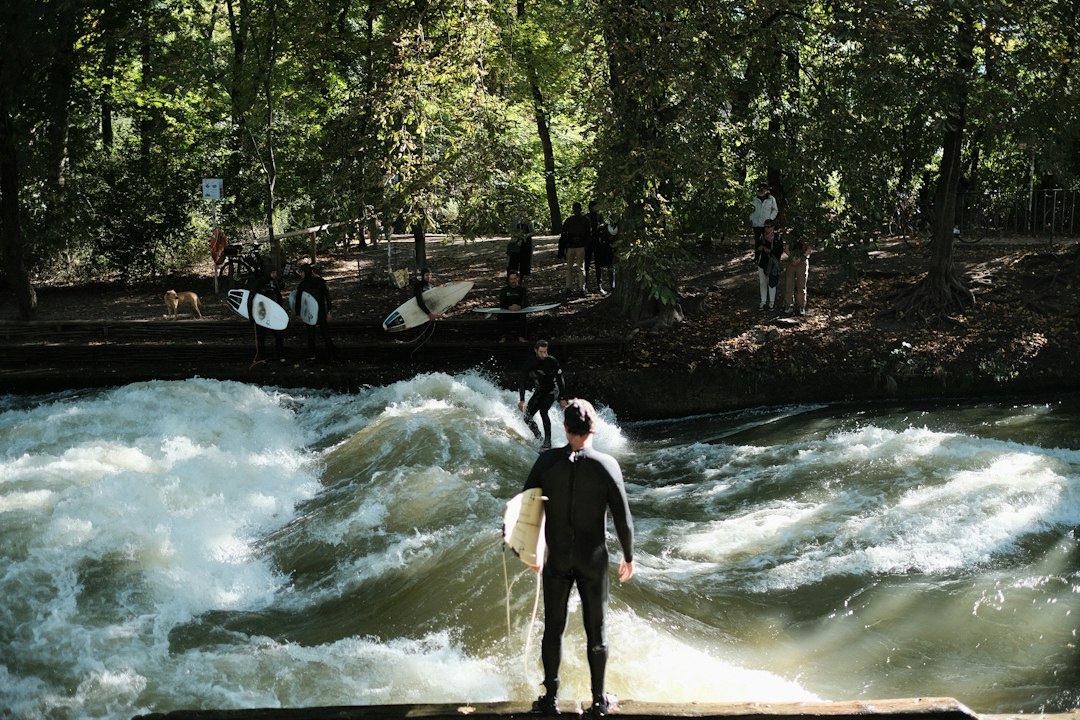
When you stand on the bridge watching surfers carve up the Eisbach, it is easy to assume you’re looking at some sort of high-tech machine, but the reality is much more elegant. The magic happens thanks to a submerged wooden step that forces the river into a hydraulic jump, a moment where fast-moving water suddenly transitions to a calmer, stable state. Think of it as a constant, self-regulating fluid dynamics experiment that doesn't need a single watt of electricity to function. Unlike those expensive, pump-driven wave pools you see popping up in landlocked cities, this setup relies entirely on the raw, passive physics of the Isar River’s natural flow. It’s a beautifully simple design that uses the river’s own kinetic energy to hold the wave in place, no matter how much water is rushing through the channel.
The engineering gets even tighter when you look at how they manage the water's speed and direction. The channel’s width is specifically tapered near the bridge, which creates a Venturi effect that accelerates the water just before it hits that submerged obstacle. This gives the wave its signature verticality and power, allowing it to stay consistent even when the seasonal snowmelt from the Alps causes the river's volume to fluctuate wildly. Engineers have also nailed the geometry to ensure that the backwash is directed away from the wave face, which stops the kind of chaotic turbulence that usually ruins standing waves in natural rivers. It’s honestly wild that a few heavy stones and steel cables holding a wooden platform in place can handle that much force for decades on end.
What I really appreciate is the low-fi brilliance of it all, especially when you compare it to the complex pneumatic or plunger systems used in modern wave technology. Maintenance crews have to go in periodically to tweak the angle of the wooden barrier, mostly to account for the natural erosion caused by years of sediment rushing over the structure. They have to be careful, too, because if that hydraulic jump migrates even a few feet upstream or downstream, the whole thing would just wash out and disappear. It’s a constant battle of physics, yet it manages to stay reliable enough to support technical maneuvers that would challenge most surfers. It makes me wonder why we’re so obsessed with over-engineering things when a little bit of smart, site-specific design can do the job perfectly for years.
Navigating the Eisbach: A Guide for Spectators and Surfers
If you're heading to the Eisbach to watch, finding a spot on the bridge is your first move, but remember that it's a busy public path, so keep your bags tucked close and don't block the commuters. The sheer volume of water creates a constant, thundering roar that makes normal conversation nearly impossible, so don't be surprised if you find yourself gesturing more than talking. You'll also notice the air feels noticeably more humid right at the railing because the standing wave constantly kicks up a fine mist. Since the bridge handles thousands of people daily, it's worth noting that the city keeps a close eye on the masonry to make sure the vibrations don't cause long-term wear.
If you’re actually planning to get in the water, you need to understand that the local etiquette is rigid and strictly enforced by the regulars. There is a precise, one-person-at-a-time queue system that keeps things running smoothly and prevents dangerous pileups. Don't even think about jumping in without watching how the locals do it first; you have to time your entry from the concrete ledge perfectly, and always go in feet-first to avoid the shallow riverbed and hidden steel structures. The water is surprisingly cold, sitting between 10 and 15 degrees Celsius year-round, so you’ll definitely want a thick wetsuit even when it’s warm out.
You should also be aware that there isn't a lifeguard on duty, meaning the community effectively acts as its own safety patrol. If you wipe out, the current is incredibly fast—sometimes hitting five meters per second—and it will pull you toward the downstream tunnel before you can blink. It’s a serious environment, and because the water isn't clean enough to drink, most people treat it as a technical sport rather than a place for a casual swim. Locals usually ride custom, high-volume boards reinforced against the hard concrete walls, as a standard fiberglass ocean board would likely get trashed in a single session.
Finally, keep in mind that the wave’s power isn't just natural; it's controlled by municipal sluice gates upstream near the Haus der Kunst. These gates dictate how much water flows through the channel, which means the difficulty can shift depending on whether the city is adjusting the volume. If you see the water level changing or the wave becoming more aggressive, that’s why. It’s a fragile, highly managed ecosystem, and professional events are only allowed there through very strict city permits. Whether you're watching or surfing, just remember to respect the gear, the queue, and the raw speed of the river.
A History of Resilience: The Wave’s Evolution and Recent Comeback
When we talk about the Eisbach wave, it’s easy to focus on the surf itself, but the real story is how this spot survived decades of being effectively illegal. For years, surfers were essentially outlaws, dodging police patrols and risking fines just to catch a ride in a gray area of municipal code that didn't know what to make of them. Before we got the stable wooden setup we see today, it was a messy, experimental era where people used everything from old tires to heavy rocks to try and force the water into shape. Those early DIY barriers were constantly being ripped out by the river’s sheer power, turning every session into a gamble against the current. It’s wild to think that this world-class destination is actually a byproduct of a 19th-century landscaping project designed for royal gardens, only to be reclaimed by a community that refused to take no for an answer.
The turning point really came in 2010, when the city finally legalized surfing, but that didn't happen by accident. It took the formation of a local surfing association that established an insurance fund to cover liability, which was the final hurdle to getting the city on board. You have to respect that kind of grit, because it turned a liability nightmare into a protected urban landmark. Even then, the wave has been pushed to the brink, most notably during the 2002 floods when the channel had to be completely shut down and dredged just to get it rideable again. It’s a testament to the community’s commitment that they still hold an annual cleaning day, manually clearing out logs and debris so the hydraulic jump doesn't collapse under the weight of river trash.
Even with official recognition, the tech behind the scenes has had to adapt to keep the dream alive. I find it fascinating that they’ve installed a hidden underwater steel gate system, which lets them make micro-adjustments to the wave's shape during droughts when water levels in the Isar are dangerously low. This isn't just a static piece of architecture; it's a living, breathing project that reacts to everything from seasonal snowmelt to atmospheric pressure shifts in the nearby Alps. While the rest of the world is building expensive, energy-hungry wave pools, the Eisbach crowd is out there in near-freezing winter water, proving that if you’re smart enough with your engineering, you don't need a massive power grid to keep the stoke alive. It’s a pretty incredible evolution, moving from a clandestine, forbidden hobby to a sophisticated, locally-managed masterpiece of urban sports.
Essential Safety Regulations and Local Etiquette for Visitors
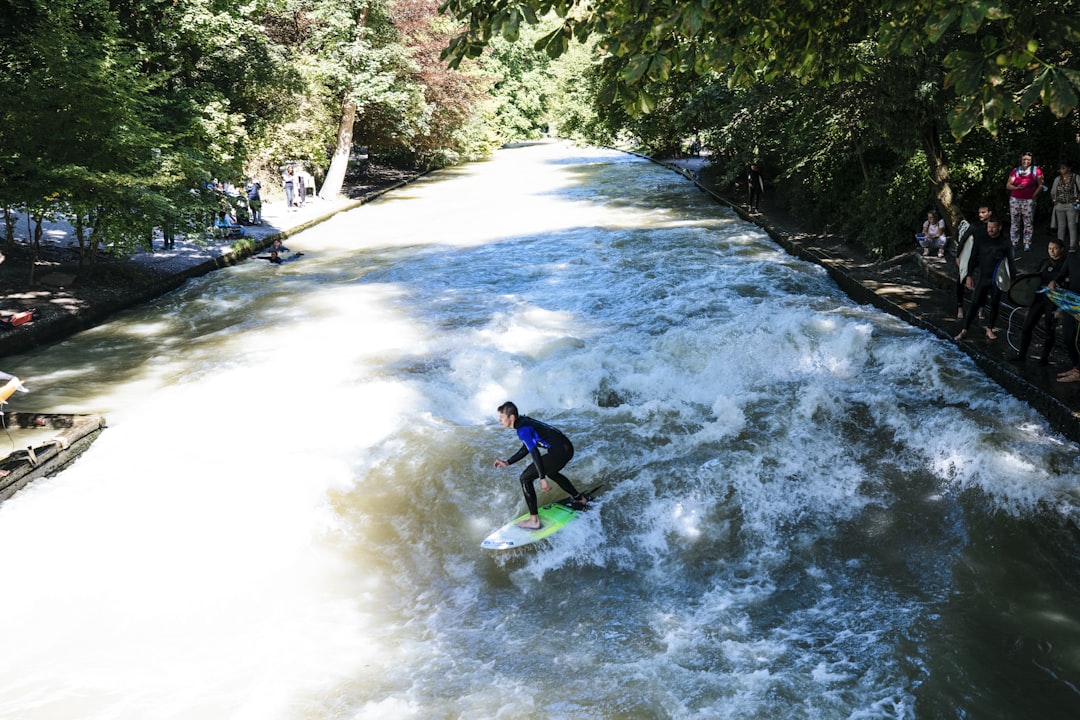
Let's pause for a moment and talk about what it actually takes to engage with the Eisbach safely, because while it looks like a playground, it’s closer to an industrial site in its intensity. First off, you really need to be careful about the water itself; the high mineral content from the Alpine limestone can be surprisingly harsh on your skin, especially if you’ve got any cuts or scrapes, so keep that in mind before you jump in. It’s also strictly non-potable, and health authorities keep a close watch on it, so do yourself a favor and keep your head above the surface to avoid swallowing any of that water. Those concrete banks might look sturdy, but they’re coated in a specialized, algae-resistant biofilm that turns into an ice rink the second it gets damp from the mist. If you're planning to watch from the edge, do yourself a huge favor and wear rubber-soled shoes, or you’re going to be fighting for traction the entire time you're standing there.
And here is where the local etiquette really comes into play. Because this is a protected slice of the English Garden, the city is super protective of the micro-ecosystem, which is why you’ll notice locals are pretty adamant about avoiding chemical-based sunscreens that could leach into the river. You also need to watch your belongings; that bridge is a high-traffic area, and the downdraft from the wave is honestly strong enough to pull a phone right out of your hand if you’re leaning too far over the railing. Just keep your gear tucked away and respect the single-file paths, because the last thing anyone wants is a bottleneck that blocks commuters or causes a spill near the water. Think of it as a shared space where we’re all balancing the thrill of the surf with the reality of a dense urban park.
If you are actually going to get in the water, you have to realize that you are entering a managed, high-stakes environment where local rules aren't just suggestions. The temperature can drop to cold-water shock levels in a heartbeat after a heavy rain in the Alps, so don't let a warm afternoon fool you into thinking the river is forgiving. I’d also strongly advise you to scout the exit points—those iron ladders—before you even think about putting your board in, because they can be tough to spot once you're in the current. And look, please respect the local surfing association’s officers; if they’re managing the flow of participants, they’re doing it to keep the queue moving and ensure nobody gets hurt on the underwater steel cables or the submerged wooden obstacles. It’s a bit of a dance, but when you respect the gear, the rhythm of the queue, and the raw physics of the river, it’s one of the most rewarding experiences you’ll find in the city.
Why the Eisbach Remains an Iconic Landmark in the Heart of Munich
The Eisbach wave remains an iconic landmark because it sits at the perfect intersection of 18th-century landscape design and modern urban hydrology, effectively turning a simple drainage tributary into a global surfing phenomenon. Think about it this way: what started as a functional excavation for the English Garden has evolved into a rare, self-sustaining ecosystem where glacial gravel deposits provide a natural filtration system for the river's flow. It’s not just a place to surf; it’s a living case study of how a city can reclaim infrastructure, using those post-war flood control walls to create a permanent, high-velocity channel that defies typical urban planning logic.
The sheer sensory experience of the site is what really sets it apart from any other city park you’ve visited. When you stand on the bridge, you’re actually inside a natural sound chamber where the stone walls amplify the river’s roar, making the water feel much more powerful than it might appear from a distance. That constant, thundering noise is paired with a localized humidity pocket that actually alters the micro-climate for the plants lining the banks, creating a lush, cool oasis right in the middle of Munich’s bustling streets. It’s fascinating how even the local wildlife, like the resilient macroinvertebrates living in the riverbed, have adapted to this high-turbulence environment, proving that nature finds a way to thrive even within a man-made system.
And I think the real reason we keep coming back to this spot is its sheer, unadulterated history of defiance. Local archives reveal that this very section of the river was the site of secret, clandestine hydraulic experiments as far back as the 1970s, long before the city officially embraced the sport. You’re looking at a site where the specific, dense hardwoods used for the wave’s barrier have been refined over decades to resist decay, all while keeping that hydraulic jump stable regardless of the season. It’s this blend of grit, clever physics, and historical continuity that makes the Eisbach more than just a tourist attraction; it’s a testament to how a community can transform a rigid, municipal channel into a reliable, world-class destination.
Planning Your Trip: How to Catch the Action in the English Garden
If you’re planning a trip to catch the action at the Eisbach, you really need to wrap your head around the fact that this isn’t a passive tourist attraction—it’s a high-performance, industrial-grade hydraulic system that demands respect. Before you even pack your camera, understand that the wave is essentially a stationary hydraulic jump holding steady against a flow of roughly 20 cubic meters per second, a feat of nature and engineering that doesn’t pause for your schedule. I’d suggest visiting during the shoulder seasons when the light is better, but keep in mind that the municipal sluice gates near the Haus der Kunst are constantly being adjusted to manage water volume. This means the wave's power can shift on a dime, so don't expect the same conditions every time you show up. It’s honestly a bit of a gamble, but that unpredictability is part of what keeps the local scene so authentic and raw.
When you arrive, you’ll notice the air feels noticeably heavier and more humid near the bridge, which makes sense because the constant atomization of water from the crashing wave keeps the local humidity 15 to 20 percent higher than in the rest of the English Garden. If you’re planning to stand on that historic masonry to watch, make sure you’re wearing rubber-soled shoes, as the concrete banks are coated in a slippery, algae-resistant biofilm that turns treacherous the moment it gets misted. You should also be aware that the bridge itself is a critical piece of infrastructure; acoustic sensors are embedded there to track vibrations, so please keep your bags tucked tight and don't lean too far over the railing. It’s a busy public thoroughfare for commuters, and the last thing you want is to be that person blocking the path while trying to get the perfect shot.
If you’re actually looking to get into the water, you need to understand that the technical demands here are extreme, especially given that the current can drag debris at speeds over 15 kilometers per hour. You’re dealing with a unique vortex effect at the edges of the wave where water recirculates at 1.5 meters per second, which is a total trap for anyone who hasn't practiced their exit strategy. I’ve seen enough people get caught off guard by the sheer force of the river, so please, watch the locals for at least a full session before you even think about jumping off that ledge. Remember that the river’s mineral-rich, alpine water is non-potable and can be harsh on your skin, so treat this as a high-stakes sport rather than a casual swim. It’s a masterclass in urban resilience, and if you respect the queue and the physics at play, it’s easily one of the most rewarding experiences you’ll find in Munich.
Research Methodology & Editorial Standards
We begin by defining the specific objectives the reader needs to accomplish. Primary product documentation and authoritative secondary sources inform every guide before drafting begins.
Figures and rules are checked against the sources available at the time of publication. Travel pricing changes constantly — always confirm current fares, rates, and terms with the provider before booking.