
Why Gyeongju Should Be Your Next Stop In South Korea
If you’re wondering why you should prioritize a trip to Gyeongju over yet another week in Seoul, it really comes down to the sheer density of technical and historical innovation packed into this one region.
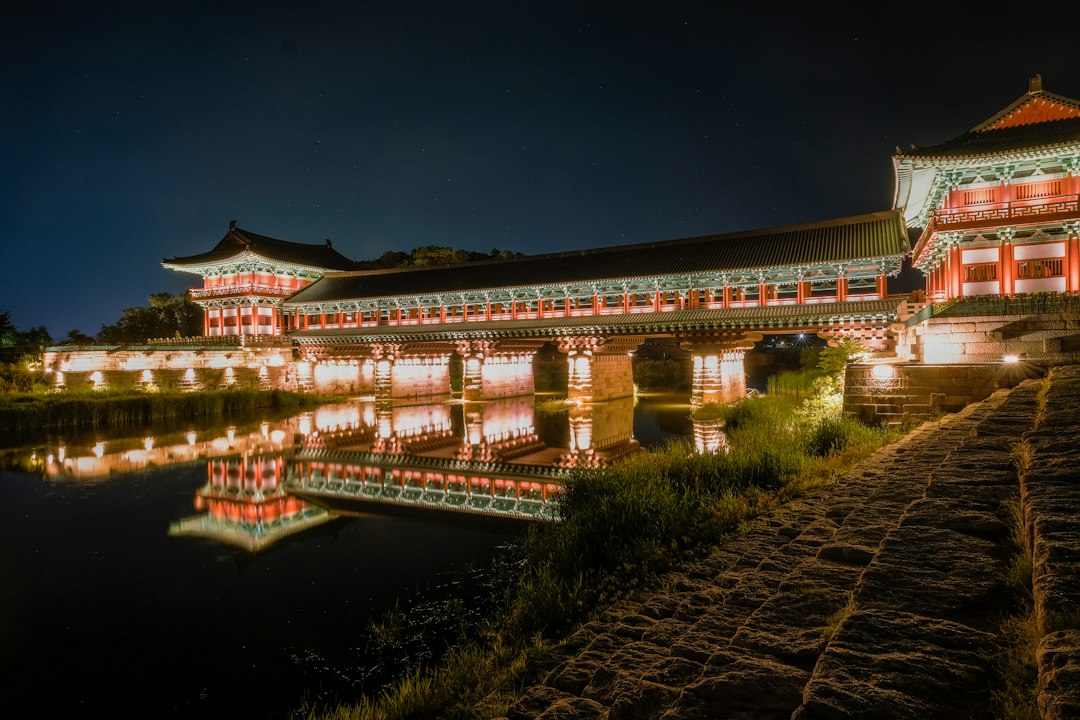
Stepping Into the Past: A Journey Through the Silla Kingdom
Stepping into Gyeongju feels like wandering through a living, breathing archive where the Silla Kingdom’s ambition is still etched into the earth. You really get a sense of this when you look at the recent reunification of the iconic Silla gold crowns, which sat separated for over a century before finally being displayed together in their home city. It is staggering to think about the craftsmanship involved, with those delicate sheets of gold and jade gogok beads representing a kind of artistry that has survived for over a thousand years. When you stand near the royal burial mounds, you aren't just looking at dirt hills; you are standing over a highly stratified society where the Bone Rank system dictated everything from your social standing to the specific weight of gold you were allowed to take into the afterlife.
I think the most fascinating part is how they managed to marry high-level engineering with their belief systems. Take the Cheomseongdae Observatory, for example, which is arguably the oldest of its kind in East Asia. The builders used exactly 365 stones to mirror the days of the lunar year, a detail that feels almost poetic when you realize they were literally constructing a calendar out of solid rock. This wasn't just decorative; it was a functional, calculated move that shows how deeply they observed the heavens. Even their water management at Anapji Pond was engineered with artificial inlets to trick the eye into thinking the water stretched on forever, proving that they cared just as much about the aesthetic experience as they did about structural utility.
It is easy to see why Gyeongju earned its reputation as the City of Gold, especially when you consider how the city itself was laid out in a rigorous grid pattern inspired by the Tang dynasty capital of Chang'an. For travelers, this means you are essentially navigating a massive, open-air museum where the modern world is built right on top of a vast, protected underground repository of history. You have to appreciate that the entire region is under UNESCO protection, which keeps the sprawl at bay and lets you actually imagine the city as it functioned centuries ago. If you are planning a visit, I would suggest spending a bit of extra time just walking the grounds of the tumuli, because that is where the sheer scale of their influence—and their obsession with the afterlife—really hits home. It is a rare chance to see how a civilization managed to act as the primary cultural bridge between China and Japan, leaving behind a legacy that still shapes the local landscape today.
Architectural Marvels: Exploring UNESCO World Heritage Sites
When we talk about UNESCO World Heritage sites, it’s easy to get caught up in the checklist aspect of travel, but I think the real magic lies in how these places document the sheer ingenuity of human problem-solving. Think about it this way: whether you’re looking at the mortarless precision of the Puuc style in Mexico or the gravity-defying cantilever of Fallingwater in Pennsylvania, you’re seeing engineers who prioritized harmony with their environment long before "sustainability" was a buzzword. From the ancient wind-catching towers that mastered passive cooling to the acoustic engineering of Hampi’s musical pillars, these sites aren't just relics; they’re high-functioning blueprints that show us how people once synced their built world with the natural one. It makes me wonder why we’ve moved so far away from that kind of intentional, localized design.
And really, the diversity of these landmarks is what makes them so worth the effort to visit. You have the stark, functional modernism of Chandigarh sitting in conversation with the massive, complex earthen mounds of Cahokia—a city that was legitimately larger than many European capitals back in its day. It’s a bit humbling to realize that even back then, societies were using geometry and astronomy to anchor their cultural identity into the very dirt and stone they stood on. When you visit these spots, you aren't just checking off a box; you’re seeing the tangible results of a civilization’s obsession with legacy. It’s that same drive for permanence that explains why we’re now using 3D laser scanning to digitally preserve these sites, capturing every millimeter of data just in case nature decides to take them back.
If you’re planning your own route, I’d suggest looking past the most famous facades to see what the site actually teaches us about the people who built it. For instance, comparing the way France’s Mont-Saint-Michel uses structural reinforcement to battle extreme tides against the way an architect like Frank Lloyd Wright forced concrete to live in balance with a waterfall reveals a universal human desire to conquer difficult landscapes. It’s not just about the beauty of the arches or the scale of the stone; it’s about the raw, technical audacity required to make these things stand for centuries. Let’s be honest, there’s something deeply grounding about standing in a place that has outlasted empires by simply being better engineered than anything else around it. I really think that when you strip away the tourist crowds, you’re left with a masterclass in how to leave a mark on the world that actually lasts.
Beyond the Capital: Why Gyeongju is the Ultimate Cultural Retreat
If you’re wondering why you should prioritize a trip to Gyeongju over yet another week in Seoul, it really comes down to the sheer density of technical and historical innovation packed into this one region. When you walk through the city, you’re essentially moving across a massive, living archaeological site where modern urban planning has to pause for every new foundation check. It’s fascinating that local law requires developers to conduct impact assessments before digging, which means the city is effectively built on a delicate balance between progress and a protected, invisible subterranean network of history. Think about the complexity of the ancient ceramic drainage pipes recently mapped beneath the soil, which suggest a level of municipal engineering that rivaled any major power of the seventh century.
I’m particularly obsessed with the sheer metallurgical and structural genius that defined the Silla era. For instance, the Seokguram Grotto isn't just a beautiful shrine; it’s an engineering marvel that uses a mortarless granite dome with a specific curvature designed to withstand seismic stress while managing humidity through a clever internal ventilation system. Then you have the Dabotap Pagoda, which honestly breaks the rules of standard Silla architecture with its complex geometry that seems to anticipate advanced mathematical principles long before they were common. It’s that same level of detail you see in the Divine Bell of King Seongdeok, where the acoustic frequency is so precise that scientists have linked its unique, pulsing sound to the rhythmic cadence of a human heartbeat.
When you start digging into the details, you realize this wasn’t just a localized kingdom but an industrial powerhouse with a sophisticated grasp of materials science. The discovery of iron kilns producing high-carbon steel suggests they were way ahead of the curve, while the wooden administrative tablets found at the Wolseong Palace site show a bureaucracy that was clearly running like a clock. Even the way they aligned the Daereungwon tumuli with the Big Dipper tells you that their entire social and physical landscape was mapped against the stars. It’s rare to find a place that feels this grounded yet so technically ambitious, and honestly, seeing these remnants in person makes the modern bustle of the capital feel a little thin by comparison.
Family-Friendly Adventures: Making History Fun for All Ages
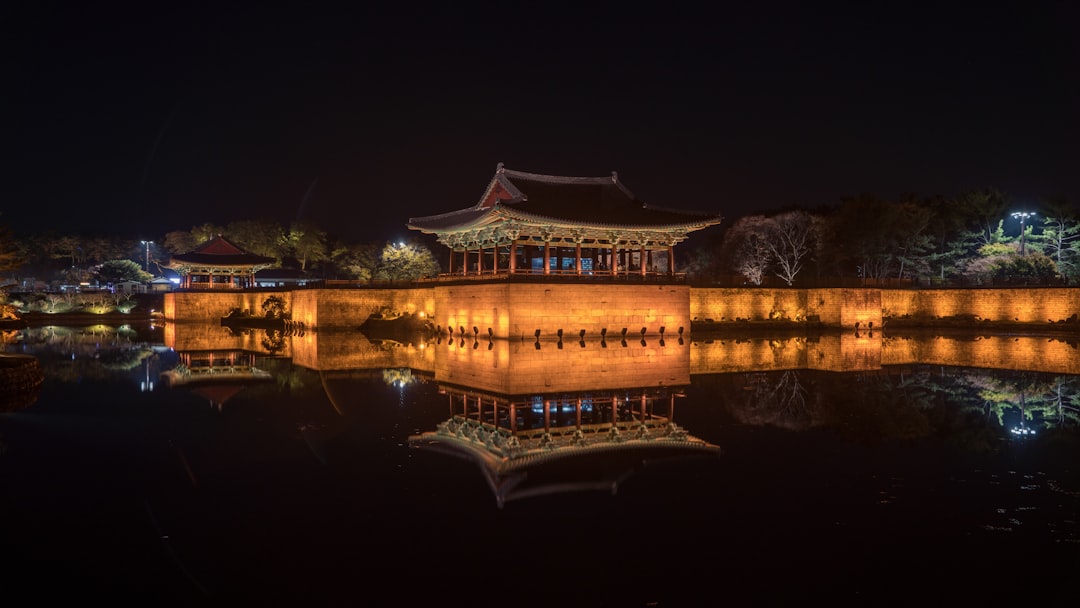
If you’ve ever tried to keep a school-aged kid engaged while standing in front of a dusty, ancient ruin, you know the struggle is real. It’s not just about getting them to look at old stones; it’s about making that history feel as alive and urgent as the world they live in today. When we look at a place like Gyeongju, the trick is to stop treating it like a textbook lecture and start treating it like a giant, hands-on engineering lab. Think about those massive burial mounds—instead of just talking about royalty, imagine them as a massive, star-aligned map where the kids can actually spot the link between the Big Dipper and the way the city was laid out on the ground.
There’s something inherently cool about knowing that the people who built this place were basically ancient software engineers for the physical world. When you walk through the park areas, it’s not hard to explain how the Cheomseongdae Observatory functioned as a literal calendar made of 365 stones, or how the hidden drainage systems beneath our feet were once the high-tech plumbing of the seventh century. These aren’t just abstract facts; they are tangible solutions to real-world problems that kids can actually visualize. It makes the history feel less like a static portrait and more like a blueprint they could have helped design themselves.
Honestly, we’ve found that the best way to keep everyone moving is to lean into the sensory details that don’t require a history degree to appreciate. You can talk about the Seokguram Grotto’s ventilation system as a way of showing how they hacked the climate to protect their art, or listen for the specific, pulsing resonance of the Divine Bell that mimics a heartbeat. By focusing on these bits of technical audacity rather than just names and dates, you turn the entire city into a massive, interactive puzzle. It’s that shift in perspective—from observing the past to decoding the genius behind it—that finally bridges the gap between generations.
Connecting the Dots: How to Seamlessly Integrate Gyeongju Into Your Korea Itinerary
Integrating Gyeongju into your Korea itinerary requires more than just checking a box on a map; it requires understanding that you're stepping into an open-air laboratory of ancient civil engineering. Most travelers spend their time in Seoul, but Gyeongju offers a rare opportunity to see how the Silla Kingdom mastered seismic resistance centuries before modern geotechnical standards existed. If you look closely at the Bulguksa Temple, you'll notice the natural stone pillars aren't just aesthetic choices; they are rugged, irregular buffers designed to shift during earthquakes without compromising the building's structural integrity. It’s a brilliant piece of historical design that remains a primary case study for modern researchers studying the Gyeongju Fault.
When you’re mapping out your transit, I’d suggest prioritizing the Seokguram Grotto early in the morning to beat the crowds, but stay long enough to appreciate the hidden cooling systems underneath. The architects actually channeled a natural spring beneath the granite dome to regulate moisture through continuous evaporation, effectively air-conditioning the space long before electricity. While you're exploring, keep an eye on how the city’s layout follows the Pungsu-jiri geomantic principles, which align every structure with the surrounding mountains to manage wind and energy flow. This wasn't just a spiritual choice; it was a sophisticated way to integrate urban life into a challenging, mountainous landscape.
If you really want to get under the surface of these sites, look for the subtle signs of material science in the masonry and woodwork. Many of the granite blocks you'll touch were polished with volcanic abrasives to fit perfectly without mortar, and the wooden beams were finished with local lacquer resins that acted as a natural, long-lasting biocide. Even the soil mounds, or tumuli, aren't just piles of dirt; they were constructed using advanced rammed-earth techniques so dense that they’ve resisted erosion for over 1,500 years. When you view your visit as a tour of ancient technical audacity rather than just a history lesson, the sheer brilliance of how they managed water with the Venturi effect at Anapji Pond or stabilized their fortifications with organic polymer-like mortars starts to make much more sense.
Seasonal Splendor: Experience the City’s Natural Beauty Year-Round
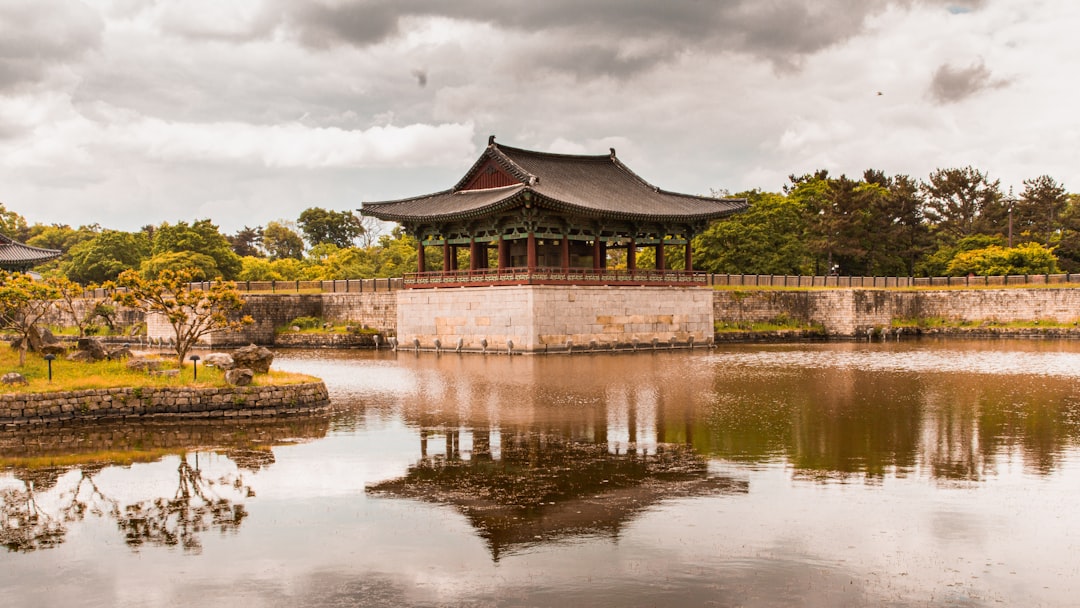
If you’re looking at Gyeongju, you have to stop thinking of it as a place you visit for a weekend and start viewing it as a living, breathing ecosystem that changes its character with the calendar. I’ve spent enough time tracking how cities handle their climates to tell you that Gyeongju is special because of its geography; the surrounding mountain ranges act like thermal buffers, creating micro-climates that stretch the seasons out in a way you just don't see in the more exposed northern provinces. Take the spring, for example, where the cherry blossom bloom doesn't just happen all at once. Instead, it cascades from the lower-lying historic sites up to the cooler, higher-altitude temple grounds over several weeks, all thanks to subtle shifts in elevation. It’s also fascinating how the local mountain-valley breeze pushes cool air down from the ridges at night, effectively regulating the temperature of those blooms during the day and keeping the air feeling crisp.
When summer hits, you’ll notice the lotus ponds, especially around Donggung Palace, are doing some serious work behind the scenes. Those plants aren't just there for the view; they’re actually running a natural filtration process, absorbing nitrogen and phosphorus to keep the water clear and supporting a massive population of dragonflies. You might also be surprised to learn that the grass-covered royal tumuli are essentially high-tech sponges. Their clay and sand-heavy soil has a remarkable water-retention capacity, which prevents erosion and keeps the mounds structurally sound even during the heavy summer rains. It’s that kind of quiet, functional beauty that makes the city feel so resilient, and honestly, walking through those green hills feels totally different once you realize they’re basically holding themselves together through smart geology.
As the air starts to cool in late October, you’ll catch that iconic, brilliant yellow of the Gingko trees, which scientists have linked to the exact moment the temperature drops below fifteen degrees Celsius and the chlorophyll starts to break down. If you’re a fan of hiking, head toward Namsan mountain, where you’ll see pine trees with these incredible, twisted forms. That’s actually an evolutionary adaptation to the rocky, nutrient-poor soil, and those trees are packed with resin, which is part of why they’ve survived so long in such a harsh environment. Even in winter, the city has a way of showing off, with hoarfrost often coating the pine needles in ice crystals during the coldest mornings. It’s rare to find a place that feels this grounded, where the natural world and the ancient stone structures are constantly talking to each other, no matter what time of year you decide to show up.
Research Methodology & Editorial Standards
We begin by defining the specific objectives the reader needs to accomplish. Primary product documentation and authoritative secondary sources inform every guide before drafting begins.
Figures and rules are checked against the sources available at the time of publication. Travel pricing changes constantly — always confirm current fares, rates, and terms with the provider before booking.