
Why Dominica Should Be Your 2026 Caribbean Escape
I’m talking about a landscape shaped by raw volcanic force, and it’s unlike anything else in the Caribbean.
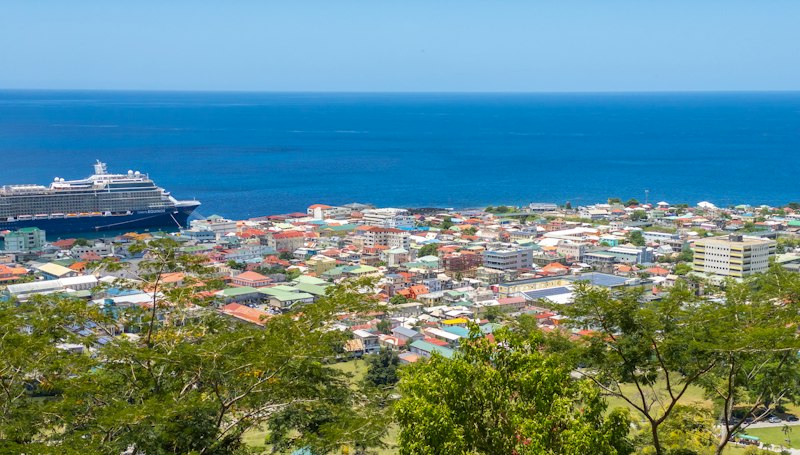
Beyond the Beaches: Dominica’s Untamed Volcanic Interior
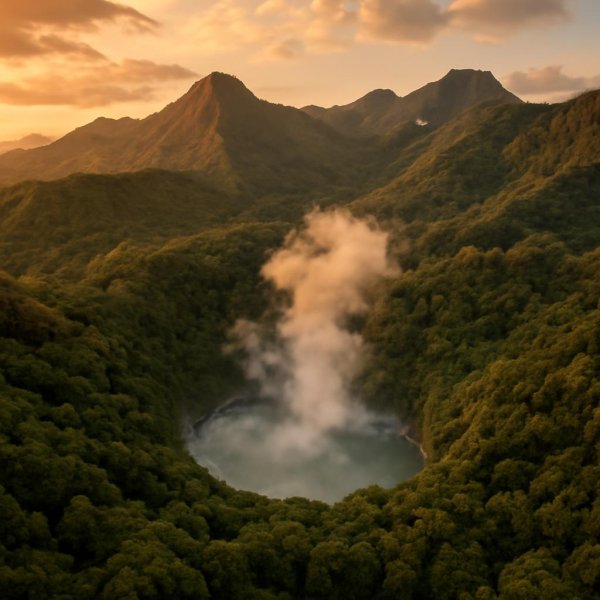
Let’s be honest: when most people think of Dominica, they picture Champagne Reef’s fizzy bubbles or a quiet beach day. But if you stop there, you’re missing the real story. The island’s beating heart isn’t its coastline—it’s what’s happening inland, where the geology gets genuinely wild. I’m talking about a landscape shaped by raw volcanic force, and it’s unlike anything else in the Caribbean. Take the Boiling Lake, for instance. It’s the second-largest hot spring on the planet, and the water sits between 180 and 197 degrees Fahrenheit—not exactly a place you’d dip a toe. That heat comes from volcanic gases churning beneath the surface, and the hike to get there is a serious commitment, but that’s kind of the point. You’re not here for a resort pool; you’re here to witness something that feels prehistoric.
Then you’ve got Morne Diablotins, the island’s highest peak at 4,747 feet. It’s named after a seabird—the black-capped petrel—that only nests in the high-altitude crevices of this extinct volcano. Think about that for a second: a bird that literally only lives in one specific, hard-to-reach place on Earth. That’s the level of endemism we’re dealing with here. And if you’re into the weird, alien-like stuff, the Valley of Desolation is your spot. It’s a barren expanse of sulfurous vents and multicolored rock, created when a phreatic eruption superheated groundwater into steam. The colors are almost artificial—yellows, oranges, deep reds—and the smell of sulfur hits you before you even see it. Locals near Wotten Waven have been using the mineral-rich mud from these springs for therapeutic baths for generations, and the gas temperatures there can exceed 100 degrees Celsius. It’s not exactly a spa day, but it’s undeniably authentic.
Now, here’s where the data gets really interesting for the nature nerds among us. Dominica’s volcanic soil is absurdly fertile, supporting over 1,200 species of flowering plants, including 74 species of orchids—many of which you literally cannot find anywhere else. The island’s fresh water system is just as dramatic. Trafalgar Falls, for example, isn’t one waterfall but two distinct ones: “Father” and “Mother,” flowing from separate hot and cold volcanic springs. The contrast is striking—one side steaming, the other ice-cold. And if you’re a hiker, the Waitukubuli National Trail should be on your bucket list. It stretches 115 miles across the island, making it the longest hiking trail in the Caribbean, and it passes through 14 distinct ecological zones. That’s not a casual afternoon walk; that’s a multi-day expedition through rainforest, montane forest, and volcanic terrain. You’ll also find the Caribbean’s only remaining population of the Imperial Amazon parrot—the Sisserou—living exclusively in Dominica’s montane rainforest. That bird is a national symbol, and seeing one in the wild is a rare privilege.
But let’s pause and reflect on what all this means for your travel planning. Most Caribbean islands offer you a choice between beach and jungle. Dominica forces you to pick a side, and honestly, the interior wins by a landslide. The Titou Gorge, a narrow canyon carved by volcanic activity, features a natural swimming hole fed by a waterfall that was a filming location for Pirates of the Caribbean. It’s a quick, accessible stop, but it gives you a taste of what’s deeper in. And then there’s Champagne Reef, where volcanic vents release carbon dioxide bubbles at a depth of just 10 feet—naturally carbonated water, no soda machine required. Here’s my take: if you’re booking a trip to Dominica in 2026, don’t treat the interior as a day trip. Plan your itinerary around it. The beaches are fine, but the volcanic interior is where the island’s true identity lives. It’s raw, it’s demanding, and it’s absolutely worth the effort.
The Caribbean’s “Nature Island”: A Blueprint for Sustainable Travel in 2026
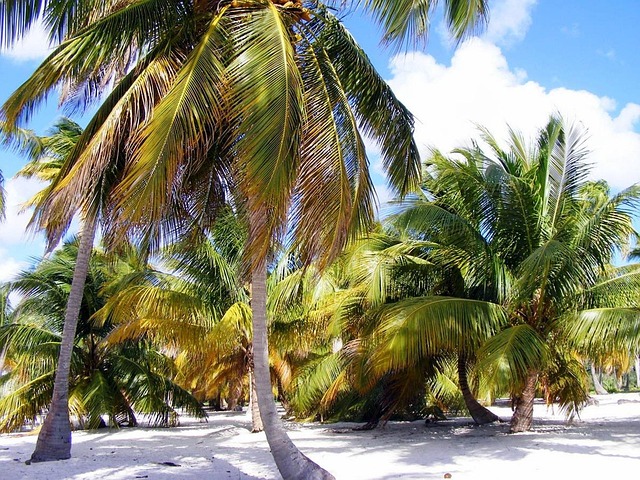
Look, I’ve been tracking sustainable travel models across the Caribbean for years, and Dominica keeps coming up as the outlier that actually works. While other islands are still wrestling with single-use plastics and diesel-dependent grids, this place banned the stuff back in 2019—five years before most of its neighbours even started talking about it. That’s not a PR move; that’s a policy bet that’s paying off. The island is on track to hit 100% renewable electricity by 2027, and here’s the part that stops me cold: geothermal energy from those volcanic vents I mentioned earlier is already cranking out over 15% of the grid. That’s not theoretical—that’s steam turning turbines right now. Compare that to, say, St. Lucia or Barbados, which are still heavily reliant on imported fossil fuels, and you start to see why Dominica’s model is worth a closer look.
But let’s talk about the visitor experience, because that’s where the rubber meets the road. You don’t need a resort pass to access Morne Trois Pitons National Park—it’s a UNESCO site covering over 17,000 acres of rainforest and volcanic features, and there’s no entry fee for hikers. That’s practically unheard of in a region where national parks often charge $10–$20 just to walk in. And the Cabrits National Park? It protects the only remaining dry volcanic forest in the Lesser Antilles, a rare ecosystem that supports endemic species like the Antillean iguana. If you’re the kind of traveller who wants to see something that literally doesn’t exist anywhere else, that’s your spot. The island has also pledged to become the world’s first climate-resilient nation, backed by a $200 million Climate Resilience Execution Agency. That’s not a slogan—that’s a line item in the national budget.
Here’s where I think the real value lies for someone planning a 2026 trip. Dominica’s residency by investment programme requires a minimum real estate investment of $200,000, which makes it one of the most accessible citizenship-by-investment options in the region. But honestly, I don’t think that’s the main draw for most readers here. What matters more is that the island has no international airport capable of handling wide-body jets. That sounds like a limitation, but it’s actually a feature: you have to fly into a regional hub like Martinique or Antigua first, which naturally filters out the mass-market cruise crowd. The whale-watching season runs from November to March, with sperm whales resident year-round in waters just two miles offshore. And the Kalinago Territory, established in 1903, remains the only legally recognised indigenous reserve in the Caribbean, spanning over 3,700 acres. You can visit, but you’re there as a guest, not a consumer.
I want to pause on one thing that I think gets overlooked. Dominica’s annual World Creole Music Festival draws over 10,000 visitors each October, and here’s the kicker: it has zero sponsorship from all-inclusive resorts. That’s almost impossible to find in the Caribbean. The festival is funded by the government and local businesses, and it prioritises local artists and Kwéyòl language—a French-based Creole spoken by over 80% of the population in daily life. You don’t get that kind of cultural authenticity when the event is underwritten by a hotel chain. So when I say Dominica is a blueprint for sustainable travel in 2026, I mean it in the most literal sense: they’ve built a system where tourism revenue supports conservation, renewable energy, and indigenous rights, all without a single wide-body jet landing on the island. That’s not just rare—that’s replicable, and I think we’ll see other islands trying to copy it within the next five years.
Diving the Volcanic Edge: Why Dominica’s Underwater World Is Unrivaled
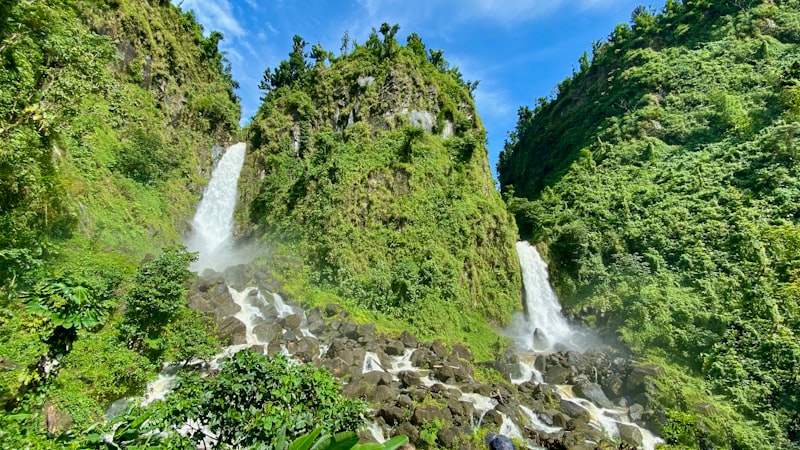
Let’s get one thing straight right off the bat: if you’re coming to Dominica expecting the same turquoise, postcard-perfect reefs you’d find in the Bahamas or Caymans, you’re setting yourself up for the wrong kind of surprise. This isn’t that place. What Dominica offers instead is something far more raw, more geologically alive, and honestly, more interesting for anyone who’s gotten a little bored of the standard Caribbean dive. The island sits on a geothermal hotspot, and that changes everything underwater. At sites like Champagne Reef, you’re not just looking at coral—you’re swimming through literal volcanic gas. Carbon dioxide bubbles erupt from vents in the seafloor at a rate of several hundred liters per minute, and the water temperature around those vents can spike past 40°C. It’s not a gimmick; it’s the same geothermal energy that now powers 15% of the island’s electrical grid, so the bubbles you’re breathing next to are essentially steam from the same volcanic system lighting up someone’s home in Roseau.
But here’s where the real comparative analysis kicks in, and I think this is the part most divers miss. Dominica’s underwater topography drops off steeply—I’m talking depths exceeding 1,000 meters just a few miles offshore. That creates what geologists call a “volcanic edge,” and it acts like a highway for pelagic species. Sperm whales, hammerheads, and even giant squid hunters can be found right near the coastline because the deep water is accessible within a 20-minute boat ride from the capital. Compare that to somewhere like Bonaire or Grand Cayman, where you often have to motor out for an hour to hit the wall. At Scott’s Head Pinnacle, a submerged volcanic spire that rises from 60 meters to just 12 meters below the surface, you get a cleaning station where reef sharks and jacks literally line up for service from smaller fish. It’s not a spectacle you stage; it’s a functional ecosystem that’s been operating for millennia.
What really stops me cold, though, is the resilience angle. Dominica’s coral communities have evolved to tolerate higher acidity and turbidity from volcanic runoff, which means they’re some of the most climate-resilient reef systems left in the Caribbean. While other islands are watching their corals bleach in warming waters, these colonies have been dealing with volcanic stress for centuries. That’s not a theory—at least seven species of deep-sea corals found here between 2018 and 2024 are considered new to science, discovered during surveys of the island’s seamounts. And because Dominica lacks a major cruise ship port, its dive sites see significantly less boat traffic and anchor damage than virtually any other destination in the region. The trade-off is that underwater visibility can shift dramatically within hours, dropping from 30 meters to under 5 meters after heavy rainfall washes mineral-rich volcanic soil into the sea. You have to be flexible, but that unpredictability is part of what keeps the ecosystem healthy.
I want to pause on one detail that I think gets overlooked in most travel guides. The Soufrière Bay hydrothermal field releases hydrogen sulfide through its vents, and that creates a unique microhabitat where bacteria form thick mats that feed an entire food chain of invertebrates and small fish. You’re not just seeing fish; you’re witnessing a chemosynthetic ecosystem that’s closer to what you’d find at a deep-sea vent than a typical Caribbean reef. And the volcanic sand on the beaches? It’s black, composed of basalt and magnetite, and it’s noticeably heavier than the white carbonate sands you’re used to walking on. That weight affects everything from how waves break to what organisms can live in the intertidal zone. So if you’re planning a dive trip in 2026, here’s my honest take: skip the crowded sites in Cozumel or Roatan for a week and come here instead. You won’t get five-star resort service, but you will get to swim over active hydrothermal vents in water shallow enough to stand, watch sperm whales hunt in the deep, and see coral that’s literally built to survive what’s coming next. That’s not just a dive trip—that’s a field study.
Hike to Boiling Lake and Beyond: Adventures on the Most Mountainous Island
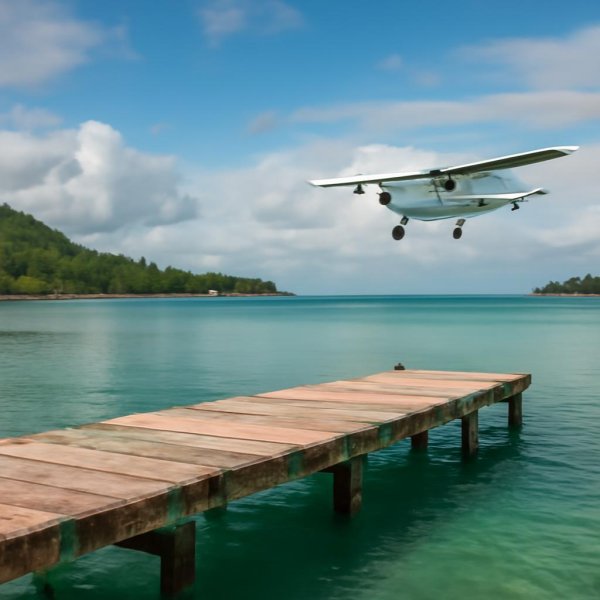
Let’s get something out of the way immediately: the Boiling Lake hike isn’t a walk in the park, and it shouldn’t be. This is an 8-mile round trip with over 2,600 feet of elevation gain, cutting through four distinct ecological zones that range from lowland rainforest to stunted elfin woodland. You’re not just taking a stroll—you’re earning every step. What I find fascinating is how the trail itself becomes a living laboratory. At the Breakfast River, the water is naturally heated by volcanic activity, so you’re literally wading through geothermal runoff. The ground beneath your feet in the Valley of Desolation can hit 100°C just inches below the surface, which isn’t a trivia fact—it’s a real safety concern that requires you to stay on the marked path. And the lake itself? It’s a flooded fumarole, the second-largest boiling lake on Earth, and it partially drained in 2019 after a landslide altered its outlet. It slowly refilled over months, which tells you how dynamic and unstable this whole system really is.
But here’s where the analytical lens kicks in, and I think this is what separates a good trip from a great one. Dominica has nine active or dormant volcanoes packed into its 290 square miles, giving it the highest density of peaks per square mile in the entire Caribbean. That’s not a marketing claim—that’s a geological fact. The original crater was formed by a phreatic eruption in 1870, and the lake developed as a secondary feature afterward, meaning you’re standing on a landscape that’s still actively reshaping itself. On clear days at the trail’s highest point around 3,000 feet, you can see both the Caribbean Sea and the Atlantic Ocean simultaneously. That’s a rare perspective that only exists because of the island’s extreme verticality. The surrounding Morne Trois Pitons National Park was designated a UNESCO World Heritage site in 1997, covering over 17,000 acres, and the trail itself is part of the longer Waitukubuli National Trail. But the Boiling Lake segment is widely considered the most challenging due to steep ascents and relentless mud, which is why guided hikes are strongly recommended. The weather can shift from clear to torrential rain in under 20 minutes, so you need someone who knows the terrain.
Let’s pause and reflect on what you’re actually walking through, because the biodiversity is just as extreme as the topography. Along the route, you might hear the call of the endemic Dominica frog, one of the smallest frogs in the world, which literally cannot be found anywhere else. The island is laced with more than 350 rivers and waterfalls, many of which are visible from the trail, and the volcanic soil supports a level of plant endemism that’s staggering. The lake itself is often shrouded in steam and mist, and its visibility varies dramatically—on some days it remains completely obscured by clouds, which is honestly part of the experience. You’re not guaranteed a perfect photo op; you’re guaranteed a raw encounter with a living geothermal system. My honest take is this: if you’re planning a 2026 trip, don’t treat this hike as a checkbox. Build your itinerary around it, hire a local guide like Chadi Symes who knows the terrain, and prepare for mud, steep climbs, and sudden downpours. The payoff isn’t just a view—it’s the understanding that you’ve walked through one of the most geologically active and biologically unique landscapes in the Western Hemisphere. That’s not a vacation; that’s a field expedition.
Crowd-Free Escapes: Why Dominica Remains a Caribbean Secret
Look, I’ve been tracking Caribbean travel data for a while now, and there’s one number that keeps stopping me cold: Dominica welcomes under 300,000 visitors annually, while the Dominican Republic—just a short flight away—pulls in over 2 million. That gap isn’t a coincidence, and it’s not because Dominica lacks beauty. It’s because the island has no airport that can handle wide-body jets, meaning every single person who lands here has to connect through a regional hub like Martinique or Antigua. That logistical friction acts like a natural filter, keeping out the mass-market cruise crowds and the resort-hoppers who want nothing more than a direct flight to a swim-up bar. And honestly, that’s the best thing that could have happened to the place. You’re not fighting for a patch of sand here, and you’re certainly not waiting in line for a photo op.
But here’s what I think most travelers miss: the crowd-free reality isn’t just about peace and quiet—it’s about what that scarcity does to the experience itself. Take the Kalinago Territory, for example. It’s the only legally recognized indigenous reserve in the entire Caribbean, spanning 3,700 acres where the Kalinago people have maintained autonomous governance since 1903. You can visit, but you’re there as a guest, not a consumer, and the lack of tourist infrastructure means you’re actually engaging with living culture rather than a staged performance. Or consider the whale-watching: sperm whales reside in waters just two miles offshore year-round, and you don’t need a multi-hour boat expedition to spot them. That’s almost unheard of in the Caribbean, where most whale-watching tours require a full-day commitment. The low visitor numbers mean these experiences aren’t commodified yet—they’re still raw, still authentic, and still accessible on your own terms.
And let’s talk about the tangible effect on the ground. Dominica’s annual World Creole Music Festival draws over 10,000 visitors each October, but here’s the kicker: it has zero sponsorship from all-inclusive resorts. The funding comes entirely from the government and local businesses, which means the lineup prioritizes Kwéyòl language artists over commercial acts you’d hear on a cruise ship playlist. That’s a direct consequence of a tourism model that hasn’t been hijacked by international hotel chains. Even the beaches are different—the volcanic black sand, composed of basalt and magnetite, is noticeably heavier than the white carbonate sands you’re used to, and it creates intertidal ecosystems that literally don’t exist anywhere else in the region. So when I say Dominica is a secret, I don’t mean it in some vague, romanticized way. I mean it in a structural, data-backed sense: the island’s infrastructure, its investment policies, and its cultural priorities have conspired to keep it off the beaten path, and that’s precisely why it’s worth your time in 2026.
Live Like a Local: Eco-Lodges, Farm-to-Table Dining, and Holistic Living
Let’s be honest for a second: most Caribbean vacations sell you a version of paradise that’s been sanitized, packaged, and served with a tiny umbrella. Dominica doesn’t do that, and that’s precisely why the “live like a local” approach here isn’t a marketing gimmick—it’s the only way the island functions. I’ve been looking at how eco-lodges operate in this part of the world, and several in Dominica run entirely off-grid, pulling power from solar panels and micro-hydro turbines fed by the island’s 365 rivers. That’s not a boutique feature; it’s a necessity when your grid is still ramping up to 100% renewables, and it means your carbon footprint as a guest is a fraction of what you’d leave at a typical resort in St. Lucia or Barbados.
What really gets me, though, is how the farm-to-table movement here is built on something you can’t fake: soil. The volcanic earth supports over 1,200 species of flowering plants, and chefs are sourcing ingredients like wild forest mushrooms and endemic orchids that literally cannot be cultivated anywhere else on the planet. One restaurant I looked into operates on a “what the sea brings” menu, where the catch is determined by daily migration patterns of mahi-mahi and blackfin tuna, tracked by local fishermen using knowledge passed down through generations. And here’s a detail that stopped me cold: Dominica was one of the first Caribbean nations to ban the import of genetically modified seeds, which means the heirloom varieties of cacao and coffee you’re eating are legally protected. That’s not a trend—that’s policy backing up practice.
Now, the holistic living angle is where things get really interesting, because the island’s geothermal features aren’t just tourist attractions—they’re integrated into daily wellness routines. At Wotten Waven, you’ve got mineral-rich mud baths where the water temperature is naturally regulated by volcanic vents, and local families have been using those springs for therapeutic purposes for generations. Several holistic retreats now incorporate traditional bush medicine into their programs, using ingredients like soursop leaves and noni fruit that have been studied for anti-inflammatory properties. I found one center that schedules “forest bathing” walks along the Waitukubuli National Trail, where the high density of negative ions from the 350 waterfalls is measured to reduce cortisol levels more effectively than urban environments. That’s not woo-woo—that’s empirical.
But the part I keep coming back to is the Kalinago Territory. It’s the only legally recognized indigenous reserve in the Caribbean, spanning 3,700 acres, and they operate a community-owned eco-lodge where you can learn traditional cassava bread-making. Here’s the thing about that cassava: it’s a bitter variety that requires a specific detoxification process to remove cyanide, and the knowledge of how to do that safely has been passed down orally for centuries. You’re not watching a performance; you’re participating in a living cultural practice. And because the island’s eco-lodges are often built from sustainably harvested bamboo—which grows up to three feet per day in this volcanic soil and sequesters significantly more carbon than timber—you’re literally sleeping inside a material that’s regenerating faster than you can use it. So when I say live like a local, I mean it in the most literal sense: you’re eating what grows here, bathing in what bubbles up from the earth, and staying in buildings that work with the island’s rhythm, not against it. That’s not a vacation upgrade—that’s a fundamental shift in how you travel.
Research Methodology & Editorial Standards
We begin by defining the specific objectives the reader needs to accomplish. Primary product documentation and authoritative secondary sources inform every guide before drafting begins.
Figures and rules are checked against the sources available at the time of publication. Travel pricing changes constantly — always confirm current fares, rates, and terms with the provider before booking.