
The Most Unusual Roadside Attractions Worth A Detour On Your Next Travel Adventure
And honestly, I think we’re seeing a real comeback here, as local spots use these gargantuan builds to stand out in a world where we’re constantly scrolling for the next cool photo.
The World’s Largest Curiosities: From Giant Food to Massive Statues
When you're staring down a long stretch of highway, there’s something undeniably magnetic about a roadside attraction that defies common sense. I’m talking about those oversized icons—like the massive ice cream sundae sculpture in Yermo, California—that stop you in your tracks just because they exist at a scale that feels almost impossible. It’s not just about being big; it’s about that specific, kitschy charm that transforms a mundane drive into a genuine memory. And honestly, I think we’re seeing a real comeback here, as local spots use these gargantuan builds to stand out in a world where we’re constantly scrolling for the next cool photo.
If you look closely at the engineering behind these structures, it’s actually pretty impressive. Most of these giants are built using modern fiberglass resins, which keep them lightweight enough to handle but tough enough to survive decades of brutal weather. You have to consider the wind-load calculations involved in keeping a giant coffee cup or a massive statue upright against high-velocity gusts on an open plain. It’s a specialized process that goes way beyond just aesthetics, requiring serious maintenance with industrial coatings to fight off UV fading. It turns out that keeping a record-breaking monument looking fresh is a full-time job.
But why go to all that trouble? For towns like those in Iowa, which claims 14 of these record-breaking curiosities, these attractions are often the heartbeat of local tourism. Think about the Walcott truck stop—it’s not just a place to fuel up; it’s a 22-acre destination with a museum and a 300-seat restaurant that keeps the local economy humming. Even if you think they’re just silly photo ops, they are remarkably effective economic anchors. Whether it’s a coffee shop in Ohio chasing a world record or a classic statue on a lonely stretch of road, these things create a physical connection in a way that online marketing just can't replicate.
Quirky Architectural Marvels That Defy Convention
When I start looking at roadside gems, I’m often drawn past the standard kitsch toward buildings that completely ignore the rules of geometry and gravity. Think about the Basket Building in Newark, Ohio, which isn't just a big basket; it’s a 160-times scale replica where the steel handles actually contain industrial heating coils to prevent dangerous ice buildup. Or consider the Kansas City Public Library, where the parking garage is hidden behind twenty-two massive, 25-foot-tall book spines that actually hold up against harsh regional temperature swings. These aren't just novelties, they’re feats of engineering that force us to rethink how a structure should look and function.
Then you have places like the Crooked House in Sopot, which manages to avoid a single straight line, or the Bubble Palace in France, where Antti Lovag built a home entirely without right angles by spraying concrete over a spherical metal frame. It’s a bold departure from the efficiency of standard boxy construction, yet these buildings manage to stay standing through sheer ingenuity. I’m always struck by the Wat Samphran Dragon Temple in Thailand, where a seventeen-story concrete dragon acts as a spiraling pedestrian tunnel, blending art with actual transit space. It’s the kind of ambition that makes you stop and wonder why we settle for beige walls and flat roofs so often.
Finally, there’s the sheer audacity of designs like the Piano House in China or the inverted Wonderworks facility in Tennessee, which use hidden steel trusses to maintain a visual trick that feels like it shouldn't exist. Whether it’s the prefab modular stacks of Montreal’s Habitat 67 or the surreal yellow eggs adorning Dalí’s Torre Galatea, these projects prove that architecture can be playful without sacrificing structural integrity. I’ve found that even humble spots like the Haines Shoe House—built way back in 1948—show that you can turn a specific shape into a livable space if you’re willing to get creative with your materials. It’s a reminder that when you’re out on the road, the most memorable stops are often the ones that refuse to fit into a conventional box.
Bizarre Museums Dedicated to the Weird and Wonderful
You know that moment when you’re mid-road trip and realize you’ve reached the limit of your patience for conventional historical sites? That’s exactly when I start hunting for the fringe—the spots that celebrate the absolute strangest corners of human endeavor. It’s not just about the kitsch factor; these bizarre museums often provide a much more honest, if slightly unsettling, look at our history than any polished institution ever could. Think about the Meguro Parasitological Museum in Tokyo, which manages to make a record-breaking 8.8-meter tapeworm into a strangely compelling study of biology, or the Icelandic Phallological Museum, which approaches its subject with a level of taxonomic seriousness that’s honestly refreshing. These places don't just exist for shock value; they function as eccentric archives that track the evolution of our daily lives, from the 4,500-year history of sanitation at New Delhi's Sulabh International Museum of Toilets to the way bread production shaped civilizations at the Museum of Bread Culture in Germany.
When you weigh the pros and cons, the value of these niche collections lies in their specificity. Where else can you find the Vent Haven Museum in Kentucky maintaining over 900 ventriloquist dummies, or the Museum of Broken Relationships in Zagreb turning discarded mementos into a profound emotional archive? Sure, you might walk out feeling a bit weirded out, especially after seeing the anatomical anomalies at Philadelphia’s Mutter Museum, but that’s the point. These sites force you to engage with topics that are usually sanitized or ignored, treating things like failure, biological horror, or even legendary cryptozoology with a rigorous level of documentation. It’s a fascinating, if sometimes messy, way to look at how we categorize our world.
But really, I think it’s time we stop dismissing these places as mere roadside distractions. When you look at institutions like the Museum of Neon Art, which preserves the delicate chemical balance of noble gases, you’re seeing a real, technical effort to stave off the obsolescence of our visual history. Even the Museum of Bad Art in Massachusetts serves a purpose, creating a formal archive of creative failure that is just as telling as any gallery of masterpieces. If you’re planning your next route, I’d suggest shifting your focus away from the standard tourist traps and toward these outliers. Whether it’s the necropants at Iceland’s Museum of Witchcraft or the sheer audacity of a museum dedicated to toilets, you’ll walk away with a much clearer picture of what makes us tick—even if you can't quite explain why you’re glad you saw it.
Ghostly Ruins and Abandoned Relics Along Forgotten Highways
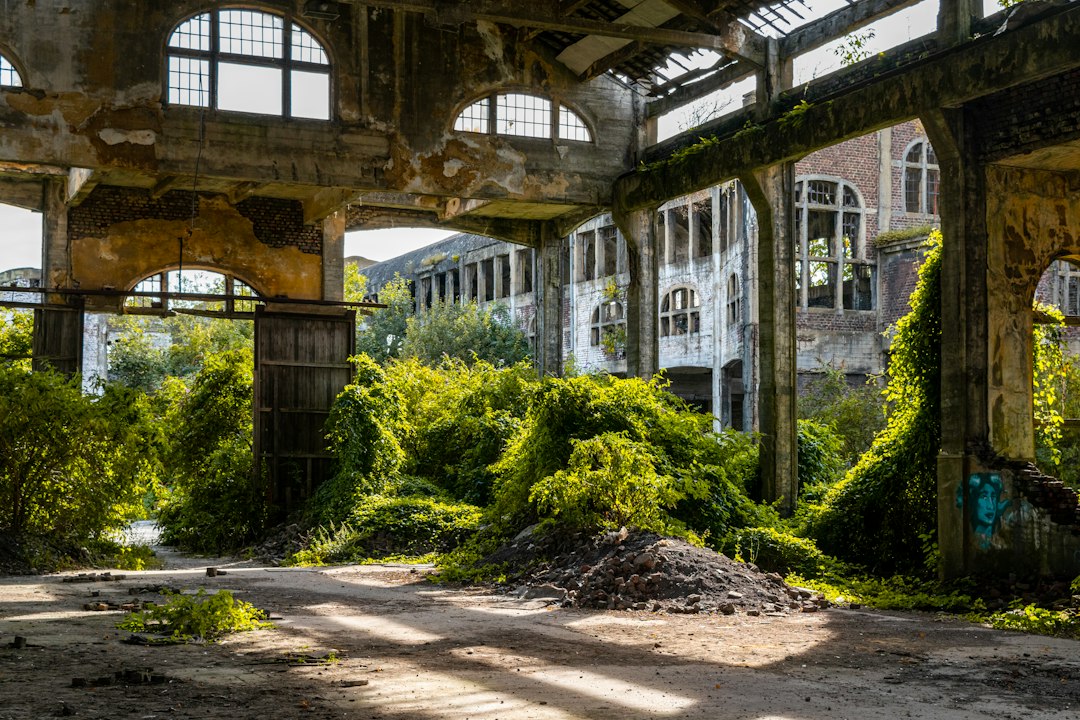
There’s something hauntingly beautiful about the way a road trip can suddenly veer from the familiar hum of the interstate into the quiet, skeletal remains of a forgotten past. We often focus on the shiny, oversized roadside attractions that command our attention, but I’ve always found the decaying relics—the crumbling ghost towns and hollowed-out motels—to be far more revealing about how we once lived and moved. When you stand in a place like St. Elmo, Colorado, it’s not just the stillness that hits you; it’s the realization that this town survived because its 10,000-foot elevation essentially pressed pause on the world, preserving lodgepole pine structures that would have long since rotted away in a more humid climate. It’s a stark contrast to the abandoned miniature villages in places like Connecticut, where forest succession and the harsh reality of soil contamination from the industrial era have completely reclaimed the land, dictating exactly which plants can survive on the ruins.
If you look at the physics of why these places disappear, it’s rarely just about time; it’s about the specific chemical and geological forces that move in once the people leave. The asphalt on these old, decommissioned highways is essentially dying through oxidation, where oxygen molecules brittle the bitumen until freeze-thaw cycles and opportunistic taproots finish the job. I find the history of these sites so fascinating because it’s usually tied to the rigid economics of resource exhaustion, like when the hydrothermal veins that fueled a mining town finally ran dry, turning a bustling settlement into a ghost town overnight. And when you factor in the interstate highway system, which effectively choked off traffic to these corridors by over 80 percent in just a few short years, you realize these aren't just empty buildings—they're monuments to a massive, systemic shift in how we built the American landscape.
But here is where it gets really interesting for those of us who like to poke around: the debris left behind is basically a time capsule if you know how to read it. I’ve read enough archaeological surveys to know that something as mundane as a discarded tin can acts as a precise chronological marker, telling you exactly when a site was active based on the shift from old soldered seams to the double-seaming process. Meanwhile, the actual structures are often a logistical nightmare; you’ve got to be careful poking around old motels because the mid-century habit of using asbestos-containing insulation means those frames are still sitting there, chemically stable and potentially hazardous, long after the termites have finished their work. It’s a messy, complex reality, but whether it’s the efflorescence eating away at concrete bridge abutments or the lichen slowly dissolving the foundations of an old attraction, there’s a genuine value in documenting these sites before they’re gone. Honestly, taking the time to understand why these places failed gives you a much sharper perspective on the road ahead, turning a simple detour into a lesson on the life cycle of our own infrastructure.
Offbeat Art Installations Buried in the Remote Wilderness
When I talk about the most striking detours you can take, I’m not just suggesting a quick photo op; I’m talking about land art that demands you actually stand in the middle of nowhere to understand its scale. Think about The Lightning Field in New Mexico, where 400 stainless steel poles are spaced exactly 220 feet apart, essentially functioning as a massive, high-precision lightning rod array. It’s an exercise in isolation, with the Dia Art Foundation intentionally keeping the location quiet so you aren't distracted by anything but the sky and the steel. Then you have the Sun Tunnels in Utah, where 22-ton concrete cylinders are perfectly aligned with solar solstices, acting as literal acoustic chambers that change how the wind sounds based on the air density. It’s wild to think that we’ve engineered these monuments to interact with the environment rather than just sitting on top of it.
But the engineering behind these installations is where things get really fascinating, especially when you look at how they survive the elements. Take the Seven Magic Mountains in the Mojave Desert, where those massive, neon-painted limestone boulders rely on hidden steel skeletons buried deep underground to withstand the intense wind shears of the basin. You’d think the paint would just flake off in a season, but they use industrial-grade, UV-resistant pigments specifically designed to handle the extreme thermal expansion that would wreck most standard materials. It’s a similar story with Salvation Mountain in California, where over 100,000 gallons of latex paint form a protective skin over adobe brick to keep the desert from reclaiming the site entirely. When you’re standing there, you’re looking at a constant, high-maintenance battle against erosion.
Other pieces are designed with a much shorter lifespan, embracing the inevitable decay of the landscape rather than fighting it. The Desert Breath installation in the Egyptian Sahara, for instance, is a massive two-acre spiral that relies on wind-driven sand to slowly fill its cones until it eventually levels back into the desert floor. It’s the exact opposite of Michael Heizer’s The City in Nevada, which is a mile-and-a-half-long complex built from rock and concrete specifically to mimic the durability of ancient ruins that might last for millennia. Whether it’s the Prada Marfa boutique—which ironically sits in a legal gray area with the Texas Department of Transportation—or the 6,650 tons of basalt rock forming the Spiral Jetty, these installations force us to see the wilderness as a canvas. Honestly, if you’re heading out on a long trip, I’d prioritize these remote spots; they don't just provide a break from the highway, they provide a completely different perspective on how we mark our presence in the world.
How to Build Your Itinerary Around America’s Quirkiest Landmarks
When you’re mapping out your next big drive, I think the smartest move is to stop viewing landmarks as mere pit stops and start treating them as data points that define the efficiency and character of your route. You really have to consider the environment when you’re chasing these offbeat spots, especially in the high desert where extreme thermal expansion can actually cause the industrial-grade pigments on art installations to crack or flake once temperatures push past 110 degrees. I’ve learned the hard way that planning for shoulder seasons isn't just about avoiding heatstroke; it’s about ensuring you actually see the installations in their intended state. If you’re really serious about the logistics, you can even optimize your fuel efficiency by plotting stops along north-south corridors that intersect with older, decommissioned bypasses, where you get a clear look at the oxidation-driven decay of the original asphalt.
When you’re poking around abandoned mid-century relics, please keep in mind that the presence of friable asbestos in old-school insulation is a real, tangible risk that makes strict perimeter distancing a non-negotiable safety practice. It’s easy to get caught up in the historical intrigue, but recognizing the signs of structural failure—like the white, powdery mineral deposits we call efflorescence—is vital for understanding which sites are truly nearing their end-of-life phase. I find that using geocaching databases is often far more effective than standard mapping apps for finding these smaller, undocumented oddities that don't show up on a typical tourist radar. It’s all about being a bit more surgical with your research so you aren't wasting hours driving to a site that’s essentially just a pile of hazardous rubble.
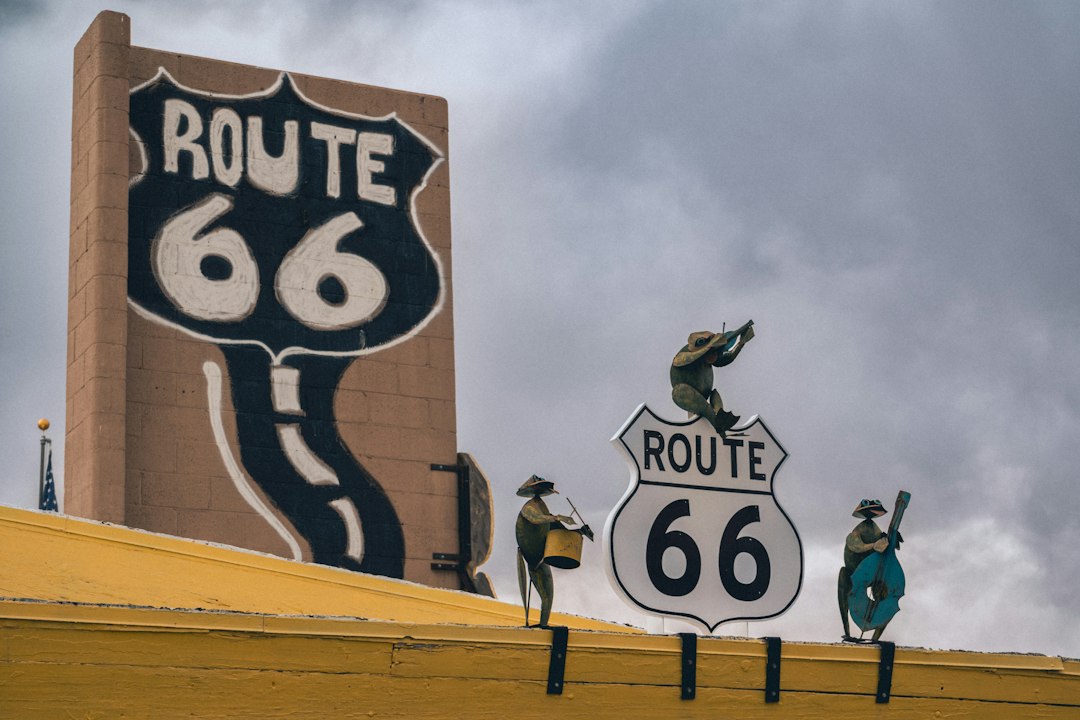
If you’re trying to dodge the crowds, especially with the surge of interest surrounding the Route 66 centennial, I highly recommend adopting the "Rule of 80." This simple approach suggests that attractions located more than 80 miles from major interstate arteries are almost guaranteed to be quieter during the week, which gives you the breathing room to actually appreciate them. I’d also suggest timing your photography to the 45-minute window around civil twilight, as it completely eliminates those washed-out, harsh midday shadows that can ruin an otherwise perfect shot. Honestly, when you start looking at these sites through the lens of wind-resilient engineering or UV-resistant maintenance cycles, the whole experience shifts from a simple sightseeing trip to a much deeper investigation of how we mark our presence across the American landscape.
Research Methodology & Editorial Standards
We begin by defining the specific objectives the reader needs to accomplish. Primary product documentation and authoritative secondary sources inform every guide before drafting begins.
Figures and rules are checked against the sources available at the time of publication. Travel pricing changes constantly — always confirm current fares, rates, and terms with the provider before booking.