
How to find the most magical firefly displays in Bali
If you're hunting for that perfect, glowing moment in the Bali rice terraces, you’ve got to stop thinking about a single summer season like you might back home.
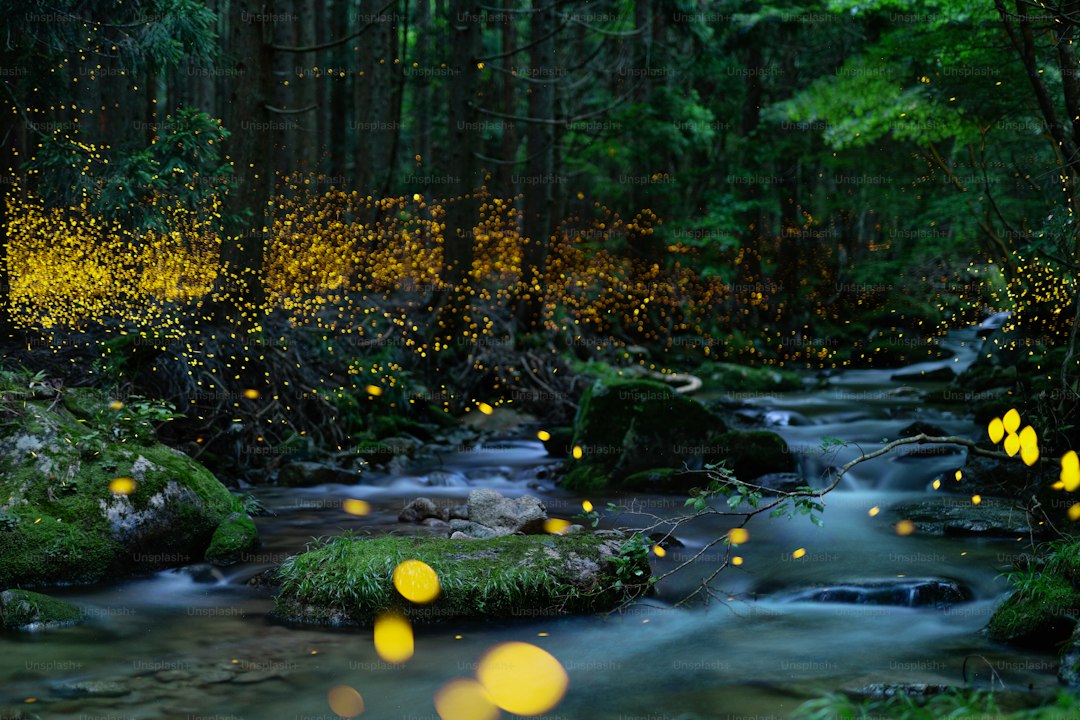
Understanding the Seasonal Timing for Bali’s Firefly Displays
If you're hunting for that perfect, glowing moment in the Bali rice terraces, you’ve got to stop thinking about a single summer season like you might back home. Honestly, the real magic happens during the transition periods between the wet and dry seasons, specifically in late March and early November. That's when the shifting humidity levels act like a starting gun for a mass emergence of these bioluminescent beetles. You’re looking for a sweet spot where ambient temperatures hover right between 24 and 28 degrees Celsius, which is exactly what these little guys need to keep their mating flashes going. It’s pretty fascinating when you realize that soil moisture is the unsung hero here; those larvae really need damp, nutrient-rich earth to survive their long development stage before they ever take flight.
But here’s the thing about the timing—you have to watch the moon just as much as the calendar. Fireflies are smart enough to dial back their light output during a full moon because they don't want to get picked off by nocturnal predators. If you’re planning your trip, try to time it for the darker phases of the lunar cycle. And don't waste your energy staying out all night, either. The peak show almost always happens between 7:00 PM and 9:00 PM, when they're burning through their energy stores to attract mates before they eventually taper off for the night. I’ve found that if you can catch them right after a light evening rain shower, that’s when the air clears and the activity levels really seem to jump.
You also have to be realistic about where you're looking, because human activity is changing the map. Because of heavy pesticide use in many standard rice fields, you’re far better off heading into the remote, organic highlands or the undisturbed mangroves along the northern coast. Light pollution from all the new coastal building is pushing these colonies further inland, so you’ll want to stick to protected UNESCO World Heritage landscapes to have the best shot. It’s a bit of a trek, but seeing the genus Pteroptyx synchronize their pulses in a group is worth the extra effort. Just remember they need those tall grasses near irrigation channels to rest during the day, so avoid stomping through the vegetation. If you keep these environmental needs in mind, you’ll have a much better chance of seeing a display that’s actually vibrant rather than just a few lonely sparks.
Prime Habitats: Where to Find Bali’s Most Vibrant Firefly Colonies
When you're out there searching for the Pteroptyx malaccae, you need to understand that these beetles aren't just everywhere; they are incredibly picky about their real estate. I’ve found that the absolute best spots are tucked away near ancient, hand-carved stone irrigation canals, specifically where the subak system keeps water stagnant enough for their larvae to hunt snails. These little guys thrive where synthetic nitrogen runoff is non-existent, so you’ll want to ignore the commercial farms and look for areas with native pandanus trees. If you can find a spot with a dense cluster of those trees, you’re looking at a high-density zone where the beetles naturally gather to rest. It’s honestly fascinating how they stick to the same kilometer for decades, making these specific mangrove stands or forest edges some of the most reliable spots on the island.
The geography plays a massive role in how they look, too, which is something most people miss. If you head up to the slopes of Mount Batukaru, the cooler air keeps their luciferase enzymes working better, leading to a much brighter, more sustained glow than you’d see near the coast. I’ve noticed the pulse frequency is actually faster in the humid canyons around Ubud, likely because they’re battling more wind and ambient noise, which makes for a much more frantic, intense display. You should keep an eye out for Nephrolepis ferns; they act like a map for you, because where those ferns grow, the soil is exactly as humid as these fireflies need it to be for their pupation phase. It’s a delicate balance, and watching them, you realize just how much they rely on that specific leaf litter found only on the edges of wild, untouched forests.
But look, you have to be really careful about where you stand because these insects are basically wired to avoid us if we mess with their environment. If you’re near any area with artificial blue-light sources—even from a hotel or a street lamp a few hundred meters away—they will just shut down their light show entirely because it stresses them out. It’s also worth remembering that the adult firefly only lives for about two or three weeks and can’t even eat, so they are essentially hyper-focused on their mating ritual. Even a light breeze can totally scramble their pheromone trails, making it harder for them to find each other than you’d expect. If you want to see them at their best, stay away from those bright lights and find a quiet, dark edge of the forest where the air is still.
Essential Tips for a Respectful and Low-Impact Firefly Viewing Experience
When you’re standing at the edge of a dark Balinese forest, it’s easy to feel like you’re just an observer, but the reality is that your presence has a measurable impact on these delicate ecosystems. Think about it: these beetles are essentially biological machines that have evolved to be incredibly energy-efficient, turning nearly every bit of their internal fuel into that soft glow. Because they don't eat as adults, every single flash they produce is a high-stakes investment in finding a mate, and when we start moving around or making noise, we force them to waste that precious energy on flight or hiding. I always remind myself that simple things like the heavy vibration of footsteps near a tree can send them diving to the ground, where they’ll stay dark for twenty minutes or more just to stay safe. It’s a bit humbling to realize that just by walking too close to their perching sites, we can accidentally pause the entire mating theater for a significant chunk of the evening.
The biggest mistake I see people make is assuming that a small flashlight or a quick glance at a smartphone won't hurt, but the science says otherwise. These insects are tuned to communicate through specific, subtle light pulses, and the blue-spectrum light from your phone can actually overwhelm their sensors and make them totally blind to the signals of their own kind. Even using a red filter isn't a free pass, as even the dimmest beam can wash out the environment they rely on for their delicate visual language. If you really need to find your way, keep your light aimed strictly at the dirt under your feet and away from the canopy where the real action is happening. You’re essentially acting as a guest in their living room, so keeping your gear dark and your movements slow is the best way to make sure you don't break the connection they're trying to build.
It’s also worth watching where you put your hands and where you sit, because fireflies are more connected to their habitat than we often give them credit for. Many of the repellents we use to keep mosquitoes at bay, especially those packed with DEET, are actually toxic to the larvae that hide in the damp soil and near the water’s edge. If that residue rubs off on the plants they call home, you might be unintentionally harming the next generation. I’d suggest skipping the heavy perfumes or scented lotions too, as those chemicals can easily mask the pheromones the beetles use to navigate the night air. Remember that these insects are basically nature’s bio-indicators, and they’re incredibly sensitive to the world around them; by staying back from the water and respecting the trees they’ve used for generations, you’re helping to ensure that the display stays alive for everyone else who comes after you.
The Best Time of Night to Witness the Bioluminescent Glow
When you’re finally out there on the sand or standing by a dark forest edge, it’s easy to assume the glow is a constant, steady show, but the reality is that the timing is a precise dance with nature. Honestly, the most intense activity usually kicks off just as the last of the twilight fades, but the real spectacle often hits its stride between midnight and 3:00 AM. Think about it: that’s when the contrast against the pitch-black water or dense foliage is at its absolute peak, making even the faint pulses look like neon electricity. And don't forget that your own eyes are part of the equation here; you really need at least twenty to thirty minutes of total darkness to reach full scotopic vision, so try to put the phone away and let your eyes actually adjust to the shadows.
If you’re hunting for marine displays, you have to keep a close eye on the tide tables because the incoming flow is what brings in the fresh, nutrient-rich water that keeps these organisms active and concentrated near the shore. I’ve found that calm, still nights are non-negotiable—any significant wind tends to disperse the plankton and ruin that high-definition shimmer you’re after. It’s also worth noting that these organisms aren't just machines that stay on forever; they have a metabolic cycle, and you’ll often see a noticeable drop-off in intensity as the hours creep toward dawn. It’s a bit like a shift change for nature, and once that light starts to bleed into the sky, the show is essentially over for the night.
The atmospheric conditions play a surprisingly big role, too, as high barometric pressure usually brings the kind of clear, stable skies that make for the best viewing. You might be tempted to go out on a bright, beautiful evening, but if there’s a strong moon, it’s going to wash out the subtler pulses and leave you feeling a little let down. I’d suggest checking the lunar cycle first to make sure you’re aiming for those dark, moonless windows where the bioluminescence can really pop. It’s definitely a bit of a gamble, and you might have to shift your schedule to align with these variables, but when you catch that perfect, quiet window, the payoff is absolutely worth the late-night effort.
Why Bali’s Rice Paddies and River Valleys Provide the Perfect Backdrop
When you’re standing in the middle of a Balinese rice terrace at night, it’s easy to get lost in the sheer beauty of it, but there’s a sophisticated biological engine running beneath those emerald slopes. The complex terracing of these paddies actually creates a series of micro-climates where the air remains trapped in low-lying pockets, which allows firefly pheromones to linger far longer than they ever could on open, windy plains. These landscapes are anchored by ancient volcanic soil, and that high mineral content supports the specific fungal growth needed by the snails that firefly larvae rely on for food. You’re essentially looking at a perfectly tuned ecosystem where every element—from the porous volcanic stone in the subak irrigation channels to the moisture-rich thermal updrafts of the Ayung River Valley—serves a precise, functional purpose for these insects. It’s not just a pretty view; it’s a high-performance habitat designed by both tradition and geology to keep these colonies alive.
If you look closely at how the land is shaped, you’ll see that the steep, verdant cliffs surrounding these valleys act as a natural shield against the light scatter from Bali’s growing urban centers. This creates a pocket of near-total darkness that maximizes the visual contrast of the bioluminescence, making the flashing patterns appear far more vivid than they would in more exposed areas. Because these valleys are sheltered, they also function as an acoustic baffle, which I suspect helps the fireflies detect the subtle, rhythmic pulses of their mates without the interference of ambient wind noise. Plus, the traditional water management used in these paddies creates stagnant, shallow pools at the edges of the terraces that warm up quickly during the day, which helps accelerate the metabolic development of the larvae. It’s pretty incredible when you think about it: the very farming techniques that have sustained the Balinese people for centuries are the same ones that provide a secure, low-impact nursery for these beetles.
I’ve always felt that the most magical spots are the ones where you can see how the native flora works in tandem with the geography. The plants along these irrigation banks provide high-perch vantage points, which allow the males to maximize their visibility to females across the water. You’ll also notice that at certain elevations, the predictable nightly temperature drop seems to trigger a much more synchronized flashing rhythm in the local populations, turning the entire valley into a single, pulsing organism. Because these remote regions still rely on organic cultivation, they maintain a high population of the mollusks and earthworms that are vital for the firefly’s subterranean life stage. It really makes you appreciate that by simply preserving these traditional, labor-intensive landscapes, local farmers are accidentally acting as stewards for one of the island’s most sensitive nocturnal species. You’re not just walking through a farm; you’re stepping into a perfectly preserved, natural life-support system.
Conservation Efforts: How to Protect Bali’s Fading Firefly Populations
Let’s talk about what’s actually happening behind the scenes to keep these glowing displays alive, because the reality is much more technical than just leaving the lights off. We’re seeing a real shift toward hyper-localized conservation, where researchers have discovered that firefly larvae are incredibly sensitive to the bioaccumulation of agricultural pesticides, which essentially scramble their nervous systems during that critical pupation phase. It’s honestly eye-opening to realize that common synthetic fungicides are just as damaging, as they wipe out the specific fungi larvae need to decompose organic matter in their damp, forest-edge homes. Because these beetles exhibit such strong site fidelity—meaning they’ll return to the exact same cluster of trees year after year—conservationists have been able to map out these specific zones for targeted restoration, like reintroducing native bamboo to give adults the structural cover they need during the day.
But it’s not just about what we take away; it’s about what we physically build to protect them. You’ll now find innovative farms using woven palm leaf barriers that act as light-shielding, effectively blocking the harsh, blue-spectrum glare from nearby tourist infrastructure that would otherwise blind the fireflies to their own mating signals. We’re also seeing a push for what researchers call dark corridors, which are essentially designated paths of wild vegetation that allow these populations to safely migrate between isolated forest pockets as urban sprawl continues to fragment their habitat. Even the street lighting in some rural villages is being replaced with motion-activated, amber-hued LEDs to cut down on that intense light pollution that we know stresses these colonies out.
Beyond the infrastructure, there's a serious effort to fix the water quality in these traditional subak systems, which is arguably the most vital piece of the puzzle. Since even trace amounts of household detergents are enough to kill larvae on contact, new filtration protocols are being implemented to keep the runoff from the paddies clean enough for the fireflies’ delicate metabolic needs. It’s fascinating to see DNA sequencing being used to identify genetic bottlenecks, which helps the team prioritize exactly which forest patches need the most urgent protection to keep the gene pool diverse. And honestly, the most hopeful part of this whole effort might be the community-led education programs that are shifting local habits away from the old practice of catching adults for lanterns. It’s a slow, meticulous process, but seeing how these farmers are moving back toward natural, non-toxic composting to boost the snail populations—the firefly’s primary food source—gives me real hope that we can keep these displays from fading out entirely.
Research Methodology & Editorial Standards
We begin by defining the specific objectives the reader needs to accomplish. Primary product documentation and authoritative secondary sources inform every guide before drafting begins.
Figures and rules are checked against the sources available at the time of publication. Travel pricing changes constantly — always confirm current fares, rates, and terms with the provider before booking.