
Exploring the deep sea for the most legendary shipwrecks around the world
Experts estimate there are roughly three million shipwrecks scattered across our oceans, and honestly, that number is mind-boggling when you consider how much of the deep sea remains a total mystery to us.
Millions Under the Sea: Understanding the Scale of Global Shipwrecks
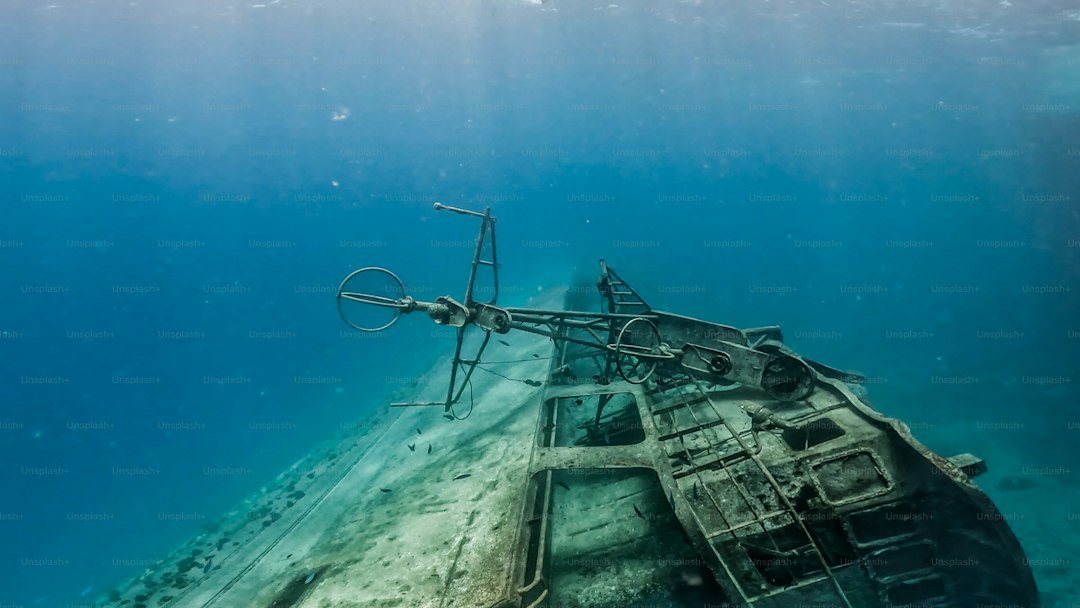
When you really stop to think about it, the ocean floor is essentially a massive, silent museum of human history. Experts estimate there are roughly three million shipwrecks scattered across our oceans, and honestly, that number is mind-boggling when you consider how much of the deep sea remains a total mystery to us. Most of these vessels are tucked away in depths that make them nearly impossible to reach, yet they serve as unexpected, thriving artificial reefs that support everything from tiny microbes to sharks. It’s pretty wild to realize that what started as a tragedy or a lost shipment has, over centuries, evolved into a vital micro-habitat that actually changes the local biodiversity of the seafloor compared to the barren sand around it.
But there is a much darker side to this underwater landscape that we don't talk about enough. Many of these wrecks—especially those from the World War II era—are literally ticking environmental time bombs, slowly leaking heavy fuel oils and toxic pollutants into our marine ecosystems. We're looking at a massive, unmanaged reservoir of hazardous materials that are quietly degrading as currents and biological processes take their toll on the steel hulls. It’s a strange irony that the same wrecks providing a home for sea life are simultaneously compromising the health of the water they inhabit, and we’re only just beginning to grasp the scale of the potential fallout.
Then, of course, there’s the romanticized idea of "sunken treasure" that keeps popping up in the news. We’ve all seen the headlines about divers pulling a million dollars in gold and silver coins off an eighteenth-century Spanish vessel in Florida, and it’s easy to see why that captures our imagination. But these discoveries often lead to messy, protracted legal battles over ownership, showing that these sites aren't just historical artifacts—they are flashpoints for complex property disputes. Whether they are viewed as gold mines, ecological wonders, or environmental hazards, these millions of wrecks are a definitive map of our maritime past that we’re still struggling to fully understand and manage.
The Titanic and Beyond: Technology Behind the World’s Most Famous Finds
When we talk about finding ships like the Titanic, it’s easy to focus on the romance of the discovery, but the real story is in the engineering that makes these missions possible. Think about the physical reality of the deep ocean, where you’re dealing with four hundred atmospheres of pressure that would turn a standard vessel into a soda can in seconds. Engineers have solved this by using titanium pressure hulls, which offer the perfect balance of strength and buoyancy to keep researchers safe while they work. Beyond just reaching the site, we’ve moved from grainy, black-and-white silhouettes to creating high-fidelity digital twins. Using photogrammetry, we can now map these wrecks with sub-millimeter precision, effectively capturing the state of the structure before time and decay inevitably take their toll.
The way we actually see these sites has also changed drastically in just the last few years. We used to struggle with the fact that water absorbs red and yellow light, leaving everything looking like a blue-tinted blur, but modern synthetic lighting arrays now use high-lumen LEDs to bring full-spectrum color to the abyss. At the same time, we’ve swapped out clunky, lag-prone copper cables for fiber-optic telemetry, which lets us beam back crystal-clear 8K video streams in real-time. It’s wild to think that someone sitting on a ship deck can watch a live feed of a deck railing thousands of feet down without the latency issues that used to drive operators crazy. We’re also using autonomous underwater vehicles equipped with synthetic aperture sonar to scan massive patches of seafloor at resolutions that used to require flying a camera mere inches from the wreckage.
But it isn't just about taking pictures or filming; it's about the data we pull from these sites to understand how they’re changing. For instance, we’re now using laser scanning to track how quickly iron-eating bacteria like Halomonas titanicae are actually chewing through the ship’s hull. We also have magnetic gradiometers that let us map out buried metal structures beneath the sediment without moving a single grain of sand, which is a massive win for non-invasive archaeology. Even the way we physically handle artifacts has shifted, with soft-robotic grippers replacing those old, rigid mechanical claws that were notorious for crushing fragile history. When you combine this with inertial navigation that gets us back to the exact same square meter of a site years later, you realize we aren't just looking at these wrecks anymore—we're monitoring them like living, breathing, and slowly fading medical patients.
High-Stakes Treasure: The Financial and Legal Battles of Sunken Riches
When we shift our gaze from the engineering feats of deep-sea exploration to the actual ownership of what lies beneath, things get messy fast. Take the San José galleon, for example, which is currently sitting on the ocean floor with a cargo estimated at a staggering sixteen billion pounds. It’s widely considered the holy grail of shipwrecks, but that value is exactly why it’s trapped in a web of litigation that makes your average business dispute look like a playground argument. We’re talking about a collision between sovereign immunity, where a nation claims a ship as its own property regardless of where it sank, and the ambitions of private salvage firms hoping to turn a massive profit. It’s honestly exhausting just tracking the filings, but it highlights a fundamental truth: finding the treasure is only half the battle, and often, it’s the easy part.
The real friction comes from the clashing legal doctrines that govern these sites. You’ve got the law of finds, which essentially rewards the discoverer with ownership, but it’s constantly butting heads with the law of salvage, which says you only get a cut of the value for the effort of recovering it. On top of that, you have the 2002 UNESCO Convention, which aims to ban the commercial exploitation of these sites, yet many countries haven't even signed off on it. This creates a state of jurisdictional chaos where international waters become a high-stakes race. Even insurance companies are getting into the mix, pulling up centuries-old records to claim subrogation rights, arguing they own the cargo because they paid out the original loss claims back when the ships first went down.
And then there's the nuance of modern tech changing the courtroom game. Courts are currently struggling to decide whether artifacts pulled up by autonomous vehicles—without a human even getting their hands wet—actually qualify for the same rewards as traditional salvage. It’s a strange, evolving gray area where the law is desperately trying to catch up to the reality of robotic recovery. Plus, we’re now seeing emerging conflicts between treasure hunters and deep-sea mining interests, where the protection of a historic site might overlap with someone else’s claim to extract minerals. If you’re thinking about the value here, remember it isn't just about the gold or silver bullion; it’s the intellectual property rights tied to the artifacts themselves that fuel some of the most expensive legal battles on the planet. It makes you realize that for every incredible image we see of a wreck, there’s likely a team of lawyers buried in even deeper, more complex paperwork.
From War Carriers to Merchant Vessels: Uncovering Lost Chapters of History
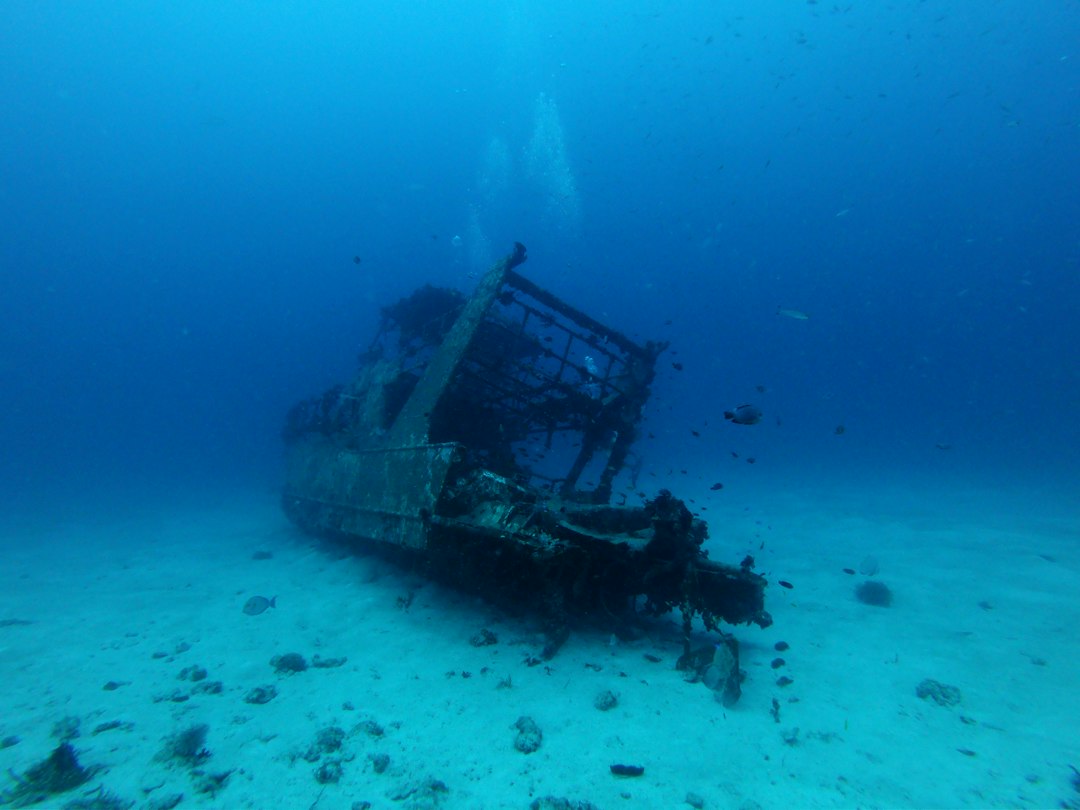
It’s honestly fascinating how many ships we identify as simple merchant vessels today were actually built for a much grittier existence as war carriers or troop transports. When you dig into their history, you often find hulls sporting reinforced steel plating originally designed to shrug off torpedo impacts, a detail that tells a very different story than what you’d see on a standard cargo ship. The transition from wartime service to commercial trade was rarely straightforward, as shipwrights frequently stripped away heavy deck armaments to make room for freight. But here is the catch: removing that weight shifted the center of gravity, which is why so many of these repurposed ships became notoriously unstable when they hit rough merchant waters.
And if you look at how these vessels were managed, it gets even more complicated. Many were rebranded as cargo ships under flags of convenience to dodge postwar regulations that would have forced owners to pay for expensive structural retrofitting. I find it incredible that we’re still unearthing these secrets, like when recent wind farm surveys in the North Sea stumbled upon what they thought were commercial carriers, only to find they were actually disguised WWI-era military vessels hiding sensitive communications gear. It’s like these ships have a dual identity etched into their very steel, especially since the alloys used during those metal-shortage years are now reacting to the ocean in ways that make them prone to weird, accelerated corrosion.
Think about the physical evidence researchers are finding now, like those improvised steam winches that serve as a kind of mechanical fingerprint to identify wrecks that were otherwise left anonymous in the records. Or consider the lower-deck magazines that were sealed off during conversion; those pockets have become time capsules, preserving textiles and wooden crates in ways the rest of the ship simply couldn't. It’s wild to imagine that some of these ships were scuttled with unexploded ordnance still tucked right next to civilian cargo, creating these strange, hazardous artificial reefs. When you look at the asymmetrical stress patterns on their hulls, you aren't just looking at a wreck; you’re seeing a structural record of a ship forced to live two lives.
Deep-Sea Frontiers: The Evolution of Underwater Exploration Technology
When we look at the sheer scale of the abyss, it is easy to assume we are just scratching the surface, but the reality is that our ability to map the ocean floor has shifted from clunky, hit-or-miss attempts to something bordering on surgical. We are moving away from the era of heavy, tethered submersibles that required massive support ships and into a world of agile, autonomous tech that honestly feels like science fiction. Think about the way we now use swarm robotics, where dozens of miniature vehicles map a wreck site simultaneously, creating a complete digital model in a fraction of the time it used to take a single, lonely ROV. It is a massive jump in capability, especially when you consider that we are now using acoustic modems to beam data through the water column in real-time, letting us see what is happening thousands of feet down without the lag that used to drive us all crazy.
But what I find even more interesting is how our approach has become so much more respectful of these sites. Instead of dragging heavy gear across a delicate hull, we now use soft-robotic sensors that just gently adhere to the surface to measure chemical leaching, and we are even using environmental DNA sampling to see what is living on a wreck just by testing the nearby water. It is a total game changer because it allows us to track the degradation of history without ever actually touching it. We are even seeing the rise of pressure-tolerant batteries, which finally gets rid of those bulky, expensive housing units and lets us build smaller, more maneuverable drones that can squeeze into spaces we once thought were totally inaccessible.
And if you want to talk about precision, the new inertial navigation systems are honestly the most impressive part of the shift. These tools are so refined that they can bring a submersible back to the exact same square centimeter of a wreck site months after an initial survey, even though there is no GPS signal down there to guide them. It means we are moving from "finding" these ships to essentially "monitoring" them like patients in a hospital, tracking their slow decay over years. We are even using non-invasive thermal imaging to spot hidden cargo voids buried deep under silt, giving us a look inside these ships without ever lifting a shovel. It is a wild time to be looking at the seafloor, and honestly, the speed at which we are turning these dark, hidden corners into open books is just staggering.
Planning Your Expedition: The Best Global Destinations for Wreck Diving
Planning your next wreck diving expedition is a balancing act between historical intrigue and the raw, physical reality of marine preservation. If you’re looking for the gold standard of structural integrity, the SS Yongala in Australia remains unmatched, mostly because the Great Barrier Reef’s stable environment has kept the hull remarkably intact since 1911. It’s not just the ship that’s impressive; the dense populations of giant trevally and sea snakes thriving there provide a unique look at how man-made steel transforms into a biological powerhouse. On the other end of the spectrum, places like Chuuk Lagoon in Micronesia offer a surreal contrast, where the volcanic ring acts as a natural buffer, shielding over 60 Japanese vessels from the chaotic swells that usually tear wrecks apart.
When you start digging into the colder, deeper sites, the chemistry of the water changes the entire experience. In Scotland’s Scapa Flow, the frigid, deep waters actually stop wood-boring organisms from eating away at the hulls, which is why the early 20th-century naval machinery is still so pristine today. Similarly, the Baltic Sea holds onto 17th-century wooden ships that would have vanished long ago elsewhere, simply because the brackish water is too harsh for the shipworms that normally devour timber. It’s a fascinating, if slightly grim, reminder that the ocean’s environment—not just the passage of time—is the ultimate architect of what history we get to keep.
If you’re someone who values the logistical side of history, the SS Thistlegorm in the Red Sea is basically an underwater museum, where trucks and motorcycles sit exactly where they were packed during World War II. But if you’re looking for something that pushes the limits of modern diving, the HMHS Britannic in the Aegean Sea sits at 120 meters, meaning it’s reserved for those with the technical skill to handle extreme depths and total darkness. Even the intentionally scuttled ships, like the USS Oriskany off Florida, serve a purpose beyond recreation by acting as massive vertical conduits for ocean currents. Whether you’re chasing a piece of wartime history or just want to see how an artificial reef evolves over time, the real key is knowing how the local sediment, depth, and temperature are actively shaping the site you’re about to visit.
Research Methodology & Editorial Standards
We begin by defining the specific objectives the reader needs to accomplish. Primary product documentation and authoritative secondary sources inform every guide before drafting begins.
Figures and rules are checked against the sources available at the time of publication. Travel pricing changes constantly — always confirm current fares, rates, and terms with the provider before booking.