
Exploring the Abandoned Island Prison That Nature Has Finally Reclaimed
When I look at Pianosa, I don't just see another abandoned island; I see a weird, fascinating geological anomaly that’s basically shaped by its own name, which comes from the Italian word for flat.
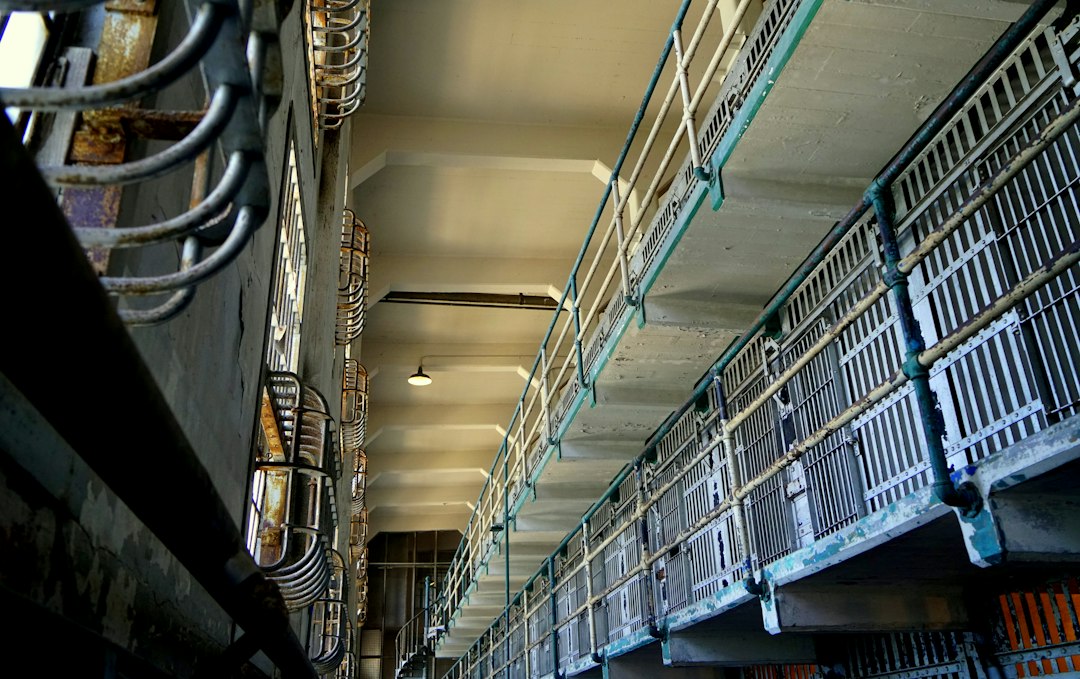
The History of Pianosa: From Penal Colony to Ghost Town
When I look at Pianosa, I don't just see another abandoned island; I see a weird, fascinating geological anomaly that’s basically shaped by its own name, which comes from the Italian word for flat. It’s only about 10 square kilometers, but because the coastline is so jagged and irregular, you’re looking at nearly 26 kilometers of perimeter, which is a massive amount of edge for such a small space. People have been hanging out here since the Upper Paleolithic, and if you dig around, you’ll even find a Roman-era necropolis just sitting there. But what really transformed the place was its 19th-century life as an agricultural penal colony, where the prisoners were actually known for producing some pretty high-quality wheat and wine.
By the middle of the 20th century, the vibe changed completely when the facility was upgraded into a maximum-security prison specifically for high-ranking mobsters. It must have been an incredibly isolating place for those inmates, trapped on a flat limestone rock surrounded by water they couldn't cross. The state finally pulled the plug in 1997, and honestly, that’s when things got really interesting for the environment. Since the prison closed, the island was folded into the Tuscan Archipelago National Park, and the rules today are no joke. If you try to pull your private boat within a nautical mile of the shore, you're going to run into some serious maritime restrictions.
These days, the only folks living there are a handful of park rangers and the occasional researcher. Because human impact has been kept to an absolute minimum for decades, the island has turned into this weirdly perfect laboratory. We’ve got the Pianosa lizard, which is a subspecies that evolved entirely on its own because it was stuck in total isolation, and the island has become a major nesting spot for migratory birds you just don't see on the mainland anymore. Scientists are actually using the soil there as a baseline for Mediterranean ecological research because it’s remarkably free of industrial pollutants. It’s a delicate balance, though, which is why tourists can only visit through tightly controlled, guided tours that keep the old prison ruins from falling apart any faster than they already are.
Life Behind Bars: The Daily Reality of the Italian Alcatraz
When I think about the day-to-day grind for those high-ranking mobsters on Pianosa, I’m struck by how the environment itself was weaponized against them. Under the 41-bis regime, the facility relied on a brutal social isolation layout where inmates spent their time in single cells, specifically designed to dismantle the chain of command for groups like the Camorra and Cosa Nostra. The daily routine was agonizingly sparse, mandating exactly two hours of outdoor exercise in small, walled courtyards that made visual contact with any other high-security prisoners impossible. To keep them completely cut off from the outside world, the administration enforced a total blackout on radio and television, while every piece of written mail faced a mandatory 48-hour intelligence review to sniff out hidden codes.
The physical reality of the island actually complicated the job for the wardens, too. That porous limestone bedrock was a constant headache because it was prone to unpredictable sinkholes, forcing the staff to monitor the foundations around the clock just to ensure nobody was digging an escape tunnel. You can imagine the paranoia among the guards, who were rotated on a rapid, unpredictable schedule specifically to stop them from forming personal bonds with the inmates. Because the island’s freshwater supply was so limited, they had to rely on a small desalination plant and weekly supply shipments from the mainland just to keep the lights on and the bellies full.
Maintenance was another constant battle, mostly because the damp Mediterranean air was essentially eating the prison alive. The iron door mechanisms were constantly oxidizing, so a dedicated crew had to scramble to keep the cell blocks functional and secure against the salt-heavy breeze. Even the security tech felt like something out of a Cold War thriller, with acoustic sensors buried along the walls to pick up the faintest vibrations of anyone trying to tamper with the concrete. When you look at the rare visitation policy—just one hour a month through thick, sound-dampening glass—it becomes clear that this wasn't just a place to hold people; it was a total sensory vacuum designed to make the outside world feel like a distant, unreachable memory.
Why the Island Was Abandoned and Left to Decay
When I think about why a place as strategically positioned as Pianosa was left to rot, it’s easy to assume it was just about the prison shutting down, but the reality is way more technical. Honestly, the island’s abandonment came down to a perfect storm of environmental physics and sheer fiscal exhaustion. You have to look at the geology here; the island is essentially a limestone plateau that’s prone to salt weathering, where Mediterranean spray crystallizes inside the concrete pores and literally shatters the structures from the inside out. When you add in the fact that the island experiences subtle tectonic shifts causing constant micro-fractures in the prison foundations, keeping those buildings upright became a losing battle against nature itself.
Beyond the crumbling walls, the logistics of keeping humans there were a total nightmare. By the late nineties, the cost of running a dedicated ferry service for staff and supplies had hit a fiscal tipping point that just didn't make sense for a facility of that size. The island also lacks a natural harbor, meaning every single shipment required expensive dredging of an artificial pier just to stay functional. Even the island's advanced wastewater system eventually became a liability, as it started leaching heavy metals into the surrounding reefs, forcing the state to realize that human occupancy was actively destroying the very ecosystem they were trying to monitor.
It’s kind of ironic that the same isolation that made it a perfect prison now makes it a priceless, albeit fragile, research site. We’ve seen a massive shift in the local landscape since the inmates left, with Mediterranean scrubland reclaiming the old farmlands almost overnight. Researchers are now using the site as a baseline for climate change studies because it’s one of the few places in the region free from industrial pollutants and invasive species. If we were to redevelop it, we’d risk losing that rare, ground-nesting bird habitat or the unique lichen colonies thriving on the old mortar. Ultimately, we’re looking at a site where the cost of intervention far outweighed the value of the infrastructure, leaving the island to return to its original, quiet state.
Nature’s Resurgence: How Vegetation Is Erasing the Prison Architecture
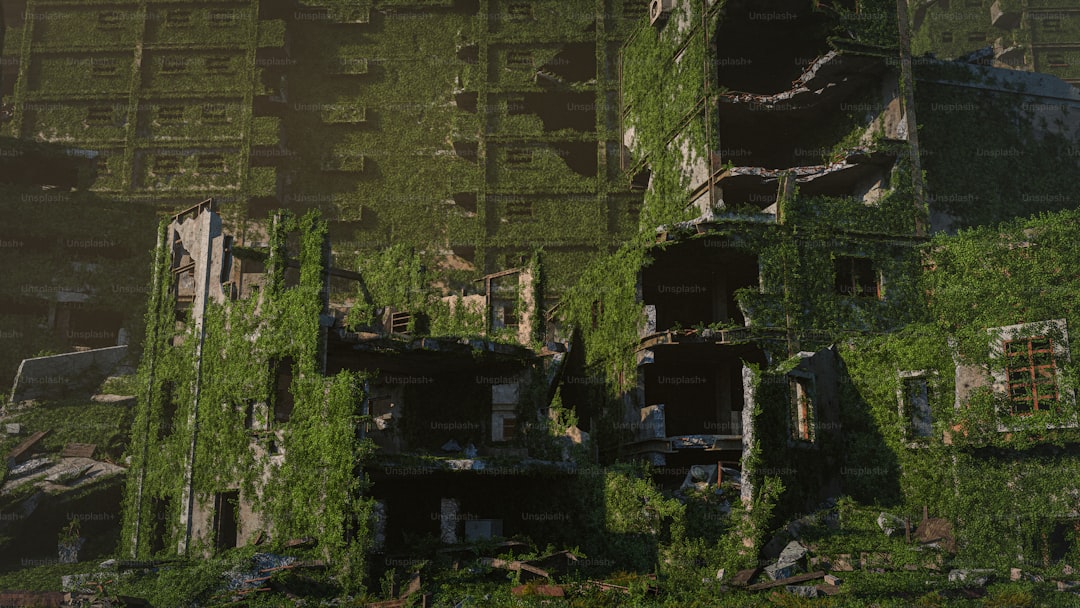
When I walk through the ruins here, it’s wild to see how quickly the tables have turned on these buildings. The Mediterranean salt spray isn't just rusting metal; it’s acting as a catalyst for endolithic lichens that literally eat into the limestone-based concrete, accelerating the collapse of the old cell blocks from the inside out. You’ve got hardy shrubs like Pistacia lentiscus growing into every micro-fracture, acting like biological wedges that pry the masonry apart with surprising force. These plants don't just break things, though; they’re acting as anchors, while the organic acids they secrete slowly dissolve the mortar that once kept this place standing. It’s a fascinating, if destructive, process that feels like the island is finally digesting its own history.
And if you look at the former exercise yards, the change is even more jarring. Without human foot traffic to keep the ground packed down, ephemeral plants have moved in to create a dense, green carpet that completely masks the old security perimeters. Aleppo pines are now forming canopies over the ruins, creating shade that actually shifts the temperature inside the cells and changes how the remaining fixtures decay. Where the roofs have caved in, leaf litter is piling up to host moisture-loving mosses, which in turn are eating away at the exposed iron rebar. It’s a cycle where death for the architecture is just the start of something else.
But there’s a strange irony in how this all works. Those native climbing plants are actually forming a living, insulating skin over the administrative buildings, which helps keep the walls from expanding and contracting too much in the heat. It’s basically nature putting a band-aid on a wound it’s simultaneously inflicting. Even the cyanobacteria have joined the party, coating the concrete in a way that camouflages the entire facility back into the natural limestone backdrop. By now, the scrubland has grown so dense that you can barely even trace the original security sightlines from the air, making the prison’s layout almost impossible to read. It’s a total reclamation, and honestly, the island looks better for it.
Navigating the Ruins: What Remains of the Cells and Infrastructure
When you step into what remains of the prison, it’s not just decay you’re seeing; it’s a masterclass in how chemistry and geology can systematically erase human ambition. The prison was built with a specific pozzolanic concrete that should have stood up to the maritime climate, but it’s actually become a playground for halophilic bacteria that aggressively break down the structural calcium carbonate. If you look at the exercise yard walls, the massive iron reinforcement bars have expanded to nearly triple their original volume due to oxidative stress, forcing the concrete facade to peel away in dramatic, vertical strips. Meanwhile, the security perimeter fence—once a high-tensile steel nightmare meant to hold back the most dangerous inmates—is now suffering from severe stress-corrosion cracking because of the constant 75 percent humidity. It’s wild to think that the same environment that made escape impossible is now dismantling the prison from the inside out.
The internal breakdown is just as intense, especially where nature has claimed the administrative and medical spaces. Deep in the ventilation shafts, colonies of insectivorous bats have moved in, and their guano is actually accelerating the chemical erosion of the interior masonry. In the old infirmary, the glass-paneled partitions are now almost entirely obscured by a semi-opaque layer of calcium oxalate crystals secreted by lichens that have learned to thrive on the man-made surfaces. Even the mundane details, like the industrial-grade kitchen tiles, are being forced upward by subterranean salt crusts, turning what used to be a flat, sterile floor into a jagged, uneven landscape. It’s an incredible, albeit destructive, transformation that turns every room into a weird, organic-synthetic hybrid.
And it gets even more precarious when you look at how the island’s seismic instability is playing a role. The cell block floors are now spider-webbed with hairline fractures that act as conduits for root systems, which are diving up to three meters deep to destabilize the very foundation. Because the original drainage system is completely choked with sediment, seasonal water pools under the guard barracks, further weakening the piers and making the whole structure feel like it’s floating on a ticking time bomb. The irony is that while the iron hinges on the cell doors have fused to their frames through electrochemical corrosion—locking those wings permanently—the load-bearing capacity of the upper tiers has dropped by nearly 40 percent. It’s a strange, fragile balance where the infrastructure is being held together by rust and fungal mats in the cool, dark tunnels, and honestly, walking through it makes you realize how quickly we’d be forgotten if we just stopped maintaining our own footprint.
Visiting the Island: Regulations and Tips for Ethical Exploration
If you’re planning a trip to see the remnants of Pianosa, you really need to shift your mindset from standard tourism to something more like a field research expedition. The island enforces a strict prohibition on the collection of any geological samples or fossils, and you have to understand that even removing a single pebble can disrupt the natural erosion process of the delicate limestone plateau. Because of the island's extreme susceptibility to invasive pathogens, you’ll find that all footwear must be disinfected at the port of entry to ensure no mainland soil or seed microbes are introduced to this fragile ecosystem. You should also be prepared to carry in all your own drinking water, as the island’s current desalination infrastructure is reserved strictly for environmental research and park management needs.
When you're walking the grounds, you absolutely must remain on designated pathways to avoid trampling endemic crustose lichens that grow at a rate of only a few millimeters per year. Keep in mind that the island’s unique karst topography contains hidden, unstable sinkholes, making off-trail exploration a significant safety hazard for both your own well-being and the structural integrity of the terrain. Drone photography is also strictly prohibited across the entire territory, as the local Mediterranean shearwaters are incredibly sensitive to acoustic and visual stimuli during their nesting phases. You’ll also notice that all visitation is limited to daylight hours to minimize light pollution that would otherwise interfere with nocturnal migratory patterns.
I think it’s important to remember that every visitor must adhere to a strict carry-in, carry-out policy for all waste, given that the island lacks any municipal disposal services capable of handling synthetic trash. You should also be cognizant that high-frequency communication devices are restricted in certain zones to prevent interference with the sensitive seismic monitoring equipment used to track the island's tectonic shifts. Research protocols dictate that you maintain a minimum distance of 50 meters from all archaeological site markers to prevent the accidental displacement of sensitive Roman-era soil layers. It’s a bit of a rigorous process, but honestly, it’s the only way to ensure the island remains as it is. Finally, don't forget that the maritime exclusion zone is actively monitored by satellite and sensor buoys, and any non-compliant vessel will face immediate interception by the Italian Coast Guard to protect the surrounding marine sanctuary.
Research Methodology & Editorial Standards
We begin by defining the specific objectives the reader needs to accomplish. Primary product documentation and authoritative secondary sources inform every guide before drafting begins.
Figures and rules are checked against the sources available at the time of publication. Travel pricing changes constantly — always confirm current fares, rates, and terms with the provider before booking.