
Explore the stunning landscapes of Nova Scotia with architect Omar Gandhi
When you look at the rugged coastline of Nova Scotia, it’s easy to see why Omar Gandhi’s work feels less like it was built on the land and more like it grew out of it.
The Architectural Philosophy of Omar Gandhi in the Maritimes
When you look at the rugged coastline of Nova Scotia, it’s easy to see why Omar Gandhi’s work feels less like it was built on the land and more like it grew out of it. He has this knack for taking the humble, salt-beaten look of a traditional fishing shed and stripping it down to something that feels sharp and modern without losing its soul. It’s not just about the look, though. Gandhi leans hard into Shou Sugi Ban, that ancient Japanese technique of charring cedar, which honestly makes perfect sense here because it’s effectively armor against the relentless salt spray and moisture that rots most siding in a few years. He’s also obsessing over how these buildings interact with the actual weather, using precise solar orientation to grab every bit of daylight during those gray, overcast winters while keeping the heat inside where you want it.
The way he builds is just as interesting as how things look when they're finished. By moving toward a modular logic, he’s managed to cut on-site waste by about thirty percent compared to the standard wood-frame houses you see popping up all over the province. And instead of bulldozing the site to make room for a foundation, he often lifts the entire structure on steel piers, which keeps the root systems of the coastal spruce and fir trees intact. It’s a small detail, but it speaks to that "soft density" idea he talks about—the goal is to exist alongside the wilderness, not to crush it. Plus, the interior layouts aren't just random; they use a central circulation spine, which is a really smart nod to the old farmhouses that were designed to move heat around efficiently.
I’ve always thought the most impressive part is how he handles the elements that want to tear a house apart. The triple-glazed windows aren't just for insulation; they’re engineered to handle the high-velocity wind pressures that define the Atlantic coast, and the cantilevered sections are reinforced with locally fabricated steel that actually supports the regional metal shops. You can see this dedication to the environment in the color palettes, too, which he pulls directly from the local lichen, rock formations, and the shifting shades of the North Atlantic. It feels like he’s playing a long game, creating spaces that prioritize how you feel when you’re inside—specifically by framing window apertures to line up with the horizon. It’s not just about building a house; it’s about making sure that when you’re standing in the living room, you’re connected to the water in a way that feels intentional and calm.
How Nova Scotia’s Rugged Coastlines Shape Modern Design
When you look at the way Nova Scotia’s coastline is changing the conversation around modern design, it’s really about how we’ve moved past the idea of fighting the environment. Instead of battling the Atlantic, architects are now treating the granite bedrock itself as a thermal battery, using that natural mass to stabilize indoor temps during those wild, unpredictable spring and autumn shifts. I’ve noticed that designers are also getting hyper-specific about salt spray, mapping out exactly where it hits so they can pick materials that won't just crumble under the pressure. It’s a complete departure from the old way of thinking, where you’d just throw up masonry and hope for the best.
And honestly, the way light is being handled now is pretty brilliant. Since the sun sits so low in the sky at these latitudes, builders are installing these clever light shelves that bounce northern sun deep into the house, keeping things feeling bright even when the weather turns grey. They’re even rethinking how they handle water, treating the region’s heavy rainfall as a resource rather than a nuisance by setting up smart harvesting systems that take the pressure off local wells. It’s not just about aesthetics anymore; it’s about making a house that functions like a living, breathing part of the local water cycle.
But the real test is how these homes handle the wind. By using vertical cedar screens as a sort of porous shield, architects are actually diffusing that heavy Atlantic gale before it hits the main walls, which takes a massive amount of stress off the structure. They’re also ditching the heavy excavators in favor of low-vibration piles, which keeps the delicate root systems of the spruce and fir trees right where they belong. It’s a quieter, much more thoughtful way to build, and it feels like we’re finally learning how to tuck these homes into the landscape instead of forcing them onto it.
Hidden Architectural Gems Across the Nova Scotian Landscape
When we talk about the architecture of Nova Scotia, it’s easy to get caught up in the big, famous coastal spots, but the real story is hidden in the engineering of the province’s older, quieter buildings. I’ve spent time looking into how these structures were actually built, and honestly, the ingenuity of nineteenth-century builders is something we’re still trying to catch up to today. Take the D’Escousse range lights on Isle Madame, for example; they use a skeletal tower design that’s basically a masterclass in handling the high-velocity cyclonic winds that hit Cape Breton. It’s not just about looking good—it’s about survival. You also see this in Shelburne, where older homes were framed with salt-cured hemlock, a choice that gives the wood a natural, resinous shield against the wood-boring insects that thrive in those humid southern forests.
And then there’s the way these buildings manage the internal climate, which is frankly more impressive than most modern HVAC systems. The Lunenburg Academy is a perfect case study, using a gravity-fed ventilation system and a central thermal chimney to keep the air moving and the humidity stable. I find the Acadian-style dwellings in the Annapolis Valley just as fascinating because they use clay-based earth plasters to regulate moisture, acting like a natural dehumidifier that breathes with the changing seasons. It’s a level of passive performance that makes you wonder why we started relying so heavily on synthetic materials in the first place. You also see this scientific approach in the Fortress of Louisbourg, where they used a specific mortar blend of lime and crushed granite to match the thermal expansion of the bedrock, effectively future-proofing the stone against our brutal freeze-thaw cycles.
When you start digging into the smaller, more remote structures, you find even wilder examples of local problem-solving. Some of the offshore cabins have these clever, wind-tunnel roof profiles that force air over the ridge to stop snow from piling up during the worst nor’easters, while certain historic lighthouses use a triple-skin wall cavity filled with sand to create a massive thermal battery that keeps the interior steady despite the cold Atlantic air. It’s wild to think about those builders working without any of our modern software, yet they were hitting these precise mathematical optimizations for everything from window aperture angles to roof pitches for shedding heavy, water-logged snow. Even the iron-rich sandstone in Pictou County is a cheat code, as it actually hardens over time when it reacts with the acidic Atlantic fog. It’s clear that the history of building here isn't just a record of style, but a long-running, experimental test on how to live in harmony with a landscape that’s constantly trying to push back.
Omar Gandhi’s Favorite Coastal Retreats and Scenic Vistas
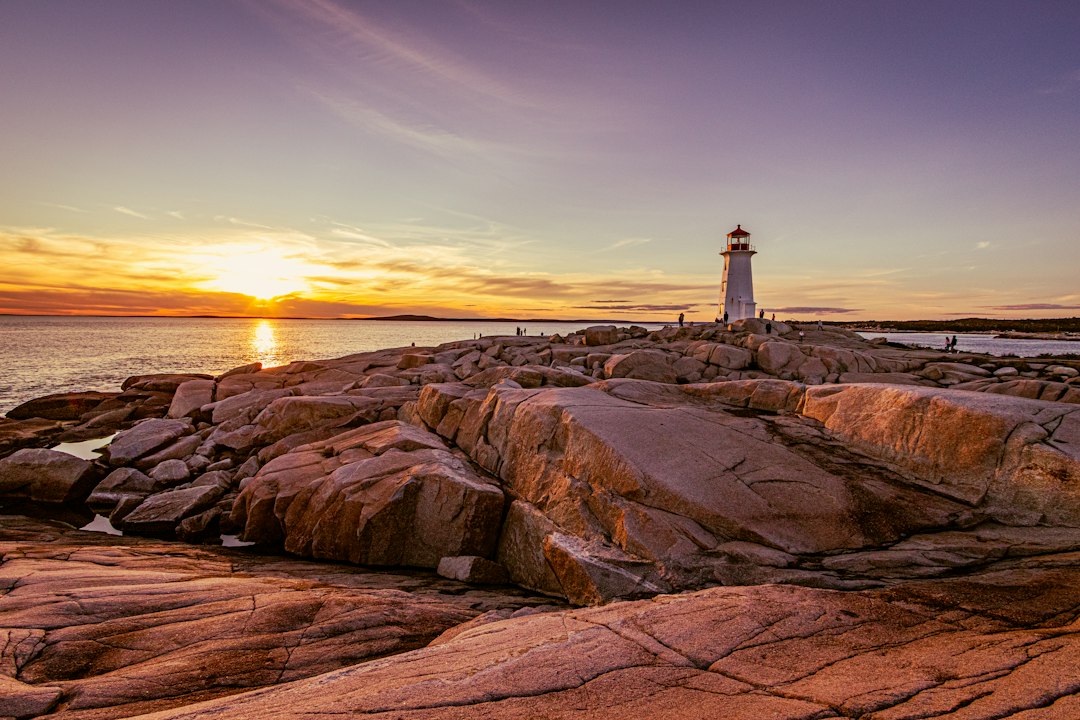
When I think about where Omar Gandhi draws his creative fuel, I’m always drawn to the way he interacts with the raw, unforgiving geography of Nova Scotia. It isn’t just about picking a pretty spot; it’s about finding locations where the Devonian-era granite bedrock provides a stable, non-porous foundation that can actually handle the wild Atlantic elements. If you’ve ever stood in Peggy’s Cove, you know that the landscape there feels almost prehistoric, and those granite outcrops aren't just for show—they act as massive, natural thermal batteries that define how a structure breathes. Gandhi clearly prioritizes these vistas because the feldspar embedded in the rock acts like a natural reflector, catching and bouncing light even when those dense, gray coastal fogs roll in at 100 percent humidity.
Beyond the geology, there’s a real technical brilliance in how these sites are chosen to manage the wind. I’ve noticed that he often looks for terrain where glacial erratic boulders can serve as natural windbreaks, shielding his projects from those relentless gales that can whip up to 150 kilometers per hour. It’s a fascinating, symbiotic dance where he calculates sightlines based on the two-meter tidal fluctuations, ensuring that the living room windows aren't just framing a view, but engaging with the shifting rhythm of the ocean. The acoustic profile in these inlets is distinct too, thanks to the way the granite reflects the high-frequency sound of the surf, creating a sonic environment that’s as immersive as the visual one.
I think the reason these retreats resonate so deeply is that they don't fight the micro-environment; they lean into the science of the coast. He’s clearly thinking about the "blue hour" light, which lingers significantly longer at these northern latitudes, and he positions his apertures specifically to capture that low-angle refraction. You can see how he respects the saltwater reality, too, knowing that the acidic, marine-aerosol-heavy rainfall and the two-kilometer salt spray zone dictate every choice from marine-grade fasteners to the way wood grain density in local spruce handles rot. Honestly, when you’re standing in one of these spots, it’s easy to see why he chooses these specific edges of the world—they’re not just scenic, they’re some of the most rigorous, high-stakes design laboratories you could ever hope to visit.
Balancing Nature and Structure: A Designer’s Perspective on the Province
When we talk about building in Nova Scotia, it’s not just about aesthetics; it’s a constant, high-stakes negotiation with the environment where every design choice either works with the coast or gets dismantled by it. You’re looking at a region where the humidity is a real, physical force, pushing architects to swap standard finishes for low-VOC, breathable materials that prevent mold while keeping those modern, airtight envelopes sealed tight. It’s fascinating to see how the industry is shifting toward reclaimed hemlock for sub-floor assemblies, simply because its natural resistance to decay outperforms the old-school pressure-treated lumber that we used to rely on. And when you factor in the erosion risk, it’s brilliant to see designers moving beyond traditional landscaping to use native, deep-rooted vegetation mats that actually stabilize the soil and manage runoff right at the foundation line.
The engineering gets even more precise when you look at how these structures handle the sheer energy of the ocean. I’ve been impressed by the move toward automated exterior louvers that respond to real-time atmospheric pressure, essentially letting a house breathe and adjust before high winds can cause those annoying, structural vibrations on the glass. We’re also seeing a smart shift toward cross-laminated timber from local mills, which is a massive upgrade over traditional framing because it gives you the strength-to-weight ratio you need for those ambitious, cantilevered designs that really capture the view. Plus, there’s a clever use of the wind itself, with rainscreen drainage planes angled to catch the breeze and force-dry the space behind the cladding, which is honestly a much more elegant solution than just adding more layers of sealant.
But what I find most compelling is the way designers are now treating the house like a high-performance machine that interacts with the specific chemistry of the site. You’ve got people experimenting with phase-change materials in the walls to soak up heat on those weirdly warm summer days, and even using locally sourced basalt as an aggregate in concrete to fight off the corrosive salt air that usually eats away at foundations. It’s that level of hyper-local, scientific focus—like using acoustic modeling to neutralize the roar of the surf or electrochromic glass that tints itself to handle the blinding Atlantic glare—that really changes the game. It isn't just about making something look cool; it’s about crafting a home that’s as durable as the rock it sits on. When you combine that kind of technical rigor with a real appreciation for the raw, weathered beauty of the landscape, you stop seeing the house as an imposition and start seeing it as a long-term member of the ecosystem.
Practical Tips for an Architecturally Inspired Nova Scotia Road Trip
When you’re planning a road trip to see Nova Scotia’s architecture for yourself, I think the best approach is to shift your mindset from being a tourist to acting like an amateur geographer. You’ll quickly notice that the land here isn't just a backdrop; the geology—like the high-slate content in Halifax—actively dictates how homes are sealed and maintained. If you’re driving through the Annapolis Valley, pay attention to the cold-air pooling zones along the river, which explain why older farmhouses are often tucked into specific elevations to avoid that stagnant, damp air. I’ve found that by observing these patterns, you start to understand why modern designers are so obsessed with thermal mass and solar orientation. It makes the drive feel less like a series of destinations and more like a masterclass in survival-based engineering.
If you’re heading toward the South Shore, keep an eye on how structures cope with the salt spray, which is abrasive enough to ruin standard exterior coatings in just a few years. It’s why you’ll see such a heavy reliance on copper-infused wood treatments or charred cedar, both of which serve as a natural barrier against that relentless maritime rot. I’d also recommend stopping near the Bay of Fundy to see how the tidal bore actually creates seismic vibrations; it’s a crazy detail, but it’s why houses built near the waterline require such specific structural damping. When you look at the buildings through this lens, you realize that every angle and material choice is a calculated response to a very specific, high-stakes environment.
Finally, don't overlook the way light works at this latitude, especially since the sun stays low for half the year. You’ll see that the best roadside architecture uses vertical apertures to snag that low-angle light, which is far more effective than the skylights you’d see in warmer climates. If you find yourself in the Digby area, look for those fine-mesh condensation collectors on newer roofs, which are harvesting the region's dense fog for water. It’s a brilliant, low-tech way to handle the environment that feels totally in sync with the history of the place. Honestly, just taking a moment to notice these small, technical details will change the way you see the entire province—it’s not just a beautiful view, it’s a living, breathing laboratory.
Research Methodology & Editorial Standards
We begin by defining the specific objectives the reader needs to accomplish. Primary product documentation and authoritative secondary sources inform every guide before drafting begins.
Figures and rules are checked against the sources available at the time of publication. Travel pricing changes constantly — always confirm current fares, rates, and terms with the provider before booking.