
Essential West Coast experiences every traveler should add to their bucket list
It’s a constant battle against the elements that makes you appreciate every mile of pavement.
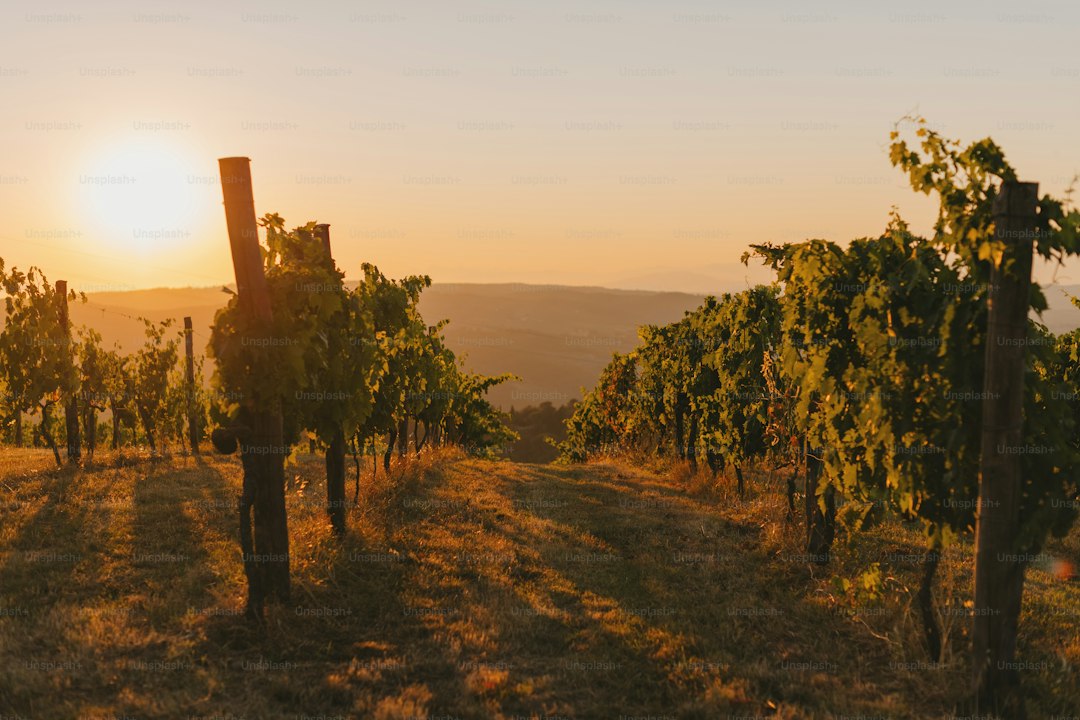
Cruising the Iconic Coastlines: The Essential Highway 1 Road Trip
If you're planning to drive Highway 1, you aren't just taking a road trip; you're navigating one of the most geologically volatile and engineered stretches of asphalt in the world. It’s easy to get swept up in the postcard views, but when you look at the engineering required to hold this route together, the experience changes. Think about the Bixby Creek Bridge, which stands as a masterpiece of early 20th-century construction, built with 45,000 sacks of cement to span a canyon that feels like it’s trying to fall into the sea. And because the road cuts right through the San Andreas Fault zone, the California Department of Transportation actually uses satellite radar interferometry just to keep an eye on slope stability. It’s a constant battle against the elements that makes you appreciate every mile of pavement.
When you’re winding through the Santa Lucia Mountains, you’re traversing some of the steepest coastal gradients in the country, where the land climbs nearly 5,000 feet in just three miles. It’s wild to think that this entire corridor, which spans over 650 miles, was largely carved out by hand between 1919 and 1937. You’ll see evidence of this history in the raw, sheer cliff sides that still look like they were bitten out of the mountainside. It’s not just a road; it’s a living record of how far we’ve gone to conquer a coastline that honestly prefers to be left alone. If you catch a glimpse of the Point Sur Lighthouse, remember it was once a clandestine hub for the U.S. Navy’s Cold War underwater surveillance, adding a layer of hidden history to that volcanic rock base.
Then there’s the biology, which is just as intense as the geology. Keep your eyes peeled for the sea otters in the kelp forests; they have the densest fur of any animal on earth, with a million hairs per square inch to survive those frigid Pacific currents. If you’re lucky enough to be there during the spring, you might spot gray whales on a 12,000-mile migration cycle that really puts your own road trip mileage into perspective. You’ll also want to stop at McWay Falls, one of the few places on the planet where a tidefall drops directly onto the sand, and check out the elephant seals at Piedras Blancas. Seeing them go through their annual molt is kind of grotesque but totally fascinating, as they shed their entire top layer of skin right there on the beach.
Honestly, don't just rush through to get to the next town. Take a moment to stand among the coastal redwoods in the northern sections, which tower over 370 feet and act as carbon-trapping machines that have been here far longer than any of us. It’s easy to get focused on the destination, but the real value of this trip is in the friction between that fragile, engineered road and the absolute power of the environment surrounding it. Whether it's the landslide risks that keep the highway crews up at night or the sheer scale of the whale migration off the coast, everything here feels big and slightly untamed. If you’re looking for a drive that changes how you see the intersection of nature and human persistence, this is the one.
Beyond Napa: Exploring the West Coast’s Underrated Wine Regions
If you’re anything like me, you’ve probably spent enough time in Napa to recognize the polished, high-gloss experience, but there’s a whole world of viticulture along the West Coast that’s quietly doing things better—or at least more interestingly—without the crowds. I’ve found that once you step away from the primary tourist hubs, you stop seeing wine as a luxury brand and start seeing it as a direct translation of geology and microclimate. Take the Rogue Valley in Oregon, for instance, where the Siskiyou Mountains create such intense rain shadows that you can stand in a vineyard growing cool-climate Pinot Noir and walk just a few miles to find heat-loving Tempranillo. It’s that kind of radical diversity that makes me want to put the map away and just drive.
Think about the Anderson Valley in Mendocino, which acts like a natural funnel for Pacific air, creating a massive 40-degree swing between day and night that keeps acidity levels in their sparkling wines absolutely razor-sharp. Or look at Lodi, where you’ve got head-trained Zinfandel vines over a century old, thriving on their own roots without a drop of irrigation—it’s a masterclass in agricultural resilience that you just don't see in mass-market production. Then there’s the Edna Valley in San Luis Obispo, where you’re literally walking on an ancient seabed; those fossilized shells in the soil give their Chardonnay a saline, mineral backbone that feels like a complete departure from the heavy, buttery styles that defined the nineties. It’s fascinating how these regions aren't just trying to copy Napa; they’re leaning into their specific, weird, and wonderful environmental constraints.
Honestly, we need to talk about the soil chemistry too, because it’s the secret sauce that makes these regions punch above their weight. When you head to the Sierra Foothills, the volcanic, granitic soils in El Dorado County impart this specific floral aromatic to their Viognier that you simply can't manufacture elsewhere. It’s similar to how the Willamette Valley’s iron-rich Jory soil gives their Pinot Noir that signature silky texture that actually rivals the best of Burgundy. Whether it’s the high-altitude UV intensity in the Snake River Valley or the ancient Missoula Flood deposits in Walla Walla, these aren't just back-up options; they’re the places where the most exciting experiments in American wine are happening right now. Let’s dive into why these spots should be your next stop.
Wilderness and Wildlife: Must-Visit National Parks for Every Adventurer
When we talk about visiting national parks, it’s easy to get caught up in the checklist of sights, but I’ve always found the real reward is in understanding the raw, mechanical forces that built these environments. Take the Olympic Peninsula, for instance, where the Hoh Rainforest pulls 140 inches of rain from the sky to sustain a moss biomass that essentially recycles itself every year. If you find that impressive, look at the Blue Glacier nearby, which is retreating by 15 feet annually—a stark, physical marker of how quickly our climate is shifting right under our boots. It’s not just a pretty view; it’s a living laboratory where you can actually witness the earth’s metabolism at work. I think that’s why these places stick with you long after the trip ends.
If you’re looking for something that defies standard logic, head over to Death Valley’s Racetrack Playa, where the sailing stones prove that even geology has a sense of humor. You’ve got 700-pound boulders dragging across mud flats, pushed by nothing more than thin ice sheets and high winds, creating tracks that look like they belong on another planet. Compare that to the thermophilic bacteria in Yellowstone’s Grand Prismatic Spring, which paint a vibrant color gradient based entirely on heat thresholds that would kill off almost anything else. It really makes you pause and realize that what we perceive as a static landscape is actually a chaotic, high-stakes survival game for every organism involved. You start looking at the ground differently when you realize how much is fighting just to exist there.
And don’t even get me started on the structural engineering of nature, like the granite monoliths in Yosemite that literally exfoliate like a sunburn as they expand and contract under the sun. It’s a slow-motion transformation that’s reshaped El Capitan over decades, just as the island fox in Channel Islands has diverged into six distinct subspecies to survive the isolation of their specific patches of land. Whether it’s the fog-drip efficiency of the Redwoods capturing moisture directly from the marine layer or the massive glacial reservoir of Mount Rainier, these aren’t just scenery. They are specialized, hyper-efficient systems that have spent thousands of years optimizing for their specific niches. I’m convinced that if you stop looking for the perfect photo and start paying attention to these biological and geological hacks, you’ll walk away from these parks with a much deeper respect for the sheer persistence of the natural world.
Coastal Culinary Journeys: Tasting the Best of Pacific Northwest and California Cuisine
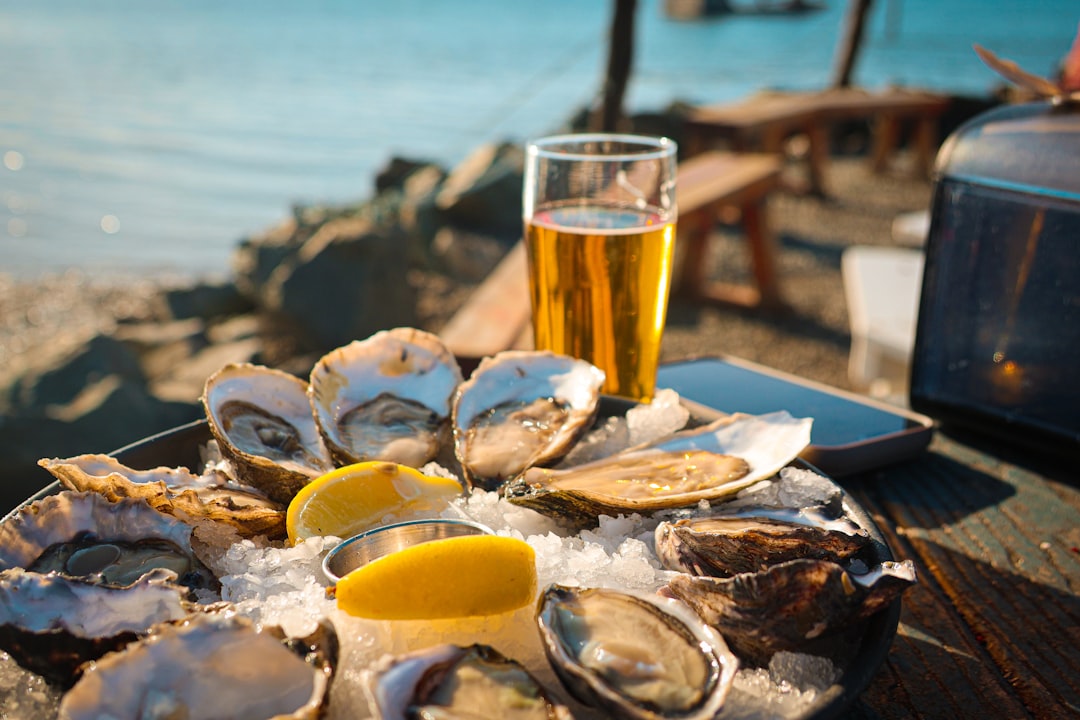
When you start looking at the West Coast not just as a place to travel but as a massive, living pantry, you realize that the culinary map is dictated entirely by these wild, local mechanics. I’ve always felt that to really understand what’s on your plate in the Pacific Northwest or California, you have to look at the environmental engine running beneath the surface. Take the geoduck clam, for instance; it’s not just a regional curiosity but a 160-year-old survivor that offers a direct taste of the cold, nutrient-rich deep ocean upwelling that defines our coastal waters. It’s a bit jarring to consider that the same geological forces supporting those iconic kelp forests are the reason your seafood is so consistently high-quality. And while we’re talking about the water, think about the Pacific oysters in Willapa Bay that filter 50 gallons a day—that’s not just an efficient biological process, it’s a natural water-clarity system that shapes the entire local nutrient profile.
But then you move inland, and the logic shifts from ocean currents to the weird, hyper-specific chemistry of the soil. You really see this in the Willamette Valley, where 99 percent of the U.S. hazelnut crop comes from the volcanic Jory soils that drain so perfectly it’s basically an agricultural cheat code. Or look at the Walla Walla sweet onion, which is only as mild as it is because the local soil happens to be low in sulfur, proving that geography really is the primary ingredient in any good meal. Even in California’s Central Valley, where you have over 400 distinct commodities growing in a few square miles, it’s the microclimates—not just farming skill—that make the difference. It’s kind of wild how the marine layer in Castroville creates the exact humidity needed for artichokes, effectively turning a patch of coast into a global production hub.
Honestly, the deeper you dig, the more you realize that even the most famous ingredients are just specialized hacks for survival. Take the Chinook salmon, which packs in extra omega-3s specifically to power its brutal migration up those steep, high-gradient rivers, or the Chanterelle mushrooms that thrive because they’ve built a long-term, symbiotic relationship with Douglas fir roots. It’s all interconnected, from the cover crops like mustard that farmers use to manage nitrogen on steep hillsides to the way a razor clam burrows into the surf zone at an inch per second. When you eat your way down this coast, you aren’t just having a meal; you’re consuming the output of a incredibly efficient, thousands-year-old biological experiment. I really think that if you stop looking for the most famous restaurant and start looking for what the land is actually forcing the farmers and fishers to produce, your entire trip changes. It’s less about checking a box on a list and more about tasting the specific, hard-won character of the earth itself.
Stargazing and Solitude: Finding the West Coast’s Best Dark-Sky Retreats
You know that moment when you’re miles from the nearest city and the sheer volume of stars above feels like it’s actually pressing down on you? We’ve all felt that overwhelming sense of scale, but finding a truly dark sky on the West Coast is becoming a specific, almost technical pursuit. If you’re serious about stargazing, you’re looking for a Bortle Class 1 site, which is basically the gold standard where the Milky Way is bright enough to cast visible shadows on the ground. Think about the physics involved; at these high-altitude retreats, the lack of atmospheric moisture means the air is incredibly stable, allowing for a level of clarity that makes the Andromeda Galaxy pop even without a telescope. It’s not just about aesthetics, though, as these locations often sit in rain shadows where descending air masses clear away cloud cover, giving you a much higher statistical probability of a perfectly clear night.
When you’re vetting these spots, you should really look for sites that hit a reading of 21.7 magnitudes per square arcsecond or higher, as that’s where you’ll start spotting the zodiacal light—a faint glow from interplanetary dust that most of us never get to see. I’ve found that the best retreats are typically nestled on high-plateau volcanic soil, which is a massive advantage because it doesn’t retain heat like urban concrete. During the day, that ground stays cooler, which prevents the convective turbulence that usually blurs out celestial images at night. Plus, those mountain ridges often act as natural sound barriers, which adds a layer of auditory isolation that makes the experience feel truly private. It’s a complete shift from the noisy, light-polluted environments we’re used to, and it honestly feels like stepping into a different version of the planet.
And let’s be real about the impact of artificial light, because it’s not just about our view; it’s about the local ecology. You’ll notice these high-quality retreats use 3000K or lower color temperature lighting, which is critical because it cuts out the short-wavelength blue light that messes with both human melatonin production and the circadian rhythms of migratory birds. I’ve noticed that in these truly dark pockets, the wildlife is different, too; species here have evolved super-sensitive, rod-heavy retinas to navigate by near-zero ambient light, so even a small flashlight can be disruptive. If you really want to lean into this, try looking for spots where thermal inversion layers trap the coastal haze beneath you, effectively creating a literal sea of clouds that blocks out the glow of distant cities. It’s a stark, fascinating way to witness how much we’ve lost to light pollution, and it’ll definitely make you appreciate every single photon hitting your eyes.
From Rainforests to Redwoods: Immersive Nature Walks for Your Bucket List
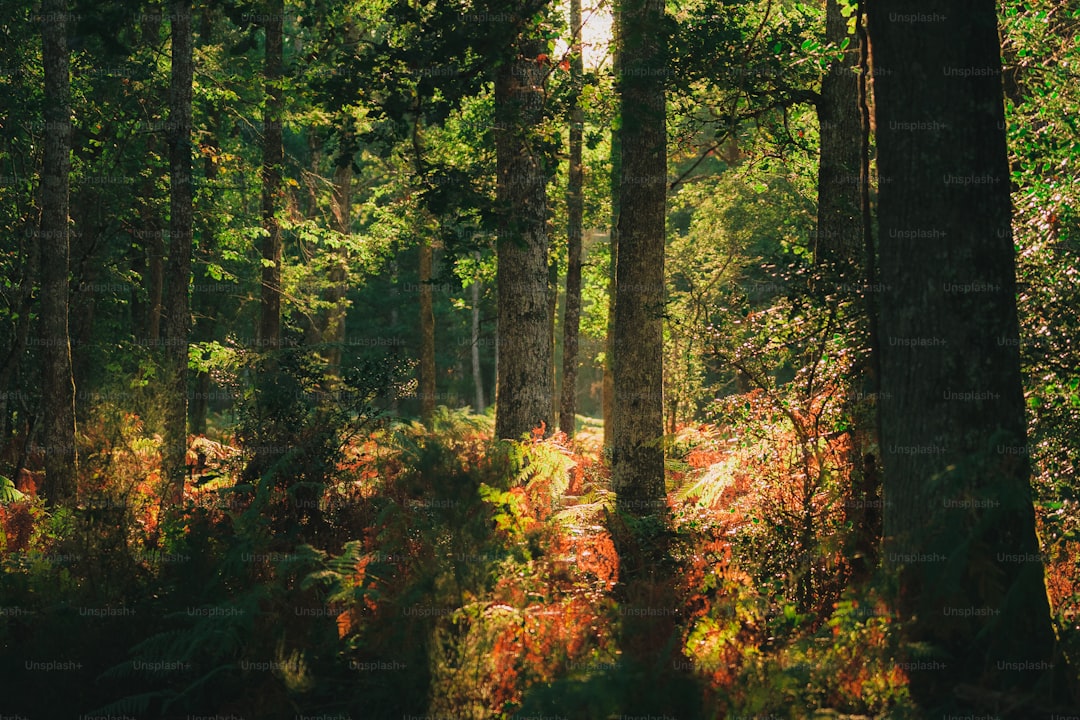
I’ve always felt that walking through a temperate rainforest or a stand of ancient redwoods is less about exercise and more about stepping into a high-functioning biological machine that has been refining its efficiency for millennia. If you really pay attention to the floor beneath your boots, you’ll realize these aren't just collections of trees; they are hyper-connected systems where giants like the coastal redwoods actually act as self-watering pumps. It’s wild to think that up to 40 percent of their annual water intake is pulled directly from the coastal fog via their needles. Plus, they use a root-grafting mechanism that physically links them underground, allowing these massive organisms to share resources and stabilize each other against the relentless Pacific winds.
When you transition into the deep rainforests of the Pacific Northwest, the sheer volume of life feels almost aggressive in its density. You’re looking at a world where epiphytic biomass is so heavy that a single maple can support over 1,500 pounds of moss and ferns. I like to think of this moss layer as a biological sponge that holds up to 20 times its own weight in water, which is exactly why the streams in these woods stay consistent even when the rain stops. Everything here follows a specific logic: fallen trees, or nurse logs, become the foundational infrastructure for the next century of growth. It’s a closed-loop system that’s honestly more sophisticated than any urban waste-management plan I’ve ever seen.
If you start observing the smaller details, you’ll notice that these ecosystems are built on incredible botanical trade-offs. The western sword fern, for instance, has figured out how to keep photosynthesizing through the darkest, gloomiest winters by constantly modulating its chlorophyll production. Meanwhile, the towering Douglas firs use a waxy cuticle on their needles to survive the harsh salt spray that would wither less adapted species. You’re even walking over a vast, invisible web of mycorrhizal fungi that acts as a bridge for nitrogen and sugar transport between trees. When you stop looking for the perfect photo and start paying attention to these micro-climates—where the canopy might be ten degrees warmer than the cool, damp floor—you really start to understand why these paths belong on every serious traveler’s bucket list.
Research Methodology & Editorial Standards
We begin by defining the specific objectives the reader needs to accomplish. Primary product documentation and authoritative secondary sources inform every guide before drafting begins.
Figures and rules are checked against the sources available at the time of publication. Travel pricing changes constantly — always confirm current fares, rates, and terms with the provider before booking.