
Essential Safety Tips for Avoiding Bear Encounters on Your Next Hiking Trip
Bears go through a distinct behavioral shift during the hyperphagia phase leading up to winter denning, where their drive to consume massive quantities of calories often overrides their natural shyness toward humans.
Understanding Bear Behavior: How to Recognize and Avoid Potential Conflicts
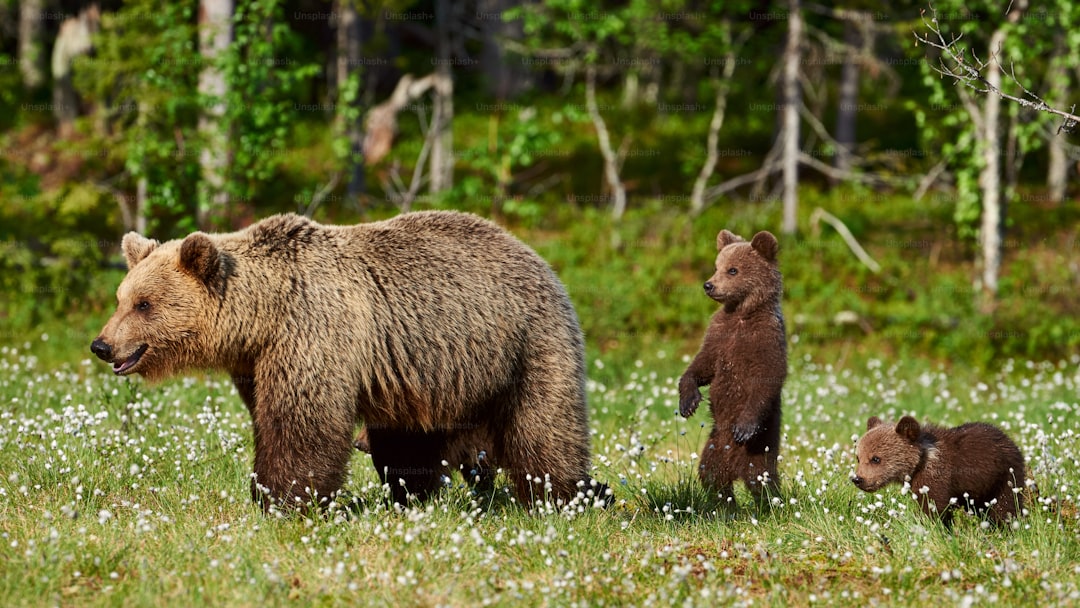
Bears go through a distinct behavioral shift during the hyperphagia phase leading up to winter denning, where their drive to consume massive quantities of calories often overrides their natural shyness toward humans. During the summer months, bear activity frequently spikes due to the breeding season and the maturation of natural food sources, creating a higher statistical probability of intersections. Research indicates that bears are highly efficient at habituation, meaning they can rapidly learn to associate human presence with food rewards if trash and attractants aren't strictly secured. Understanding that a bear standing on its hind legs is typically a display of curiosity or an attempt to gain a better vantage point for scenting the air, rather than an act of aggression, can help you remain calm when you’re out on the trail.
Scientific studies on bear communication suggest that jaw-popping or huffing sounds are common defensive signals used to express discomfort or warn of perceived threats long before an actual charge occurs. While many hikers fear a direct confrontation, the vast majority of interactions are characterized by the animal choosing to retreat once they detect a human presence, provided they aren't surprised at close range. Recent ecological mapping highlights that bear-prone areas are often defined by specific topographical features like riparian corridors and dense berry-producing thickets, which serve as primary travel and foraging routes. In regions where human overlap is high, conflict mitigation often requires a community-wide approach to waste management because a single unsecured food source can change the behavior of multiple individual bears.
The sensory range of a bear is immense, with a sense of smell capable of detecting food odors from over a mile away, which really drives home the necessity of using scent-proof storage for all your gear. Bears often display nuanced social hierarchies, and younger or sub-adult bears are sometimes displaced from prime habitat by more dominant individuals, leading them to wander into human-inhabited areas with greater frequency. Biological data reveals that female bears with cubs are exceptionally protective, and their threshold for what constitutes a threat is significantly lower than that of solitary adults. Although black bears are generally more timid than their grizzly counterparts, they are highly capable climbers and may seek safety in trees if they feel threatened, which you should recognize as a clear sign to maintain your distance.
Situational Awareness: Staying Vigilant on Popular Trails and Backcountry Routes
Let’s talk about why we’re even bringing this up, because I think we often assume that being outside means we’re naturally paying attention. Honestly, most of us fall into a kind of trail hypnosis where the rhythm of walking puts us in a trance, making it way too easy to miss what’s happening just off the path. You’ve probably been there, eyes locked on your boots or a navigation app, not realizing that your peripheral vision has basically shut down. When you’re focused on your screen, you’re losing about forty percent of your field of view, which is a massive safety gap when you consider that bears often approach from the side. And don't get me started on the noise; between the wind in the trees, rushing water, and high-frequency sounds from our electronics, we’re essentially walking around with noise-canceling headphones on.
It’s worth noting that we’re often accidentally setting ourselves up for a surprise because we don't account for how these animals use the same terrain we do. Bears are experts at energy conservation, so they’ll use our established trails to move through the woods, especially during those dawn and dusk hours when we’re most likely to be out there too. Recent data from 2025 trail cameras shows a clear shift toward nocturnal activity in high-traffic areas, meaning the "safe" times we think we’re hiking are actually when the risk profile is highest. Plus, when you hit those topographical convergence zones—where game trails cross our hiking paths—you’re walking through a high-probability encounter point without even knowing it. It’s a bit humbling to realize that if a bear is moving at thirty-five miles per hour, your brain needs about two hundred milliseconds just to process the sound, which is barely enough time to react.
We also have to be real about our own physical limitations, because fatigue is probably the biggest enemy of situational awareness. As you start to tire out during those final, steep miles, your scan frequency drops off a cliff, and you stop noticing things like flattened vegetation or disturbed soil that might be right in front of you. Think about that moment when you walk from a bright meadow into a dark, shaded thicket; your eyes take several seconds to adjust, and that’s a window of vulnerability where a bear could be standing ten feet away and you’d never see it. The wind can also play tricks on you, creating a sensory vacuum where the bear has your scent long before you even have a chance to hear a snapping twig. I’ve found that the best way to stay sharp is to treat your hike like an active observation task, constantly scanning the sides of the trail rather than just looking at the dirt in front of you, because that extra bit of vigilance is what actually keeps you safe.
Essential Gear: Why Carrying Bear Spray Is Your First Line of Defense
I think we’ve all been there, wondering if that one piece of gear in the side pocket of our pack is actually going to do the job if things go sideways. Let’s be honest: when you’re miles from the trailhead, you don’t want to be guessing about your safety, so let’s talk about why bear spray is realistically your only true line of defense. Scientifically, it’s designed to trigger immediate, transient inflammation of the mucous membranes in a bear’s eyes, nose, and lungs, effectively stopping an encounter through sensory overload rather than physical injury. The active ingredient, Oleoresin Capsicum, doesn't care how big or aggressive the animal is, which gives it a major edge over firearms that require near-perfect marksmanship under extreme duress. Think about it this way: while a gun requires you to hit a specific target, bear spray creates a massive, conical wall of aerosol that acts as an effective deterrent even when your heart is racing and your hands are shaking.
When we compare the two, the data is pretty clear: research shows that spray is over ninety percent effective at stopping aggressive behavior, consistently outperforming firearms in real-world encounters. But here is the catch—that effectiveness is entirely dependent on accessibility. If your spray is buried in the bottom of your pack, it’s useless, because a charging bear can close the gap in a matter of seconds. You really need it mounted on a hip belt or chest strap where you can draw and deploy it in under two seconds. And don't forget that these canisters aren't just "set it and forget it" gear; they have a shelf life of about three to four years as the internal pressure slowly degrades.
I’d also argue that most of us make the mistake of thinking we’ll just "figure it out" if the moment comes, but that’s a dangerous gamble. You have to account for environmental variables like wind speed, which can blow the cloud back on you, or cold temperatures that might affect the propellant. That’s why I always recommend picking up an inert practice canister to build actual muscle memory. You need to know exactly how that safety clip feels under pressure and how to aim without thinking about it. Ultimately, carrying this isn't just about having a tool; it's about shifting your mindset toward active, prepared observation, ensuring that if you do encounter a bear, you’ve got a reliable, proven way to keep both you and the animal safe.
Group Dynamics: The Safety Advantages of Hiking in Numbers
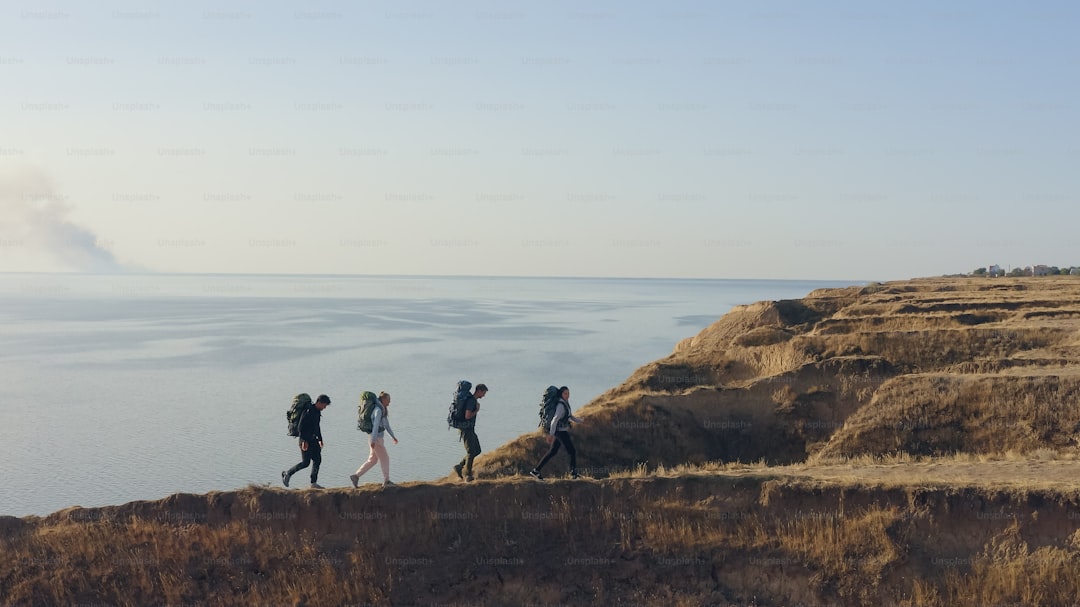
Let’s dive into why hiking with a group is arguably your most effective safety tool, even more than the gear in your pack. When you’re walking solo, you’re essentially a silent, predictable target, but a group of three or more creates a multi-directional acoustic footprint that’s hard for any animal to ignore. Think about it: bears are wired to avoid novel, non-biological sounds, and the irregular rhythm of multiple people chatting is a noise profile they can’t easily categorize as prey. Plus, you’re exponentially increasing your collective field of view, which helps kill those nasty blind spots where a surprise encounter usually happens. It’s a bit like having a security detail that’s constantly scanning the brush while you’re busy catching your breath.
There’s also the issue of scent and size, both of which work in your favor when you’ve got friends around. The combined scent plume of four people is much more detectable to a bear at a distance than the subtle smell of just one hiker, giving the animal plenty of time to steer clear before you even know it's there. And honestly, bears are just like any other animal; they aren't looking for a fight, and they’re much more likely to yield the trail to a group that looks like a significant, competitive threat. If you’ve got kids with you, keep them right in the middle of the pack, because that surrounding buffer of adults changes the bear's perception entirely, making the group look less like a vulnerable snack and more like a dominant force.
Finally, we have to talk about the sheer logistics of an emergency, because the math here is pretty compelling. If things go south, a group can coordinate multiple canisters of bear spray to create a wide, overlapping wall of aerosol that’s far more effective than a single hiker fumbling with one can. You’re also distributing the mental load of the hike; when you’re not the only one responsible for spotting tracks or fresh scat, you’re much less likely to let your guard down as fatigue sets in. It’s not just about safety in numbers, it’s about the active, assertive presence that a group naturally projects. If you’re heading into high-density territory, don’t just go for the solitude—bring a crew and make sure you’re keeping the conversation going the whole time.
Proper Food Storage: Keeping Attractants Away from Campsites and Trails
Let’s be real for a second: we tend to think of food storage as just tossing our groceries in a bag and hanging it high, but honestly, that’s often just an invitation for trouble. I’ve seen enough campers rely on the old tree-hang method only to watch a bear dismantle a branch with surgical precision, which really proves that if a bear wants it, they’re going to get it. If you’re really serious about keeping your site clean, you have to look at this through the lens of scent management rather than just physical barriers. It isn’t just about the trail mix or the leftover pasta; those scented sunscreens, lip balms, and even your toothpaste are essentially dinner bells ringing out through the woods. Bears have an olfactory memory that’s honestly terrifying, and they’ll track those chemical scents back to your tent long after you’ve finished your meal.
Think about it this way: your gear is a sponge for every smell you encounter. When you cook dinner on your camp stove, those microscopic food oils don’t just vanish, they settle into the burner and the pots, creating a lingering scent profile that’s basically a target on your back. I’ve found that even if you think you’ve cleaned your gear, a bear’s nose can pick up those volatile organic compounds from a mile away. This is why I almost always prioritize using hard-sided, IGBC-certified canisters; they’re engineered to resist crushing forces that would turn a standard dry bag into a snack wrapper. For that extra layer of confidence, tucking those items into odor-proof liners before sliding them into the canister is the smartest move you can make.
And please, let’s stop pretending that burying trash is a viable strategy, because it’s just not. I’ve read enough field reports to know that a bear can excavate a three-foot hole in the time it takes you to lace up your boots, so you’re really just leaving a concentrated cache of calories for them to find. Even if you’re meticulous, the physical distance between your kitchen and your sleeping area is your last line of defense. Setting up that hundred-yard buffer zone ensures that if a curious bear does catch a whiff of something, they’re investigating a site that’s already empty of humans. It’s all about creating a environment where you aren't providing a reward, because once a bear learns that humans equal calories, their behavior changes permanently and that’s a cycle we really need to stop fueling.
What to Do If You Encounter a Bear: Expert Strategies for De-escalation
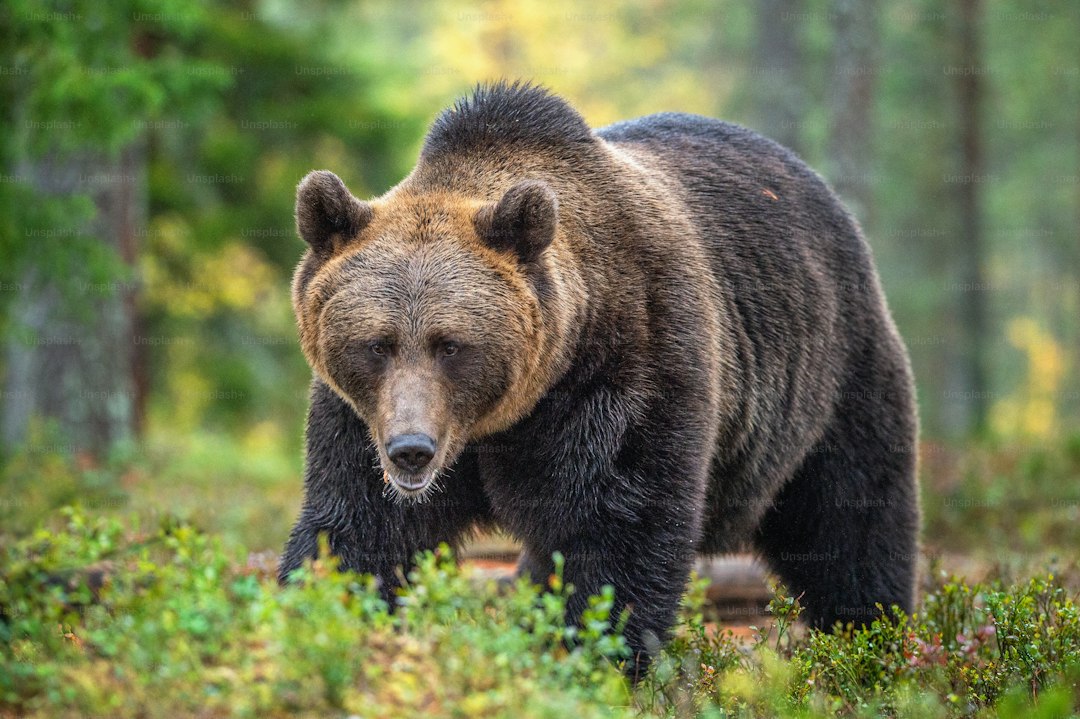
Let’s be honest: the moment you realize a bear is watching you, your heart is going to hammer against your ribs, but that’s exactly when you have to force your brain to override your fight-or-flight response. The biggest mistake most of us make is letting that panic take the wheel, because high-pitched yelling or sudden, erratic movements often trigger a chase instinct in the animal. Instead, you need to anchor yourself in the reality of the situation; realize that the bear is likely just as surprised as you are and is probably looking for a reason to leave. Keep your voice low, steady, and monotone, which helps the animal identify you as a human rather than a distressed prey animal. And please, resist the urge to lock eyes, as a fixed, steady gaze is interpreted by almost every apex predator as a direct challenge or a threat.
If the bear starts to move toward you, don't immediately assume it’s a full-on attack, as they frequently perform bluff charges to test your nerve. These are tactical, high-speed maneuvers where the bear stops abruptly, often just a few feet away, specifically to see if you’ll break and run. Standing your ground during these moments is a classic, high-stakes game of chicken, but it’s often the only way to signal that you aren't an easy mark. It’s also worth noting that if you have a pack on, keep it on; it acts as a physical barrier between you and the animal, and honestly, you don't want to be fumbling with gear while you're trying to de-escalate.
The goal here isn't to look like a predator—which means you shouldn't be waving your arms or making yourself look big in a way that feels confrontational—but to project a calm, unthreatening presence. If the bear is just hanging out, slowly back away at an angle while keeping the animal in your peripheral vision, as this allows you to monitor its body language without being aggressive. Remember that their hearing and sense of smell are vastly superior to ours, so even if they seem distracted, they’re taking in every detail about you. If you’re in a group, cluster together to present a larger, more confusing shape that doesn't fit the profile of a solitary meal. It’s about being boring, predictable, and distinctly non-predatory, giving the bear every possible incentive to just walk away and let you finish your hike in one piece.
Research Methodology & Editorial Standards
We begin by defining the specific objectives the reader needs to accomplish. Primary product documentation and authoritative secondary sources inform every guide before drafting begins.
Figures and rules are checked against the sources available at the time of publication. Travel pricing changes constantly — always confirm current fares, rates, and terms with the provider before booking.