
Discovering the hidden Indigenous heritage and untamed landscapes of Quebec
When we talk about visiting Quebec, it is easy to get caught up in the architecture of Old Montreal or the charm of the Laurentians, but there is a much deeper layer to this land that often goes unnoticed by the average traveler.
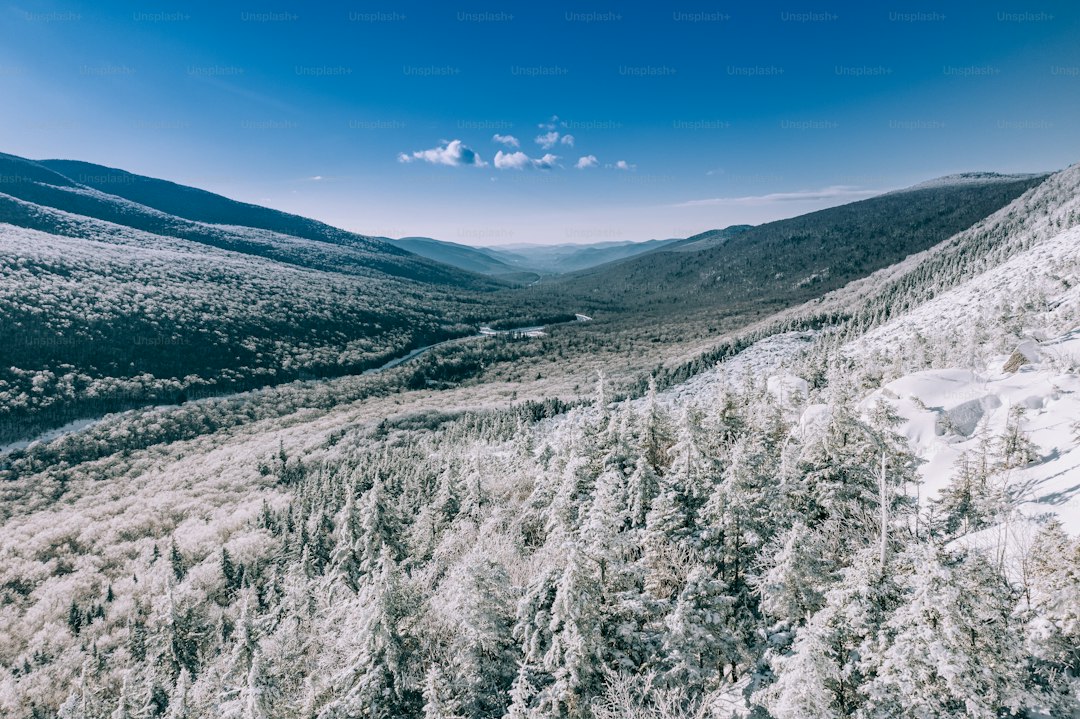
Unveiling the Ancestral Wisdom: Connecting with First Nations Culture
When we talk about visiting Quebec, it is easy to get caught up in the architecture of Old Montreal or the charm of the Laurentians, but there is a much deeper layer to this land that often goes unnoticed by the average traveler. I really think that to truly understand the spirit of these regions, you have to look toward the ancestral wisdom of First Nations communities, whose relationship with the environment isn't just a cultural relic but a sophisticated science. Think about the Innu nation, for instance; they have been managing forest ecosystems using ecological markers that often pick up on biodiversity shifts long before our modern sensors even register a change. It is honestly humbling to realize that while we rely on satellite modeling for subarctic hydrology, the Naskapi have been using their deep-rooted knowledge of ice structure and snow density to navigate these lands for generations.
And then there is the sheer precision of their historical record, which really challenges how we think about documentation. The Mi’kmaq community, for example, has preserved oral histories that act as a high-fidelity database for coastal erosion and sea-level fluctuations spanning centuries. It is not just about the past, either, because these techniques are increasingly being viewed as a blueprint for contemporary sustainability. When you look at how the Huron-Wendat managed botanical knowledge through complex linguistic archives or how the Three Sisters agricultural method optimized soil health without industrial intervention, you start to see that this isn't just folklore. It is empirical, lived-in data that is finally getting the validation it deserves in scientific circles today.
I think it is worth pausing for a moment to consider how much we overlook when we don't engage with these perspectives. The way the Atikamekw use star-mapping for navigation or how the Inuktitut language categorizes the cryosphere with dozens of distinct terms tells me that we are only scratching the surface of what is possible when we bridge traditional knowledge with our own. If you are heading out to explore the untamed landscapes of Quebec, my advice is to stop looking at the scenery as just a backdrop and start seeing it as a living, recorded history. It shifts your entire experience from simple sightseeing to a much more meaningful connection with a culture that has been the steward of these lands for thousands of years.
Into the Wild: Navigating the Rugged Beauty of the Gaspé Peninsula
When you’re planning a trip to the Gaspé Peninsula, it is easy to view the region as just another scenic coastal drive, but once you dig into the geology, you realize you're traversing a massive, active tectonic boundary. The Logan Fault essentially splits the peninsula in two, separating the ancient Canadian Shield from the Appalachian Orogen and creating the jagged, dramatic cliffs that define the northern coastline. If you look closely at the seismic data, you’ll see that this crustal deformation is still happening, which is a big reason why the landscape looks so raw and unpolished compared to other parts of Quebec. It’s not just pretty scenery; it’s a living, shifting geological laboratory that demands your respect as soon as you hit the road.
I think the most fascinating part is how these geological quirks dictate the biology of the entire peninsula. Take the Chic-Choc Mountains, for example, which stand as the northernmost reach of the Appalachians; their high-altitude tundra microclimates are the only reason the woodland caribou population survives south of the St. Lawrence. Then you have the maritime climate acting as a cooling system, which allows arctic-alpine flora to flourish here even though it shouldn't realistically survive this far south. It is this specific convergence of cold waters and high peaks that turns the region into a refuge for species that usually stick to the far north.
If you head out toward the eastern tip, you’ll encounter Percé Rock, a five-million-ton limestone monolith that is literally losing hundreds of tons of weight every year to simple freeze-thaw cycles. It’s a stark reminder that even the most massive landmarks here are in a constant state of decay and transition. Meanwhile, just offshore, the deep-water upwelling in the Laurentian Channel creates a perfect feeding ground for blue whales, making this one of the few places where you can reliably spot them near the coast. Whether you’re watching the northern gannet colony on Bonaventure Island—which houses over 120,000 birds—or tracking the salmon runs in the Cascapédia, you’re constantly seeing how the peninsula’s unique physical structure supports an incredible density of life.
I’d suggest you don't just drive through; pay attention to the subtle markers, like the old-growth boreal forests that have remained untouched for a century or the way the sea levels here are shifting differently than the global average due to isostatic adjustment. It’s rare to find a place where you can see such a clear intersection of deep-time geology and immediate biological survival. When I consider the complexity of the water chemistry and the sensitive river systems, I realize this isn't just a vacation spot, but a fragile system that requires careful observation. If you’re looking to go, keep your eyes on the horizon and your gear ready, because the Gaspé doesn't play by the same environmental rules as the rest of the continent.
Echoes of the North: The Untamed Wilderness of Nunavik
When you head north into Nunavik, the landscape shifts from the familiar boreal forests to something much older and more raw. You're effectively stepping onto the Superior Province of the Canadian Shield, where the bedrock itself dates back nearly 3.9 billion years in the Torngat Mountains. It’s wild to think that you're walking on some of the oldest exposed rock on our planet, a crust that has remained tectonically stable while the rest of the world shifted around it. And if you’re wondering why the ground feels so alive, it’s because the land is still rising through isostatic rebound, slowly shaking off the crushing weight of ice sheets that retreated millennia ago.
Think about the sheer scale of the Pingualuit Crater, which is a perfect circular scar from a meteorite strike about 1.4 million years ago. Its lake water is honestly mind-blowing, with visibility reaching 35 meters because there's just no organic matter to cloud it. Beneath your boots, you’ve got permafrost reaching depths of over 500 meters, acting as a frozen basement for the entire ecosystem. It’s a place where the tundra plants have evolved to stay low to the ground in a prostrate growth pattern, a clever trick to hide from the abrasive, ice-laden winds that define life up here.
I’m always struck by how the region manages to host such massive life despite the harshness. You’ve got the Rivière aux Feuilles supporting a migratory caribou herd that numbers in the hundreds of thousands, a sight that really puts our modern concept of wilderness into perspective. And just off the coast in the Hudson Strait, you might spot bowhead whales—creatures that can live for over 200 years—gliding through a corridor that seems almost untouched by time. During the summer solstice, the midnight sun gives you nearly 24 hours of light, which is exactly what the mosses and lichens need to snap out of their suspended animation and get growing again. It’s a high-latitude climate ruled by the Arctic oscillation, and honestly, seeing it in person changes how you view the resilience of life in extreme conditions.
Sustainable Traditions: Traditional Fishing and Hunting Practices in Modern Quebec
When I really look at how Indigenous communities in Quebec manage their land, I’m struck by how much we’ve missed by viewing these practices as mere relics of the past. Let’s dive into it: the Cree practice of rotational hunting, for example, isn't just a tradition, but a finely tuned biological clock that keeps beaver populations thriving by leaving colonies undisturbed for years. This isn't just about survival; it’s a sophisticated, self-regulating management system that keeps local wetlands in balance. Think about the tallymen in the James Bay region—they serve as localized data collectors, tracking animal migration and habitat shifts to set conservation quotas that are far more responsive to actual ecological health than a distant office could ever be. It’s a level of stewardship that turns the act of hunting into a precise, data-driven exercise in long-term environmental protection.
And then there’s the technology involved, which is honestly elegant in its simplicity. Take those V-shaped stone fish weirs in our tidal rivers—they’re designed to let juvenile fish pass through unharmed, ensuring we aren't just taking what we want today, but protecting the genetic diversity of salmon populations for years to come. It’s the same logic behind how hunters use specialized snowshoes to traverse muskeg without crushing the delicate insulation layer that keeps small mammals and plants alive beneath the snow. When you compare this to the blunt force of industrial extraction, the contrast is stark. We’re talking about a philosophy of low-impact mobility that respects the fragility of the boreal expanse, rather than trying to conquer it with heavy, disruptive machinery.
You also have to appreciate the chemistry and the circularity of these methods. Smoking meat with specific woods like alder or birch isn't just about flavor; it’s an effective, chemical-free preservation technique that manages food security in the harshest subarctic conditions without needing a single synthetic additive. Even the post-harvest protocols, where remains are returned to the land to facilitate nutrient cycling, show a deep-rooted understanding of the closed-loop systems that keep these ecosystems alive. It’s a way of living that acknowledges we’re just one piece of a much larger, interconnected puzzle. If we’re serious about sustainability, we should be paying attention to these methods, because they’ve been maintaining the health of these landscapes for thousands of years while our modern models are still trying to catch up to the reality of the climate.
Artistic Expressions: The Evolving Narrative of Indigenous Craftsmanship
When we talk about the artistic traditions of First Nations communities, it is easy to view these works as static relics, but if you look closer, you’ll find they are actually high-stakes, evolving mediums of information. Think about contemporary quillwork among the Huron-Wendat; it has transitioned from simple adornment into a sophisticated tool for geo-spatial mapping, where specific color patterns actually document historical migration routes. I find it fascinating that the birch bark used in these crafts acts as a natural preservative because it contains betulin, a potent antimicrobial agent that keeps designs intact for centuries. It is not just about the visual beauty; it is about the chemistry behind the craft being functional, enduring, and remarkably ahead of its time.
There is also a massive amount of technical precision happening beneath the surface of these materials that modern engineering is only now catching up to. For instance, master weavers among the Inuktitut utilize seal gut treated with fermented fish oil, which results in a tensile strength that rivals synthetic polymers while staying completely biodegradable. And look at the traditional snowshoe webbing; the weave density is calculated based on regional snow water content to manage weight distribution through actual fluid dynamics. You can see this same rigor in the way Innu carvers are now integrating LiDAR scanning data to select wood with density profiles that mimic the acoustic properties of historical instruments. It really shifts your perspective when you realize these are not just artifacts but optimized tools designed to survive the harshest conditions on the planet.
Honestly, we are seeing a fascinating intersection where traditional knowledge is being validated by modern, empirical science. I’m thinking of the way traditional drum-makers calibrate moose hide thickness to match local atmospheric pressure for consistent resonance during humidity shifts, or how ancient soapstone carving used a slow-heat tempering process to maximize thermal conductivity for winter survival. Even the use of spruce resin as a sealant creates a chemical bond that holds up better against sub-zero fracturing than most industrial epoxies I have encountered. It is clear that these artisans have been practicing a form of material science for millennia that is finally getting the recognition it deserves. If you are going to explore Quebec, I suggest you look at these crafts not as souvenirs, but as data-dense, living archives that carry the weight of an incredibly sophisticated history.
Sacred Landscapes: Finding Spiritual Solitude in the Boreal Forest
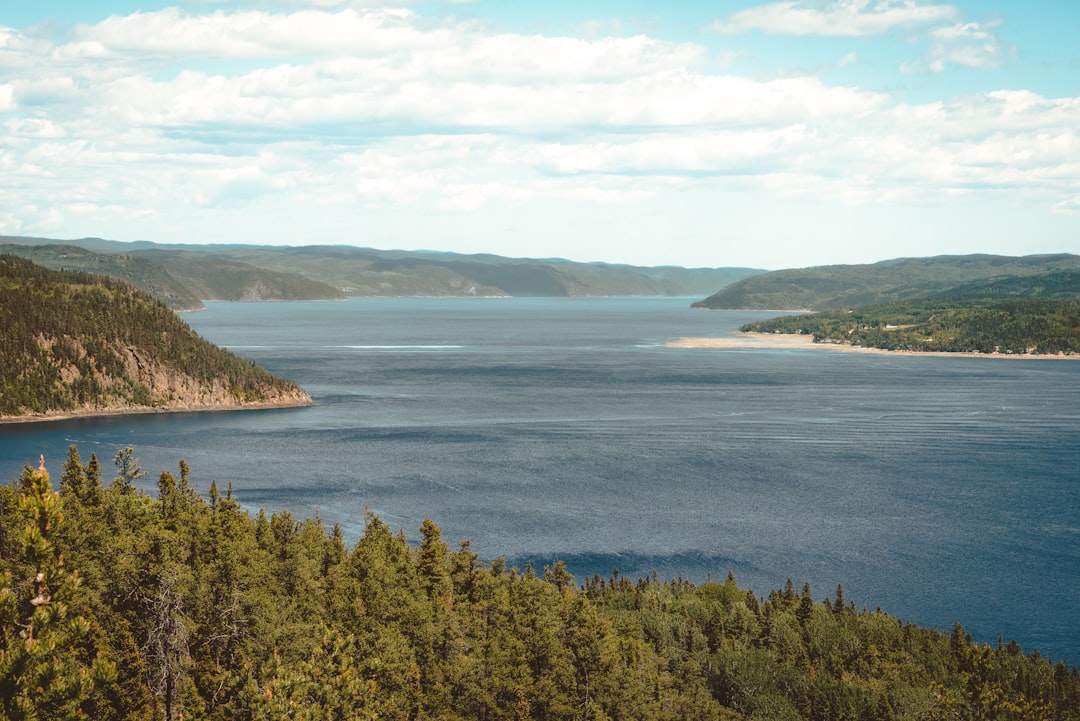
When we venture into the boreal forest, it is easy to mistake the profound quiet for emptiness, but the reality is that we are stepping into a biological engine of massive proportions. This biome functions as a terrestrial carbon sponge, sequestering nearly twice as much carbon per hectare as tropical rainforests, thanks to the thick accumulation of organic matter and peatlands beneath our feet. I find it incredible that the silence here is actually physically measurable, as the dense, sound-absorbing properties of coniferous needles and complex forest floor textures dampen noise far more effectively than any open landscape ever could. Think of the forest floor as a hidden, high-speed network; it is held together by a symbiotic fungal system called mycorrhizae that facilitates nutrient transfer between trees over several kilometers. You’re essentially walking across a living, interconnected web that keeps the entire ecosystem functioning in a delicate, precise balance.
It is easy to overlook the engineering happening in the sub-nivean zone, that small space between the ground and the snowpack during the winter. Even when air temperatures plummet well below negative thirty degrees, this space maintains a constant temperature near freezing, providing a critical thermal refuge for small mammals that would otherwise never survive the conditions. I’ve always been struck by the black spruce stands in these reaches; many are actually genetically identical clones that have propagated through layering, where lower branches take root after being pressed into the moss by snow. It is a masterful survival strategy that allows the forest to persist even in the most unforgiving climates. If you look at the soil acidity here, you’ll see it’s so high that it naturally halts decomposition, which has created a high-resolution time capsule of pollen records dating back over ten thousand years.
The more I look into the mechanics of this landscape, the more I realize it is doing so much more than just sitting there. These forests are vast enough to generate their own localized weather patterns through intense evapotranspiration, acting as a lung for the continent while regulating global atmospheric chemistry through those deep peat layers. Certain tree species even exhibit hydraulic redistribution, pulling water from deep, stable groundwater sources during droughts to release it into the upper soil layers at night, essentially sharing resources with nearby flora. You also have to appreciate the sensitivity of the lichen here; because they absorb atmospheric pollutants directly through their surface, they act as perfect bio-indicators that allow researchers to map air quality shifts with extreme precision. It is a place where the magnetic field alignments are so distinct that they serve as a critical migratory bottleneck, helping birds navigate thousands of miles with absolute accuracy. When you pause to reflect on these layers, you realize the forest isn't just a backdrop—it is a sophisticated, self-sustaining archive that requires us to walk through it with genuine intention.
Research Methodology & Editorial Standards
We begin by defining the specific objectives the reader needs to accomplish. Primary product documentation and authoritative secondary sources inform every guide before drafting begins.
Figures and rules are checked against the sources available at the time of publication. Travel pricing changes constantly — always confirm current fares, rates, and terms with the provider before booking.