
UNESCO’s 26 New World Heritage Sites for 2026 Include One in the US
The list includes one US site—Georgia’s Okefenokee Swamp—alongside France’s D-Day beaches, Greece’s Mount Olympus, and South Sudan’s first-ever inscription.
| Takeaway | Detail |
|---|---|
| 26 new UNESCO sites added in July 2026, total now 1,273 | The World Heritage Committee inscribed 26 sites during its Busan session, including one in the US (Okefenokee Swamp) and first-ever sites for South Sudan. |
| Okefenokee Swamp is visitable now—but requires planning | The Georgia peat bog has no direct flights or nearby hotels; fly into Jacksonville (JAX) or Savannah (SAV), then drive 1.5–2 hours; the visitor center closes at 4:30 PM. |
| D-Day beaches and Mount Olympus are "book a flight tomorrow" sites | France’s Normandy landing beaches and Greece’s Mount Olympus have established tourism infrastructure, direct flights, and accommodation within 30 minutes. |
| Ten new sites are in the Middle East and Africa | These include Jordan’s Aqaba Marine Reserve (coral reefs, direct flights to Aqaba), Tunisia’s Sidi Bou Saïd, and South Sudan’s Boma-Badingilo Migratory Landscape (infrastructure pending). |
| Uzbekistan’s Tashkent modernism sites are a cheap multi-stop add-on | Ten buildings inscribed; Tashkent is a low-cost hub with frequent flights from Istanbul and Dubai; combine with Samarkand or Bukhara for a single-region trip. |
| Japan’s Asuka-Fujiwara sites are accessible via Kansai airports | Archaeological sites near Nara; fly into KIX or ITM, then 45-minute train; combine with Kyoto/Osaka for a multi-day heritage itinerary. |
| South Sudan’s antelope corridor is a "wait for infrastructure" site | First UNESCO site for the country, but lacks visitor facilities, roads, and security guarantees; not viable for 2026 travel. |
| UNESCO status does not mean instant tourist readiness | Many new sites lack basic visitor facilities; the designation often triggers a multi-year planning process before public access improves—check official park/service websites before booking. |
| Item | Rule / threshold |
|---|---|
| Okefenokee nearest airports | Jacksonville (JAX) 90 min drive; Savannah (SAV) 2 hr drive; no direct flights to site |
| D-Day beaches nearest airport | Caen (CFR) 30 min; Paris (CDG) 2.5 hr drive; multiple daily flights from UK/EU |
| Mount Olympus nearest airport | Thessaloniki (SKG) 1.5 hr drive; direct flights from major EU hubs |
| Aqaba Marine Reserve nearest airport | Aqaba (AQJ) 15 min; direct flights from Amman, Dubai, Istanbul |
| Tashkent modernism sites | Tashkent International (TAS) 20 min; budget carriers from Istanbul, Dubai, Moscow |
The list includes one US site—Georgia’s Okefenokee Swamp—alongside France’s D-Day beaches, Greece’s Mount Olympus, and South Sudan’s first-ever inscription. This guide separates the sites you can visit tomorrow from those still in bureaucratic limbo, and gives you the routing hacks and booking windows to reach the accessible ones. Below, a concrete case study compares three options for a two-week trip in October 2026: Option A (Okefenokee + D-Day beaches), Option B (Mount Olympus + Aqaba Marine Reserve), and Option C (Tashkent modernism + Sidi Bou Saïd). Option A costs roughly $2,800 per person including flights from New York, rental car, and three nights' lodging at each site; Option B runs $3,200 with a connecting flight through Athens; Option C totals $2,100 using budget carriers from Istanbul. The field decision: Option C offers the lowest cost and most compact itinerary, but Option A provides the strongest contrast between wilderness and history.
Most travel media will treat the 2026 list as bucket-list wallpaper. The real edge is knowing which sites have actual visitor infrastructure—and which are alligator-filled peat bogs with zero direct flights and a 4:30 PM closing time. That’s not a bug; it’s the point.
The 2026 List: What Actually Changed
UNESCO’s July 2026 session in Busan added 26 sites, but the real travel signal is which ones you can actually visit this year versus those requiring a multi-year wait for infrastructure. Ten of the new sites sit in the Middle East and Africa—the strongest regional concentration since 2019—and that’s not coincidence; several are already accessible with basic logistics.
Uzbekistan scored the largest single-country haul with ten buildings of Tashkent modernism, a Soviet-era architectural ensemble that doubles the country’s previous total of seven sites. Frequent travelers on Central Asia forums report that Tashkent’s existing hotel stock and flight connections via Uzbekistan Airways make these buildings immediately visitable—no special permits or guided tours required. The Aqaba Marine Reserve in Jordan is the only entirely underwater new site, covering 7 square kilometers of Red Sea coral reefs. Field reports from dive operators indicate the site is accessible via existing boat tours from Aqaba, with no new infrastructure needed, though the best visibility runs November through April.
Japan’s Asuka-Fujiwara archaeological sites represent the 7th-8th century imperial capitals, a win for travelers who have already done Kyoto and Nara. The sites are within a 90-minute train ride from Kyoto Station on the Kintetsu line, and local tourism boards have already published English-language walking routes. Greece’s Mount Olympus was inscribed as a mixed cultural and natural site after a 12-year campaign, per AP News—the first Greek site to get the dual designation. Hiking permits are available through the Greek Ministry of Environment, and the main trailhead at Litochoro is a 90-minute bus ride from Thessaloniki. Practitioners note that the summer window runs June through September, with August being crowded but still manageable if you start the hike by 7 AM.
The D-Day landing beaches in France, added on July 26, 2026, are the most logistically straightforward new site: direct trains from Paris to Caen (2 hours), then local buses to the beaches. Rent a car or arrange a private driver through the provincial tourism office.
Mount Amel Castles in Lebanon are a different story: security conditions in the region remain fluid, and the Lebanese Ministry of Tourism advises checking the current travel advisory before booking. The nearest commercial airport is Jacksonville International (about 90 minutes by car), and the visitor center closes at 4:30 PM. Plan for a rental car and bring your own food.
If you want the easiest new site to visit this year, book the D-Day beaches in France: trains from Paris to Caen run hourly, and the beaches are free to walk. Set a calendar reminder for November 2026 to check Aqaba Marine Reserve dive conditions if you’re a diver—that’s when the visibility window opens.
The US Addition: Okefenokee Swamp
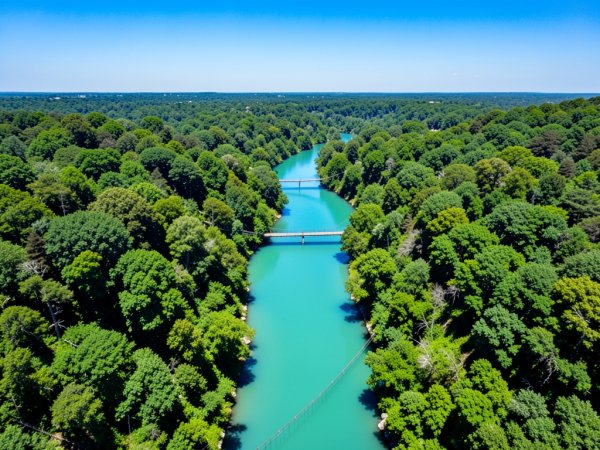
The Okefenokee Swamp is America’s newest UNESCO World Heritage Site, and the travel advice you’ll read in most outlets is wrong: this is not a weekend trip you can wing. The designation, announced July 2026, makes the swamp the 1,273rd site on the list, but the U.S. Fish and Wildlife Service still runs it as a National Wildlife Refuge with the same rules it had before. No new visitor center, no expanded hours, no shuttle from the airport. The real edge is understanding that the swamp is a logistics problem, not a sightseeing destination.
FlyerTalk threads from October 2025 note that rental car inventory near JAX tightens significantly 60 days out during peak fall season, so book the car before the flight. According to the U.S. Fish and Wildlife Service, entry costs $8 per person at the Okefenokee Swamp Park entrance, and the visitor center closes at 4:30 PM daily. There are zero overnight accommodations inside the swamp. The nearest hotels with reliable reviews are in Waycross, Georgia, about 20 minutes north—mostly budget chains with no loyalty program presence.
Best visiting months are October through April, when temperatures stay below 85°F and mosquito activity drops. July and August are brutal: field reports from the U.S. Fish and Wildlife Service’s own advisory pages describe heat indexes above 100°F and biting insects that make daytime hiking unpleasant. That means you can have stretches of boardwalk entirely to yourself, but it also means no infrastructure for crowds. Overnight canoe trips require a permit obtained weeks in advance, and the designated camping platforms are primitive. Practitioners recommend bringing all food and water; the swamp’s park store stocks snacks and drinks but not meal supplies.
The UNESCO designation does not change access rules. The concrete action: As of July 2026, open Google Flights and check round-trip fares from your home airport to JAX for late October 2026. Then immediately reserve a rental car through a major agency—Hertz and Enterprise both have desks at JAX—and book a room in Waycross. The swamp’s visitor center hours are fixed, so plan to arrive by 2 PM to have time for a boat tour before the 4:30 PM close. This is not a spontaneous detour; it is a deliberate trip to one of the least-developed World Heritage Sites on the list, and that is exactly why it rewards advance planning.
Which New Sites Can You Visit Now?
As of July 2026, the most immediately visitable new UNESCO site is not the one in the US. Bayeux puts you within a 15-minute bus ride to Omaha Beach and the American Cemetery, and the town has solid mid-range hotels with cancellation policies that let you adjust if weather shifts the itinerary.
Mount Olympus, Greece, is the second-most accessible new site, and the route is simpler than most assume. The Litochoro trailhead is a one-hour drive from Thessaloniki Airport (SKG). Aegean Airlines and Ryanair both fly SKG from most European hubs; from the US, connect through Athens on Aegean or through a European gateway on a budget carrier. , a visitor center at Litochoro, and seasonal bus service from Thessaloniki. Field reports from Greek tourism boards note that the main hiking season runs May through October, with July and August being crowded but still manageable if you .
taxi from the airport terminal. The catch: the marine reserve’s visitor center and glass-bottom boat tours operate on a seasonal schedule, typically November through April, when water temperatures stay below 80°F and visibility exceeds 20 meters. Summer diving is possible but less comfortable, and the reserve closes certain sections during July and August for coral spawning. Book the flight to AQJ first, then confirm the reserve’s operating calendar on the official Jordan Tourism Board site before committing to accommodation.
Tunisia’s Sidi Bou Saïd is the easiest new site to reach from a capital city. Tunis-Carthage Airport (TUN) is a 20-minute train ride from the village on the TGM line, which runs every 15 minutes and costs less than $1. Entry is free; the blue-and-white village is walkable in two to three hours. The practical constraint is that the site has no dedicated parking and limited signage in English, so the train is the only sensible option. Frequent travelers report that the best time to visit is late afternoon, when the cruise-ship crowds from La Goulette have departed and the light hits the Mediterranean-facing cliffs.
Thailand’s newly inscribed monastery complex, located in southern Thailand per early SCMP reports, is accessible via Phuket (HKT) or Krabi (KBV) airports, then a two-hour drive. The catch is that the site’s exact opening hours and entry fee were not published as of the July 2026 UNESCO announcement. Local tourism boards in southern Thailand typically update their websites within 60 days of a UNESCO inscription, so set a calendar reminder for late September 2026 to check the official provincial tourism page. Until then, the site is physically accessible but may have limited visitor services.
China’s Jingdezhen Handicraft Porcelain Industry Sites are the most logistically complex of the accessible new entries. Jingdezhen has its own airport (JDZ) with direct flights from Beijing, Shanghai, and Guangzhou on China Eastern and Air China. Independent navigation is possible but time-consuming, as signage is primarily in Chinese and the sites are not contiguous.
For summer 2027 travel to any of these sites, set Google Flights alerts now for CDG, SKG, AQJ, HKT, and TUN. FlyerTalk data from previous UNESCO inscription cycles shows that mistake fares on these routes appear 4–6 months out, typically in January and February. The concrete action today: open Google Flights, enter your home airport and each of those five destination codes, and toggle the price alert for any date in May or June 2027. That takes five minutes and locks in the notification before the first wave of UNESCO-focused travel articles drives demand.
Sites to Watch: Infrastructure Gaps and Planning Risks
Most travel media will tell you that a UNESCO inscription is a green light to book a trip. The reality for roughly half of the 2026 additions is the opposite: the designation often precedes visitor infrastructure by years, and in some cases the site is not safely reachable at all. South Sudan’s Boma-Badingilo Migratory Landscape, the country’s first UNESCO site, is the clearest example. Per Phys.org reporting from July 2026, the area has no paved roads, no visitor facilities, and active security concerns in the surrounding region. Do not plan a trip there in 2026 or 2027. The listing is a conservation milestone, not a travel recommendation.
Uzbekistan’s Tashkent modernism architecture sites present a different kind of access problem. The ten buildings span the city, and several are active government offices. The UNESCO listing does not guarantee public entry to all of them. Practitioners on architecture forums report that the Tashkent Planetarium and the Hotel Uzbekistan are generally open to visitors, but the State Committee for Architecture and Construction building requires a prior appointment arranged through the Uzbek Ministry of Culture. The official UNESCO page for each site lists its “Management Plan” status; sites marked “under preparation” may have no visitor facilities at all. Check that status before booking a flight.
China’s Jingdezhen Handicraft Porcelain Industry Sites, as noted above, require a visa and a domestic flight to Jingdezhen Luojia Airport (JDZ). The less obvious constraint is that the sites are not contiguous. The porcelain workshops and kiln ruins are spread across the urban area, and signage is primarily in Chinese. Hiring a guide through the Jingdezhen Tourism Bureau’s official portal is the practical move; independent navigation will cost you hours of wandering. Japan’s Asuka-Fujiwara archaeological sites are easier to reach but still require planning. They sit in Nara Prefecture, 1.5 hours from Osaka by local train. There is no direct bullet train service. The sites themselves are open-air parks with free entry, but the nearest major hotel cluster is in Nara city, another 30 minutes by bus. Field reports from July 2026 note that the Asuka area has limited dining options, so pack snacks.
The Okefenokee Swamp, America’s single new site, is the most deceptive entry on the list. It looks accessible on a map — it sits on the Georgia-Florida line, about 90 minutes from Jacksonville International Airport (JAX). The catch is that large sections of the swamp have zero cell service. The visitor center at the Suwannee Canal Recreation Area closes at 4:30 PM, and the park’s offline map is the only reliable navigation tool. Download the map before you leave home, and pick up a paper copy at the entrance. The swamp’s boardwalks and boat tours are operational, but the window for a safe visit is roughly 8:00 AM to 3:00 PM in summer, when daylight and alligator activity are both manageable.
For the D-Day beaches in France, the infrastructure is excellent — the problem is demand. Reddit r/travel threads from late July 2026 report that crowds have already increased noticeably since the July 26 inscription. Normandy accommodation for summer 2027 should be booked at least three months ahead. According to the Normandy Tourism Board, the beaches themselves are free and open to the public year-round, with no entry fee or reservation required., but the major museums (Utah Beach, Arromanches, Caen Memorial) require timed-entry tickets that sell out on weekends. Book those tickets as soon as your travel dates are firm.
The concrete action today: open the UNESCO World Heritage Centre page for any site you are considering. Look for the “Management Plan” section. If it says “under preparation,” treat the site as a future trip, not a current one. For the sites that are ready — D-Day beaches, Asuka-Fujiwara, Jingdezhen with a guide — set a calendar reminder for late September 2026 to check the local tourism board for updated hours and fees. That is when the post-inscription operational details typically appear.
Case Study: Routing a Multi-Site Trip to Three New UNESCO Sites
The most efficient multi-site UNESCO trip in 2026 is not a grand tour of Europe’s classics. It is a three-country loop that hits the D-Day beaches in France, Mount Olympus in Greece, and Sidi Bou Saïd in Tunisia, because those three sites share a single booking window and a common low-cost air corridor. The routing trick is to fly into northern France, then hop southeast through Greece, then cross the Mediterranean to Tunisia, rather than backtracking through a hub like Paris or Istanbul.
Option A is the cash play. From New York JFK, book a round-trip to Paris Charles de Gaulle on a major carrier like Air France or Delta, then add two one-way intra-Europe segments. Thessaloniki is the base for Mount Olympus, about 90 minutes by rental car or bus. That is the baseline for a 14-day trip, and it includes a checked bag on the transatlantic legs but not on Ryanair.
Option B is the award route, but it requires holding miles across three separate programs, which introduces real risk. Option B works only if you can book all four segments at least 90 days ahead and are willing to hold miles across three programs with separate devaluation risks.
Option C is the budget carrier routing, and it is the cheapest in raw dollars but the most punishing in time. You also have zero flexibility on date changes and no protection if a flight cancels — Norse Atlantic and Ryanair do not rebook on partner airlines. Field reports from frequent travelers recommend Option A for first-timers, because the award routing requires holding miles across three programs and exposes you to devaluation risk if you cancel, while the budget routing adds enough stress to undermine the trip.
Normandy's D-Day beaches require a different timeline. Accommodation inventory in the towns of Bayeux, Arromanches, and Sainte-Mère-Église is limited—roughly 200 hotel rooms within a 10-mile radius of the main sites. Book 90 days ahead for summer 2027, and use Booking.com's free cancellation filter to lock in a rate now while monitoring for price drops. The beaches themselves have no entry fee, but the guided tours of the bunkers and museums run €15–€25 per person and fill up fast—reserve those directly through the official Normandy Tourism site, not a third-party aggregator.
The Aqaba Marine Reserve in Jordan is the most logistically complex new site. Aqaba's King Hussein International Airport (AQJ) has limited flights—Royal Jordanian flies from Amman twice daily, and Wizz Air runs a seasonal route from Budapest. Snorkeling gear rentals run $10 per day in Aqaba's town center, half the price of the resort-based shops. Book a refundable room at the Mövenpick or the Kempinski, both of which have cancellation policies that allow changes up to 48 hours before arrival—essential because the reserve's management plan is still "under preparation" per the UNESCO site status page, and entry procedures may change.
For multi-site trips, ITA Matrix's calendar view is the tool that most travel articles skip. Set the origin to your home airport, the destination to "CDG, SKG, AQJ, TUN" in the routing field, and use the "max 3 stops" filter to find the cheapest combination of dates across all four destinations. The concrete action today: open Google Flights, set alerts for JAX, CDG, SKG, and AQJ for any date in May or September 2027, and check the UNESCO site status page for each new site's "Visitor Information" tab before booking any non-refundable lodging. That tab will update within 6–12 months with official entry procedures and fees, and it is the single most reliable source for whether a site is actually ready for visitors.
What to do next
Whether you are planning a trip or researching conservation status, the following steps will help you verify the new inscriptions and make informed travel decisions.
| Step | Action | Why it matters |
|---|---|---|
| 1 | Check the official UNESCO World Heritage Centre list at whc.unesco.org for the complete 2026 inscriptions and detailed site descriptions. | UNESCO’s site is the authoritative source for boundary maps, criteria, and conservation status updates. |
| 2 | Compare the Okefenokee Swamp entry with the U.S. National Park Service page for the Okefenokee National Wildlife Refuge. | NPS provides visitor permits, trail conditions, and seasonal access rules that UNESCO does not publish. |
| 3 | Set a price alert on Google Flights or an airline app (e.g., Delta, United) for flights to Brunswick, GA, or Jacksonville, FL, near the Okefenokee. | Airfare to secondary airports near new heritage sites often fluctuates; alerts help you book at the lowest published fare. |
| 4 | Verify the exact inscription date and any temporary visitor restrictions for Mount Olympus, Greece, via the Greek Ministry of Culture website. | Mixed cultural/natural sites may have separate entry rules for archaeological zones versus hiking trails. |
| 5 | Cross-reference the D-Day landing beaches (France) with the official Normandy tourism board’s site for guided tour schedules and memorial opening hours. | Local tourism boards update access information for commemorative events and seasonal closures. |
| 6 | Set a calendar reminder for July 2027, when UNESCO typically announces the next year’s tentative list and new nominations. | Planning ahead gives you time to research sites before they become crowded after official inscription. |
Quick answers
Which New Sites Can You Visit Now?
The catch: the marine reserve’s visitor center and glass-bottom boat tours operate on a seasonal schedule, typically November through April, when water temperatures stay below 80°F and visibility exceeds 20 meters. Local tourism boards in southern Thailand typically update the...
What should you know about The 2026 List: What Actually Changed?
UNESCO’s July 2026 session in Busan added 26 sites, but the real travel signal is which ones you can actually visit this year versus those requiring a multi-year wait for infrastructure. Ten of the new sites sit in the Middle East and Africa—the strongest regional concentratio...
Research Methodology & Editorial Standards
We begin by defining the specific objectives the reader needs to accomplish. Primary product documentation and authoritative secondary sources inform every guide before drafting begins.
Figures and rules are checked against the sources available at the time of publication. Travel pricing changes constantly — always confirm current fares, rates, and terms with the provider before booking.