
Discovering Greece and the ancient sites every traveler must see
It’s nothing like the stark, sterile white we often imagine when we think of ancient ruins.
The Architectural Grandeur of the Acropolis and the Parthenon
When you finally stand atop the Acropolis, it’s easy to get lost in the sheer scale of the Parthenon, but the real story is in the math. Honestly, I find it mind-blowing that there isn’t a single true right angle in the entire structure. The architects used a technique called entasis, giving the columns a slight, calculated bulge to trick our eyes into seeing perfectly straight lines where there are actually subtle curves. It’s a genius bit of engineering that makes the whole building feel alive rather than just a static slab of stone. You’re looking at a structure that was, quite literally, designed to breathe and shift with the earth beneath it.
And if you look closer, you’ll notice that warm, honey-like glow hitting the Pentelic marble, which is actually the result of iron trace minerals oxidizing over thousands of years. It’s nothing like the stark, sterile white we often imagine when we think of ancient ruins. In fact, historians have found that the temple was once painted in punchy, vibrant reds, blues, and golds that would’ve looked incredibly bold against the Athenian sky. Think about how much that changes our perception of what "classical" beauty really meant to them. They weren't aiming for minimalist restraint; they were going for something far more visceral and dramatic.
But don’t let the beauty distract you from the heavy-duty engineering holding it all together. The foundation relies on a dry-stone technique with gravity-locked joints and lead-coated iron clamps that were specifically built to handle the region's frequent seismic activity. Even after the devastating 1687 explosion, the remaining structure still stands as a testament to those structural choices. Today, modern engineers are using titanium dowels to piece the ruins back together, making sure every repair is reversible and won't harm the original stone. It’s a delicate, high-stakes puzzle that honestly makes you appreciate how much work goes into keeping these stones standing for another few centuries.
Echoes of the Past: Exploring the Sanctuary of Delphi
When you hike up the steep slopes of Mount Parnassus toward the Sanctuary of Delphi, the first thing that hits you isn't just the view; it's the realization that this place was essentially the world's most high-stakes geopolitical hub. We often think of it as a mystical spot for prophecies, but geologists have actually linked the Pythia’s trances to ethylene gases seeping from active tectonic faults right beneath the Temple of Apollo. Think about how wild that is: ancient rituals weren't just based on blind faith, but on a precise, albeit accidental, interaction between subterranean chemistry and the limestone bedrock. It’s almost like the site’s entire religious authority was built on a geological fluke that the priests turned into a finely tuned, highly lucrative theater.
You’ll notice that as you walk the Sacred Way, the layout forces you past a series of treasuries, which were basically the most secure bank vaults in the Mediterranean. City-states didn't just dump their gold here for piety; they used the sanctuary as an international repository because the site’s religious status offered a level of protection that no army could guarantee. It’s fascinating to imagine these treasuries filled with silver and gold while pilgrims made their way up the mountain, likely stopping at the Castalian Spring to wash off the dust of their journey. I always find it jarring to realize that these structures were once packed with immense wealth, even if today we’re mostly looking at the stone shells that survived the looting of later eras.
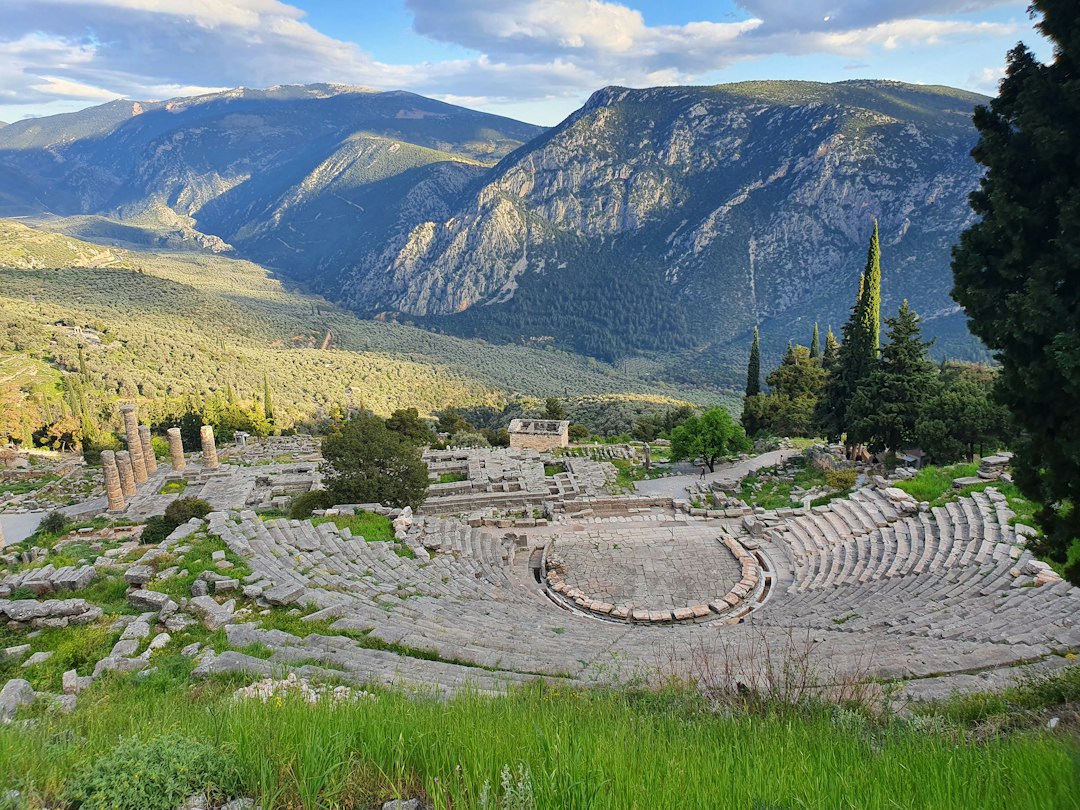
If you look closely at the stadium at the top, it’s a total masterclass in logistical defiance, fitting 6,500 people into a space that feels far too narrow for such a crowd. It wasn't just for athletics either, since the Pythian Games were unique for celebrating music and poetry as much as physical feats, truly honoring Apollo’s role as the patron of harmony. Even the reconstruction of the Athenian Treasury is a neat bit of history, using an early form of anastylosis to piece the original blocks back together like a massive, centuries-old puzzle. When you stand there, you aren't just seeing ruins; you’re seeing the remnants of a place where geology, finance, and theater collided to shape the ancient world.
The Palace of Knossos and the Origins of Minoan Civilization
When you first step onto the grounds of the Palace of Knossos, it is easy to get caught up in the sheer scale of the place, but I think the real story here is how much we’ve gotten wrong about these people over the last century. For a long time, researchers assumed the Minoans must have migrated from Egypt or the Near East to build such a sophisticated hub, but modern genetic analysis has completely flipped that script. We now know they were indigenous to Crete, evolving from Neolithic roots right there on the island. It makes you realize that their genius wasn't imported; it was home-grown. Honestly, looking at the lack of defensive walls really drives this home, as it suggests they felt secure enough in their naval power that they didn't need to hide behind stone fortifications like their mainland neighbors.
But you have to wonder about the atmosphere inside those walls. The palace wasn't just a home for royalty; it was a massive, high-tech processing center designed to manage wealth, with storage magazines still lined with the giant ceramic jars that once held the olive oil, grain, and wine fueling their maritime economy. They even figured out how to solve the problem of living in such a sprawling complex by installing advanced light wells that funneled natural sunlight and fresh air deep into the interior rooms. It’s a level of structural sophistication that feels surprisingly modern when you’re standing in the dim, cool air of the lower levels. And that same resilience shows up in how they handled their environment, as they repeatedly rebuilt the palace after catastrophic earthquakes using flexible construction techniques that were honestly light-years ahead of their time.
Of course, the shadow of the Labyrinth myth looms large, but I’ve always found it more interesting to look at the people behind the legend. Those famous bull-leaping frescoes weren't just pretty wall art; they represent a high-stakes athletic ritual that likely sat at the very center of their social and religious identity. It’s also hard to ignore that their art features female figures so prominently, hinting at a society where women held real power in leadership and religion—a sharp departure from the patriarchal norms that would eventually overtake the region. We are still left with the mystery of Linear A, their undeciphered script, which hides the administrative details of a civilization that was essentially the first true European superpower. It really makes you pause and reflect on how a society that controlled trade across the entire Mediterranean could be so quickly transformed into a monster of myth by the Mycenaeans after they finally collapsed under the weight of volcanic eruptions and social upheaval.
Uncovering the Athletic Legacy of Ancient Olympia
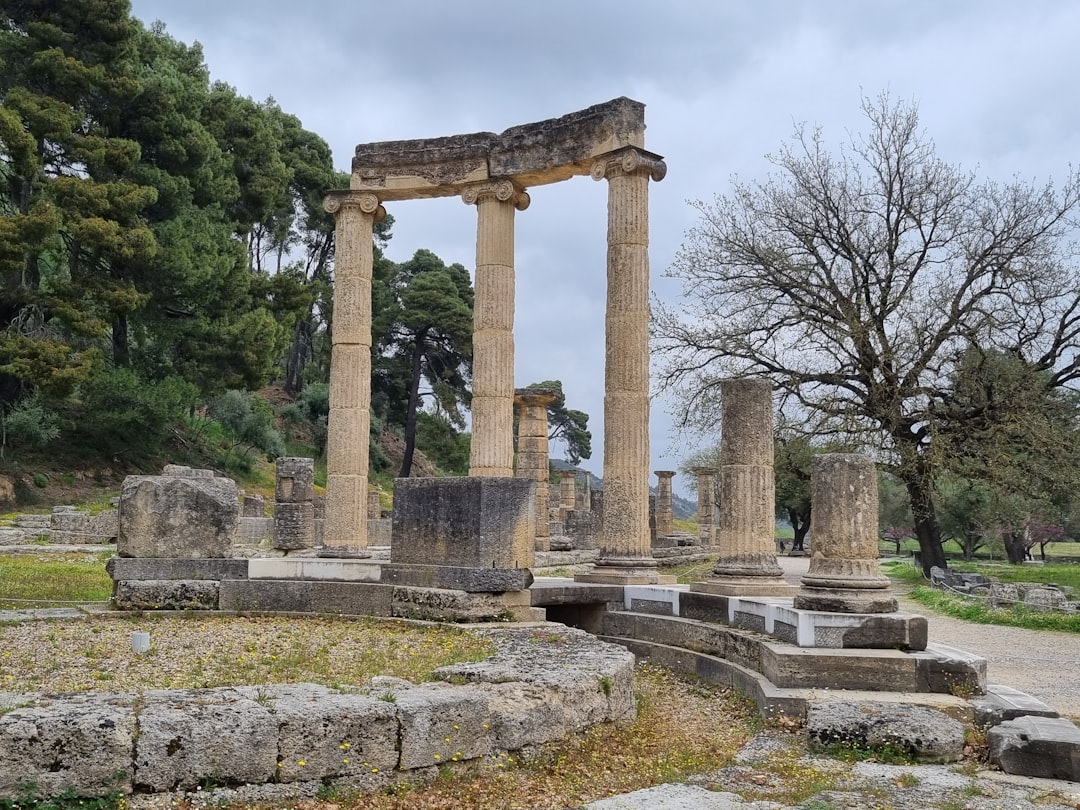
When we talk about the ancient Olympics, it’s easy to picture just the runners and the dust, but the reality is that the sanctuary at Olympia was a far more complex piece of engineering than any of us realized. I’ve been looking at recent geophysical surveys, and it’s honestly wild—ground-penetrating radar has found massive structures buried six meters deep, which basically means the site we walk through today is just the tip of the iceberg. It feels like we’re only now starting to see the true scale of this place, revealing a landscape that extended well beyond the temples we’ve known for centuries. It makes you wonder how much more is still waiting under our feet.
If you think the training for these games was just about showing up and competing, you’d be surprised by how rigid it actually was. Athletes were essentially living as professional machines, fueling themselves with specific diets of dried figs, goat cheese, and heavy bread to keep their energy levels high for explosive bursts. They even used lead weights called halteres during jumps to build core stability, which is a surprisingly advanced way to think about resistance training. It wasn’t just physical, though; it was theater and politics wrapped in one. Every athlete was a representative of their city-state, using the arena as a neutral zone to flex their collective wealth and influence.
And honestly, the way the site was built to handle those games is a masterclass in logistics. The track itself was a specialized mix of compacted clay and river sand, leveled out with such precision that you could sprint barefoot without losing your footing, even during the messy autumn storms. They even had drainage systems designed to keep the stadium from turning into a total swamp, which really highlights how they valued the sanctity of the competition. When you consider that victors were treated like war heroes—getting free meals for life and the best seats in town—it’s clear this wasn't just a sport. It was a high-stakes, sacred stage where the physical demands were just as punishing as the geopolitical pressure of the era.
The Theater of Epidaurus: A Masterpiece of Acoustic Engineering
When you walk into the Theater of Epidaurus, the first thing you notice is the sheer scale, but let’s be real—the magic isn't just in the size, it’s in the sound. I’ve spent time looking at how this place functions, and it’s honestly wild that the limestone seats were specifically curated with a high concentration of material that acts as a natural sound filter. This unique mineral composition works by suppressing low-frequency background noise, like the murmurs of a restless crowd, while simultaneously boosting the high-frequency sounds coming from the performers. It’s like the architecture itself is a giant equalizer designed to make sure the dialogue never gets lost in the breeze.
Researchers have found that those rows of seats actually function as an acoustic diffraction grating, which basically means the stone benches are shaped and spaced to scatter unwanted sound waves that would otherwise turn a performance into a garbled mess. By strategically spacing these benches, the architects ensured the theater's physical geometry reinforces the speech spectrum, which is why you can catch a whisper from the center of the orchestra all the way in the top rows. It’s so precise that even when the place is totally empty, a coin dropped on the central stone creates a sharp, clear resonance that hits the furthest reaches of the seating area. You don’t need a packed house to dampen the echoes because the design handles the sound distribution entirely on its own.
Think about the physics for a second: the auditorium is set at a calculated 30-degree slope, which prevents sound from just bouncing off the ground and instead directs it cleanly upward and outward toward the audience. Scientists have confirmed that this layout minimizes the time delay between the direct sound and any reflections, which is the secret sauce our ears need to distinguish words clearly. It’s essentially a massive, stone-carved parabolic collector that captures waves and tosses them toward the spectators with almost zero energy loss. Modern architects still visit here to study its geometry as the gold standard for outdoor sound reinforcement, which just goes to show that the ancient Greeks were masters of wave physics long before we had the math to explain it. Standing there, you realize this isn't just a ruin; it’s a functional, high-fidelity laboratory that has survived for millennia.
Beyond the Ruins: Connecting with Living History in Modern Greece
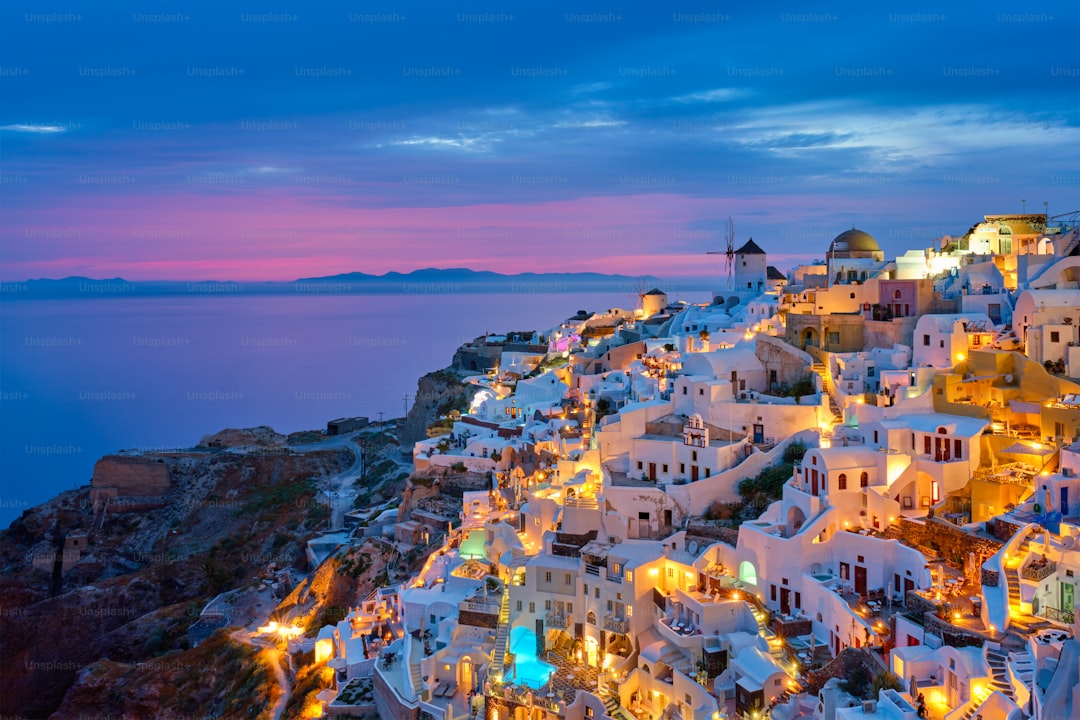
When you move past the heavy stone columns and the well-trodden paths of the major sites, you start to realize that Greece isn’t just a static museum of the past; it’s a living, breathing blueprint of ingenuity that we’re still piecing together today. I’ve always found that the most exciting moments in travel happen when you stop looking at the ruins as singular monuments and start seeing them as part of a massive, interconnected network. Think about the island of Sifnos, where researchers have mapped out 77 ancient beacon towers that functioned like an early optical telegraph system using fire and smoke to bridge the Aegean. It’s wild to imagine that kind of high-speed communication happening thousands of years before we had satellites or fiber optics.
When you really look at how these people lived, the sophistication is honestly staggering. Take the Minoan palaces, where they weren't just storing goods; they were managing a complex, standardized economy using massive ceramic jars tucked into cool, subterranean chambers to regulate temperature. It’s a perfect example of how their daily survival was built on a foundation of clever environmental engineering. And when you head to Olympia, keep in mind that what we see on the surface is only a tiny slice of a sprawling urban center, with vast administrative complexes buried deep underground just waiting for us to uncover their secrets.
There’s something so grounding about realizing that the people who built these places were dealing with the exact same challenges we face today—like securing water in arid climates or managing seismic threats with flexible, mortar-free masonry. Whether it’s the hydraulic lime-lined cisterns that kept cities alive during droughts or the biomechanical precision of athletes using weighted halteres to master the physics of a broad jump, the evidence is everywhere if you know where to look. It’s not just about walking through history; it’s about recognizing that the logistical, financial, and scientific systems we depend on now have roots that go much deeper than we ever imagined. So, next time you're standing in front of a weathered wall, try to look past the surface and consider the sheer technical mastery that kept it standing for all this time.
Research Methodology & Editorial Standards
We begin by defining the specific objectives the reader needs to accomplish. Primary product documentation and authoritative secondary sources inform every guide before drafting begins.
Figures and rules are checked against the sources available at the time of publication. Travel pricing changes constantly — always confirm current fares, rates, and terms with the provider before booking.