
Beyond the Neon Lights Discovering the Secret Snake Safaris of Hong Kong
You might think of Hong Kong purely as a concrete jungle of skyscrapers and finance, but I’ve found that’s only half the story.
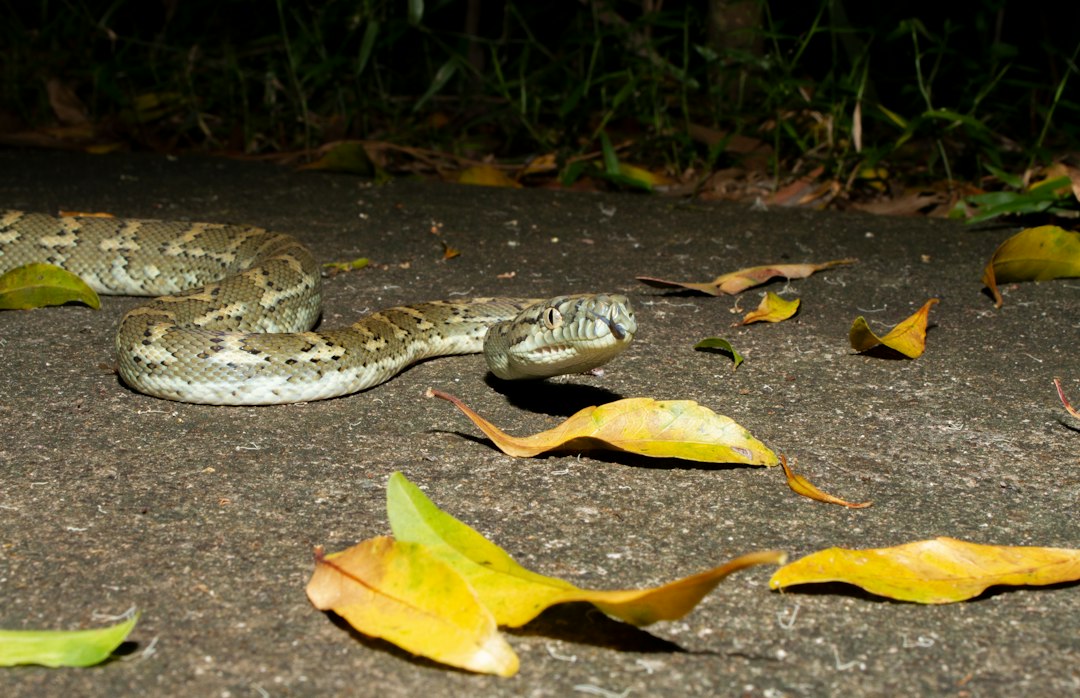
The Hidden Wilderness: Why Hong Kong Is a Global Hub for Herping
You might think of Hong Kong purely as a concrete jungle of skyscrapers and finance, but I’ve found that’s only half the story. If you actually step away from the neon lights, you’ll find a massive concentration of life that honestly rivals any tropical destination I’ve visited. We’re talking about over 100 reptile species and 24 kinds of amphibians crammed into this tiny landmass, which is just wild when you consider how much of the territory is paved. It’s a total biodiversity hotspot, largely because nearly 40 percent of the land is protected as country parks. This creates a rare environmental transition point where northern and southern species lineages literally collide in the same square kilometer.
I’m constantly surprised by how much is happening in these hidden valleys, especially at night. Field data from the last couple of years shows that nocturnal herping here is actually more productive than in many of the famous rainforests across Southeast Asia. You’ve got the Burmese python—an apex predator that can hit five meters—coexisting with tiny miracles like the Romer’s tree frog, which was once thought extinct until it popped back up on Lantau Island in the eighties. The Hong Kong newt is another big one, serving as a vital indicator for how healthy those mountain streams actually are. It’s these specialized creatures that draw researchers from all over the world to see how they’ve adapted to such specific, isolated island habitats.
There is a genuine intensity to the wildlife here, too, like the many-banded krait, which packs some of the most potent neurotoxic venom you’ll ever encounter. But it’s not just about the heavy hitters; it’s the weird, niche stuff like the white-spotted slug snake that really gets people excited. Those recent field discoveries into their bizarre, specialized diets prove we’re still barely scratching the surface of what lives in these ravines. You’ve got unique microclimates on the high-altitude peaks that act as time capsules for relict populations you won't find anywhere else in mainland China. It’s messy, it’s humid, and it’s arguably one of the most underrated spots on the planet for anyone who wants to see evolution in action.
Nocturnal Explorations: Navigating the Trails After Dark
When you step onto a Hong Kong trail after sunset, you’re not just going for a walk; you’re entering an entirely different ecosystem that demands a shift in how you navigate. I’ve found that using a high-lumen headlamp is non-negotiable, but here’s the trick: always prioritize a red-light mode to save your night vision and keep from startling the very creatures you’re hoping to spot. If you’re serious about finding the harder-to-see snakes, thermal monoculars are honestly a game-changer. They let you pick up heat signatures from a Burmese python hidden in thick leaf litter that would be invisible to the naked eye. It’s a bit of an investment, sure, but it turns a lucky guess into a calculated observation.
Humidity here frequently climbs past 90 percent, and while that sounds uncomfortable, it actually carries sound differently, making it much easier to track the specific calls of frogs through the ravines. Just keep in mind that the lunar cycle matters; those ambush predators like the many-banded krait get noticeably more elusive under a bright full moon. I also pack a small UV flashlight, which is wild to use because it makes certain scorpions and fungi glow in ways you’d never catch with a standard white beam. It’s these little technical adjustments that take a standard night hike and turn it into a genuine, high-signal field expedition.
If you’re heading up toward the higher ridges, remember that the early morning hours bring a temperature drop that forces cold-blooded species toward thermal refugia, like sun-warmed rocks or concrete drainage channels. You’ll want sturdy boots with serious ankle support, not just for the rocks, but for peace of mind when you’re scanning the ground in low light. Also, be careful with your depth perception; that thick, humid air often plays tricks on your eyes, making distant landmarks look deceptively close. It’s easy to get turned around when the canopy blocks out the sky, so I always keep a backup light clipped to my pack. If you time your trek for that 11:00 PM to 2:00 AM window, you’ll catch the forest at its most active, well after the day hikers have cleared out and the real, quiet rhythm of the wild finally takes over.
Species Spotlight: Identifying Bamboo Vipers, Kraits, and Harmless Reptiles
If you’re out on a night hike, the ability to distinguish a venomous threat from a harmless look-alike is basically your most important safety skill. Let’s start with the bamboo viper, or the Vogel’s pit viper, which is a master of thermal detection thanks to those pits between its eyes and nostrils capable of sensing a temperature shift as tiny as 0.003 degrees Celsius. While it’s tempting to just look for that classic neon green coloring, keep in mind that the females are much bulkier than the males, a classic bit of sexual dimorphism that can throw you off if you’re only looking for a specific size. But the real curveball is the common mock viper, which has evolved to mimic the bamboo viper’s appearance and defensive posturing almost perfectly. It’ll flatten its neck and strike just like the real deal, which honestly works well enough to fool even people who do this for a living.
Then you have the many-banded krait, which is a completely different animal when it comes to temperament. While the viper might hold its ground and posture, the krait is strangely shy and often tucks its head under its own body coils rather than engaging. Don’t let that docility fool you, though, because their venom is packed with alpha-bungarotoxin, a nasty neurotoxin that essentially shuts down the communication between your nerves and muscles. It’s a quiet, nocturnal hunter that demands a lot of respect, even if it doesn't look like it’s looking for a fight.
If you’re scanning the water or the damp undergrowth, you’ll likely run into the various keelbacks, which are a fascinating study in evolutionary adaptation. The red-necked keelback is particularly interesting because it actually sequesters toxins from the poisonous toads it eats, storing them in specialized neck glands to use as a chemical defense. It’s a reminder that even snakes labeled as mild can pack a punch if you aren't careful about how you handle them. On the other hand, species like the striped keelback rely on pure speed and agility to hunt, while the common wolf snake has developed specific, recurved teeth to snag slippery geckos. When you’re trying to ID these in the field, don't rely on color alone; take a second to check the dorsal scale rows and the arrangement of the head shields, as those are the only metrics that actually hold up under scientific scrutiny.
Safety First: Essential Gear and Professional Guidelines for Snake Spotting
When you’re heading out into the humid, dark hills of Hong Kong, I really want you to think of safety not just as a set of rules, but as your primary gear. Honestly, the most important piece of protection you can wear is a pair of high-denier Cordura or Kevlar snake gaiters, which are specifically designed to stop viper fangs that simply can’t penetrate those dense, multi-layered fibers. Don’t fall for the trap of thinking standard hiking socks will do the trick, because they offer zero defense against the pressurized venom delivery of local elapids. I also suggest swapping your narrow-beam flashlight for a wide-angle, high-CRI light, as the broader field of view stops that dangerous tunnel vision that might lead you to accidentally step right next to a well-camouflaged snake.
Let’s talk about movement, because I’ve learned that the "step-and-scan" method is the only way to stay truly safe. You absolutely must never step over a log or a rock without first checking the other side, since those spots are essentially thermal buffers where snakes love to hang out and regulate their body temperature. Always keep at least two meters of distance between you and any serpent you spot, keeping in mind that some species can launch a strike covering up to half their total body length. If you’re tempted to bring tools, look for a collapsible stainless steel hook with a pivot design if you really need to redirect an animal, but steer clear of tongs, as the pressure required to hold a snake can easily crush their ribs and cause fatal internal injuries.
It’s also good to keep in mind that up to a quarter of all venomous strikes are actually dry bites, but please, never gamble on that statistic. If you’re ever bitten, the medical protocol in Hong Kong is simple: forget home remedies and get to a hospital immediately, because even tiny amounts of neurotoxic venom can trigger rapid respiratory failure. Make sure you’re carrying a dedicated pressure-immobilization bandage, which is scientifically proven to slow the spread of toxins through your lymphatic system while you’re in transit. And honestly, keep a digital log of your GPS coordinates and the time of any encounter; it might seem like a bit of a chore, but it’s the exact data a doctor will need to identify the species and administer the right antivenom if things go sideways. Just remember that the goal is observation, not interaction, so never try to handle a snake by hand, even if you’re sure it’s non-venomous, because those deep, humid-environment lacerations are notorious for nasty secondary infections.
The Ecological Importance of Hong Kong’s Serpent Populations
You might look at the sleek skyline of Hong Kong and only see finance, but let’s pause for a moment to reflect on the silent, cold-blooded workforce actually keeping those surrounding hillsides in check. The Chinese cobra, for instance, acts as a critical primary predator for local rodent populations, effectively serving as a natural pest control system that prevents small mammals from overrunning the forest fringes and encroaching on our residential pockets. It’s honestly a massive ecological service that we rarely stop to appreciate. Beyond just keeping pests at bay, specialized species like the mountain keelback serve as living barometers for the health of our remote mountain streams, their presence signaling that these vital water sources haven't been compromised by pollutants or runoff.
If you’re wondering why researchers are so obsessed with these high-altitude snakes, it’s because those isolated peaks act like biological time capsules. These relict populations have stayed separate from mainland pressures for millennia, essentially functioning as an evolutionary record that we can study to understand how life adapts to such specific, confined island environments. At the same time, smaller snakes are busy cycling nutrients right under our feet; by regulating the arthropod populations that break down the forest floor's leaf litter, they play a surprisingly large part in the overall health of the soil. Their metabolic efficiency is what really strikes me, as it allows them to maintain stable populations in mountain areas where larger mammals would simply starve because they couldn't survive on such limited resources.
Think about the sheer complexity of these food webs for a second—snakes act as a bridge, moving energy between aquatic and terrestrial zones as they hunt across different elevations. This creates a vertical stability in the forest, ensuring that no single group of amphibians or geckos can reach levels that would destabilize the local vegetation. Because many of these species are incredibly loyal to their specific habitats, their presence provides us with a high-signal metric for verifying the long-term sustainability of our protected country parks. It’s not just about the snakes themselves, but how their role as both predator and prey holds the entire structure of the ravine ecosystems together. Next time you’re out on a trail, remember that you’re walking through a carefully balanced machine, and these guys are the ones keeping the gears turning behind the scenes.
Ethical Wildlife Observation: Responsible Tourism in the Fragile Countryside
When we step into the quiet, fragile corridors of the countryside to observe wildlife, we’re essentially guests in a home that doesn't belong to us, and the way we move really dictates the health of that environment. It’s easy to think that just being quiet is enough, but snakes can actually pick up high-frequency vibrations through their jawbones, meaning even your light footsteps can trigger a panic response before you’ve even seen them. I’ve learned that keeping a three-meter buffer isn't just a suggestion; it’s the only way to ensure these animals continue their natural foraging without us accidentally ruining their dinner. And if you’re using a camera, please ditch the direct flash, as that bright white light can temporarily blind a nocturnal reptile, leaving them totally exposed to predators for minutes at a time.
We also have to be incredibly mindful of the smaller, unseen impacts we bring along on our boots. That microscopic fungus, Batrachochytrium dendrobatidis, is a real menace that hitches a ride between isolated mountain pools on dirty gear, so carrying antiseptic wipes for your soles is a simple, high-impact habit to adopt. It’s the same logic with insect repellents; those synthetic chemicals are easily absorbed through the permeable skin of amphibians, and honestly, we don't need to be spreading toxins in these delicate zones. I find that keeping groups small—four people or fewer—is the best way to keep the noise and ground vibrations down, which lets you see the forest as it actually exists, rather than as a place currently scrambling to hide from you.
At the end of the day, I really believe the most ethical way to engage with nature is to shift from active searching to passive, patient observation. If you’re lucky enough to spot something rare, resist the urge to drop the exact GPS coordinates on social media, because that kind of exposure can lead to localized foot traffic that destroys fragile micro-habitats in no time. Instead, tuck that data into a verified citizen science app like iNaturalist, where it actually helps researchers track population trends without putting a target on the animal’s back. It’s about being a silent witness to evolution, keeping the logs and stones exactly where you found them, and using a long lens so you can capture the magic without ever making the creature feel like it’s being hunted.
Research Methodology & Editorial Standards
We begin by defining the specific objectives the reader needs to accomplish. Primary product documentation and authoritative secondary sources inform every guide before drafting begins.
Figures and rules are checked against the sources available at the time of publication. Travel pricing changes constantly — always confirm current fares, rates, and terms with the provider before booking.