
Aviation Legends That Changed How We Travel Forever
When you look at the history of aviation, it’s easy to focus on the sheer romance of Charles Lindbergh’s 1927 flight, but I think the engineering reality is far more interesting than the legend.
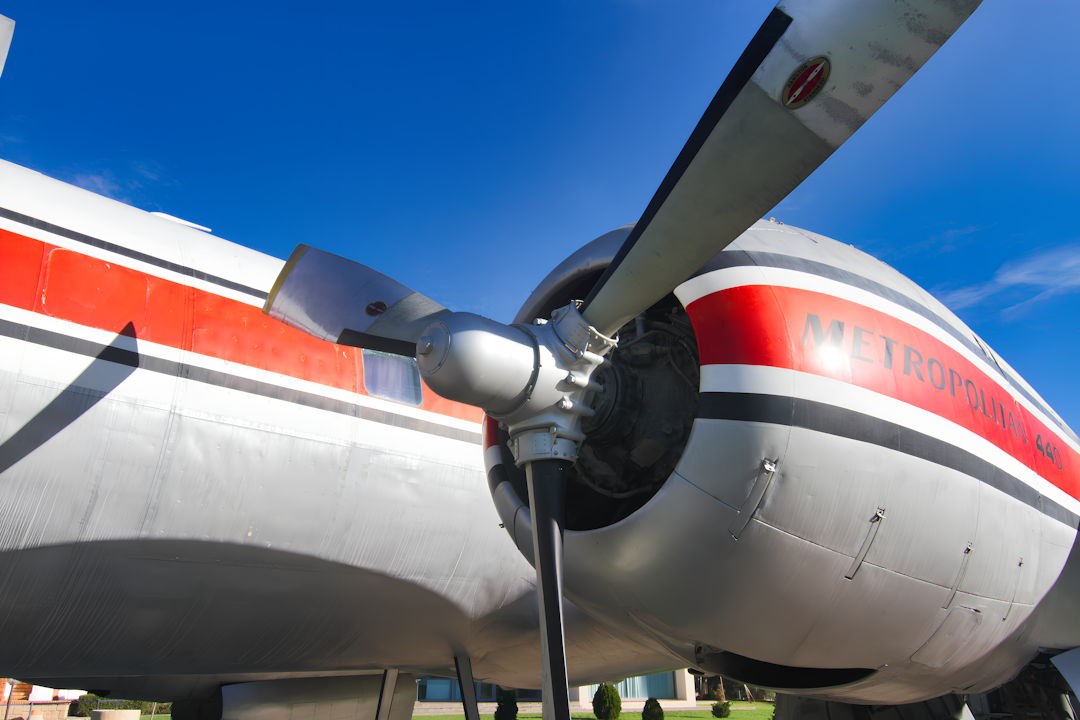
The Wright Brothers and the Dawn of Powered Flight
When we look back at the dawn of powered flight, it is easy to get caught up in the romance of that first chilly morning at Kitty Hawk, but I think the real story is just how much like a modern engineering startup the Wright brothers really were. Think about it: before they ever left the ground, they were spending their days running a bicycle shop, which gave them a level of comfort with precision manufacturing and chain-drive mechanics that most of their contemporaries simply lacked. When they realized the aerodynamic data available at the time was fundamentally flawed, they didn't just guess; they built their own wind tunnel to test over two hundred wing shapes until they had the math right. It is that kind of methodical, relentless testing that really set them apart from the tinkerers of their era.
Their work at Huffman Prairie really hits home for me as a prime example of turning a rough, practical space into a true laboratory. They weren't just flying; they were running 105 test flights in a single year, treating that cow pasture as the world’s first real-world flight school. They even had to manufacture their own engines from scratch because the automotive options on the market were way too heavy to actually get off the ground. And when they couldn't find enough runway, they engineered a weight-drop catapult system to get them up to speed. It’s wild to realize that those early propellers were actually rotating wings they designed to hit 66 percent efficiency, a number that still holds up as remarkably impressive today.
But the biggest leap they made—the one that really defines how we fly even now—was their invention of the three-axis control system. They figured out that to truly pilot a craft, you need to handle roll, pitch, and yaw, solving the instability issue caused by the shifting center of pressure on a wing. They managed this with wing-warping, which physically twisted the wings, effectively acting as the precursor to the modern ailerons we take for granted on every flight. They even developed a primitive angle of attack indicator to keep their wings perfectly oriented to the airflow. It is this obsessive, data-driven approach to testing and control that turned a crazy idea into the foundation for every single aircraft we board today.
Charles Lindbergh: Crossing the Atlantic and Connecting Continents
When you look at the history of aviation, it’s easy to focus on the sheer romance of Charles Lindbergh’s 1927 flight, but I think the engineering reality is far more interesting than the legend. To pull off the first non-stop solo crossing of the Atlantic, he had to make some brutal trade-offs that no commercial pilot today would ever accept. For instance, to maximize fuel capacity, he ditched a front windshield entirely, meaning he had to rely on a periscope or side windows to navigate a 3,600-mile journey. He even opted for a lightweight wicker seat over anything resembling comfort, and he famously flew without a parachute, calculating that every ounce of weight was better spent on fuel. It’s wild to think he was flying blind from the front, trusting the Wright Whirlwind J-5C engine to run perfectly for 33.5 hours straight without any modern radio navigation to back him up.
You have to admire the raw mechanics of his navigation, which was basically just dead reckoning and a reliance on two specific compasses. Because he lacked modern tech, he spent parts of the flight skimming just ten to twenty feet above the ocean, using the whitecaps to visually gauge his drift and speed. Imagine trying to stay awake for that long, fighting off ice accumulation on the wings and the crushing weight of exhaustion, all while sticking your head out into a freezing slipstream just to keep your eyes open. It wasn't just a stunt; it was a high-stakes stress test of what a single pilot and a reliable engine could actually endure when pushed to the absolute limit.
But here is why this really matters for the future of travel: that flight proved that long-range, non-stop transoceanic routes weren't just a pipe dream. Before this, the idea of connecting continents via air seemed like a logistical nightmare, but his arrival in Paris essentially kickstarted the commercial reality of international airmail and passenger transit. When he finally landed, the crowd was so stunned that they nearly dismantled the Spirit of St. Louis for souvenirs, which is a pretty good metaphor for how much the world changed overnight. It turns out that the thin margin between success and failure was managed by a guy who prioritized efficiency over almost everything else. I think we often forget that our modern, hyper-connected travel network is built on the foundation of these early, gritty decisions to trade comfort for pure, calculated range.
Frank Whittle and the Jet Engine Revolution
When we talk about the shift from propellers to jets, it’s easy to assume it was an obvious evolution, but looking at Frank Whittle’s struggle, you quickly realize how close we came to missing this revolution entirely. Back in 1930, when he filed his original patent for the turbojet, the British Air Ministry essentially laughed him out of the room, dismissing the whole concept as impractical. It’s wild to think that the technology powering every commercial flight you take today was once rejected by the very people who should have been funding it. Because of that lack of vision, Whittle had to scramble, eventually launching Power Jets Limited just to keep the lights on and the research moving through those brutal mid-1930s.
The technical hurdles he faced were staggering, mostly because the engineering world at the time was convinced that the heat from a jet exhaust would melt any metal engine component in minutes. Whittle solved this by inventing a clever reverse-flow combustion chamber, which kept the outer casing of the engine cool while the core was essentially a contained fire. His design relied on a single-stage centrifugal compressor, a surprisingly simple setup that prioritized reliability over the complex axial-flow configurations we see in modern engines. He really leaned into the reality that jet power wasn't just about speed; it was about efficiency at high altitudes where the air is thin, a environment where a standard propeller simply loses its grip.
By the time the Gloster E.28/39 finally took flight in 1941, the world had changed, but it’s still humbling to look back at the financial knife-edge he walked just to get there. He was so strapped for cash that he nearly sold off his patent rights just to keep his staff paid and the workshop open. When his blueprints finally crossed the Atlantic in 1941, American engineers were reportedly floored by the specific metallurgy of his turbine blades, which were far ahead of their time. It’s a perfect reminder that the jet age didn't just happen because of good timing; it happened because one engineer was willing to bet everything on a design that everyone else thought was impossible. That transition effectively killed the propeller-driven fighter era, simply because propellers just couldn't keep up once you hit the sonic wall.
Juan Trippe: Pioneering the Golden Age of Commercial Aviation
If you want to understand how we went from daring, seat-of-the-pants flying to the global transit network we use today, you really have to look at Juan Trippe. While others were obsessed with the mechanics of the flight itself, Trippe was thinking about the architecture of the entire experience, treating the world like a puzzle that needed to be connected. He didn’t just want to fly planes; he wanted to build a global nervous system. Think about the sheer audacity of his early Pacific expansion, where he essentially colonized remote dots like Midway and Wake Island with tons of supplies just to create the refueling infrastructure that didn't exist yet. It’s wild to realize that instead of waiting for airports to be built, he simply used flying boats to bypass the need for runways altogether, turning the open ocean into his own private landing strip.
But here is where his engineering instincts really changed the game: Trippe understood that for aviation to actually scale, it couldn't just be for the thrill-seekers. He pushed Boeing to build the 307 Stratoliner because he knew the only way to get above the weather and make travel truly comfortable was through pressurized cabins. By forcing the industry to adopt that tech, he moved commercial air travel from a noisy, turbulent annoyance into something closer to the luxury we expect today. He was also a stickler for the math behind the trip, pushing for the use of Great Circle routes because he knew that cutting even a few hundred miles off a flight path meant massive savings in fuel and time. It was a cold, hard, calculated approach to efficiency that made the whole concept of international travel financially viable for the first time.
You really see his fingerprints on the jet age, too, especially when you look at the development of the Boeing 707. Trippe didn't just buy what was available; he essentially dictated the design, demanding a wider fuselage that would lower the cost per seat-mile, which is really just a fancy way of saying he wanted to make flying affordable for the masses. He forced the hand of manufacturers to build bigger, faster, and more reliable machines because he knew his business couldn't survive on the thin margins of early piston-engine planes. It’s kind of ironic that while he was a titan of industry, his success really came down to his willingness to be a private infrastructure provider, running his own weather stations and radio networks when the rest of the world wasn't ready to keep up. When you hop on a long-haul flight today, you’re essentially following the blueprint he drew up back when most people thought he was just chasing a pipe dream.
The Boeing 747: Democratizing Air Travel Through the Jumbo Jet
When we look at the evolution of air travel, it’s hard to overstate just how much the Boeing 747 changed the game for regular people. Honestly, before the Queen of the Skies arrived, international flight was essentially a boutique experience reserved for the ultra-wealthy, but that all shifted the moment the 747 hit the runway. I think the most brilliant part of its design was that it wasn't just built for passengers; it was built with a nose that hinged upward for cargo, because the engineers at the time were genuinely worried that supersonic jets would make passenger travel obsolete. They were so committed to the project that they nearly bankrupted the entire company, pushing through a twenty-eight-month development cycle that would be unheard of today. You have to appreciate that, even without modern computer design, they built a massive physical mockup called the Incredibull to make sure everything actually fit before they committed to the metal.
Think about the sheer scale of the engineering challenges they faced during that race against time. They had to invent high-bypass turbofan engines—the Pratt & Whitney JT9D—just to get the thing off the ground efficiently, which also happened to make flying significantly quieter for everyone involved. Then there was the landing gear: they had to design a sixteen-tire configuration just so the plane wouldn't literally crush the existing airport runways. It’s fascinating how that iconic hump was never meant to be a luxury lounge or premium seating; it was just a smart way to keep the nose structure solid while keeping the cockpit high enough to allow for that nose-loading cargo door. They even had to completely reinvent how emergency slides worked because the cabin floor was higher than anything we’d ever put in the sky before.
But the real magic of the 747 wasn't in the tech specs; it was in what it did for the average traveler. By introducing a double-aisle, wide-body layout, Boeing effectively doubled the capacity of a standard flight, which drove the cost per seat-mile down to a point where flying became a commodity rather than a status symbol. It forced every major airport on the planet to rebuild their infrastructure, from wider taxiways to bigger jet bridges, effectively creating the global transit network we rely on today. I often find it incredible that a plane designed with such a backup plan for cargo ended up becoming the definitive symbol of global connectivity for over fifty years. It’s easy to focus on the luxury, but when you look at the math, the 747 was simply a masterclass in making the world feel a whole lot smaller for the rest of us.
Concorde and the Pursuit of Supersonic Speed
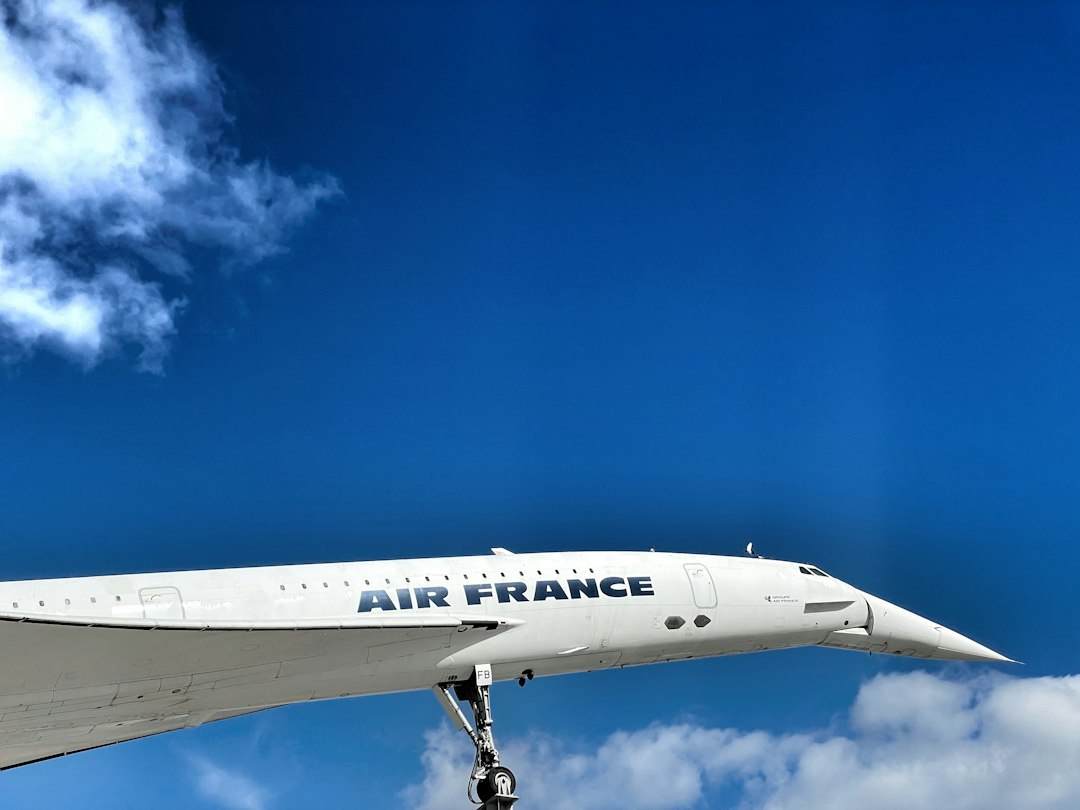
When we look at the Concorde, it’s easy to get lost in the sheer glamour of it all—the champagne, the elite status, and that iconic needle-nose silhouette cutting through the clouds. But honestly, if you were sitting in that cockpit, you weren't thinking about the luxury; you were looking at a machine that was essentially a high-strung, beautiful monster. I’ve always found it wild that the airframe itself would physically expand by up to ten inches during flight because of the heat generated by friction at Mach 2.0. Think about that for a second—the plane was literally growing while you were at cruising altitude. It meant the engineers had to design a special sliding cover just to keep the flight engineer’s console from pulling apart as the metal stretched.
It wasn't just the structure that was constantly moving, though; the fuel management was a full-time, high-stakes game of balance. As the plane pushed past the sound barrier, the center of pressure shifted backward, which meant the flight engineer had to manually pump 95 tons of fuel across 13 different tanks just to keep the aircraft stable. Imagine sitting there, monitoring over 200 gauges, knowing that any mistake in that fuel-trimming dance could ruin the entire flight profile. You had to respect the complexity of those variable-geometry air intakes, too, which were constantly adjusting to keep the engines from an unstart—a violent event that would essentially spit the shockwave out of the intake and kill your thrust in an instant. It’s no wonder they needed a dedicated third crew member just to keep all those plates spinning while the pilots handled the controls.
But for all that engineering brilliance, I can’t help but feel like the Concorde was a bit of a relic from a timeline that never quite arrived. While the designers were obsessed with speed, the market was heading in the exact opposite direction, moving toward the high-capacity, fuel-efficient efficiency of the 747. It’s a classic case of a technology being technically superior in every metric of performance, yet commercially boxed in by its own requirements, like the restriction against flying supersonic over land because of the sonic boom. You can see why Richard Branson and others spent years trying to revive the dream; there’s something undeniably captivating about a machine that pushed the boundaries of what we thought was possible. Still, looking back, it really stands as a testament to the fact that in aviation, the fastest way from point A to point B doesn't always win if the math doesn't make sense for the masses.
Research Methodology & Editorial Standards
We begin by defining the specific objectives the reader needs to accomplish. Primary product documentation and authoritative secondary sources inform every guide before drafting begins.
Figures and rules are checked against the sources available at the time of publication. Travel pricing changes constantly — always confirm current fares, rates, and terms with the provider before booking.