
Aviation History Exploring The Legacy Of The Gloster Meteor Britain First Jet Fighter
That durability ended up being the deciding factor for the Gloster Meteor, our first operational jet, because those centrifugal engines could actually handle the harsh, unpredictable environment of a combat zone without falling apart.
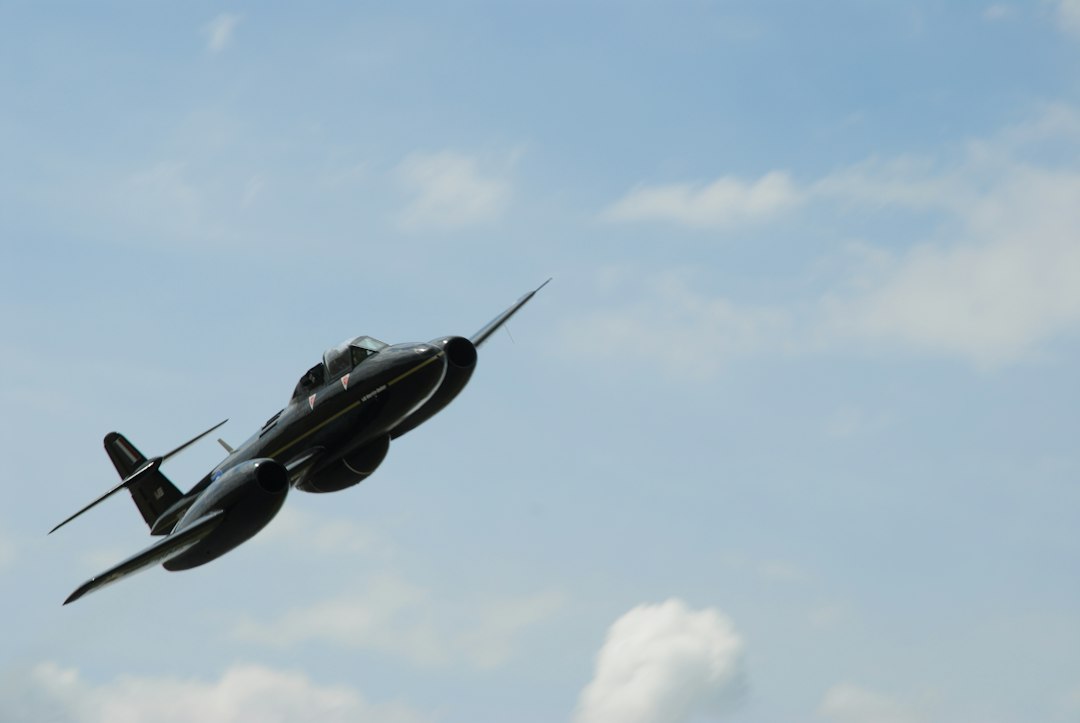
The Birth of British Jet Propulsion: The Race to Build a Fighter
When we look back at the birth of British jet propulsion, it’s easy to get lost in the romance of flight, but honestly, it was more of a desperate, high-stakes engineering grind than a graceful leap into the future. Frank Whittle was essentially fighting two wars at once: one against the Luftwaffe and another against an Air Ministry that was deeply skeptical of his radical vision. His early WU engine design relied on a single-stage centrifugal compressor, which, while a bit clunky compared to the sleek axial-flow designs the Germans were chasing, was a total tank when it came to reliability. That durability ended up being the deciding factor for the Gloster Meteor, our first operational jet, because those centrifugal engines could actually handle the harsh, unpredictable environment of a combat zone without falling apart.
Think about the sheer audacity of building the E.28/39 testbed out of spruce and plywood just to shave off weight and get it into the air faster. It wasn't about being pretty; it was about getting the data before the clock ran out. And let's be real, the fuel logistics were another massive headache, but the move to kerosene was a stroke of genius. It gave us higher energy density and kept those fuel pumps lubricated, which was a huge win compared to the volatile aviation gas everyone else was stuck with. Still, those early pilots had to learn an entirely new way of flying, specifically how to manage the terrifyingly slow throttle response known as engine lag, which could easily cause a stall if you pushed things too hard during a dogfight.
The technical hurdles didn't stop there, though, as simple things like starting the engine were a logistical nightmare. Since there were no onboard starter motors, you were essentially tethered to a bulky ground power unit just to get the turbine spinning fast enough for ignition. We also hit a wall with metallurgy; those first turbine blades were made of steel alloys that just couldn't handle the heat, meaning engines were essentially disposable, needing a total overhaul after just a few dozen hours of flight. We even had to shift to a tricycle landing gear setup on the Meteor just to stop the exhaust from melting the tarmac. Looking at it now, it’s clear that Britain’s lead in jets wasn't just about a single bright idea—it was about brute-forcing solutions to physical problems that the rest of the world hadn't even encountered yet.
Engineering Innovation: Understanding the Gloster Meteor’s Design
When we look at the Meteor’s design, it’s easy to focus on the engines, but the real genius was how the engineers forced the rest of the airframe to cooperate with those massive centrifugal units. Because the W.2B engines had such a wide diameter, the team had to go with a thick wing profile that actually turned out to be a lucky break, giving the plane surprisingly good lift during low-speed maneuvers. They had to get clever with the internal structure, too, turning the main wing spar into a bypass bridge just to fit everything together while keeping the center of gravity in a flyable range. To stop the whole structure from shaking itself to pieces, they used heavy-gauge aluminum skin designed specifically to soak up the intense acoustic vibrations from the exhaust. It wasn’t just about raw speed; it was a constant battle to keep the plane from falling apart under the stress of early jet propulsion.
You also have to appreciate how they handled the flight control issues that started popping up at higher speeds. Without the luxury of modern fly-by-wire systems, the team added mass balance weights that poked out ahead of the hinge line, which did a great job of preventing the kind of aerodynamic flutter that could rip a plane apart. Then there was the tailplane, which they mounted high on the fin just to keep it out of the messy, turbulent air coming off the wings. I think it’s interesting how they handled the cockpit, too, using an inflatable rubber tube seal to keep things pressurized at altitude, which was honestly pretty slick for the time. Even the wingtips were rounded on purpose to avoid the tip stalls that plagued other high-speed designs of the era.
Managing the heat was another massive project that most people don't think about, especially the way the jet pipes would expand and contract. They had to build in specialized expansion joints, or the whole rear fuselage would have warped under the rapid temperature swings of a flight cycle. And since the engines were buried right in the wing, they developed a custom nacelle shroud that acted as a secondary cooling vent to keep the internal structures from melting during long bouts of maximum thrust. The fuel system was another balancing act, with segmented tanks that required careful management as the kerosene weight shifted. It’s a testament to their grit that they didn't just build a plane that could fly, but a machine that could actually survive the brutal reality of operational service.
Combat Debut: The Meteor’s Role in the Final Months of WWII
When we consider the Meteor’s arrival in early 1945, it’s important to remember that this wasn't about dominating the skies in a classic dogfight, but rather a high-stakes game of keeping secrets. The Air Ministry was so paranoid about the technology falling into enemy hands that pilots were strictly forbidden from flying over German-held territory, often carrying incendiary grenades to destroy their own aircraft if they went down. It’s wild to think that these pilots were essentially flying a propaganda piece, as the primary mission was to boost Allied morale and signal that we finally had a jet to match the German Me 262. To keep everyone from shooting them down, we had to paint the undersides white just so our own nervous anti-aircraft gunners wouldn't mistake them for the enemy.
The logistical reality was even more grueling than the politics. Because the F.1 variants had such a limited range, they were tethered to forward bases in Belgium and spent more time hauling across the English Channel than actually patrolling the front. If you were a pilot back then, you were flying a machine that required a strip-down inspection of the Rolls-Royce Welland engines every ten hours, which is just an absurd maintenance burden by any modern standard. Plus, the cockpit was so cramped with fuel tanks behind the seat that you had to fly with your knees tucked into your chest, all while freezing in a cabin that lacked any real heating system. You were basically trapped in a sheepskin-lined suit, praying the heat-resistant paint on the tail wouldn't flake off from the exhaust scorch.
The performance issues were equally jarring once you pushed the throttle. While the jet was unmatched at catching V-1 flying bombs, hitting Mach 0.7 caused so much buffeting that aiming the 20mm cannons became a nightmare for anyone not used to that level of instability. And don't get me started on the lack of an ejection seat; if things went sideways, you had to climb over the side of the cockpit and hope the airflow didn't slam you into the tail assembly. It really highlights how raw and experimental everything was, especially since the lack of propeller blast made landing approaches feel heavy and unresponsive compared to the piston fighters pilots were used to. Looking back, it’s clear the Meteor was a brilliant piece of engineering, but it was just as much a testament to the grit of the ground crews and pilots who kept a fragile, volatile prototype operational during the final, chaotic months of the war.
Beyond the War: The Meteor’s Global Export and Operational Service
When we look at the legacy of the Gloster Meteor, it is easy to get caught up in the wartime headlines, but the real story is how this airframe became a global workhorse that defined the early jet age. It wasn't just a British triumph; it was a platform that found a second life in over a dozen countries, from the deserts of Egypt to the rugged terrain of Australia. Think about the audacity of the Argentine Air Force, which kept these jets in the sky until 1970, long after the rest of the world had moved on to supersonic flight. The Meteor’s durability was genuinely surprising, largely because the engineers had inadvertently built a tank that could handle the primitive, rough-hewn landing strips found in theaters like Korea.
Let’s pause for a moment to consider the technical brilliance of that maintenance cycle. In an era when most jets were hangar queens, the Meteor introduced a modular engine swap system that allowed ground crews to yank and replace a damaged Rolls-Royce Derwent in under six hours. That kind of field-ready design is honestly hard to imagine today, especially given the cramped conditions those crews were working in. It was even the testbed for the Martin-Baker ejector seat, effectively saving countless lives by turning a dangerous experiment into a standard safety feature. You really have to respect how the designers managed to adapt a basic interceptor into everything from a high-altitude reconnaissance scout to a tandem-seat trainer, requiring them to completely re-engineer the internal control linkages just to keep it flying straight.
But the most fascinating part is seeing how this tech proliferated globally, sometimes in ways that felt almost ironic. You had instances where these planes faced off against their own kind in regional conflicts, a stark reminder of how quickly British innovation became a global commodity. It is a bit wild to think that while we now obsess over modern beyond-visual-range weaponry like the Meteor missile—a namesake that dominates current conversations about air superiority in places like India and Pakistan—the original Gloster Meteor was just trying to survive small-arms fire from the ground. It didn't have the fancy guidance systems or the reach we expect today, but it laid the operational groundwork for every jet that followed. Honestly, it is the gritty, modular, and sometimes messy reality of its service life that makes the Meteor such a defining chapter in aviation history.
A Legacy of Transformation: How the Meteor Shaped Modern Aviation
When we look at the legacy of the Gloster Meteor, it’s easy to focus on the raw speed, but the real story is how this airframe became the fundamental blueprint for everything we currently expect from a jet fighter. Think about the engineering confidence required to build a wing so robust that it suffered zero structural failures during high-speed dives throughout its entire service life—a standard of reliability that modern manufacturers still struggle to match under the same stresses. I find it fascinating that the team was already thinking about pilot survivability in such a hands-on way, using explosive bolts to clear the canopy as a direct precursor to the ejection systems we rely on today. They even developed a clever, passive fuel transfer system that used venturi suction to move kerosene between tanks, proving that you didn't always need complex electronics to solve critical flight problems.
It’s honestly amazing how they managed the thermal realities of early jet propulsion without the benefit of today's heat-resistant alloys. By applying specialized aluminum-flake paint to reflect heat away from the primary structure, they effectively bought the airframe the extra life it needed to stay in the air. We also see the roots of modern precision in the cockpit, where they implemented a friction lock on the throttle quadrant just to keep the twin engines synced within a fraction of a percent. This manual, mechanical discipline was the only way to avoid the dangers of asymmetric thrust during takeoff. It’s that kind of gritty, inventive problem-solving that defined the era, like the high-pressure pneumatic accumulator that allowed the landing gear to cycle in under three seconds, even if the primary hydraulics went dead.
If you dig into the aerodynamics, the decision to mount the tailplane high on the fin wasn't just aesthetic; it was a calculated move based on early wind tunnel data to avoid vortex shedding that would have left the elevators useless at high speeds. They even optimized the nacelles with a slight downward cant to reduce trim drag by three percent, a small detail that shows just how obsessed they were with wringing every bit of efficiency out of the design. They were essentially learning the physics of transonic flight in real-time, often while sitting in a cockpit that had to be upgraded to bird-proof laminate just to survive the impact forces of intercept speeds. It’s a bit of a reality check when you realize that their 24-volt electrical system was considered revolutionary back then, yet it fundamentally lightened the plane enough to give it a performance edge over the heavy, wire-laden piston fighters of the day. Every time I look at those ballistic steel shrouds designed to contain engine shrapnel, I’m reminded that the Meteor wasn't just a prototype; it was the first machine to actually account for the violent, unpredictable nature of the jet engine.
Preserving History: Where to See the Gloster Meteor Today
If you’re anything like me, you probably find that seeing a piece of history in a book is one thing, but standing next to the actual metal is a completely different experience. Let's talk about where you can still get up close with the Gloster Meteor, because these survivors offer a masterclass in how we keep the jet age alive. If you happen to be in the U.K., the National Trust at Croome is a must-visit, as it sits on the former RAF Defford airfield where these planes were pushed to their limits during the war. It’s haunting to think about the testing that happened on that exact soil, and seeing a Meteor parked there really brings that high-stakes, experimental era into focus.
But don't assume every display is identical, because preservationists have had to get creative to keep these birds from falling apart. At the RAF Museum Cosford, for example, the team has to keep the aircraft in specialized dehumidified environments just to stop the original magnesium-alloy control linkages from turning to dust. It’s a constant battle against physics, especially with the landing gear mechanisms, where decades of sitting still usually cause the high-pressure pneumatic seals to fail entirely. If you look closely at some of the static displays, you’ll notice they aren't always original from nose to tail; many are actually composite builds, carefully assembled from salvaged parts of different service eras to create a complete, representative look at the design.
If you’re looking for a truly rare treat, the Temora Aviation Museum in Australia is one of the only places on the planet where you can see a Gloster Meteor actually take to the skies. Watching it fly gives you an entirely different perspective on its handling that a static museum exhibit just can’t replicate. Meanwhile, the Imperial War Museum Duxford houses a T.7 trainer variant, which is fascinating because it shows you exactly how the engineers had to carve out space for a tandem cockpit to teach piston-engine pilots how to handle the terrifying new reality of jet thrust. It’s these small, gritty details—like the bird-proof laminate canopies at Tangmere or the lead-heavy, heat-resistant paint at the Mid-Atlantic Air Museum—that remind us how much trial and error went into making these machines safe for human hands.
Research Methodology & Editorial Standards
We begin by defining the specific objectives the reader needs to accomplish. Primary product documentation and authoritative secondary sources inform every guide before drafting begins.
Figures and rules are checked against the sources available at the time of publication. Travel pricing changes constantly — always confirm current fares, rates, and terms with the provider before booking.