
A Weekend Guide to the Best Hidden Gems in Malibu
When we talk about escaping the crowds in Malibu, I think we often forget that the best spots aren't just empty—they’re geologically and ecologically active zones that demand a bit of respect.
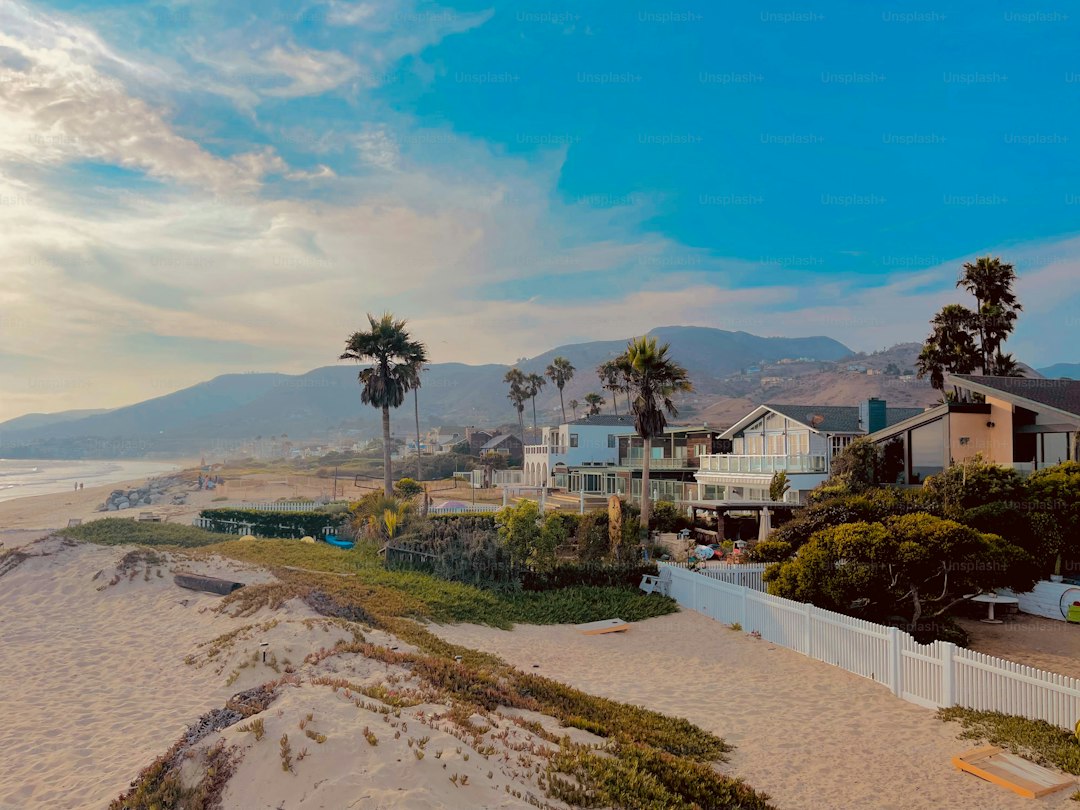
Beyond the Tourist Trail: Malibu’s Most Secluded Beaches
When we talk about escaping the crowds in Malibu, I think we often forget that the best spots aren't just empty—they’re geologically and ecologically active zones that demand a bit of respect. Take El Matador, for example, where those dramatic sea caves are actually remnants of the Pleistocene epoch, though you’ll notice they’re pretty unstable after a heavy rain. If you’re heading up toward Lechuza, keep in mind it’s a vital nesting ground for the western snowy plover, so there’s a strict ban on dogs and kites through September to protect the birds. I’ve always found that understanding the science behind these places makes the quiet moments feel much more meaningful. It’s not just about finding a patch of sand; it’s about recognizing the rare systems you're stepping into.
If you’re looking to get closer to the water, Nicholas Canyon is fascinating because the kelp forests offshore act like a natural breakwater, keeping the surf mellow in a way that feels almost engineered by nature. Over at Point Dume, the headland is one of the best spots to catch the gray whale migration, as they hug the coast to dodge the harsher offshore currents. I try to stay really aware of the access points near Encinal Canyon, too; those paths rely on historical rights that cut through private land, so you’ve got to stick to the markers if you want to keep those routes open for the rest of us. It’s a delicate balance between public access and private property, and honestly, staying within the lines is the only way this works.
The weather patterns in these hidden pockets can be just as interesting as the geology. Big Rock Beach, for instance, hits this strange microclimate where the mountain runoff and cold currents create a persistent afternoon fog that keeps the anemones thriving. You might even notice dark, magnetic streaks in the sand at some of the northern spots, which is just magnetite washed down from the volcanic cliffs. If you’re into tide pooling, the Marine Protected Area at the end of Leo Carrillo is a must-see, but please remember that the high species count there is directly tied to the fact that nobody is picking up shells or walking on the bryozoan colonies. It’s a fragile environment, and I’ve learned that the less we leave behind, the longer these spots stay worth visiting.
Even the popular-sounding names like Carbon Beach have their secrets, mostly because the public easements are often tucked away behind landscaping or subtle signage to keep the crowds at bay. I’ve spent time watching the waves at Latigo Shore, where the reef structure forces the water into these weird, shallow angles that favor filter-feeding creatures instead of the typical heavy surf. Even Pirate’s Cove feels like a different world; that rock promontory blocks the wind so well that it’s become a literal nursery for juvenile surfperch during storms. When you’re out there, just remember that these beaches are constantly shifting due to erosion and seasonal runoff, so what you see today is just one moment in a much larger, messy cycle. It’s a privilege to be there, and I really hope we can keep these spots special by just being mindful of how we move through them.
Coastal Flavors: Where to Find the Best Local Eats
When I think about the food scene in a place as iconic as Malibu, I think we have to look past the polished storefronts and start considering the actual mechanics of the coast. The local sea urchin, specifically the purple urchin found in our nearshore rocky reefs, possesses a roe profile that’s honestly more savory than its red counterpart, largely because of a diet heavy on kelp and crustacean larvae. If you’re hitting up local markets, you’ll find the best catch is often tied to specific diatom blooms in the water column that change the flavor chemistry of the urchin. It’s wild to think that the marine biology offshore is directly dictating what ends up on your dinner plate, but that’s the reality of a place defined by its cold, nutrient-rich upwelling.
Chefs who really care about quality are constantly looking toward the northern Malibu kelp beds, mostly because the turbulence there makes for firmer, more muscular fish. And don't discount the Santa Ana winds; when those shift, they push forage fish offshore, which actually changes what our local artisanal fishermen can bring in on any given day. I’ve always found it fascinating that the mineral-heavy runoff from the Santa Monica Mountains gives our rock crab an earthy, distinct undertone you just won't find in crabs from industrial ports. It’s that same runoff that feeds the edible seaweeds like Ulva, which are popping up everywhere now in dishes that feel like they were pulled directly from the tide line.
Then there’s the sheer physics of it—our spot prawns are pulled from depths between 600 and 900 feet, where the extreme pressure and cold seem to lock in a natural sweetness by concentrating glycogen in the meat. If you’re eating mussels near Leo Carrillo, that specific brine signature is a direct result of how ocean spray mixes with mountain sediment in those tidal zones. It’s almost like the shoreline itself acts as a seasoning agent for the entire ecosystem. Even the gray whale migrations correlate with shifts in plankton density that change the lipid content of the filter-feeding fish you’ll see on local menus. It’s all one big, messy, interconnected cycle, and realizing that makes every bite feel a whole lot more intentional.
Scenic Escapes: Top Hiking Trails with Ocean Views
When you're standing on a ridge in the Santa Monica Mountains, looking out at that endless stretch of blue, it’s easy to get lost in the sheer scale of it all, but there’s a real technical beauty to why these trails work the way they do. I honestly think the best way to experience these paths is to look at the ground beneath your feet, because the Solstice Canyon trail, for instance, isn't just a walk—it's a hike through a localized thermal chimney that pulls cool marine air inland to keep the riparian habitat for the endangered southern steelhead trout alive. If you push up to the Backbone Trail near Sandstone Peak, you’re hitting an elevation gain of 3,111 feet where the chaparral ecosystem is essentially baked by 300 days of solar radiation every single year. It’s a harsh, high-energy environment, and you can feel it in the way the air shifts as you climb.
If you’re wondering why the terrain feels so stable even on those steep, rugged ascents, look at the Miocene-age volcanic debris that makes up the Point Mugu State Park system; that high-friction substrate is the only reason the soil doesn't just wash away during our seismic shifts. When you’re walking the Mishe Mokwa Trail, you’re literally stepping over exposed granite from the Conejo Volcanics, which is the secret source for the mineral runoff feeding all the coastal flora you see lower down. I find it fascinating that the coastal sage scrub along the Zuma Ridge Trail is in a constant, quiet war with itself, using a process called allelopathy where plants like black sage actually release chemicals to stop competitors from taking root. It’s not just a view; it’s a living, breathing, and highly competitive biological machine.
It’s also wild to see how the ocean itself dictates the trail's personality, especially near Point Dume, where high-tide spray reaches 200 feet up the cliffs to hand-select exactly which salt-tolerant plants can survive there. Those trails are part of a Mediterranean-type climate zone that covers less than five percent of the planet, which is why we see so many species here that you just won't find anywhere else. I always notice the dwarfed oaks along the Corral Canyon loop—a result of constant moisture stress and high-frequency winds—and it’s a solid reminder that the "elfin forest" look isn't just aesthetic; it’s a direct response to a rough climate. Even the soil is unique, packed with high levels of magnesium that boost the nutrient density for the local wildlife. Just keep in mind that with the region’s tectonic uplift pushing the land up about 0.5 millimeters a year, these trails are slowly, constantly changing under our boots.
Art and Architecture: Discovering Malibu’s Cultural Landmarks
When you look beyond the typical coastal scenery, Malibu’s built environment acts as a fascinating bridge between ancient techniques and modern engineering. Take the Adamson House, for instance, which feels like a living museum of the defunct Malibu Potteries; those rare Persian-style tiles aren't just for show. They utilize a specific lead-based glaze chemistry that provides an iridescent sheen, a method that essentially captures the regional clay deposits of the early 1930s before the company folded. It’s wild to think that the aesthetic mimicry of the Alhambra was being perfected right here on the coast using such precise, chemistry-heavy materials.
The Getty Villa takes this historical immersion even further by serving as a forensic reconstruction of the Villa dei Papiri in Herculaneum. While the Roman luxury on display is what grabs your attention, the real engineering marvel is hidden underneath; the facility uses advanced base-isolation systems to decouple the entire structure from the ground. In a region prone to tectonic shifts, this is the only reason those irreplaceable antiquities remain safe from seismic movement. It’s a perfect example of how we use modern structural science to preserve the past, ensuring that an ancient Roman blueprint can actually survive in a twenty-first-century environment.
If you head over to the Malibu Hindu Temple, you’ll find another layer of intentional design based on the ancient principles of Vastu Shastra. The structure’s orientation is calculated to manage cosmic energy flow, but practically speaking, those hand-carved granite sculptures from India were engineered to handle the specific wind loads of the Santa Monica Mountains. I’m always struck by how the Frederick R. Weisman Museum of Art at Pepperdine similarly balances form and function, using a modular frame designed by Edward Durell Stone. That system isn't just an artistic choice; it manages intense, direct coastal solar radiation to protect sensitive canvases, all while sitting on a specialized sedimentary shelf to avoid the settling issues common in our local clay-heavy soil.
Even the quieter spots, like the Self-Realization Fellowship Lake Shrine, rely on clever engineering to maintain their atmosphere. The site uses dense perimeter vegetation as an acoustic buffer to dampen the constant hum of the Pacific Coast Highway, creating a micro-environment that feels completely removed from the road. You can see a similar logic in the 1905 wooden design of the Malibu Pier, where the original builders had to select treated timber species specifically for their resistance to high-salinity erosion. It’s a recurring theme in Malibu architecture: every landmark is essentially a long-term experiment in surviving the harsh, chemical reality of the Pacific. When you visit these sites, try to look past the surface and see the struggle—and the science—that keeps them standing.
Sunset Spots: The Most Romantic Locations for Evening Drinks
If you've spent any time chasing that final sliver of light along the Pacific Coast Highway, you know the feeling: the horizon starts to flatten, the air thins out, and suddenly the whole coast feels like it's holding its breath. I've always thought the magic of a Malibu sunset isn't just about the view, but the physics of how that light interacts with the marine layer. You're actually looking at a complex dance of sea salt aerosols scattering shorter wavelengths, which is exactly why we get those deep, almost impossible violet and indigo hues that you just don't see in the desert or the city. It’s a bit scientific, sure, but understanding that the thermal inertia of the ocean acts as a massive heat sink—keeping the horizon line crisp and steady—makes the experience feel much more grounded.
When you're picking a spot for an evening drink, you’re often perched on these ancient, uplifted marine terraces that have been pushed up by tectonic activity over thousands of years. It’s wild to realize that you’re sitting hundreds of feet above sea level on ground that was once submerged, and that those same geological shifts influence the very way the ground radiates heat back at you as the sun finally drops. I’ve noticed that at the best cliffside spots, the acoustic impedance of the sandstone bluffs actually catches the low-frequency rumble of the surf, amplifying the sound of the ocean in a way that feels almost intentional. It’s these subtle, structural details that separate a generic patio from a spot where you can truly lose track of time.
Of course, there’s a bit of chemistry involved in the atmosphere, too, especially when the Santa Ana winds kick up that fine dust that filters out the blue light and leaves us with that intense, glowing orange. If you’re lucky, you might even catch a green flash, which happens when the atmospheric temperature inversions act like a prism for that final sliver of solar radiation. And honestly, pay attention to the plants around you—lemonade berry and scrub oak actually release volatile organic compounds as the temperature drops, giving the air a spicy, fresh scent that’s distinct to our coastal micro-climates. It’s an interconnected system, really; from the alkaline-rich water fueled by Miocene-era fossils to the way the local geography traps the cool evening air, these aren't just places to grab a glass of wine. They’re active, breathing environments, and once you start looking at them that way, the sunset becomes less of a photo op and more of an event you're lucky to be a part of.
Beyond the Surf: Unique Outdoor Adventures for Every Traveler
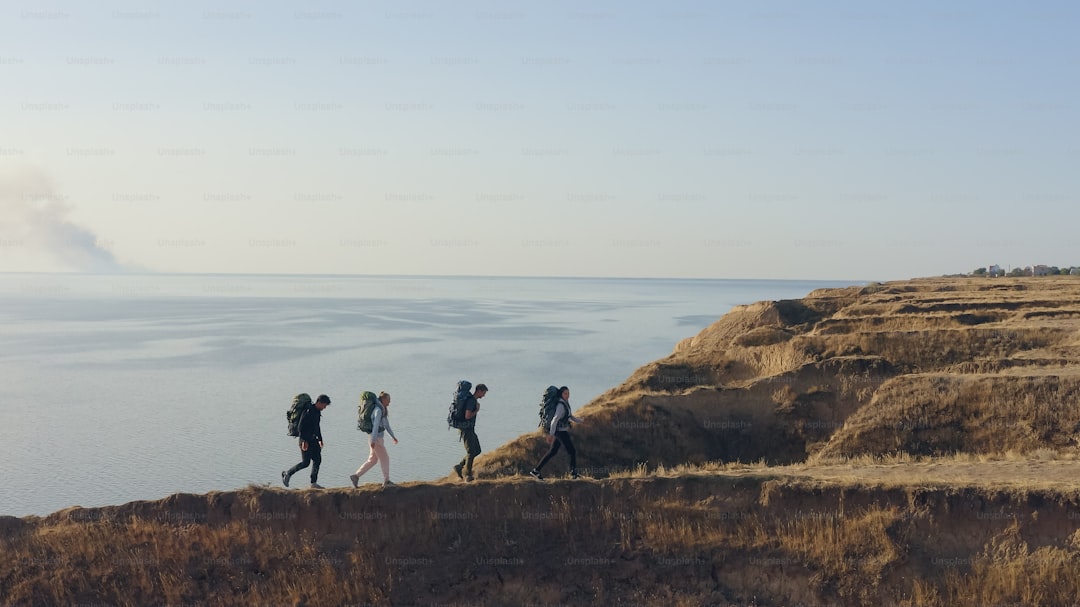
If you’ve been spending your time solely on the sand, you’re missing the actual mechanics of what makes Malibu tick. Let’s pause for a moment to consider that we aren't just talking about a beach town; we're looking at a complex, high-energy environment where the terrestrial and marine systems are in a constant, aggressive dialogue. When you move beyond the surf, you’re essentially stepping into a living, breathing laboratory where giant kelp grows two feet a day and mountain lions use the hidden canyons as literal highways to bypass human density. It’s wild to think that the very soil beneath your boots, built from the silica skeletons of ancient Monterey shale, is doing the heavy lifting to support unique species like the coastal cholla, which somehow manages to thrive despite the constant, corrosive salt spray.
Here’s what I think: if you’re looking for a real adventure, you have to shift your focus to these ecological realities. The western snowy plover is out there right now, relying on cryptic coloration to keep its eggs hidden in plain sight, and if you’re hiking through the riparian zones, you’re walking through a critical thermal chimney that keeps the whole ecosystem balanced. I’ve found that the most rewarding experiences in the Santa Monica Mountains come from recognizing the geological struggle, like the fault splays that create those jagged, irregular rock formations you’ll see at the remote access points. These aren't just scenic backdrops; they’re the result of an ongoing tectonic uplift that’s literally carving the landscape as you traverse it.
Honestly, the best way to approach these adventures is with a bit of scientific humility. You might notice the northern bluffs retreating by about three inches a year, a reality pushed by groundwater saturation and more frequent storms that tells you exactly how temporary these paths really are. It’s a bit humbling, right? Understanding that the rock crab you’re seeing is genetically distinct because it’s adapted to the specific, high-temperature waters of the Malibu shelf changes how you view a simple tide pool. Next time you head out, try to look for those connections—the way the runoff alters the pH of the tide pools or how the brown pelicans conserve energy by mapping the thermal updrafts against the cliffs. It makes the whole experience feel less like a day trip and more like a front-row seat to a massive, messy, and totally fascinating biological machine.
Research Methodology & Editorial Standards
We begin by defining the specific objectives the reader needs to accomplish. Primary product documentation and authoritative secondary sources inform every guide before drafting begins.
Figures and rules are checked against the sources available at the time of publication. Travel pricing changes constantly — always confirm current fares, rates, and terms with the provider before booking.