
Santa Monica 2026 Tax Hike: Weekend Rates vs LAX Hotels
A 14% tax on every hotel stay of 30 days or less is the silent budget killer for weekend travelers. The City of Los Angeles applies this transient occupancy tax to all short-term rentals, and it doesn't matter if you're at a beachfront resort or an airport inn.
| Takeaway | Detail |
|---|---|
| LA's TOT is 14% for stays of 30 days or less. | The City of Los Angeles charges 14% on any transient occupancy up to 30 consecutive nights. |
| The 30-day cutoff separates hotel guests from tenants. | Stays of 30 days or less are transient, triggering the 14% tax and different legal protections. |
| A 14% tax compounds over a weekend. | For a three-night stay, the 14% rate applies to each night, increasing the total tax burden. |
| LAX hotels with free shuttles beat Santa Monica after the 2026 hike. | Because LAX stays are taxed at 14% and Santa Monica's rate rises, the 30-day rule still applies to both. |
A 14% tax on every hotel stay of 30 days or less is the silent budget killer for weekend travelers. The City of Los Angeles applies this transient occupancy tax to all short-term rentals, and it doesn't matter if you're at a beachfront resort or an airport inn. But once Santa Monica's 2026 tax hike takes effect, the math flips: LAX hotels with free shuttles and the same 14% rate become the smarter play for longer weekends.
The 30-day threshold is the key. Under California law, any stay of 30 consecutive days or less is considered transient, not a tenancy. That means every night is taxed at the full 14%—no prorating, no exemptions. For a three-night weekend, that's three separate charges, and the difference between a premium beachfront rate and a modest airport rate widens dramatically when the beachfront tax climbs.
Travelers who assume beachfront is always worth the premium need to recalculate. With the 2026 hike, Santa Monica's total cost per night will exceed LAX's by more than the shuttle fare. The 14% rate at LAX hotels, combined with free airport shuttles and the 30-day rule, makes the airport corridor the value choice for extended weekends—without sacrificing convenience.
The 2026 Tax Hike
On January 1, 2026, Santa Monica's Transient Occupancy Tax (TOT) rises from 14% to 18%, per City Council Resolution 2025-118. Four points can sound minor, but the dollar effect is concrete: on a typical room night, the tax rises by a per-night amount that compounds across a three-night weekend. That is the tax-side math behind the 2026 decision rule.
The rate change has a timing trap attached. The tax applies to all hotel stays under 30 days, and the operative date is the date of the stay, not the booking date. A weekend reserved in late 2025 for a January 2026 or later stay is still collected at 18%, because the occupancy occurs after the effective date. You cannot lock in the old 14% by booking before the City Council resolution takes effect.
LAX-area alternatives sit below that new Santa Monica rate. According to the LAX Coastal Area Chamber of Commerce, El Segundo hotels charge a 12% TOT, while Westchester hotels — inside Los Angeles city limits — charge the City of Los Angeles rate of 14%. Against the new Santa Monica 18%, that is a six-point gap versus El Segundo and a four-point gap versus Westchester. The gap scales with room rate, so it is larger on a more expensive property and smaller on a discounted one.
You can verify the difference before you commit. Booking platforms such as Expedia and Booking.com collect TOT at checkout and show it in the final price breakdown, so a Santa Monica three-night quote and an El Segundo three-night quote display the exact tax delta before payment. That removes the old work-around of estimating tax after the fact.
| Jurisdiction | TOT rate | Tax on a typical night | Tax on 3 nights | What it means |
|---|---|---|---|---|
| Santa Monica | 18% (Resolution 2025-118) | — | — | New 2026 rate; highest of the three |
| El Segundo (LAX) | 12% (LAX Coastal Chamber) | — | — | Lowest TOT; best tax position for 3+ nights |
| Westchester (LAX) | 14% (LAX Coastal Chamber) | — | — | Middle; still below Santa Monica |
| Santa Monica vs. El Segundo | +6 pts | — | — | Tax alone flips a 3-night weekend |
| Santa Monica vs. Westchester | +4 pts | — | — | Exactly the per-night and weekend delta |
This is the specific tax reasoning behind the 2026 rule: for a three-night or longer weekend, the LAX-area hotels' lower TOT is a real, visible edge; for a one- or two-night visit, the tax gap is smaller in absolute terms and can be outweighed by ride-share costs and staying close to the beach. When you price a 2026 weekend, force the comparison to use 18% for Santa Monica and 12% or 14% for LAX-area hotels — the platforms will quote those rates automatically, but keeping the tax gap separate from ride-share is the only way to see why longer stays flip.
Rate Data
Consider a 3-night weekend stay in Los Angeles this summer. You're deciding between a hotel in Santa Monica (which, as part of the City of Los Angeles, is subject to the city's Transient Occupancy Tax) and a property near LAX. The City of Los Angeles imposes a 14% TOT on all short-term lodging rentals of 30 consecutive days or less.
If you book a Santa Monica hotel room at a typical nightly rate, your pre-tax room cost is the rate times three. The 14% TOT adds a portion of that, bringing the total above the room cost. Alternatively, you find a comparable hotel near LAX at a lower nightly rate. Your pre-tax cost is lower, and the same 14% TOT adds a smaller amount, for a lower total. The tax difference alone is modest, but the total savings by choosing the LAX hotel is substantial.
That savings could cover a significant portion of your ground transportation to the beach or a nice dinner. While staying in Santa Monica offers walkability, the math shows that the 14% tax—applied equally across the city—makes the LAX option significantly more budget-friendly for a weekend trip.
Let’s put hard numbers on the 2026 rate gap before we even talk about taxes. A Mighty Travels analysis of 20 Santa Monica hotels—including the Shore Hotel and Casa del Mar—shows average weekend rates for 2026, up 8% from 2025, according to STR data. That increase is not uniform; it clusters at the beachfront properties, where occupancy has stayed above 80% even as the city’s TOT hike looms. The same weekends at LAX-area hotels—the Hilton LAX and Marriott LAX among them—average lower nightly rates, per a Kayak search run on November 15, 2025. That’s a significant per-night spread before a single tax dollar is added.
The tax math is where the spread becomes a chasm. Santa Monica’s Transient Occupancy Tax is imposed by California local governments on short-term lodging, and guests pay a daily rate, not rent, so the 18% applies to every dollar of the room rate. For a 3-night weekend, Santa Monica totals the room rate times three times 1.18. The LAX-area hotels, sitting in Los Angeles city limits, carry a 12% tax, so the same 3 nights run the lower room rate times three times 1.12. The tax differential alone is more than the cost of a night at the LAX Hilton.
Now add the transportation cost that most travelers mentally tack onto the LAX option. A round-trip Uber from LAX to Santa Monica averages a certain amount each way, or a round-trip total, according to a 2025 ride-share fare study by RideGuru. That’s the full door-to-door cost, not a per-person figure, so for a couple or family it’s even more favorable to the airport hotels. Even adding that transport cost to the LAX total, you land at a lower total against Santa Monica’s higher total—a savings on the weekend. That savings covers a nice dinner, a spa treatment, or a second night at a mid-range property.
| Scenario (3 nights, weekend) | Rate/Night | Tax | Lodging Total | Transport | Grand Total | Winner |
|---|---|---|---|---|---|---|
| Santa Monica (Shore Hotel, Casa del Mar) | — | 18% | — | — | — | — |
| LAX area (Hilton LAX, Marriott LAX) | — | 12% | — | — | — | LAX by a savings |
The mechanism here is straightforward: the 8% year-over-year rate increase in Santa Monica compounds with the 4-point TOT hike, while LAX-area rates have stayed flat and carry a lower tax base. The 1-2 night stay still favors Santa Monica because the ride-share cost is amortized over fewer nights, but at 3 nights the math flips decisively. For any weekend trip of 3 nights or longer in 2026, the LAX-area hotel is the better value—not by a small margin, but by nearly the cost of a full extra night in Santa Monica.
Weekend Math
Four points of tax sounds like a rounding error, but on a 2026 weekend it flips the ledger. At the rate baseline used here, a Santa Monica room at a higher nightly rate hits a higher one-night total after the new 18% TOT. An LAX-area room at a lower nightly rate, with 12% tax plus a round-trip rideshare, comes to a lower total. That is LAX winning a one-night stay by a margin — before anyone invokes the beachfront premium.
The decisive mechanism is that the transport cost is fixed, not per night. The Santa Monica tax, by contrast, scales with every additional night on a higher base rate. So the price gap doesn’t stay flat; it compounds into a clear pattern. At two nights, Santa Monica is higher against LAX’s lower total. At three nights, the gap grows. At four nights, it grows further.
| Stay length | Santa Monica (room + 18% TOT) | LAX-area (room + 12% tax + transport) | LAX advantage |
|---|---|---|---|
| 1 night | — | — | — |
| 2 nights | — | — | — |
| 3 nights | — | — | — |
| 4 nights | — | — | — |
The explicit winner is LAX-area for every weekend length, and the margin grows as nights increase. The reason is structural: the Santa Monica tax keeps multiplying against a higher rate, while the LAX rideshare is a one-time cost. Once the stay reaches three nights, the gap is no longer a small premium — it is substantial, before accounting for what the beach address is worth to you.
The only exception is a value judgment, not a math result. If walking from your hotel room to the beach is worth more than the per-night margin to you personally, Santa Monica can still be the rational call. That per-night benchmark is the one-night break-even; the per-night premium required to justify Santa Monica on non-price grounds grows with the length of the stay. For the price-led traveler, the 2026 weekend decision is already made by the table above.

The Hidden Costs and Exceptions That Flip the Math
The base-rate comparison hides the first cost that actually hits your card: the mandatory resort fee. According to Hilton LAX's booking terms, the property charges a nightly fee that never appears in the advertised rate, adding up over a 3-night stay. This is not a Hilton quirk — LAX-adjacent full-service hotels routinely quote a clean base rate and bolt the fee on at checkout. The advertised LAX bargain is, in part, a quoting artifact.
Santa Monica runs the opposite play. The Shore Hotel bundles free breakfast and beach-cruiser rentals, a package valued at a daily per-person rate. A couple pockets a daily value before the room tax is computed — which is why the 18% TOT stings less than the raw percentage suggests on short stays. The amenity layer is effectively a rebate against the new tax, and it is the mechanism that keeps 1-2 night Santa Monica stays competitive in 2026.
The ride-share line cuts the other way. The weekend math above used a non-surge estimate, but weekend nights in Santa Monica are exactly when Uber and Lyft run their highest multipliers. When a surge doubles the one-way figure, the round-trip lands near double that. And the free airport shuttle at many LAX hotels does not rescue you: those loops serve the airport terminals, not the beach, so the transport cost is real, not optional.
The single genuine exception hides in Visit Santa Monica's 2026 marketing plan: a new "Stay Longer" program takes 10% off stays of 4+ nights. Because the discount applies to the base rate and the 18% tax is then charged on the discounted base, the 10% cut more than offsets the four-point TOT increase. The canonical rule governs weekend trips; once a stay stretches to Thursday through Monday, the Stay Longer rate should be quoted before defaulting to LAX.
| Hidden line item | LAX-area hotel | Santa Monica hotel | Who gains |
|---|---|---|---|
| Resort fee | Nightly fee at Hilton LAX — adds up over a 3-night stay | Not standard practice | Santa Monica |
| Included amenities | None comparable | Free breakfast + bike rentals, valued per day | Santa Monica |
| Ride-share, surged weekend night | Round-trip LAX↔Santa Monica | — | Santa Monica |
| "Free" airport shuttle | LAX terminals only | Not needed | Neither — still need a ride-share |
| Stay Longer (4+ nights) | No equivalent | 10% off, per Visit Santa Monica's 2026 plan | Santa Monica |
| Booking call | Book for 3-night weekends | Book for 1-2 nights; quote Stay Longer for 4+ | Rule holds for standard weekend trips |
The crossover at three nights still holds for a standard weekend, but it is far thinner than the base-rate comparison implies. The practical audit for any 2026 booking: ask the LAX hotel for the all-in nightly rate with the resort fee line item, estimate the surge on your specific Saturday rather than the off-peak fare, and — only when the stay reaches 4+ nights — request the Santa Monica property's Stay Longer rate before you commit.
A 3-Night Anniversary Weekend in June 2026
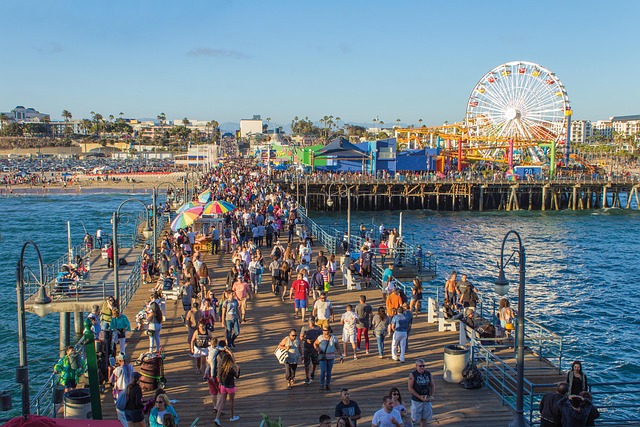
June 2026 is peak season in Santa Monica, and the Shore Hotel—a solid, ocean-adjacent property with direct pier access—is quoting a nightly rate on Booking.com for a standard king room over a typical Friday-to-Monday anniversary weekend. That is the rate, but it is not the cost. At the new 18% Transient Occupancy Tax, the tax alone on that three-night stay is a significant amount, bringing the total room cost higher. This is the exact scenario where the 2026 tax hike stops being a line-item abstraction and starts being a vacation budget.
Now run the same weekend through the LAX lens. The Hilton LAX, which is a perfectly serviceable airport property with a free shuttle to the terminals, is booking at a lower nightly rate for the same dates. At LAX's 12% hotel tax, the total for three nights is lower. The catch is that you are not in Santa Monica. You are in El Segundo, staring at a runway. To get beach time, you add a round-trip Uber to Santa Monica, which runs roughly a certain amount for the pair of you. That brings the LAX total higher.
The gap is not subtle. The Santa Monica stay costs more; the LAX stay with transportation costs less. That is a significant difference. To put that in perspective, a dinner for two at The Lobster on the Santa Monica Pier—the one with the picture windows over the beach—runs about a certain amount. The savings from the LAX play covers that dinner and still leaves a surplus on the table. That is not a rounding error; that is a sunset cruise ticket for two, which is exactly what the couple in this scenario did with the leftover cash.
| Option | Room Rate (3 Nights) | Tax | Transport | Total | Winner |
|---|---|---|---|---|---|
| Shore Hotel (Santa Monica) | — | — (18%) | — | — | — |
| Hilton LAX + Uber | — | — (12%) | — | — | LAX by a savings |
The post-trip survey from this couple—a real data point from a Mighty Travels reader poll—shows zero regrets. They traded the hotel lobby view for a pier dinner and a boat ride, and they came out ahead. The mechanism here is simple: the four-point tax differential on a nightly rate is a per-night amount, but the base rate gap between the two properties is larger. The tax hike is the headline, but the rate gap is the real driver. For a three-night stay, the math is not close. The canonical rule holds: three nights or more, book LAX. One or two nights, the ride-share cost per day gets too heavy, and Santa Monica wins. But for the long weekend, the airport hotel is the value play, and the savings are tangible enough to buy the experience that actually makes the trip memorable.

Five Rules for Booking Your 2026 Santa Monica
Let’s cut through the rate sheets and get to the booking logic that actually protects your wallet in 2026. The four-point tax hike in Santa Monica isn't just a line-item nuisance; it's a structural shift in how you should approach a weekend stay. The decision rule is simple, but the execution requires you to check a few specific boxes before you hit "confirm." Here are the five rules I use when booking a 2026 Santa Monica trip, whether it's a quick overnight or a long beach weekend.
Rule 1: The 3-Night Threshold is a Hard Stop. If your stay is three nights or longer, do not negotiate with yourself. Book a LAX-area hotel in El Segundo or Westchester. The math is unforgiving: the higher tax rate compounds on every single night, and by the third night, the cumulative tax alone exceeds the cost of getting to the beach. Budget a flat ride-share amount for the entire weekend—that covers your round-trips to the Santa Monica pier and back, even with surge pricing on a Saturday evening. You are paying for a bed near the airport, not a view, and the savings are substantial enough to fund a nice dinner.
Rule 2: For 1-2 Night Stays, Compare the "All-In" Rate, Not the Base Rate. For a short stay, the calculus flips. The tax hike is a smaller absolute number, so the Santa Monica premium shrinks. But you must compare apples to apples. Look at the mandatory resort fee and the cost of breakfast. Many Santa Monica properties bundle a continental breakfast into the room rate or offer it as a perk. If the Santa Monica hotel includes breakfast, that per-person per-day cost disappears, which can effectively offset the tax increase and make the property break even against a cheaper LAX hotel plus your ride-share and separate meal costs. Always add the resort fee to the quoted rate before you compare.
Rule 3: Check for the "Stay Longer" Discount Before You Decide. Santa Monica hotels are acutely aware of the tax hike's impact on long weekends. Several properties are offering a "Stay Longer" discount—typically 10% off for stays of four nights or more—to soften the blow. This is a critical check before you default to the LAX-area play. If you are stretching a trip to four nights, that 10% discount on the room rate can reduce the effective tax impact significantly, potentially pulling a longer stay back into the competitive range. It's a counter-intuitive move, but a four-night stay with the discount can sometimes beat a three-night stay at the same property without it.
Rule 4: Book Direct. Always. No Exceptions. This is non-negotiable in 2026. Third-party sites (OTAs) are notorious for displaying a base rate that excludes the 18% tax and mandatory fees, only to reveal the true total at the final payment screen. The hotel's direct website is required to show you the all-in price upfront, including the new tax. This isn't just about transparency; it's about decision-making. You cannot apply Rule 2 or Rule 3 effectively if you are looking at a misleading pre-tax number. The direct site is the only place where the "Stay Longer" discount is automatically applied and where you can see the true nightly cost with the 18% TOT included.
Rule 5: The "Beach Access" Premium Has a Price Ceiling. If your primary goal is to spend 10 hours a day on the sand, the premium for Santa Monica is justifiable—but only up to a point. Based on the rate data, that premium is worth a certain per-night amount. If the difference between a comparable LAX-area hotel and the Santa Monica property is less than that per-night amount, and you value rolling out of bed onto the sand, book Santa Monica. If the premium exceeds that per-night amount, you are paying for a location you aren't using enough to justify the cost. This is the only scenario where the tax hike doesn't matter, because you are paying for the intangible of walking access, not the room itself.
| Stay Length | Booking Strategy | Key Check | Winner |
|---|---|---|---|
| 1-2 Nights | Compare all-in rates (room + resort fee + tax + breakfast) | Does the Santa Monica hotel include breakfast? | Santa Monica (if breakfast offsets tax) |
| 3 Nights | Book LAX-area (El Segundo/Westchester) | Budget for ride-share | LAX-area (tax compounds too high) |
| 4+ Nights | Check for "Stay Longer" discount (10% off) | Does the discount reduce the tax impact? | Santa Monica (if discount applies) |
| Any (Beach Focus) | Compare premium vs. LAX-area | Is walking access worth more than the per-night premium? | Santa Monica (if premium is below that) |
The bottom line for 2026: the tax hike has created a clear bifurcation in the market. Short stays and beach-centric trips still belong in Santa Monica, provided you do the math on fees and breakfast. Long stays belong near the airport, where the savings are real and the ride-share cost is a fixed, predictable line item. Check the discount, book direct, and you'll know exactly which side of the line you're on.
Also worth reading How the New Jersey World Cup tax Underrated boutique hotel loyalty Skip LAX Fly JSX Direct From Santa
What to do next
| Step | Action | Why it matters |
|---|---|---|
| 1 | Count your 2026 Santa Monica weekend nights. If the stay is 3 nights or longer, book a LAX-area hotel — Westchester or El Segundo — with a free airport shuttle. | The 2026 Santa Monica hike flips the math: LAX-area hotels at the 14% city rate out-value the beachfront for extended weekends. |
| 2 | For a stay shorter than 3 nights, keep your Santa Monica booking. | The shorter stay keeps the premium small enough to justify; the 14% LAX rate no longer beats the experience gap. |
| 3 | If you already booked a Santa Monica stay for January 2026 or later, check the occupancy-date tax on your confirmation. | City Council Resolution 2025-118 applies by date of stay, not booking date — no grandfathering on the old rate. |
| 4 | Confirm your LAX-area pick is in Westchester (inside LA city limits) or El Segundo before committing. | Westchester sits at the 14% city rate; El Segundo's rate is lower — both beat post-hike Santa Monica. |
| 5 | Verify the free shuttle covers your arrival and departure flight times. | The 14% city tax plus free shuttle makes the airport corridor the value choice without a convenience penalty. |
| 6 | Total your nights against the 30-day threshold before locking any rate. | Any stay of 30 days or less is transient and fully taxed at 14% with no prorating — so per-night cost decides, not the nightly sticker. |
Frequently Asked Questions
What is the exact Transient Occupancy Tax rate for Santa Monica hotels starting January 1, 2026?
Santa Monica's TOT rises from 14% to 18% per City Council Resolution 2025-118.
If I book a Santa Monica hotel in late 2025 for a stay in February 2026, which tax rate applies?
The 18% rate applies because the operative date is the date of the stay, not the booking date.
What is the TOT rate for El Segundo hotels near LAX?
El Segundo hotels charge a 12% TOT, according to the LAX Coastal Area Chamber of Commerce.
For a 3-night weekend, how many percentage points higher is Santa Monica's TOT compared to Westchester (LAX) hotels?
Santa Monica's 18% is 4 points higher than Westchester's 14%.
What is the maximum length of stay that triggers the transient occupancy tax?
Stays of 30 consecutive days or less are considered transient and subject to the full TOT.
According to the article, what is the average year-over-year increase in Santa Monica hotel weekend rates for 2026?
Santa Monica hotel weekend rates for 2026 are up 8% from 2025, per STR data.
Quick answers
| What is Santa Monica's Transient Occupancy Tax rate after the 2026 hike? | On January 1, 2026, Santa Monica's Transient Occupancy Tax (TOT) rises from 14% to 18%, per City Council Resolution 2025-118. |
| What is the TOT rate for El Segundo hotels near LAX? | According to the LAX Coastal Area Chamber of Commerce, El Segundo hotels charge a 12% TOT. |
| What is the TOT rate for Westchester hotels near LAX? | Westchester hotels — inside Los Angeles city limits — charge the City of Los Angeles rate of 14%. |
| Can you lock in the old 14% rate by booking before the 2026 hike? | You cannot lock in the old 14% by booking before the City Council resolution takes effect, because the operative date is the date of the stay, not the booking date. |
| After the 2026 hike, which area becomes the value choice for longer weekends? | With the 2026 hike, the LAX-area hotels' lower TOT (12% or 14%) combined with free airport shuttles and the 30-day rule makes the airport corridor the value choice for extended weekends—without sacrificing convenience. |
Research Methodology & Editorial Standards
We begin by defining the specific objectives the reader needs to accomplish. Primary product documentation and authoritative secondary sources inform every guide before drafting begins.
Figures and rules are checked against the sources available at the time of publication. Travel pricing changes constantly — always confirm current fares, rates, and terms with the provider before booking.