
Why Manhattan Beach is the ultimate Southern California coastal escape
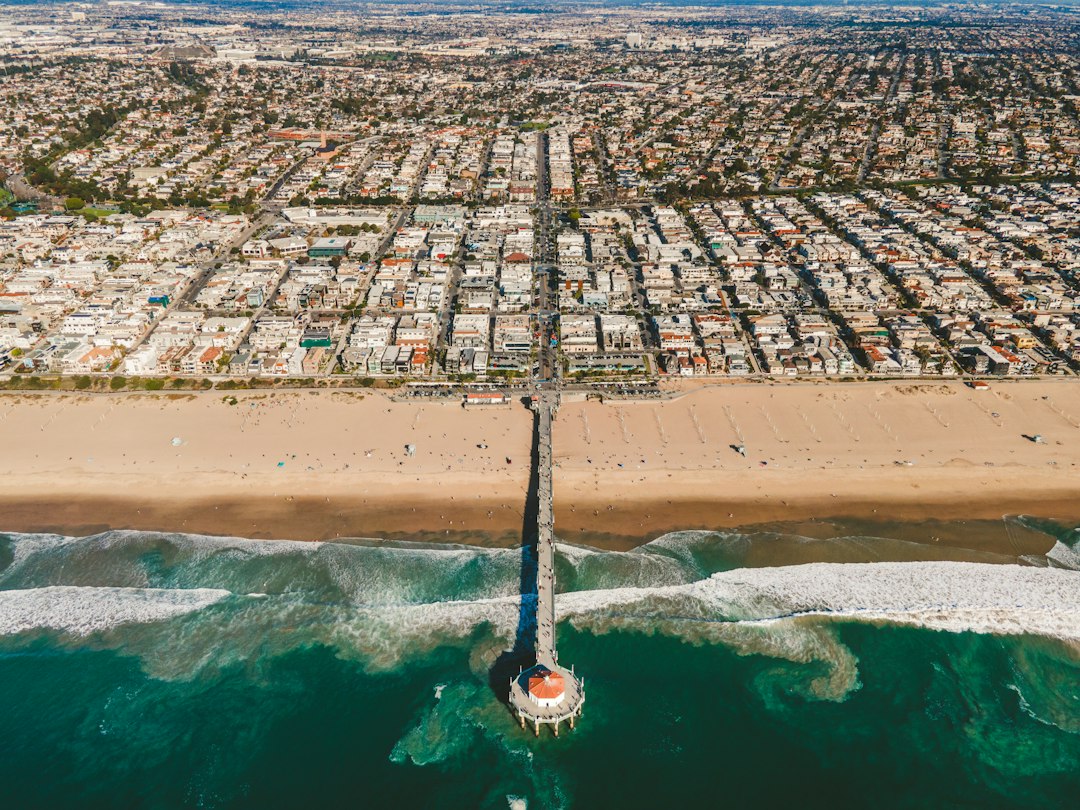
When you walk out onto the Manhattan Beach Pier, it’s easy to just see a nice spot for a photo, but there is so much more engineering history under your feet than most people realize.
Beyond the Surf: Exploring the Iconic Manhattan Beach Pier
When you walk out onto the Manhattan Beach Pier, it’s easy to just see a nice spot for a photo, but there is so much more engineering history under your feet than most people realize. This isn't the original structure; it’s actually the fifth version of the pier, built after harsh winter storms completely wiped out its predecessors between 1901 and 1920. If you look closely at that iconic round building at the end, you’re looking at a 1920s design that has been home to the Roundhouse Aquarium since the early eighties. It’s a perfect example of how the city shifted from wood to concrete reinforced with steel to finally stand up to the relentless, salt-heavy Pacific spray that ruined those earlier attempts.
Think about the physics involved here for a second. The pier features a specific parabolic arch profile that isn't just for show; it’s a brilliant way to dissipate the massive kinetic energy of waves crashing against the supports during high tide. Beneath the surface, those massive pilings have basically turned into an artificial reef, supporting dense kelp forests and a whole ecosystem of crustaceans that draw in predatory fish. Marine scientists actually keep a close eye on the water around these pilings because the currents here create oxygen levels you won’t find in the open surf just a few yards away. It’s become a hotspot for researchers tracking the migration patterns of leopard sharks that love to hang out in the sandy shallows right at the base.
If you’re ever there during the summer solstice, make sure you look straight down Manhattan Beach Boulevard. The whole street was surveyed to align perfectly with the sunset, which is a detail that always makes me stop and appreciate the planning that went into this town. It extends 928 feet into the blue, and that distance is critical for local events like the Pier to Pier Paddleboard Race, where the structure acts as the main logistical anchor for the whole event. Even after a major rehabilitation in the nineties to shore up the walkway, it still feels like a living piece of California history. It’s not just a walk over the water; it’s a masterclass in how to build something that lasts in one of the most challenging environments on the coast.
Why the Strand is the Ultimate Hub for Coastal Recreation
If you’ve ever spent a morning weaving through the chaotic mix of cyclists, skaters, and runners on the Marvin Braude Bike Trail, you’ve probably noticed it feels like more than just a sidewalk. We call it The Strand, but it’s actually a 22-mile feat of civil engineering that functions as the primary artery for the entire Santa Monica Bay. What strikes me is the sheer intentionality behind the design; engineers built this surface with a specific composition to handle constant thermal expansion from the blistering coastal sun while still managing to drain quickly during those rare, intense rainstorms. It sits at a precise elevation relative to the mean high tide, acting as a crucial buffer zone that absorbs storm surge energy before it ever reaches the homes tucked behind the dunes.
The science beneath your feet is just as interesting as the views. If you look at the sand nearby, you’re seeing a highly active zone where specific bacteria thrive in the salt spray, essentially acting as a natural filtration system for the local coastline. The trail’s layout also creates a unique wind corridor, which I’ve noticed is a favorite flight path for migratory shorebirds looking for an energy-efficient way to travel. Sensors along the route show that recreational traffic hits its peak in the late afternoon, perfectly timed with the arrival of the marine layer cooling the air. It’s funny to think that all that foot traffic is actually helping stabilize the dune vegetation by creating clear transit lanes that stop people from trampling the native plants.
What really separates the Manhattan Beach portion of the path from the rest of the coast is what lies beneath the concrete. This section rests on ancient marine terrace deposits, which gives the trail a stability you just don’t get in the shifting, loose sands found further north. They’ve even engineered the barriers to catch windblown sand, which naturally rebuilds the protective berms that shield the city from erosion. Plus, the width was standardized specifically to fit emergency response vehicles, making it one of the few places on the coast with true medical evacuation capabilities built right into the infrastructure. It’s rare to find a recreational space that pulls double duty as a critical piece of city defense, but that’s exactly what’s happening here every single day.
A Culinary Destination: Exploring the Downtown Dining Scene
When we talk about the downtown dining scene here, you have to look past the menus to understand what’s actually happening behind the scenes. It’s not just about finding a good meal; it’s a masterclass in how a city can thrive while pressed right up against the Pacific. Honestly, the way these restaurants handle the environment is fascinating—they’ve basically hacked the local micro-climate to keep you comfortable. Because of that consistent onshore breeze, the air quality feels noticeably sharper than what you’d get in inland urban centers, and those clever high-pressure misting systems you see on patios are calibrated to the exact humidity of the marine layer. It’s that kind of attention to detail that keeps your table dry even when the coast is feeling a bit damp.
Think about the physical space itself for a second. The way the downtown blocks are oriented isn't accidental; they’re angled to grab every bit of winter sun, which is why you can sit outside comfortably while people just a few streets away are reaching for a coat. And because the ground beneath us sits on a stable sedimentary shelf, you don't get that annoying vibration-induced settling you see in other coastal spots. That stability is actually a big deal because it lets these historic buildings support the massive, high-end kitchen equipment needed to churn out some of the best food in the state. I’ve always found it impressive that the local supply chain is so tight that your seafood often hits the plate less than eight hours after it’s pulled from the water.
There’s also a real, quiet intelligence to how the district manages its footprint. You’ll notice the street layout acts as a deliberate windbreak, using the building massing to keep your wine glass from tipping over during a gusty afternoon. Even the grease traps are over-engineered to ensure not a single drop of runoff finds its way into the sensitive coastal drainage basins, which is the kind of stewardship you just don’t see everywhere. Plus, the way the restaurants work together—like the closed-loop composting that helps keep our dune vegetation healthy—makes you realize that dining here is a form of local participation. It’s that blend of rigorous engineering and genuine hospitality that makes grabbing a seat downtown feel like you’re part of something much bigger than just dinner.
Sand, Sun, and History: The Legacy of Manhattan Beach
When we talk about the legacy of Manhattan Beach, it’s impossible to ignore the complex human history buried right beneath the sand, specifically the story of Bruce’s Beach. It’s a sobering reality that what we now see as a peaceful recreational space was once the site of a thriving resort for Black families, operated by Willa and Charles Bruce until the city seized the land through eminent domain in 1924. This wasn’t just a simple property transfer; it was a targeted, racially motivated displacement that we really need to sit with if we want to understand the true identity of this coastline. I think it’s important to acknowledge that the ground we walk on carries this weight, serving as a reminder that the development of these coastal towns was often shaped by systemic forces rather than just organic growth.
Beyond the social history, there’s an incredible geological story happening under your feet that explains why this stretch of sand feels so distinct. If you look at the composition of the beach itself, you’re basically standing on quartz and feldspar that traveled down from the San Gabriel Mountains over thousands of years, moved by the Santa Monica Bay’s natural sediment conveyor belt. It’s fascinating how the shoreline is actually maintained today through artificial nourishment, where engineers mechanically transport sand to fight off chronic erosion. That sand isn't just there for our beach days; it’s a vital, engineered surge protector for all the infrastructure tucked behind the dunes.
Then there’s the biological side of things, like the way native plants such as the Beach Primrose act as living anchors against the wind. These plants are built to handle extreme salt levels that would normally kill most vegetation, and they work in concert with a sophisticated storm drain system that scrubs urban runoff before it touches the Pacific. It’s a delicate balance, especially when you consider that the beach is also a nursery for the California grunion, which performs this wild, nocturnal spawning ritual right in the wet sand. I always find it pretty remarkable that in such a developed urban area, we’ve still managed to keep these natural cycles moving alongside our daily lives.
Finally, the whole town is essentially engineered to live in harmony with the Pacific’s specific micro-climate. From the way our homes are angled to catch the west-northwest breeze for natural cooling to the clever injection wells that keep seawater from ruining our freshwater supply, there’s a quiet, high-tech defense system protecting this place. The city sits on sedimentary layers that actually help dampen seismic activity, providing a bit of geological stability that’s rare for coastal zones. It’s not just about the sun and the surf; it’s a constant, calculated effort to maintain a livable environment in one of the most challenging, beautiful spots on the planet.
Family-Friendly Shores: Why It Remains a SoCal Local Favorite
When you’re juggling nap schedules and the constant need for snacks, finding a beach that doesn't just offer sand but actually makes your life easier is like hitting the jackpot. I’ve spent enough time hauling gear across various SoCal shores to know that Manhattan Beach hits differently because it’s engineered for actual human utility, not just aesthetic appeal. Think about the way the street grid acts like a natural wind tunnel, creating a consistent, cooling breeze that keeps the kids from overheating while you’re trying to set up your umbrella. It’s a subtle detail, but when you compare it to the stifling heat pockets you find in flatter coastal zones, you realize how much that air circulation matters for a stress-free afternoon.
The real secret to why families keep coming back, though, is the sheer, high-tech safety net hidden in plain sight. Most parents don't realize that the water quality here is consistently among the highest in the region because of an advanced ultraviolet treatment system that scrubs runoff before it even hits the surf. It gives me a massive amount of peace of mind knowing that the environment is being actively managed to keep the water safe for little ones who inevitably end up swallowing a mouthful of ocean. Plus, the sand itself is uniquely soft—it has a high grain sphericity index that feels miles better under bare feet than the gritty, shell-heavy stuff you find just a few miles up the coast.
Beyond the logistics, there’s a quiet, rhythmic stability to this stretch of beach that makes it the perfect anchor for a weekend trip. While other spots are constantly fighting off flooding or dealing with aggressive erosion, the underlying marine terrace here acts as a natural buffer, keeping the shoreline far more predictable for families who don't want their day cut short by a rising tide. Even the local parks feel smarter, using soil moisture sensors that keep the dunes lush and stable without turning the walkways into a muddy mess. It’s honestly rare to find a place that feels this wild and beautiful while having such a sophisticated, invisible support system keeping everything running smoothly for us.
Beyond the Weekend: Tips for Planning Your Perfect Coastal Getaway
If you’ve been sticking to the traditional two-day cycle, you’re missing the actual rhythm of how this coastline breathes. When you plan a trip here, I’d suggest shifting your perspective away from the typical weekend rush to truly capture the environmental stability that makes Manhattan Beach stand out. Think about it: while most visitors are busy fighting for parking, the local infrastructure is actually operating on a series of century-long projections designed to handle everything from seismic shifts to rising tides. You aren't just visiting a beach; you’re stepping onto a stable Pleistocene-era marine terrace that offers a geological foundation far more reliable than the loose, shifting sands you’ll find further north.
It’s worth noting that the town’s design is a masterclass in passive climate control, especially the way the street grid is oriented to capture the west-northwest winds. This constant land-sea breeze oscillation, combined with the high albedo effect of the silica-rich sand, keeps the surface temperatures significantly lower during midday heatwaves than you'd expect. I always tell friends to look for the subtle engineering in the downtown architecture, where buildings act as wind-deflection structures that keep your patio coffee from blowing away. When you start to notice these details—like the way the local runoff is treated through multi-stage bio-filtration systems—you begin to realize that this entire area is essentially a high-tech defense system working to preserve its natural beauty.
If you’re looking to get the most out of your stay, try timing your walks with the tidal shifts monitored by the local pressure sensor network, which is accurate to within a single millimeter. You’ll see that the offshore bathymetry creates a refraction pattern that makes the surf more predictable, which is exactly why the local kelp ecosystems remain so robust despite being right next to a major urban center. I really believe that by understanding these cycles, you stop being just another tourist and start interacting with the coast on its own terms. Whether it’s watching the shorebirds navigate their precise flight corridors or noticing how the native dune plants manage their own water intake, the intelligence behind this landscape is what makes a longer stay so rewarding. It’s not just about finding a spot to sit; it’s about appreciating the complex, invisible work that keeps this stretch of the Pacific so incredibly resilient.
Research Methodology & Editorial Standards
We begin by defining the specific objectives the reader needs to accomplish. Primary product documentation and authoritative secondary sources inform every guide before drafting begins.
Figures and rules are checked against the sources available at the time of publication. Travel pricing changes constantly — always confirm current fares, rates, and terms with the provider before booking.