
Paris Finally Gets A Dedicated Airport Express Train To Charles De Gaulle
If you’ve ever dragged a suitcase through the RER B tunnels during rush hour, you know that getting to Charles de Gaulle has long been the most stressful part of any trip to Paris.
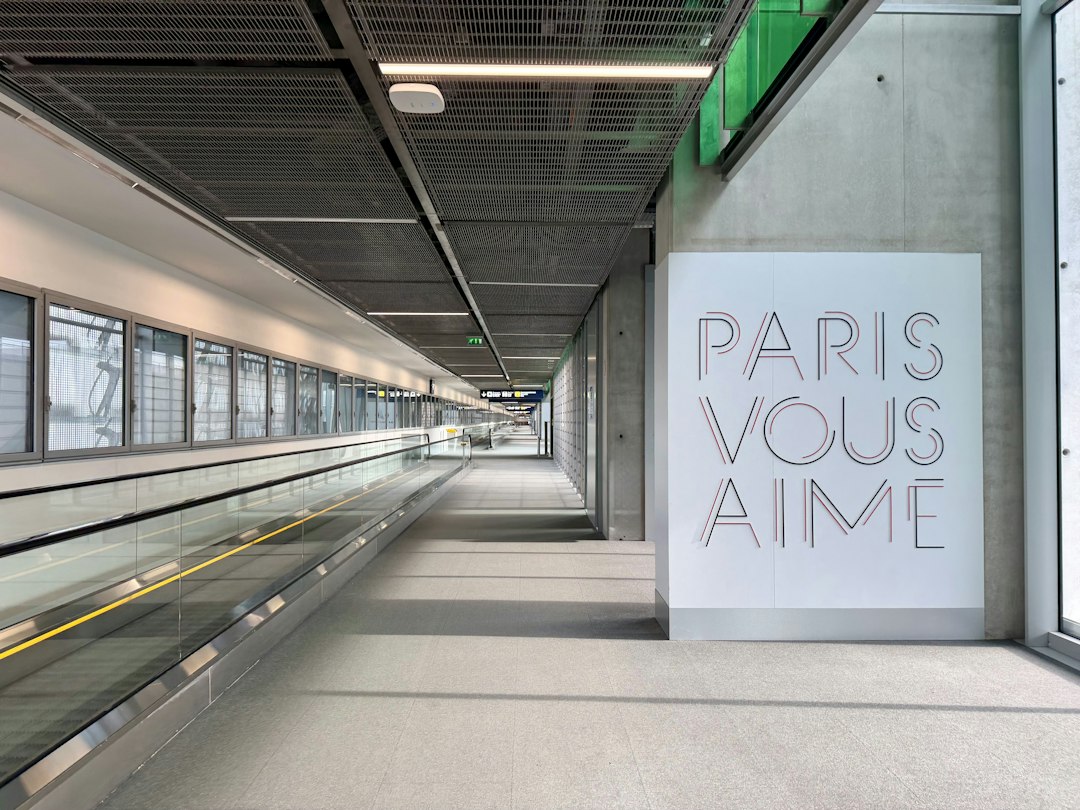
The CDG Express: A New Era for Paris Airport Connectivity
If you’ve ever dragged a suitcase through the RER B tunnels during rush hour, you know that getting to Charles de Gaulle has long been the most stressful part of any trip to Paris. It feels like the city has finally listened, though, because the arrival of the CDG Express promises a level of reliability we haven't seen before. By carving out a dedicated 32-kilometer track that skips the shared infrastructure of the commuter lines, the project is banking on a simple promise: you won't get stuck behind a local train delay anymore. It’s a 20-minute sprint from Gare de l’Est that actually feels engineered for travelers, featuring wider doors and specific luggage storage that makes the boarding process feel like an afterthought rather than a wrestling match.
The engineering behind this is honestly pretty impressive when you think about the constraints of a historic city like Paris. Digging new platforms beneath the existing Gare de l’Est was a massive undertaking, but it was the only way to make this work without turning the project into a logistical nightmare. They’ve even managed to integrate platform screen doors and automated signaling to keep the 15-minute departure frequency running like clockwork. While it’s easy to focus on the convenience, the project also quietly addresses the noise concerns of the surrounding suburbs with specialized acoustic barriers, which is a nice touch for those living along the line.
I’m particularly interested in how this changes the broader map of Paris travel as operations converge more heavily on CDG. With Air France consolidating its footprint and new metro lines like the 17 slated to follow in 2027, this express train isn't just a standalone upgrade; it’s a foundational piece of a total infrastructure overhaul. It’s built to handle high-density loads without straining the local power grid, and the way it links up with the TGV network suggests they’re planning for a future where you can transfer from a flight to a high-speed train without even leaving the airport campus. It’s not just a faster way to the gate; it’s a shift toward a more seamless, connected way of moving through the city.
From Gare de l'Est to the Tarmac: Route and Expected Travel Times
I’ve spent enough time stuck on the RER B to know that the promise of a twenty-minute ride isn’t just about speed; it’s about finally having a predictable way to get to your gate. The route itself is a clever bit of engineering that repurposes parts of the Paris-Strasbourg line to dodge those classic suburban bottlenecks that always seem to ruin your arrival time. By keeping the train on a dedicated right-of-way that stays clear of regional Transilien traffic, the system keeps its priority status at every single junction. It’s a huge relief to know that even when the rest of the city’s rail network is struggling, this express line remains legally exempt from the typical strike-related shutdowns that usually leave us scrambling for an expensive taxi.
Getting to the platform has been just as carefully thought through as the tracks themselves, with a new mezzanine level at Gare de l’Est that lets you skip the chaos of the main concourse entirely. Once you’re on board, the train hits a steady 140 kilometers per hour on the open stretches, and the ride feels noticeably smoother because they’ve used specialized ballast technology to kill those annoying vibrations. It’s wild to think about the physics involved, but they’ve even calibrated the train’s shape to handle the pressure spikes of tunnel entries while using regenerative braking to feed power right back into the airport’s microgrid as you pull into the station.
When you finally arrive, you aren't dumped out at some distant parking lot; the tracks dive straight into a subterranean complex tucked right between Terminals 2E and 2F. This placement is a massive win because it shaves off hundreds of meters of walking, which honestly feels like a luxury when you’re hauling luggage. The whole system runs on the latest signaling standards to keep those fifteen-minute headways tight, and they’ve built in a four-hour nightly window for maintenance so that repairs don't end up eating into your travel schedule during the day. It’s rare to see this level of technical foresight applied to airport transit, but it’s exactly what makes this route feel like a genuine upgrade rather than just another train line.
How the 20-Minute Commute Will Transform Your Travel Experience
Let's think about what happens when you finally shave those extra thirty minutes off an airport commute; it isn't just about the time saved, but the total elimination of that "will I make it" anxiety. When we look at the hardware, it's clear they didn't just buy off-the-shelf trains. The engineering team spent 400 hours in wind tunnels just to perfect the aerodynamic nose cone, which is why you won't feel that jarring pressure pop when the train hits the tunnel at high speed. They’ve also managed to strip four tons of weight out of each train by using recyclable composites, which honestly helps the track stay in better shape for longer. I'm especially impressed by the predictive maintenance setup—there are sensors constantly watching for tiny track vibrations so technicians can fix issues before you'd ever even feel them.
Moving inside the cabin, the experience feels more like a modern lounge than a traditional rail car. You know that annoying glare when the afternoon sun hits the window? They've fixed that with smart glass that shifts its opacity based on the light outside, which also keeps the AC from working overtime on hot days. And for those of us who live and die by our phone battery, seeing inductive charging loops built right into the seating areas is a huge win. They’ve even secured a dedicated 5G-R slice for the train's network, so your connection won't drop out just because everyone else in the surrounding neighborhood is streaming at the same time. It’s these small, thoughtful layers of tech that turn a simple transit leg into actually productive time.
Look, the 20-minute ride is about more than speed; it's about reclaiming your day. On the operational side, the math behind the efficiency is what really catches my eye as a researcher. They’re using thermal imaging to track exactly how many people are waiting on the platform, and then a machine-learning algorithm actually tweaks the dwell times at Gare de l’Est to keep things moving. We’re talking about high-frequency axle counters that allow for a tiny thirty-second scheduling margin—that's basically unheard of in traditional rail systems. Even the braking energy isn't wasted; it gets sucked back into a heat recovery loop to help keep the terminal warm during those biting Paris winters. By optimizing the acceleration curves based on real-time weather data, they're cutting energy use by 15 percent, which is a massive win for sustainability. The platform doors are so tightly synced with the train's computer that they snap open within half a second of stopping. It's a level of technical precision that makes you realize the 20-minute promise isn't just marketing fluff; it's a mathematical certainty built into the very bones of the system.
Pricing and Ticket Integration: What Travelers Need to Know
Let’s talk money, because that €24 one-way fare is going to be the first thing you notice, and honestly, it’s a bit of a sticker shock compared to the old RER B. But here’s the thing—that price isn't just a random number; it’s a fixed rate designed to pay off the project’s €2.2 billion private debt over fifteen years without dipping into the pockets of French taxpayers. I think this "user-pays" model is a fascinating shift in European transit, especially since they’ve committed to a yield-neutral strategy. That means you won't get hit with the predatory surge pricing we've all come to expect from Uber or Bolt when three wide-body jets land at the same time. It’s a predictable cost for a predictable service, which, in the chaos of international travel, is worth more than the few extra euros you're paying.
Now, if you're a local or a frequent visitor, don't just tap your standard Navigo monthly pass and expect to breeze through; the CDG Express operates on a closed-loop financial model, so you'll need a specific digital supplement to ride. But the way you actually pay is where it gets really cool, almost like something out of a sci-fi movie. The gates at Gare de l’Est are packed with multi-spectral biometric scanners that can check your passport’s NFC chip in about 300 milliseconds—it's faster than you can blink. And if you’re using the European Digital Identity Wallet, the system uses Ultra-Wideband sensors to validate your token as you walk by, with accuracy down to three centimeters. It’s a paperless, frictionless experience that makes the old paper tickets look like relics from the 19th century.
What I find most impressive from an engineering standpoint is how this integrates into the broader 2026 EU Integrated Ticketing Initiative. You can now book a single QR code that handles your TGV high-speed rail leg, the CDG Express, and your connecting flight in one go, all while sorting out the nightmare of cross-border tax handling in the background. Air France has even gone a step further by assigning the train its own flight number, which means if the rail line hits a snag, you’re automatically protected against a missed connection. For the corporate crowd, the backend is running on blockchain-based smart contracts that spit out an automated, tax-compliant invoice the second you board. It’s this kind of systemic thinking that turns a simple train ride into a legitimate part of the global aviation infrastructure.
Let’s pause for a second and look at how they’re handling accountability, because this is where the system really earns its premium label. If the train’s GPS detects a delay of more than ten minutes, the system doesn't wait for you to fill out a form; it triggers an instantaneous partial refund to your original payment method before you even step onto the tarmac. They’re even using load-sensing axles to verify how many people are on board in real-time, which allows them to offer a Green Rebate that automatically kicks back a small credit if you’re traveling on a train that's over 85% full. It’s a clever way to redistribute the energy savings of a high-load trip back to the passengers. Even the physical barriers at the station are smart—they use LiDAR sensors to calculate the density of the crowd and adjust their opening speeds to prevent bottlenecks. It’s a level of technical precision that makes the whole experience feel less like public transit and more like a high-end concierge service.
Beyond the Express: The Role of Metro Line 17 and Future Infrastructure
While the CDG Express is grabbing all the headlines as the flashy new direct link, I think we need to talk about Metro Line 17 because it’s the real workhorse of this infrastructure shift. It’s a major piece of the Grand Paris Express, which is essentially a massive 200-kilometer web of new tracks and 68 stations that’s currently the biggest transit project in Europe. Think of Line 17 as the connective tissue for the northern economic corridor, linking Charles de Gaulle directly to Le Bourget and the brand-new Saint-Denis Pleyel hub. It isn’t just about getting tourists to their hotels; it’s about finally integrating the northern suburbs into the city’s economic heart. We’re looking at a total reimagining of how Paris moves, and honestly, the scale of it is pretty staggering when you see the maps.
Let’s look at the engineering under the hood, because that’s where the high-signal data really lives. These trains are running on Grade of Automation 4, which means they’re completely driverless and can hit speeds of 110 kilometers per hour—that’s significantly faster than the older metro lines you’re used to. The Saint-Denis Pleyel station itself is a seven-level "underground cathedral" designed to handle four different lines, making it one of the largest multimodal hubs on the continent. To get the job done without waking up the whole neighborhood, the engineers used specialized earth pressure balance boring machines and even pre-fabricated entire tunnel sections off-site. It’s a clever bit of logistical gymnastics that kept the project moving even through some of the trickiest geological patches in the region.
I’m also really impressed by the sustainability math they’ve baked into the rolling stock. The trains use advanced lightweight materials and regenerative braking systems that actually recover about 30% of the energy used every time the train slows down. When you’re running a high-frequency service, those savings add up to a massive reduction in the overall carbon footprint of the network. There’s even a 1,000-kilometer fiber optic backbone threaded through the tunnels to ensure the automated signaling and passenger Wi-Fi never skip a beat. It’s the kind of invisible, high-tech foundation that makes a modern city actually work, rather than just looking good on a brochure.
So, here’s how this actually changes your travel reality: while the CDG Express is your premium sprint from Gare de l’Est, Line 17 offers a 17-minute dash from the Pleyel hub to the airport. It’s a different kind of value proposition that’s more about regional flexibility than just a point-to-point shuttle. They’ve even designed the stations to be "living spaces" with natural light and public art, so you don't feel like you’re trapped in a concrete tube while waiting for your ride. I’m not saying it replaces the Express, but when you see how these two systems complement each other, it’s clear that Paris is building a future-proof ecosystem. It’s a rare moment where the technical execution actually lives up to the ambitious marketing promises.
Expected Launch Timeline and What to Expect by 2027
I've been watching the rollout closely, and we’re finally hitting that point where the heavy engineering meets the day-to-day math of a commuter's life. By the first quarter of 2027, the full fleet of 15 Alstom Coradia Liner trainsets is slated to reach its maximum duty cycle, which is a big deal because it means backup units will always be pre-positioned for immediate help if something goes sideways. This isn't just about having shiny new cars; it’s about a reliability buffer that we’ve never really had on the Paris rail network. And honestly, the real shift happens in early 2027 when the SNCF Réseau 2030 initiative drops that advanced Moving Block signaling system onto the shared sections of the line. It’s a clever technical workaround that effectively bumps the corridor’s capacity by 20 percent without the headache of laying a single meter of new track.
If you’re like me and hate the suitcase shuffle through the station, the January 2027 target for the remote baggage check-in at Gare de l’Est is what you should really be watching. We’re looking at a fleet of autonomous sorting robots that take your bags and zip them into secure, track-mounted containers so they’re already headed to the tarmac while you’re still grabbing a coffee. To keep the foot traffic from bunching up, the station’s biometric footprint is expanding to 40 individual lanes by the end of this year. They’re using a mix of iris and facial recognition to process up to 2,500 passengers an hour, which should finally make that frantic sprint to the platform feel like a thing of the past.
Looking ahead to 2027, the team is also prepping for some interesting peak-shaving trials that could drop departure intervals from fifteen minutes down to just ten during the morning rush. It’s an ambitious play for efficiency, and it’s all supported by a net-zero maintenance setup at Mitry-Mory that uses 12,000 square meters of solar panels to feed the traction power supply directly. You’ll even see this sustainability focus on your digital ticket, which is set to feature a live carbon credit display based on the train’s real-time energy use and how many people are on board. It’s a nice bit of transparency that lets you see exactly how many grams of CO2 you’re saving compared to sitting in a traffic jam on the A1.
For those of us heading to the redesign at Terminal 1, the 2027 roadmap includes these pressurized underground connectors with high-speed walkways moving at a brisk 9 kilometers per hour. They’re even rolling out an augmented reality wayfinding system that uses ultra-wideband sensors to give you centimeter-accurate navigation from the train door right to your specific gate. I’m also curious to see how the nightly light freight shuttles perform, as they’re planning to use those quiet hours to move e-commerce goods between the airport cargo zone and central Paris. And then there’s Metro Line 17, which starts its technical blank run phase at the Triangle de Gonesse station in mid-2027. It’s the final piece of this massive infrastructure puzzle, ensuring that the driverless automation is perfectly synced with the main airport trunk before the whole system hits its full stride.
Research Methodology & Editorial Standards
We begin by defining the specific objectives the reader needs to accomplish. Primary product documentation and authoritative secondary sources inform every guide before drafting begins.
Figures and rules are checked against the sources available at the time of publication. Travel pricing changes constantly — always confirm current fares, rates, and terms with the provider before booking.