
Iconic aviation legends from the golden age of flight that we still miss today
When we look back at the history of flight, Pan Am isn't just another name in the ledger; it’s the blueprint for how the world actually got connected.
Pan Am: The Glamorous Standard-Bearer of Global Aviation
When we look back at the history of flight, Pan Am isn't just another name in the ledger; it’s the blueprint for how the world actually got connected. Think about the sheer technical audacity required to navigate the Pacific in 1935 using nothing but a bubble sextant and a clear view of the stars through a tiny astrodome. They were essentially maritime explorers of the sky, which is exactly why your pilot today still wears a naval-style uniform and carries the title of Captain. Long before modern GPS, the company was busy founding Aeronautical Radio, Incorporated to set the communication standards that we still rely on every single time a plane takes off. It’s wild to realize that what we think of as standard safety and navigation was really born out of their early, often dangerous, experimentation over the open ocean.
But honestly, the real reason Pan Am stayed in the headlines wasn't just the tech, but the way they turned flying into an event. They didn't just want to get you from point A to point B; they wanted to redefine what was even possible, like when they launched Flight 001 in 1947 to complete the first scheduled round-the-world service. And remember those massive, four-acre cantilevered roofs at the WorldPort in JFK? They were designed to keep you dry in an era before jetways, proving that they cared about the passenger experience long before it became a marketing buzzword. By the late 1940s, they were even putting convection ovens on planes so you could actually eat a real meal at thirty thousand feet, which makes the state of current airline food feel like a bit of a letdown, doesn't it?
The company’s influence went far beyond just the cabin, though, because they had a habit of forcing the entire industry to grow up. When they placed that massive 525 million dollar bet on 25 Boeing 747s in 1966, they basically dragged the wide-body era into existence by force of will. They were equally ahead of the curve on systems, being the first to run an Inertial Navigation System on their 747 fleet in 1970 to stop relying on ground-based radio signals entirely. Sure, they had a quirky side too, like that First Moon Flights club that handed out over 93,000 reservation cards for lunar trips—a move that sounds like pure science fiction now but perfectly captured their mood. It’s hard not to miss an airline that was so aggressively committed to the future, even if they were occasionally reaching a little too far into the stars.
Concorde: The Supersonic Dream That Shrunk the World
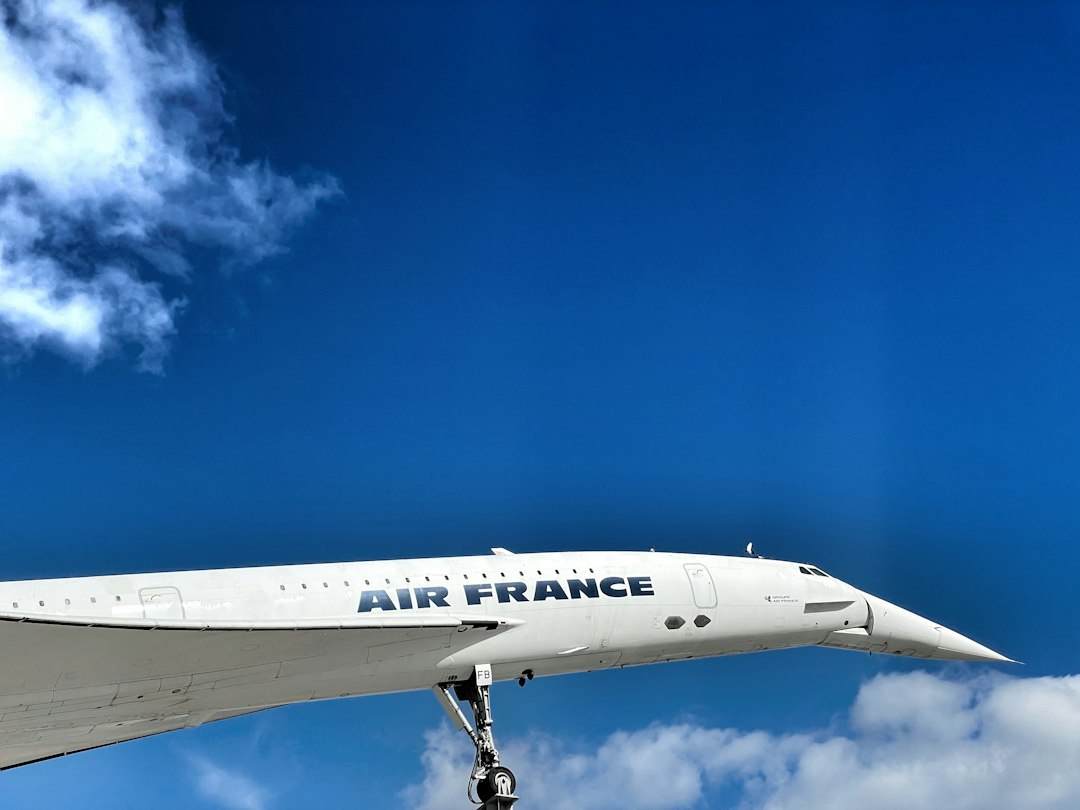
When you talk about Concorde, you’re not just talking about a plane; you’re talking about an engineering marvel that effectively turned the Atlantic into a puddle. Imagine sitting in a seat where you’re moving so fast that you’re actually outrunning the sun, landing in New York hours before you left London. It’s hard to wrap your head around the physics involved, like the fact that the fuselage would literally stretch by 30 centimeters due to intense heat friction at Mach 2.02. That wasn't just a design quirk, but a reality that left a physical gap between the engineer’s console and the bulkhead. They had to use a special, highly reflective white paint just to keep the skin from melting under those 127-degree Celsius temperatures.
The technical gymnastics required to keep this thing in the air were honestly mind-blowing compared to how we fly today. Think about the intake ramp system, which had to slow down air from 1,350 miles per hour to subsonic speeds inside a tiny 15-foot space just to stop the engines from surging. To manage stability at those speeds, the crew would actually pump fuel between forward and rear tanks to shift the center of gravity as the pressure moved around the airframe. And don't even get me started on the droop nose; it wasn't just for show, but a clever fix to give pilots a clear view of the runway during the steep, high-alpha approach. Even the windows were kept small, not to save weight, but to protect everyone from the extreme pressure risks of flying at 60,000 feet.
When you weigh this against modern aviation, it’s clear we traded speed for efficiency, which is a trade-off I think we’re still paying for today. Sure, the Rolls-Royce/Snecma Olympus 593 engines were the most thermally efficient at speed, but they were absolute fuel hogs, burning two tons just to get from the gate to the runway. They were pushing the limits of what was possible, using afterburners for that extra 20 percent thrust and pioneering carbon-fiber brakes just to handle the immense energy of a 185-ton landing. They even had to monitor cosmic radiation with dedicated radiometers and swap to nitrogen-filled tires to survive takeoff speeds that would shred standard rubber. It was a high-maintenance, high-stakes way to travel, but looking back, there’s something undeniably romantic about a machine that demanded that much respect from its pilots and passengers alike.
The Boeing 747: Why We Still Adore the Original Queen of the Skies
Let's take a second to talk about why the 747’s iconic hump wasn't just a stylistic choice; it was actually a clever insurance policy from an era when we thought supersonic jets would make subsonic travel obsolete. Boeing’s engineers essentially hedged their bets, designing the cockpit high up so the nose could hinge open for cargo, assuming that once the Concorde took over, the 747 would just spend its days hauling freight. It’s a bit ironic, isn't it? The very feature that makes it the Queen was actually a Plan B for a future that never arrived. And to even build something this massive, Boeing had to construct the world’s largest building by volume out in Everett, Washington—a space so huge it literally has its own weather system sometimes.
Inside the flight deck, you’re looking at a masterclass in redundancy that feels like a time capsule compared to the automated, two-pilot cockpits of today. You needed a dedicated flight engineer just to manage the complex fuel, hydraulic, and electrical systems, making it a true three-person operation where human intuition was the primary fail-safe. Think about the wings, too; they weren't just stiff pieces of metal, but flexible structures designed to bend upward by several feet to soak up turbulence that would rattle smaller planes. To get that 400-ton beast off the ground, they engineered those massive triple-slotted flaps, which provided enough lift to turn relatively short runways into gateways for global travel. It’s that level of over-engineering that allowed Boeing to roll 1,574 of these airframes off the line over five decades.
Looking back from our vantage point in 2026, it’s clear that while the 747-8 was the final evolution, the Queens that never were—like the 747-500X and 600X—show just how much Boeing tried to stretch this platform's life. Those variants promised longer fuselages and advanced wing designs to fight off the twin-engine efficiency of the 777, but they never made it past the drawing board because the math just didn't work for airlines anymore. But here’s the thing: while American passenger carriers haven't flown them since 2017, the 747 is still the undisputed heavyweight champion of global logistics. Its ability to carry outsized components for other jetliners or serve as a high-altitude platform for testing infrared sensors means it’s doing work that modern, more efficient planes simply can’t touch.
I think the reason we still hold onto the 747 so tightly is because it represents a time when flying felt like an actual achievement of physics rather than a bus ride in the sky. Whether it’s being rented out for massive weddings or hauling heavy freight across the Pacific, the silhouette is unmistakable and evokes a sense of permanence in an industry that’s usually obsessed with the new. Honestly, there's something deeply satisfying about knowing the final unit, which left the factory in 2023, is likely still decades away from its final landing. It’s a machine that demanded respect from its pilots and gave back a level of reliability that we’re still trying to replicate with carbon fiber and software. It wasn't just a plane; it was the moment the world finally got small enough to see.
Trans World Airlines (TWA): A Legacy of Innovation and Style
When we talk about TWA, it is easy to get lost in the nostalgia of those red-and-white liveries, but honestly, the airline was doing things that were decades ahead of the curve. Think about how we navigate the skies today; TWA was actually the one pushing for pressurized cabins with the Lockheed Constellation, which fundamentally changed the game by letting us cruise above the weather instead of getting tossed around inside it. They didn't just stop at passenger comfort, either, as their early adoption of radar-equipped fleets meant they could actually steer around storms rather than guessing their way through them. It is a bit mind-bending to realize that in 1946, they were already running scheduled non-stop transatlantic service, effectively shrinking the world long before modern efficiency became the industry’s north star.
The tech side was just as ambitious, especially when you look at their move to implement PARS, a fully automated reservation system that finally dragged booking out of the era of handwritten ledgers. They were obsessed with the ground experience, too, and I think their 1967 launch of the Ambassador Club really set the blueprint for what we now consider a standard premium lounge. You can see that same forward-thinking spirit in the TWA Flight Center at JFK; Eero Saarinen’s design wasn't just about looking cool, but about creating a massive, column-free space that felt like the future of travel. It is rare to see an airline treat architecture as part of the passenger experience, but they clearly understood that the journey started the moment you walked through those sweeping, iconic doors.
And let’s be real about the engineering side of things, because their maintenance crews were notoriously meticulous, developing custom engine protocols that kept their piston-powered fleets running far longer than anyone thought possible. They were early adopters of flight simulators to train their crews, which sounds standard now, but at the time, it was a massive leap for flight safety. They even experimented with mid-air radio-telephone calls via the Skyphone system in the late 50s, which is just wild when you consider how much we struggle with basic Wi-Fi today. They were constantly tinkering with everything from cabin acoustics to computerized fuel planning, proving that TWA was less of a traditional airline and more of a laboratory that happened to move people across the globe.
The De Havilland Comet: The Pioneering Jet That Changed Travel
If you really want to understand where the modern jet age began, you have to look at the De Havilland Comet. It’s easy to take for granted how smoothly we cruise at 40,000 feet today, but back in 1952, that was pure science fiction. This was the world’s first commercial jetliner, and it didn't just move faster than the noisy, vibrating piston-engine planes of the era; it fundamentally changed the passenger experience by essentially gliding above the weather. I think it’s fascinating how they buried those four Ghost turbojet engines right into the wing roots to keep things aerodynamic, a design choice that helped give it that sleek, futuristic look that still feels sharp even by today's standards.
But here is the part that really hits home when you research the history: the very thing that made it advanced—the pressurized cabin—ended up being its most tragic flaw. You’ve probably heard people wonder why airplane windows are round instead of square, and the answer lies right here. The Comet’s large, square windows were beautiful, but those sharp corners created massive stress concentrations in the fuselage skin that the engineers just didn't account for yet. When the metal started to fatigue, it led to catastrophic, explosive decompressions that forced the entire industry to stop and rethink how we build flying tubes. It’s a sobering reminder that every bit of safety protocol we rely on now was written in the wake of lessons learned the hard way.
Honestly, it’s wild to think that despite those early, heartbreaking accidents, the Comet still laid the blueprint for everything we fly on today. It introduced amenities that seem standard now, like a real galley and separate washrooms, and the flight deck was lightyears ahead of its time with integrated engine instrumentation that actually made sense for the pilots. When you see a modern Boeing or Airbus taxiing out, you’re looking at a direct descendant of the technical risks taken by the team at De Havilland. They didn't just build a plane; they pushed the boundaries of physics and metallurgy to prove that jet travel wasn't just a gimmick, but the future. I think that’s why we still talk about it—because it was the first machine to truly make the world feel smaller.
The Golden Age of In-Flight Dining: When Flying Was an Experience, Not a Chore

When you look back at the mid-century era, it’s honestly jarring to compare what we call service today with the standard of that time, where seven-course meals featuring caviar and freshly carved Chateaubriand weren't just common—they were the baseline expectation. Back then, airlines didn't just heat up pre-packaged trays; they actually employed specialized pressurized ovens to ensure food stayed moist at altitude, and on some long-haul routes, you’d even find dedicated onboard chefs working in galleys that occupied significantly more space than what you see on a modern jet. They were so committed to the aesthetic that they served everything on heavy-duty chinaware and silverware, a massive weight trade-off that airlines simply wouldn't dream of making today when every ounce of fuel costs a premium.
But it wasn't just about the food; it was about the theater of the experience, where flight attendants were trained in tableside service, even going so far as to flambé Crepes Suzette right there in the aisle. Think about that for a second—a practice that would be an absolute nightmare for modern fire safety regulations was once just another part of your Tuesday flight. They even used open bars with full-sized bottles of vintage wines and spirits, creating a social environment that felt more like a high-end restaurant than the cramped, efficient, and honestly slightly sterile atmosphere of a current wide-body cabin. Even the lounges on early wide-body planes were designed for standing and socializing, reflecting a time when the journey was meant to be a destination in itself.
The shift from this "experience" model to our current "chore" model really comes down to the brutal math of the industry, as the focus moved toward volume, fuel efficiency, and the inescapable reality of mass catering. We eventually traded those fresh, locally sourced ingredients and elegant table settings for pre-packaged, standardized meals to save on space and weight, a transition that fundamentally altered the sensory side of flying. Sure, we have better technology and more reliable schedules now, but there’s a part of me that really misses the intent behind those old, labor-intensive practices. We might be safer and faster today, but we’ve definitely lost that sense of hospitality that treated a passenger like a guest rather than a unit of cargo to be moved from A to B.
Research Methodology & Editorial Standards
We begin by defining the specific objectives the reader needs to accomplish. Primary product documentation and authoritative secondary sources inform every guide before drafting begins.
Figures and rules are checked against the sources available at the time of publication. Travel pricing changes constantly — always confirm current fares, rates, and terms with the provider before booking.