
How to Travel to Egypt to See Ancient Treasures and Historical Wonders
Getting your logistics sorted before you touch down in Egypt is honestly the difference between a seamless adventure and a series of avoidable headaches.
Essential Travel Logistics: Visas, Best Times to Visit, and Staying Safe
Getting your logistics sorted before you touch down in Egypt is honestly the difference between a seamless adventure and a series of avoidable headaches. First off, you’ll want to handle your entry requirements well ahead of time, as the government has shifted to a fully digitized e-Visa system for over 80 nationalities. You really need to secure this at least seven days before departure to make sure everything is processed, though you can still use kiosks at Cairo International Airport if you’re carrying a passport with six months of validity remaining. It’s just one of those things you don't want to leave to chance when you’re standing in the arrivals hall after a long flight.
When it comes to timing your visit, I’d suggest skipping the summer months entirely unless you’re prepared for heat spikes that regularly push past 40°C. While the winter crowds are standard, the real sweet spot for hitting Upper Egypt is during the shoulder seasons of March to April or October to November. You get much more stable thermal comfort during these windows, which makes exploring ancient sites without constant sun exposure a lot more manageable. And look, even if you go in the cooler months, the Sahara sun is no joke, so keep your hydration and SPF game strong to avoid feeling drained by noon.
Staying safe is mostly about common sense and using the right tools to navigate the urban chaos. I’ve found that using ride-sharing apps is a game changer for getting around Cairo because you get GPS-tracked routes and transparent, fixed pricing that saves you from haggling. Don't forget that cash is still king at the more rural historical sites, so keep small denominations of Egyptian pounds handy for those entry points. If you really want to optimize your trip, grab a Cairo or Luxor Pass; it cuts your costs by about 30% and keeps you moving through ticket lines much faster.
Finally, keep in mind that being a bit more conservative with your clothing in religious or rural areas isn't just about respect; it’s a practical move that usually results in a much smoother experience. You'll also want to pack a universal adapter since you're dealing with a 220V power supply and Type C or F plugs. It’s a small detail, but you don't want your phone dying while you’re out navigating a market. Just keep a low profile, stay updated through your embassy’s traveler enrollment program, and you’ll find that the logistical side of things is actually pretty straightforward once you’ve got these basics locked down.
Navigating Cairo: Exploring the Giza Pyramids and the Grand Egyptian Museum
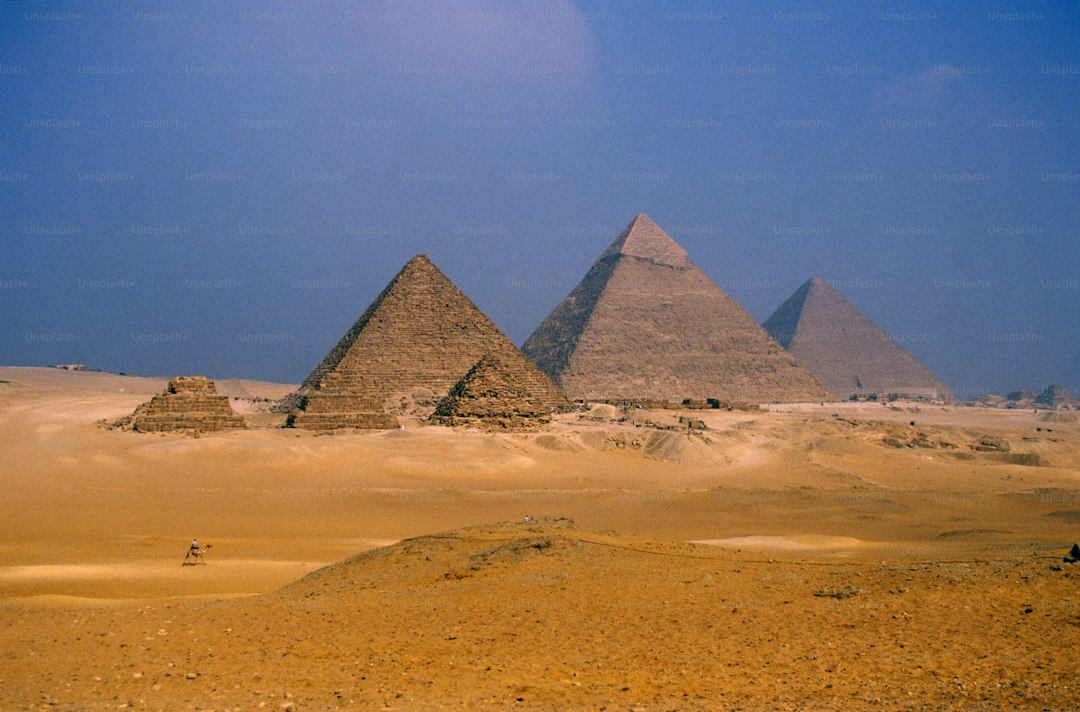
Let’s dive into the core of your Cairo itinerary, because honestly, balancing the raw, dusty majesty of the Giza Plateau with the sleek, high-tech reality of the Grand Egyptian Museum (GEM) is the ultimate travel puzzle. When you stand at the base of the Great Pyramid, you’re not just looking at stone; you’re looking at a masterpiece of ancient engineering where Tura limestone casing stones were once fitted with gaps thinner than a credit card. It’s wild to think that the Sphinx isn't a collection of masonry blocks, but rather a singular ridge of bedrock carved in place. Most people don’t realize the pyramids were essentially a massive logistical operation, utilizing a network of man-made canals to float blocks during Nile floods, which really changes how you perceive the surrounding desert terrain.
Now, contrast that ancient ingenuity with the Grand Egyptian Museum, which is basically an architectural fortress for history. Spanning over 500,000 square meters, it’s not just a gallery; it’s a massive, seismic-protected vault that uses high-end structural technology to keep artifacts safe from the ground up. You’ll want to spend a significant amount of time on the Grand Staircase, which is arguably the best vantage point in the city, rising four stories to frame the pyramids through a panoramic glass wall. It creates this jarring, beautiful tension between the pharaohs' statues in front of you and the actual monuments in the distance.
Here’s my advice for making this work: don't rush the transition between the two sites, as they represent totally different phases of Egyptian heritage. While researchers are still using muon tomography to map out internal voids within the pyramids, the GEM is already showcasing a massive collection of 100,000 items that give you the context those empty chambers can't provide on their own. Even though Cairo is modernizing rapidly with new transit lines like the upcoming Metro Line 4, navigating the plateau itself still requires a bit of grit and planning. If you want my take, treat the pyramids as your primary sensory experience and the museum as your analytical one, because when you layer the two together, you finally get the full picture of why this city remains the top destination on the continent.
Cruising the Nile: A Journey Through Luxor and the Valley of the Kings
If you’re planning to explore Upper Egypt, you’ve likely realized that a Nile cruise isn’t just a way to get from point A to point B; it’s a masterclass in ancient geography that feels remarkably different from the dusty urban intensity of Cairo. Let’s look at the logistics of the river itself, because the Esna Lock is really the heartbeat of the trip, acting as a vital navigational gate that regulates water levels so your ship can transition between the lower elevation of Luxor and the higher basin of Aswan. It’s fascinating how the river acts as a hard geological boundary here, where the lush, fertile riparian strip often measures less than two kilometers wide before it abruptly crashes into the hyper-arid Sahara. And if you’re wondering about the comfort of these ships, many modern vessels have been retrofitted with specialized shallow-draft hulls specifically to maneuver through the silting patterns of the waterway during the low-water seasons.
When you step off the boat into the Valley of the Kings, you’re walking through a space that is as much an engineering feat as it is a necropolis. I’ve always found it wild that while there are over 60 known tombs, the total volume of excavated rock debris removed during their construction is estimated to be over 200,000 cubic meters. You’ll notice the wall paintings look surprisingly vibrant; that’s because they often utilize Egyptian blue, which is actually one of the world's first synthetic colors, created by heating silica, lime, copper, and alkali. It’s also worth noting that the temperature inside the deeper tombs stays pretty consistent, usually hovering around 25 to 28 degrees Celsius, which offers a brief, cool sanctuary from the extreme surface heat you’ll face while walking the site.
Back in Luxor, the sheer scale of the architecture becomes impossible to ignore, especially when you consider the labor involved in structures like the Temple of Karnak. Its hypostyle hall features 134 massive sandstone columns, with the tallest reaching 24 meters and weighing roughly 100 tons each, which makes you wonder how they even managed to align them so perfectly. I always tell people to look closely at the outer pylons of Luxor Temple, where you can still spot remnants of the original sandstone scaffolding holes left by ancient laborers. The orientation is also incredibly precise; take the Temple of Hatshepsut, for example, which was intentionally designed to align with the winter solstice to ensure the sun’s rays hit the very back of the sanctuary. It’s these small, intentional details that make the entire experience feel less like a sightseeing tour and more like a direct, tactile connection to the past.
Beyond the Classics: Hidden Gems and Off-the-Beaten-Path Archaeological Sites
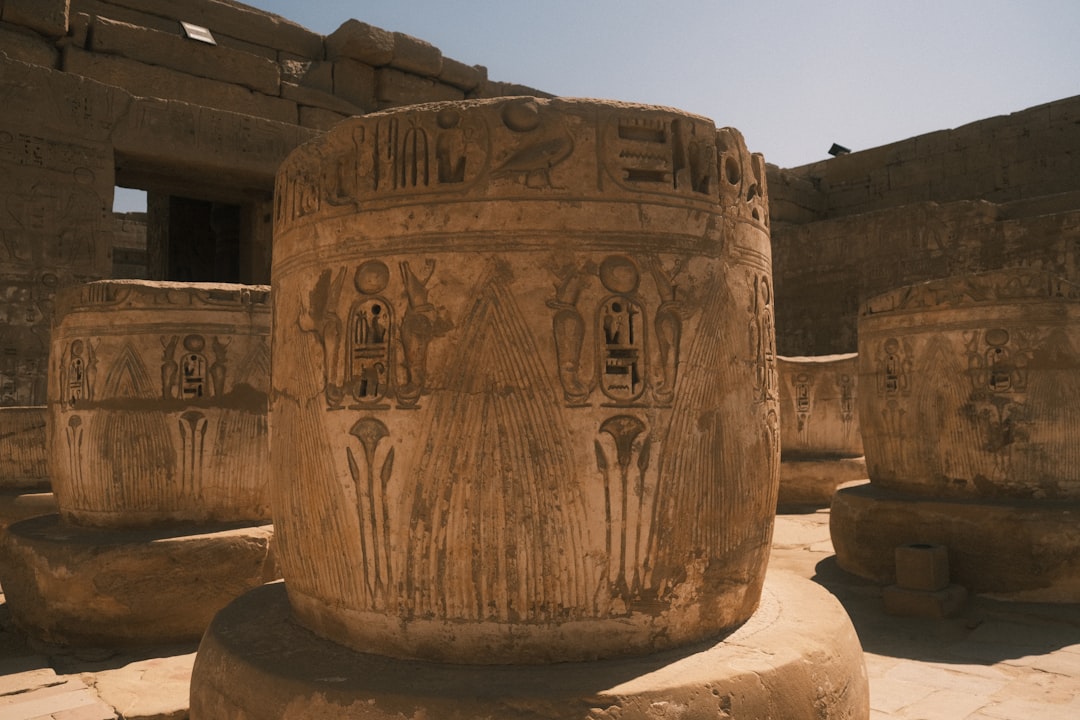
I think we’ve all had that moment where we realize the most famous landmarks are just the tip of the iceberg, and honestly, the real magic often hides in the places most travelers completely overlook. If you’re really looking to understand the mechanics of how this civilization functioned beyond the postcard shots, you need to step away from the Giza crowds and explore sites like the Serapeum of Saqqara. It’s wild to stand there and realize you’re looking at seventy-ton granite sarcophagi that were maneuvered into subterranean galleries with such mathematical precision that they’ve barely shifted after thousands of years. Or consider the ruins of Tanis in the Delta, where the sheer audacity of finding silver coffins—an incredibly rare material for the time—completely flips our understanding of the wealth possessed by pharaohs during the Third Intermediate Period.
When I think about the evolution of engineering, I always tell people to check out the Meidum Pyramid, which is essentially an architectural crime scene that tells a fascinating story of trial and error. You can clearly see where the outer casing collapsed, exposing the original stepped core and showing exactly how they fumbled their way toward the perfect pyramid design. Then there’s the site of Tell el-Amarna, which feels like a total fever dream; it’s this sprawling, asymmetrical capital built in a massive rush during Akhenaten’s radical reign, giving you a look at a city that defied every convention of the era. It’s these kinds of sites that show you the human side of history, rather than just the polished, god-like narratives we usually get fed.
If you’re really into the day-to-day grit of ancient life, head straight to Deir el-Medina, which was essentially a company town for the workers who built the royal tombs. You can literally read their old complaints about labor disputes and struggles, which makes the whole civilization feel a lot more grounded and relatable. I’d also argue that you haven't really seen the scope of their ambition until you visit the quarries at Gebel el-Silsila, where the deep, raw chisel marks left in the stone look like they were carved yesterday. It’s a bit of a trek, but standing in those silent, hollowed-out canyons puts the scale of monuments like Karnak into a completely different perspective.
Finally, don’t ignore the smaller, more specialized sites like the Temple of Dendera, where the astronomical ceiling maps out the cosmos with a level of sophistication that really makes you pause and appreciate how they viewed their place in the universe. Whether it’s the Hellenistic fusion found in the tomb of Petosiris or the strenuous, rewarding climb up to the hermitage of Saint Anthony, these hidden gems offer a much more intimate, unfiltered connection to the past. It’s not just about ticking boxes on a map; it’s about piecing together the messy, brilliant, and incredibly complex reality of a culture that didn't just build monuments, but lived through them. If you’re willing to put in the effort to reach these spots, you’ll find the entire story of Egypt opens up in ways you never expected.
Cultural Etiquette and Local Customs for a Respectful Egyptian Odyssey
When you’re navigating the bustling streets or serene temple grounds of Egypt, the most rewarding experiences often come down to the small, silent signals of respect you send out to the people you meet. Think about it this way: your body language communicates just as much as your words, so start by being mindful of your hands, as the right hand is traditionally the only one used for eating, greeting, or handing over cash. I’ve found that keeping your left hand tucked away during these moments is a simple but powerful way to show you’re paying attention to local norms. And please, just watch where your feet are pointing when you’re relaxing in a cafe or waiting for a guide; keeping those soles away from others isn’t just good manners, it’s a standard sign of respect you’ll want to keep in mind throughout your trip.
Hospitality is a massive part of the social fabric here, so if someone offers you a tea or coffee, try to accept it as a gesture of kindness rather than seeing it as an inconvenience. If you find yourself dining in a local home, leaving just a tiny bit of food on your plate is actually a polite way to signal that you’ve been well-fed and that your host provided more than enough. It’s a subtle shift in mindset, but it changes the entire dynamic of the meal from a simple transaction to a genuine connection. If you’re traveling during Ramadan, the best way to be a good guest is to avoid eating or drinking in plain sight during daylight hours, as this shows a lot of consideration for those who are fasting.
When you’re out exploring, keep in mind that baksheesh isn't just a tip; it’s an expected part of the daily flow, and you’ll find that giving small, frequent amounts for minor services works much better than one big payout. I always suggest keeping a stash of small notes handy for this exact reason. If you’re snapping photos, take a second to ask permission before turning your lens on someone, because privacy is held in high regard here and people generally appreciate being asked first. It’s also worth remembering that public displays of affection should be kept low-key to stay in line with the local, more conservative social standards.
Finally, when you’re planning to head into a mosque, just remember the basics: dress to cover your shoulders and knees, and women should have a scarf ready to cover their hair. It’s standard practice to slip your shoes off at the entrance, so if you’re like me and value efficiency, wearing slip-on footwear makes these transitions effortless. If you find yourself haggling in a market, approach it like a fun conversation rather than a battle, and you’ll almost always walk away with a better deal and a much friendlier rapport. Being a respectful traveler in Egypt isn't about being perfect; it’s just about being observant and meeting the local culture halfway.
Expert Tips for Booking Guided Tours and Avoiding Common Tourist Traps
Let's pause for a moment and reflect on how you're planning your time in Egypt, because the difference between a life-changing experience and a series of frustrating setbacks often boils down to how you vet your guides. I always recommend that you start by confirming any private operator is registered with the Ministry of Tourism and Antiquities, as you can easily cross-reference their license number against the official government database to ensure they're legitimate. It’s worth noting that street-level vendors often lack insurance, and since most standard travel policies won’t cover claims involving unlicensed providers, that "deal" you found on a whim could turn into a massive personal liability. Honestly, I’ve found that booking through platforms with escrow-style payment systems cuts your risk of "no-show" scams by about 40% compared to just handing over cash on the street.
When you're actually out there, please be wary of any guide who suddenly insists on a "quick stop" at a perfume or papyrus shop, as these are almost always commission-based detours that can eat up over half of your precious time at a historical site. If you're hiring an Egyptologist, always ask to see their government-issued ID card; these professionals have finished rigorous university-level training in archaeology, which means you’re actually getting history rather than a fabricated script. I’ve also noticed that high-end operators now use geofencing to track their vehicles in real-time, offering a layer of safety that independent, unvetted drivers simply can't provide. If you're worried about reliability, look for companies that use encrypted apps for your itinerary, as this effectively prevents local third parties from hijacking your schedule or forcing unwanted stops into your transit route.
Finally, keep your guard up against the classic "closed site" scam where a tout claims a monument is shut just to steer you toward a private gallery, because checking the official Ministry of Tourism website for real-time updates is the only way to avoid that manipulation. If you really want to optimize your day, aim for an early start between 7:00 AM and 9:00 AM, which lets you finish your tour before the midday heat hits and makes the whole experience feel significantly more manageable. You should also be aware that solo travelers who stick with one dedicated, vetted driver-guide throughout their trip tend to face about 70% fewer incidents of street harassment than those who rely on a mix of random local transport. And look, if someone promises you "exclusive access" to restricted areas of a tomb, double-check that with the site management first, because unauthorized entry is a serious offense that can lead to immediate trouble with local authorities. When in doubt, always use a credit card with strong consumer protections for those multi-day bookings; it’s your best safety net if the service doesn't match the contract.
Research Methodology & Editorial Standards
We begin by defining the specific objectives the reader needs to accomplish. Primary product documentation and authoritative secondary sources inform every guide before drafting begins.
Figures and rules are checked against the sources available at the time of publication. Travel pricing changes constantly — always confirm current fares, rates, and terms with the provider before booking.