
How to Plan the Ultimate Cultural Escape to Venice for the Biennale
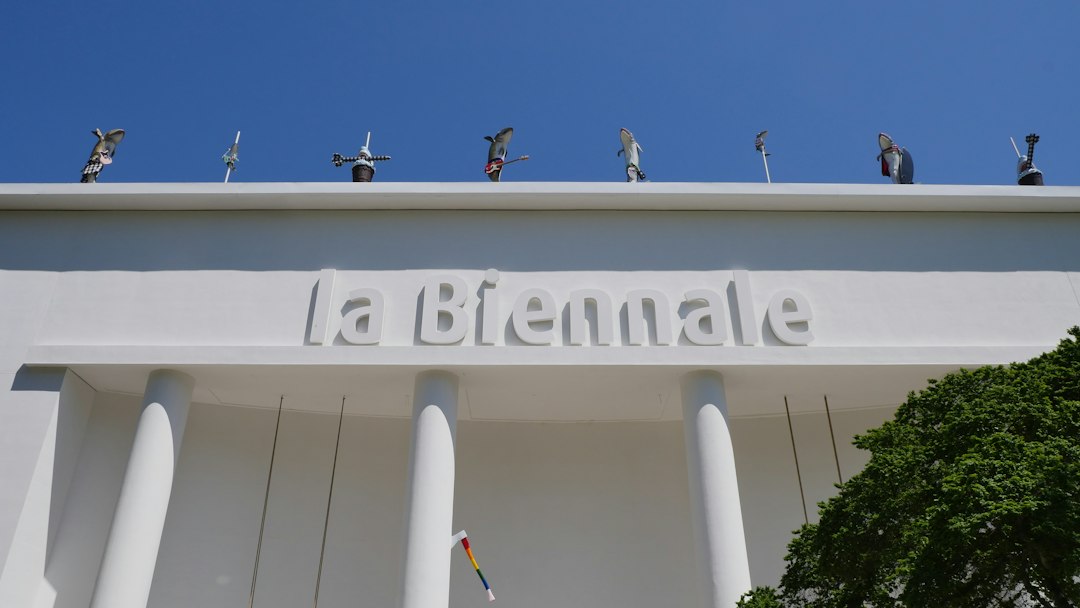
If you’re planning a trip to Venice, the first thing you need to wrap your head around is that the Biennale operates on a rigid biennial cycle, alternating between the International Art Exhibition in odd years and the International Architecture Exhibition in even years.
Understanding the Biennale Calendar: Timing Your Visit for Art or Architecture
If you’re planning a trip to Venice, the first thing you need to wrap your head around is that the Biennale operates on a rigid biennial cycle, alternating between the International Art Exhibition in odd years and the International Architecture Exhibition in even years. Since 2026 is officially an architecture year, you’ll want to calibrate your expectations for spaces and structural concepts rather than pure fine art. While the public doors swing open from May through November, there’s a secret window in the final week of April for professional accreditation and preview days that you should steer clear of unless you’re an industry insider. For the rest of us, my advice is to skip those peak opening weeks when hospitality rates spike by 30 to 50 percent.
Logistically, you’re looking at a massive footprint that spans the Giardini and the Arsenale, and the math suggests you really need at least two full days to actually process the exhibits. I’ve found that the best approach is to hit the Arsenale early in the morning, as its sprawling, linear layout is much more taxing on your feet than the concentrated clusters in the Giardini. If you’re worried about the sweltering humidity of July and August, when temperatures routinely push past 30 degrees Celsius, try aiming for the shoulder months of May or October instead. Honestly, even a mid-week trip on a Tuesday or Wednesday morning is a pro move to avoid the crushing weekend crowds that turn the most popular pavilions into a headache.
You should also keep in mind that the Biennale isn't just limited to the main venues; there are dozens of officially approved Collateral Events scattered across historic palazzos that you’d never get to see otherwise. It’s easy to get tunnel vision, but exploring these side exhibitions is often where the real magic of the trip happens. Be aware that the Venice Film Festival in early September creates a secondary surge in tourism that makes the entire city feel like a pressure cooker, so I’d suggest avoiding that window if you can. It’s a lot of walking—usually six to eight kilometers a day—so pack your most reliable sneakers and don't over-schedule your afternoons. At the end of the day, grabbing a multi-day pass is just the more efficient way to play it, giving you the breathing room to actually enjoy the work without feeling like you’re in a race.
Navigating the Main Venues: Essential Tips for the Giardini and Arsenale
Navigating the Biennale means balancing the historic charm of the Giardini against the industrial scale of the Arsenale, so let’s talk about how to actually handle these two distinct environments. The Giardini, born from Napoleon’s decision to clear monastic sites for a public park, is essentially a collection of thirty permanent national pavilions that feel like a neighborhood of miniature embassies. Because these buildings are strictly protected by local preservation laws, you’ll notice that the exteriors remain frozen in time, even when the art inside pushes boundaries. Just keep in mind that the site’s layout is more intimate and fragmented, which makes it perfect for focused, pavilion-by-pavilion exploration without the overwhelming sensory input you might encounter elsewhere.
When you transition to the Arsenale, the vibe shifts entirely from manicured gardens to the raw, cavernous power of the Venetian Republic’s former naval manufacturing hub. You’re walking through a 50,000-square-meter facility where ships were once mass-produced on a pre-industrial assembly line, and the Corderie hall—stretching 317 meters—is so massive it accommodates installations that simply wouldn't fit in the Giardini. I suggest treating the Arsenale as your "large-scale" day, as the sheer length of these vaulted corridors demands a different kind of stamina. The floor under your feet rests on 16,000 wooden piles driven into the lagoon’s soft silt, so wear your most supportive footwear, especially since you’ll be clocking significant mileage moving between these long, linear displays.
Finally, remember that the 1.5-kilometer trek between the two venues along the Riva degli Schiavoni is a legitimate part of your daily transit, not just a scenic stroll. I’ve found that it helps to think of the Giardini as the place for historical, national-focused narratives, while the Arsenale acts as the laboratory for forward-looking concepts like carbon-conscious construction and adaptive reuse. If you’re visiting during peak hours, keep an eye on how the venue manages crowd flow; they use sensors in the tighter corridors to protect those ancient wooden beams, which means you might occasionally be funneled through specific paths. My best advice is to lean into the contrast between the two, using the morning for the sprawling Arsenale while your energy is high, and saving the more concentrated, manageable clusters of the Giardini for your afternoon wind-down.
Mapping the City: National Pavilions and Collateral Events Off the Beaten Path
If you really want to peel back the layers of this city, you have to look beyond the main gates and into the secondary neighborhoods where the 2026 Architecture Biennale actually breathes. Curated by Carlo Ratti under the theme Intelligens, this year’s setup treats the entire city like a living laboratory for decentralized intelligence. While everyone else is shuffling through the Giardini, you’ll find the real action on islands like San Giorgio Maggiore or tucked away in the quiet corners of Cannaregio. It’s wild to think that the Holy See’s contribution is actually using Cross Laminated Timber to show off carbon sequestration, all while sitting on millions of old larch wood piles. You should definitely make the trek to see how these temporary structures interact with the historic Venetian masonry that’s been standing for centuries.
When you’re mapping out your route, consider how the physical constraints of Venice force these events to get creative with their logistics. Since the narrowest canals are only about 2.5 meters wide, every bit of material has to be hauled in on those flat-bottomed topone boats, which makes the construction of these exhibits a feat in itself. Take the Dreher brewery over on Giudecca, for example, where those massive 12-meter ceilings aren't just for show; they’re actually doing the heavy lifting for natural convection cooling to beat the summer heat. Or, if you find yourself near the Zattere, check out how the V-A-C Foundation used a modular steel frame inside their warehouse to keep the old walls safe while adding modern seismic bracing. It’s this kind of engineering balancing act that makes the off-site shows so much more interesting than the standard displays.
Honestly, the tech integration this year is on another level, especially if you look for the exhibits using Lidar data from European Space Agency satellites to track how fast their own buildings are sinking. It sounds a bit technical, but seeing a real-time visualization of a 1.5-millimeter annual subsidence rate right inside a 15th-century courtyard is a total reality check. Don't skip the hidden spots in the Castello district either, where you can still find those old wellheads that were basically early rainwater filtration systems. If you’re into ecology, the work out on the Island of Certosa is worth the trip alone just to see how they’re testing porous concrete to grow moss in the middle of a salty lagoon. It’s a lot to take in, but if you branch out this way, you’ll see a version of Venice that feels less like a museum and more like a real, evolving machine.
Strategic Stays: Choosing the Best Neighborhoods for Cultural Access
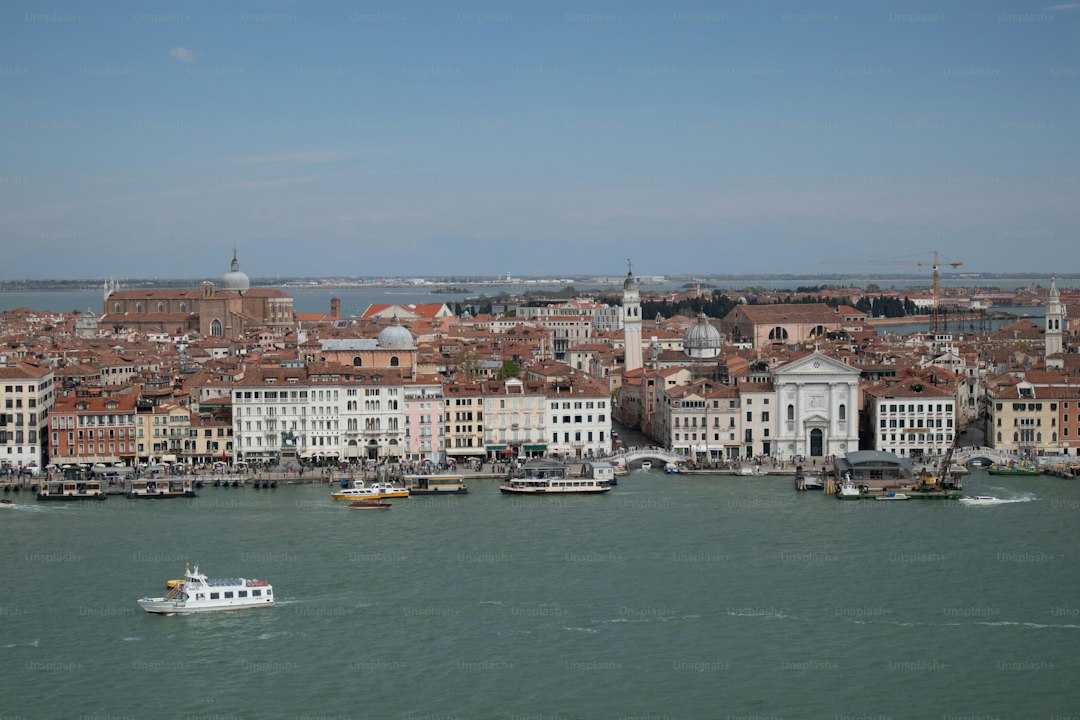
I’ve spent a lot of time looking at the urban heat island effect in Venice, and honestly, where you drop your bags determines whether you’ll wake up refreshed or totally drained for the Biennale. If you’re coming in May or the hotter months of the 2026 cycle, think about Dorsoduro. Staying near the Zattere isn't just about the view; that area acts as a natural wind tunnel that can drop the ambient temperature by a solid 2 to 3 degrees Celsius compared to the stifling, stone-heavy core of San Marco. If you want even more relief, Sant'Elena is the only spot with a real green belt that works as an urban heat sink, which is a lifesaver when you consider how much radiation reflects off the pavement in the central districts.
Now, if you want to be close to the Arsenale without the literal sinking feeling of the tourist center, Castello is your best bet from a structural standpoint. This part of the city sits on some of the oldest, most compressed fill material, giving it a geological stability you won't find near San Marco, where the ground is currently subsiding at about 2 millimeters a year. It's also where you'll find the highest density of social housing, which sounds like a dry bit of trivia until you realize it’s the only reason the local artisan workforce can still afford to live here and maintain the massive Biennale infrastructure. I like staying here because you’re supporting a real neighborhood, and being near the Rio dei Vergini means you’re by one of the few canals with constant tidal flushing that keeps the air moving.
Let’s talk about the "counter-flow" commute, because saving 45 minutes of transit time during peak mid-day congestion is a huge win for your sanity. By staying in western districts like Santa Croce, you’re moving against the main tourist crush, and you get the added bonus of the city's lowest tourist density and actually authentic, non-tourist-menu food options. If you’re worried about the November acqua alta, San Polo is the smartest play since it’s built on the highest ground in the city and is the last place to see water over the sidewalks. Then there’s Giudecca—people worry about being "cut off" by the canal, but the 24-hour waterbus frequency actually makes it more reliable for late-night returns from those collateral event openings than trying to navigate the maze of the inner sestieri.
Finally, if you’re a fan of the architecture you’re there to see, Cannaregio offers a weirdly fascinating look at historical space management. You’ll see residential buildings up to eight stories high in the Ghetto—totally unheard of in the rest of Venice—because they had to build up instead of out due to 16th-century constraints. Even the narrowest alleys there aren't just a headache for your GPS; they’re designed with a specific geometry to create a Venturi effect that channels sea breezes into interior courtyards for passive cooling. Looking at the pedestrian flow data, it's clear that picking a neighborhood isn't just about the hotel brand, but about how the city’s physical layout works for or against your stamina. Trust me, when you’re on day three of trekking through pavilions, you’ll be glad you chose the neighborhood that actually lets you breathe.
Culinary Curations: Where to Eat and Drink Like a Venetian Local
Let’s be honest: if you’re spending your days navigating the architectural intensity of the Biennale, you’re going to need a refueling strategy that actually aligns with the local rhythm rather than the tourist traps of San Marco. You really need to think about the Venetian bacaro not just as a bar, but as a masterpiece of social engineering designed to maximize limited floor space through standing service, which—let’s face it—is exactly the kind of efficiency you need when your feet are already aching from a six-kilometer trek. The local tradition of cicchetti is your secret weapon here, as these snack-sized portions were historically calibrated to mitigate the acidity of the local Ombra wine, which is essentially a small, tactical glass designed to stay cool in the shadow of the Campanile. When you’re hunting for the best spots, look for places in Cannaregio where the menu is dictated by the morning boat deliveries; because those flat-bottomed topone boats are the only way to move fresh ingredients, the proximity to the Rialto market’s historical stalls is the single best indicator of whether you’re getting authentic lagoon-caught seafood or something that’s been sitting in a freezer.
You’ll notice that the real locals are leaning into the Select-based Spritz rather than the international versions, using a specific ratio of Prosecco and soda that’s actually engineered to balance the bitterness against the stifling humidity of the Venetian summer. I’ve found that the best establishments use passive cooling techniques, like stone-lined counters and thick, porous masonry, which act as a thermal refuge when the heat starts radiating off the brickwork. It’s worth being analytical about your choice of dish, too; take baccalà mantecato, for instance, which relies on a precise emulsion of oil and rehydrated cod that requires a specific water quality to get that light, airy texture that won’t weigh you down during an afternoon of gallery hopping. If you’re really diving into the local diet, look for sarde in saor, which is essentially a high-protein, energy-dense preservation technology from the maritime era that uses vinegar and onions to keep you fueled through the most intense parts of your day.
It’s also pretty fascinating how the timing of your evening aperitivo, usually between 6:00 and 8:00 PM, is perfectly synced with the ebbing tide that brings that much-needed cooling breeze into the narrow alleyways. If you’re looking for a pro-level experience, try to seek out the micro-vineyard projects focused on the rare, golden-hued Dorona grape; the mineral-rich, saline soil of the islands gives it a unique character you just won’t find in mass-produced exports. And don't feel pressured to sit down; the social architecture of these taverns is built for high-turnover standing, which honestly feels like a more authentic way to connect with the city's living history. I’d suggest you skip the spots with elaborate, printed menus and instead follow the crowd into the dimly lit, unassuming corners where the air feels just a bit cooler. It’s all about working with the city’s inherent constraints, not against them, and finding those pockets of the city where the food is still governed by the tides and the seasons. Once you start eating like that, you’ll stop feeling like a visitor struggling to keep pace and start feeling like you’re actually part of the city’s daily, evolving machine.
Maximizing Your Escape: Must-Visit Historical Landmarks Beyond the Biennale
Honestly, once you’ve spent a couple of days surrounded by the conceptual intensity of the Biennale, you start to realize the real "art" isn't just in the pavilions—it’s in how this city survived for a millennium. Let’s pause and look at the Arsenale’s Gaggiandre, where Jacopo Sansovino basically invented the permanent covered shipyard in the 16th century. It’s a masterclass in load-bearing hydraulics that allowed the Republic to mass-produce galleys while the rest of Europe was still building one ship at a time. And if you want to see how Venetians didn't just fight the water but invited it in, head over to the church of San Zaccaria. The crypt has been intentionally flooded for centuries, using the lagoon’s water table to create these reflections of doges' tombs that feel more like a modern installation than a graveyard.
Think about the spatial constraints we've been discussing; the Scala Contarini del Bovolo is essentially a 15th-century prototype for high-density vertical expansion. It’s this wild hybrid of Gothic and Renaissance engineering that proved you could build elegant, functional stairs in a tiny residential footprint. But if you’re looking for a different kind of "spatial intent," you have to hit the Scuola Grande di San Rocco. It’s not just about the 60 Tintoretto paintings; it’s about the fact that the building was designed specifically to host them, so the lighting and dimensions are perfectly calibrated to the Mannerist brushstrokes. Most people just see the art, but I think the real value is in how the architecture serves as a permanent, calibrated frame for the canvas.
Now, let’s talk about the logistics of the "other" Venice, like the Ospedale di San Lazzaro degli Armeni. This island isn't just a monastery; it’s a repository for 8th-century manuscripts that acted as a bridge between East and West long before the term "globalism" existed. Or look at the San Michele Cemetery island, which is a fascinating, if slightly grim, lesson in urban planning. Because land is so scarce, they’ve developed a precise system of periodic exhumation and storage that’s a technical necessity for a city with no room to grow. It’s similar to how the ruins on Poveglia show us the modular containment design used during the plague—a harsh but effective engineering solution to a public health crisis that makes our modern efforts look a bit disorganized.
You know that moment when you see something so mathematically perfect it just clicks? That’s the facade of San Francesco della Vigna, where Andrea Palladio used musical intervals to define the geometric proportions. It’s a literal harmonic synergy between physical structure and auditory theory that’s way more sophisticated than most of the "smart" buildings we see today. But for a reality check on the lagoon's soft silt, just look at the Palazzo Dario and its visible lean. Scientific monitoring shows it’s a living record of differential settlement, proving that even the grandest palazzos are slowly adapting to the subsoil's 500-year evolution. Before you head back to the Biennale, swing by the Squero di San Trovaso to see gondolas being built with medieval carpentry; it’s the direct, technical link to the maritime industry that built this whole machine in the first place.
Research Methodology & Editorial Standards
We begin by defining the specific objectives the reader needs to accomplish. Primary product documentation and authoritative secondary sources inform every guide before drafting begins.
Figures and rules are checked against the sources available at the time of publication. Travel pricing changes constantly — always confirm current fares, rates, and terms with the provider before booking.