
How Ebola Outbreaks Impact Your International Travel Plans
When we start looking at how Ebola outbreaks shift the ground beneath our travel plans, it is easy to feel like the rules are changing by the hour.
Understanding Current Ebola Travel Restrictions and Entry Bans
When we start looking at how Ebola outbreaks shift the ground beneath our travel plans, it is easy to feel like the rules are changing by the hour. I think it is helpful to first acknowledge that these government-mandated restrictions often arrive with a lot of noise, and it can be incredibly difficult to separate the actual public health necessity from the political optics at play. When you see a new entry ban pop up, remember that these measures are rarely static; they tend to expand in scope, sometimes even pulling in permanent residents and green card holders who might have otherwise assumed their status offered a stable path home. It is honestly a bit of a scramble for anyone caught in the middle of these policy shifts, and the lack of clear exit criteria for these bans often means they stay on the books far longer than you’d expect.
But here is where things get messy and, frankly, a little counterproductive. When countries slam their borders shut, we often see a sharp decline in the flow of essential medical supplies and international aid workers who are trying to get into the heart of the crisis. From what I have observed, these total closures can actually make the situation worse by forcing travelers to take indirect, undocumented routes to bypass checkpoints, which makes it nearly impossible for health officials to keep track of potential exposures. It is a classic case of a policy meant to provide security creating a massive blind spot for the very people trying to manage the outbreak. Plus, these bans often prioritize national origin over actual epidemiological risk, which might look good on paper but doesn't necessarily stop the virus from moving.
If you are currently looking at your own travel schedule, the best thing you can do is look past the headlines and understand that the most effective response is usually robust screening rather than a total wall. We have seen time and again that when borders are heavily restricted, commercial flights vanish, and the affected regions end up isolated from the global economy exactly when they need to be connected the most. It creates a domino effect where travelers, fearing they will be caught in a mandatory quarantine or denied entry regardless of their actual health, might delay seeking care or try to hide their travel history entirely. It is a tough reality, but being aware of how these policies influence human behavior is exactly how you stay informed when you’re navigating an uncertain trip.
How Health Screening Procedures Impact Your International Arrival
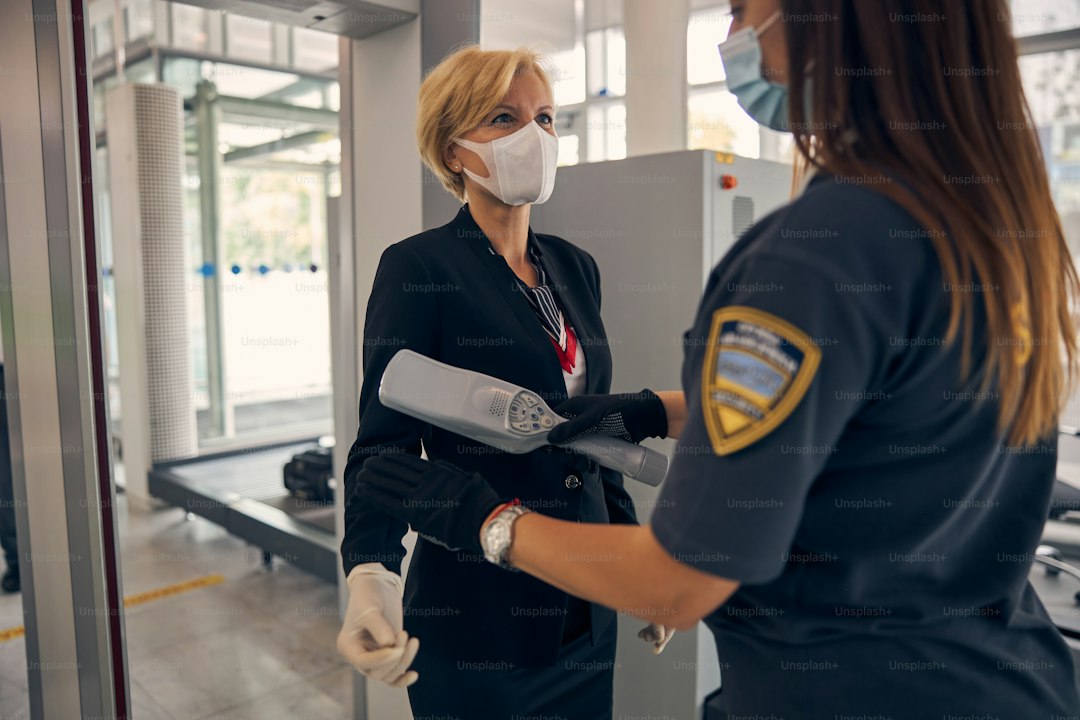
When you’re standing in that long, winding line after a ten-hour flight, the last thing you want is a surprise medical screening, but here’s what you need to understand about why these protocols exist and how they’re actually shaping your journey. It’s easy to look at thermal cameras or health declaration forms as simple safety measures, but they’re actually part of a much more complex, and often imperfect, global response to outbreaks like Ebola. Honestly, the reality is that these screenings are frequently more about managing perception than catching every single case. Because Ebola has such a long incubation period—up to 21 days—you could easily pass a temperature check while carrying the virus, which makes the whole process feel like a bit of a performance. It's frustrating, I know, but realizing that these systems have these massive blind spots is the first step to staying realistic about your own travel safety.
Think about it this way: when airports funnel everyone into a single, crowded screening area, they’re effectively creating a bottleneck where people are packed into tight, poorly ventilated spaces for hours. It’s almost ironic, right? You’re there because they’re trying to prevent the spread of a virus, yet the environment itself might be increasing your exposure to other things. Plus, there’s the issue of human nature. If you’re a traveler who’s terrified of being stuck in an involuntary quarantine, you might be tempted to downplay your symptoms or skip over a detail on a health form. When policies rely entirely on self-reporting or reactive thermal scans, they often miss the mark, especially since common travel ailments like dehydration or fatigue can easily mimic the early signs of an infection, leading to a mess of false alarms.
And we really need to talk about the data gap, because it’s a huge problem that rarely gets mentioned in the brochures. Right now, there isn't a seamless, global way to share health status between the country you’re leaving and the one you’re entering, so you’re essentially starting the screening process from scratch every time you touch down. Governments are starting to move toward digitized health declarations, which you’ll see popping up more frequently throughout 2026, but even those are only as good as the systems backing them up. If the local authorities don't have the resources to actually follow up on your contact information, the whole digital paper trail is just that—paper. My advice? Don't bank on these screenings to keep you safe. Instead, keep a close eye on the actual epidemiological situation in your destination and be prepared for your plans to shift, regardless of what the airport checkpoint says.
Evaluating Risk: Should You Be Worried When Traveling Near Outbreak Zones?
When you’re staring at a map with a red "outbreak zone" circle over your destination, it’s only natural to feel a spike of anxiety, but let’s pause and look at the actual mechanics of risk before you cancel those tickets. Honestly, the most important thing to wrap your head around is that Ebola isn't a casual traveler’s threat; it’s transmitted through direct contact with infected bodily fluids, not through the air, water, or the food you’re served at 30,000 feet. I think we often forget that the biggest danger to most travelers isn't the virus itself, but the sheer chaos that international border policies and medical screenings can inject into a perfectly planned itinerary.
It’s easy to assume that if an outbreak is reported, the entire country is a no-go zone, but that’s rarely the reality on the ground. Research shows that pathogens like the Bundibugyo virus, which has surfaced in parts of the DRC and Uganda, are often contained within specific geographic clusters rather than sweeping across entire nations. Public health authorities are now using advanced genomic surveillance to pinpoint these pockets, which means you might be looking at a situation where a massive region is technically safe while a small, rural area requires caution. If you’re trying to weigh the danger, don't just look at the news headlines; look for updates from health agencies that focus on specific districts. It’s a bit like checking the weather—a storm might be hitting one side of the mountain while the other side remains sunny and open for business.
I also want you to be prepared for the fact that airport health screenings are often more of a logistical hurdle than a precise medical shield. Because Ebola has an incubation period of up to 21 days, a thermal scanner isn't going to catch someone who is infected but currently asymptomatic, which honestly makes the whole screening process feel like a bit of a performance. You’re much more likely to be held up because you’re dehydrated or suffering from simple travel fatigue, which can mimic early symptoms and trigger a series of frustrating, false-alarm evaluations. If you’re traveling near these areas, your best defense isn't just hoping the airport staff catches everything; it’s staying informed about the local environment and knowing that, statistically, you’re far more likely to deal with a common tropical illness than a viral hemorrhagic fever. Keep your plans flexible, stay away from high-risk medical settings if you’re in the area, and try to remember that being a smart, low-profile traveler is still your best form of protection.
Navigating Medical Evacuation Protocols for Americans Abroad

If you ever find yourself needing a medical evacuation while traveling abroad, I need you to understand that the reality is far more complicated than the simple phone number on the back of your insurance card. You might assume your standard travel insurance has your back, but most of these policies explicitly void coverage for anything related to an epidemic, leaving you staring down a private air ambulance bill that can easily top $100,000. It’s a bitter pill to swallow, but private charter is often your only exit route because commercial airlines are legally obligated to deny boarding to anyone showing even a hint of a communicable disease. And here is the thing that really keeps me up: the Department of State won't fly you home, either. Their role is strictly limited to helping you find local care, which leaves you entirely on your own to navigate a market that is fundamentally constrained by supply.
The bottleneck isn't just about money; it’s about a global shortage of specialized equipment. Very few aircraft are outfitted with Aeromedical Biological Containment Systems, and because flight crews often face a mandatory 21-day quarantine after moving a high-risk patient, the availability of these jets plummets exactly when an outbreak hits. Even if you have the funds, you still have to clear an administrative minefield before the wheels ever leave the ground. You need pre-approval from the receiving hospital’s infection control board, and even then, your flight plan can be grounded if an intermediate country refuses overflight clearance for fear of a pathogen crossing their airspace. It’s a fragile, high-stakes game of logistics where a single missing permit or a lack of specialized ramp access at a remote airport can turn an emergency into a multi-day standoff.
When you’re looking at these options, you have to be clinical about the risks because providers usually demand full payment or a verified bank guarantee before the engines even start. I’ve seen enough to know that if the U.S. State Department issues a Level 4 Do Not Travel advisory, your insurance protections might evaporate entirely, effectively leaving you uninsured at the exact moment you need support. It’s not meant to scare you, but you need to be aware that this isn't a situation you can simply buy your way out of on a whim. My best advice? Research specific medical evacuation memberships that don't have epidemic exclusions, and always, always keep a secondary emergency fund accessible. You’re essentially betting against a system that struggles to scale, and knowing these harsh realities upfront is the only way to protect yourself if the worst-case scenario actually plays out.
The Ripple Effect: How Outbreaks Influence Global Events and Large Gatherings
When we look at how a localized outbreak ripples outward, it is rarely just about the virus itself; it’s about how our hyper-connected global systems react, often with a level of volatility that leaves travelers and organizers scrambling. You have to realize that even a contained health emergency can trigger automated algorithmic trading shifts, which often devalue local currencies within hours, making your travel budget feel like it’s evaporating in real-time. Then there is the psychological side of it, where we see a massive fear-based drop in event attendance, sometimes slashing participation by 40 percent even when the venue is completely outside any danger zone. It’s honestly a ripple effect that turns a regional medical issue into a logistical nightmare for anyone trying to maintain a normal schedule.
But the tech side of this is where things get even more tangled. While we see the rise of digital health passports, these systems have inadvertently created a shadow economy where black-market forged credentials are sold on encrypted networks just to bypass border checkpoints. It’s a messy reality that forces airlines to constantly shift their flight paths to avoid perceived high-risk airspace, which ironically pushes up ticket prices for the rest of us while increasing carbon emissions on those longer, indirect routes. Even corporate travel policies have shifted toward extreme risk-aversion, as companies try to avoid the massive liability of having staff stranded under sudden, unpredictable quarantine orders.
And let’s be real about the cargo side of things, because it’s a bottleneck that doesn't get enough attention. When outbreaks hit, air cargo space gets prioritized for medical gear, which leaves everyday industrial components and electronics stranded in transit for weeks, further complicating global supply chains. We are also seeing big shifts in how international events are insured, with organizers now facing tiered premiums based on real-time epidemiological modeling that makes hosting anything global a much higher financial gamble. It’s a lot to take in, but I think the best way to handle it is to stop seeing these restrictions as static barriers and start seeing them as a fluid, reactive system that changes based on data rather than just headlines.
Essential Resources for Monitoring Real-Time Health Alerts and Travel Advisories

If you’re anything like me, you’ve probably realized that waiting for mainstream headlines to tell you it’s time to change your travel plans is already too late. I’ve found that the real key to staying ahead of the curve isn't just scrolling through social media, but tapping into the same high-level data sources that intelligence analysts use every single day. The Smart Traveler Enrollment Program remains the absolute gold standard for U.S. citizens because it delivers location-specific security updates directly from the embassies on the ground, bypassing the usual media spin. Beyond that, I always keep an eye on the World Health Organization’s Disease Outbreak News; it’s admittedly dry and highly technical, but it provides clinical data on transmission patterns weeks before those details ever make it to a travel blog.
But look, if you really want to see where things are headed, you need to look at how the experts track the virus itself. Genomic surveillance portals, like the Global Initiative on Sharing All Influenza Data, offer a granular look at how a virus is actually evolving, which often serves as a silent early warning system for regional outbreaks. Many modern monitoring systems are also moving toward edge computing to process patient vitals in real-time, which slashes the time it takes for an alert to hit the system. It sounds like a lot, but I honestly find that comparing these technical feeds against the CDC’s Health Alert Network gives you the best diagnostic picture of what’s actually happening versus what’s just being reported.
And don't overlook the logistics side of things, because that’s usually where your trip actually hits a wall. The IATA’s Timatic system is my go-to for verifying entry requirements, as it pulls directly from immigration databases rather than relying on the often-outdated hearsay you’ll find on airline websites. I’ve also started watching global flight tracking services, because when you see commercial paths suddenly shift away from specific regions, it’s usually a much more accurate indicator of a looming border closure than any official statement. It feels a bit like being an amateur detective, but building your own, localized intelligence stack is the only way to keep your plans from falling apart when the environment shifts. Just remember that no amount of data beats having a solid backup plan, so stay flexible and keep your eyes on the specific districts, not just the country-wide warnings.
Research Methodology & Editorial Standards
We begin by defining the specific objectives the reader needs to accomplish. Primary product documentation and authoritative secondary sources inform every guide before drafting begins.
Figures and rules are checked against the sources available at the time of publication. Travel pricing changes constantly — always confirm current fares, rates, and terms with the provider before booking.