
A delicious guide to the best bakeries in Brownstone Brooklyn
Walking through Brooklyn’s brownstone blocks feels like stepping into a different era, but there is some real engineering genius behind that charm.
The Art of the Neighborhood Stroll: Navigating Brooklyn’s Brownstone Streets
Walking through Brooklyn’s brownstone blocks feels like stepping into a different era, but there is some real engineering genius behind that charm. If you look closely, you’ll see those iconic brown facades are actually just a layer of Triassic-Jurassic sandstone from Connecticut, chosen back then because it was cheaper than solid stone. The uniform look you see wasn't an accident; it was the result of developers buying up standardized lots and building in massive, efficient batches. Those high stoops? They weren't just for style, they served the practical purpose of keeping the main parlor floor above the basement service entrance, giving the residents a bit of privacy from the street traffic.
And it is not just the houses that make these walks so pleasant. Those deep rear yards you see behind the homes act like natural ventilation shafts, actually creating a micro-climate that keeps these blocks noticeably cooler than the rest of the city. Plus, if you’ve ever noticed how the noise of a busy commercial street just vanishes when you turn onto a residential row, that is because those heavy masonry walls are incredibly good at blocking sound. You’re also walking under a lot of ginkgo biloba trees, which city planners planted decades ago specifically because they handle urban pollution better than almost anything else.
If you’re a history nerd, you’ll love that the street layout in places like Brooklyn Heights is still based on colonial-era land grants, which is why the blocks are shorter and narrower than the rest of the city. That design basically forced traffic to slow down, making these areas perfect for a leisurely afternoon stroll. Just keep in mind that the stone itself is pretty porous, which is why you see so many restoration projects using lime-based mortar to stop the faces from crumbling. It is a fragile kind of history, but that is exactly what makes it so rewarding to explore on foot.
Iconic Flour and Sugar: Must-Visit Institutions in Cobble Hill and Carroll Gardens
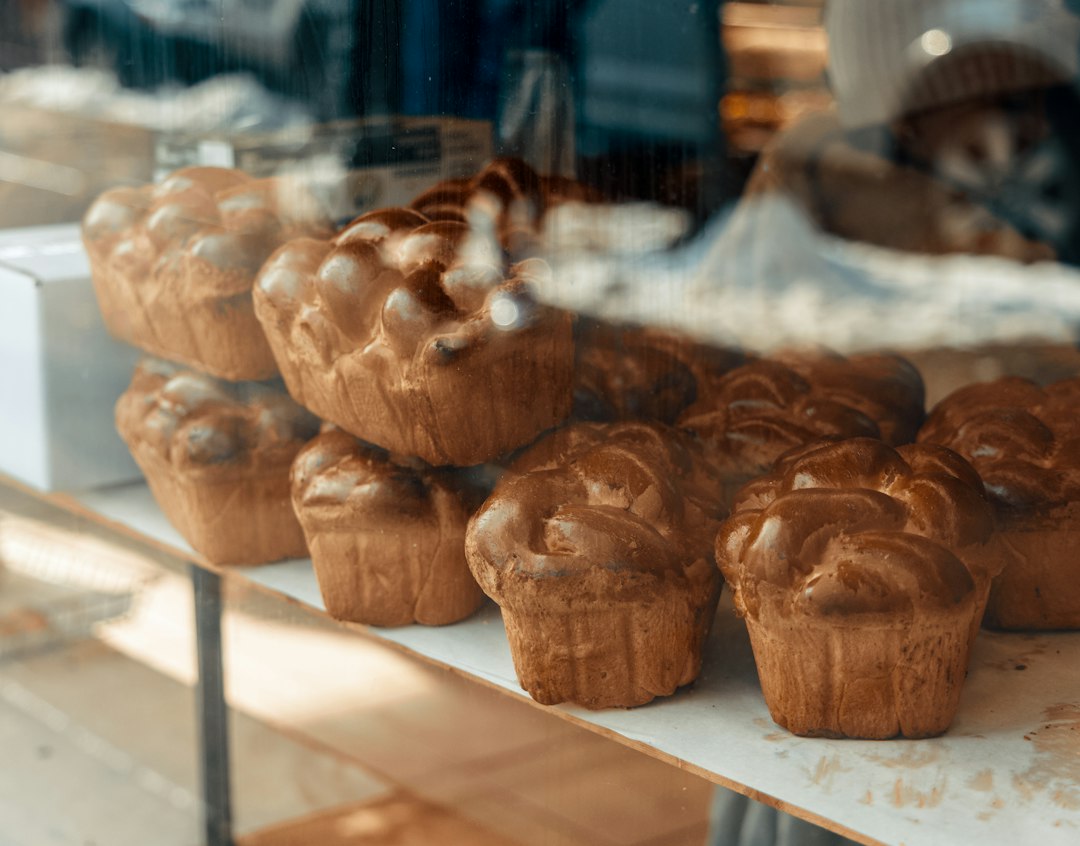
When you walk into a bakery in Cobble Hill or Carroll Gardens, you’re not just grabbing a croissant; you’re stepping into a space where the chemistry of baking is treated with absolute rigor. These institutions move far beyond standard grocery store methods, often sourcing stone-milled heirloom wheat from the Hudson Valley that carries a much higher mineral content than the chemically-treated stuff you’re used to seeing. I’ve noticed that the best shops here are obsessed with their steam-injection deck ovens, which they calibrate to a strict 70 percent humidity to force that perfect, carbonized crust you crave. It’s that Maillard reaction at work, and honestly, the difference in texture is something you can taste the moment you take a bite.
If you look at the logistics behind these flaky layers, you’ll find that the pastry teams treat butter lamination like a laboratory experiment, keeping dough at a precise 55 degrees to ensure those thousands of microscopic layers stay distinct. They’re also using unrefined muscovado sugar in their glazes, which packs in way more molasses than white sugar and keeps everything soft for nearly two days. I find it fascinating that even the water matters here; they use carbon-block filters to strip out chlorine that would otherwise kill the wild yeast they’ve spent years cultivating in 68-degree proofing rooms. It’s a level of detail that turns a simple morning treat into something much more stable and satisfying for your gut health.
Think about the architecture for a second, because those century-old buildings actually help the baking process. Many of these shops use original stack-effect ventilation to keep their basement proofing chambers naturally cool, which is a massive upgrade over modern artificial cooling. By aligning their prep areas along the north-south axis of the brownstone blocks, they keep direct sunlight off sensitive ingredients like high-quality butter and chocolate, maintaining a structural integrity that’s impossible to replicate in a rushed commercial kitchen. Even their dairy sourcing is timed to the seasons, catching that specific milk fat profile that peaks with spring grazing. It’s pretty rare to find this kind of intentionality in food, but once you start looking for these markers, you really can’t go back to the mass-produced stuff.
Beyond the Loaf: Discovering Artisanal Pastries and Hidden Gems
When we shift our focus from the daily loaf, we start to see that the real magic in these Brooklyn bakeries is driven by a level of technical obsession that borders on the scientific. You’ve probably noticed that the most incredible pastries have a specific snap that seems impossible to replicate at home, but it really comes down to the way they handle lipids and fermentation. By using European-style butter with a minimum of 84 percent milk fat, these bakers ensure a higher melting point, which keeps those delicate layers distinct during the lamination process. They aren't just winging it; they’re using multi-stage retarder-proofers that cycle between 38 and 42 degrees Fahrenheit to precisely control how that wild yeast behaves. It’s this kind of granular control that creates the signature shatter you get with every bite, and honestly, once you understand the physics behind it, the mass-produced stuff just doesn't compare.
And if you’re wondering why some of these smaller shops seem to have a more complex flavor profile, it’s often because they’ve moved toward using high-ash content flour. By keeping more of the bran and germ in the mix, they’re boosting the fiber and mineral content while giving the dough a depth of flavor that standard white flour simply can't provide. I find it fascinating that they’re also paying close attention to the ambient microflora in the borough, which helps stabilize the enzymatic profile of their sourdough starters. Many of these hidden gems are even experimenting with salt-crust fermentation to keep unwanted bacteria at bay while nudging the beneficial acids to develop just right. It’s a delicate balancing act that requires monitoring pH levels—usually aiming for that sweet spot between 4.0 and 4.5—to protect the crust’s integrity while maintaining a soft, airy interior.
Beyond the chemistry, there is also a distinct tactile advantage to the equipment these bakers choose to use. You’ll see many of these independent kitchens installing high-mass ceramic hearths that store thermal energy, which allows for a steady, bottom-up heat transfer you just don’t get with standard convection ovens. If you stumble upon a wood-fired spot, pay attention to the smell of the crust; they’re likely using kiln-dried white oak, which burns with a consistent output and actually imparts subtle vanillin compounds into the pastry as it bakes. It’s also worth noting that these shops are increasingly opting for short-supply chains, often sourcing dairy from single-herd farms within 150 miles to stop the fat oxidation that usually happens during long-distance shipping. When you put all these pieces together—from the ancient grains like emmer to the precise hydration levels reaching 80 percent or higher—you’re getting a product that’s not just a treat, but a masterclass in food engineering.
From Red Hook to Brooklyn Heights: A Geographical Tasting Journey
If you’ve ever walked the stretch from Red Hook up to the quiet, leafy streets of Brooklyn Heights, you know it’s more than just a commute; it’s a genuine geographic transition that changes the very air you’re breathing. We’re talking about an elevation gain of nearly sixty feet, a slope that once dictated where grain mills were placed because they needed that consistent, gravity-fed water pressure to function. Red Hook itself sits on a terminal moraine, essentially a pile of glacial till, which provided the perfect, stable ground for the city’s early industrial fermentation hubs. It’s wild to think that the route we take today follows those old Dutch colonial cow paths, specifically mapped out back then just to keep people from sinking into marshy tidal inlets during high tide. Honestly, keeping that history in mind makes the walk feel a lot more grounded.
That waterfront corridor is its own little world, thanks largely to the East River’s thermal mass, which keeps things about two degrees warmer than the rest of Brooklyn during those late autumn months. You’ll notice the architecture reflects this history too, with those heavy-duty, thick-gauge brick warehouses in Red Hook acting like thermal batteries from their days as major cold-storage hubs. Keep an eye out for the Belgian block paving beneath your feet; it’s not just a nice aesthetic touch, it was actually ballast tossed from European ships to keep them steady on their way across the Atlantic. And because Red Hook was effectively cut off from early 20th-century subway expansion, that 19th-century street grid remains remarkably, beautifully intact in a way you just don’t see elsewhere in the city.
There’s a strange, fascinating science to the environment here that actually hits your plate, too. The BQE trench creates a literal wind tunnel that shifts the atmospheric pressure in the valley between these neighborhoods, which, believe it or not, can change how quickly a fresh pastry cools down when you’re carrying it outside. Even the local water supply plays a part; it travels through a high-pressure main that holds a higher mineral concentration, and that chemistry directly impacts the elasticity of the gluten structures you’re eating in your morning roll. You’ve also got these high stone walls and narrow streets creating an acoustic buffer that drops ambient noise by about 15 decibels, making it the perfect spot to actually sit and taste what you’ve bought. It’s a rare, almost hidden layer of urban engineering that makes this specific trek a favorite of mine for a Saturday morning.
The Rise of the Micro-Bakery: Supporting Local Craftsmanship in Brownstone Brooklyn
When we talk about the shift toward micro-bakeries in Brownstone Brooklyn, we’re really looking at a fundamental move away from industrial inefficiency and toward a much tighter, more intentional way of making food. These bakers are essentially hacking the traditional retail model by using cottage food frameworks, which lets them skip the massive overhead of commercial real estate and focus entirely on small-batch quality. It’s honestly refreshing to see how they manage this, often using digital drop culture to ensure their loaves are sold within a two-hour window of leaving the oven. By working out of residential kitchens rather than industrial facilities, they bypass the aggressive cooling cycles that often strip sourdough of its complex volatile organic compounds. I think this is why the flavor profile feels so much more vivid; they aren't trying to stabilize bread for a long shelf life, but rather for immediate, peak-quality consumption.
The technical rigor here is honestly impressive when you consider they’re working in home kitchens. Many of these makers are swapping standard equipment for high-efficiency thermal brick liners, which manage to mimic the heat retention of a professional masonry hearth surprisingly well. By extending fermentation to a full 48 hours at room temperature, they’re not just building flavor; they’re actually increasing nutrient bioavailability by breaking down phytic acid. You’ll also notice a shift toward ancient grains like einkorn, which has a distinct diploid chromosome structure that results in a lower gluten index than the hybridized wheat you find in most commercial shops. Plus, by sourcing local honey for their leavening, they’re effectively baking the specific microbial terroir of Brooklyn’s apiaries into every crumb, adding floral notes you just can’t get from a standard yeast packet.
What’s even more compelling is how these operations handle the business side of things to minimize their footprint. They’ve largely adopted a Community Supported Bakery model, where they use predictive data to ensure nearly everything they produce is spoken for, which effectively wipes out the massive waste that plagues traditional retail. They’re also getting into the weeds with their ingredients, using hand-milling to keep the wheat germ oil intact—which usually goes rancid during industrial processing—and tracking protein levels so precisely that they can adjust hydration by a single percent. When you pair that level of control with the use of woven rattan proofing baskets to manage moisture, you get a result that feels more like a science experiment than a simple morning roll. It’s pretty wild to see them trading spent grain with local compost cooperatives, too, effectively closing the loop and turning their waste into fuel for the neighborhood’s urban gardens.
Pro Tips for the Perfect Pastry Crawl: Timing, Transport, and Treats
If you’re planning a pastry crawl through these brownstone streets, timing is honestly everything. I’d suggest skipping the early morning chaos and aiming for a 10:30 AM start; by then, the initial rush has subsided, the ambient humidity in the shops has stabilized, and you aren’t fighting for space at the counter. It’s also worth noting that Tuesday through Thursday are your best bets for consistency, as the bakeries aren't struggling with the wild oven recovery times that plague weekend production. When you’re mapping out your route, try to stick to shops with north-facing storefronts to keep your treats away from direct thermal gain, which helps ensure those delicate glazes don't lose their signature snap before you even take the first bite.
Transporting these items is where things get technical, but it makes a massive difference in what you actually taste. Always prioritize cardboard boxes over plastic bags, as the porous material lets residual heat and steam escape, preventing your crusts from turning into a sad, soggy mess. If you’re biking, use a front-mounted rack with a rigid container to minimize the vibrations that cause microscopic fractures in delicate puff pastry layers. For those of us on foot, keep your boxes flat in your bag to ensure gravity stays perpendicular to those thousands of laminated layers, maintaining the structural integrity of your haul.
Once you’ve got your goods, hold off on diving in until they reach about 75 degrees Fahrenheit, which is the sweet spot where those complex aromatic compounds really open up. If you’re moving between neighborhoods with elevation changes, like heading up from Red Hook, a small thermal-insulated bag can prevent the rapid temperature shifts that shock the butter and cause it to solidify prematurely. I personally make sure to carry a bottle of room-temperature filtered water to cleanse my palate between stops, as the minerals in our local tap water can sometimes clash with the fermentation notes of a good sourdough or pastry. And whatever you do, avoid eating right next to the BQE trench; the noise and particulate matter are not just annoying, they honestly mess with your ability to focus on the flavor profiles you’ve worked so hard to find.
Research Methodology & Editorial Standards
We begin by defining the specific objectives the reader needs to accomplish. Primary product documentation and authoritative secondary sources inform every guide before drafting begins.
Figures and rules are checked against the sources available at the time of publication. Travel pricing changes constantly — always confirm current fares, rates, and terms with the provider before booking.