
Find your perfect scenic adventure on the trails surrounding Los Angeles
Look, if you’re hiking the coastal trails south of Mulholland, you’re getting a huge thermal break; those areas log temperatures 8 to 12 degrees Fahrenheit cooler than, say, the Cahuenga Peak side overlooking the hot San Fernando Valley, thanks entirely to that persistent marine layer influence.
The Iconic Views: Trails…
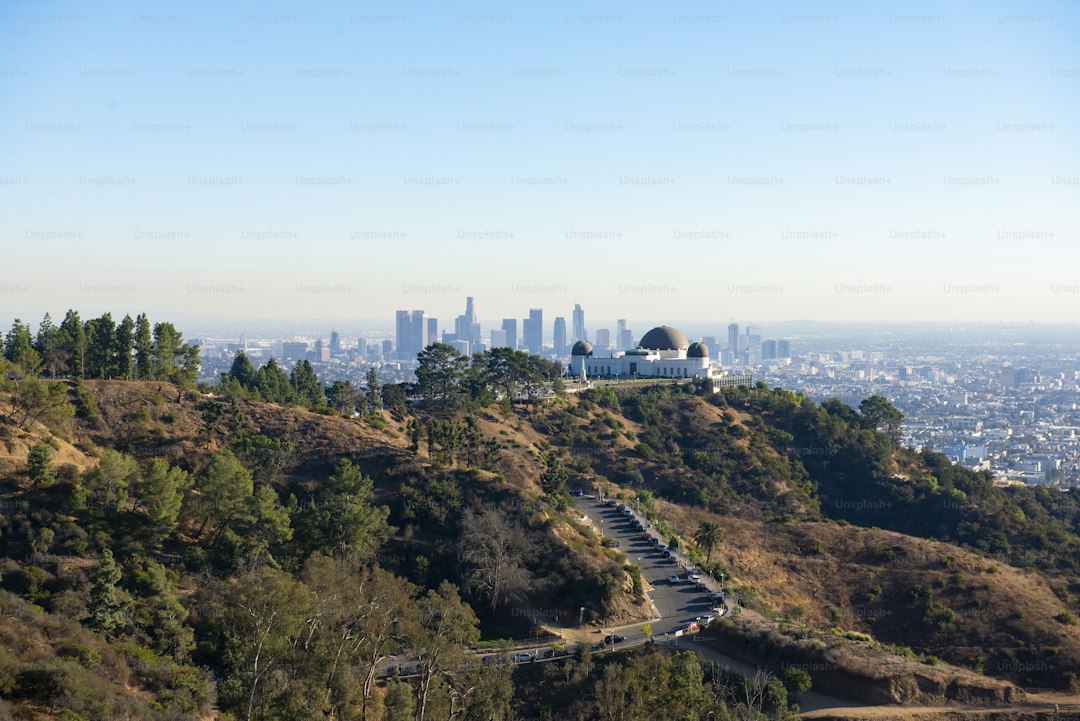
When we talk about finding that perfect, panoramic shot of LA—the Hollywood sign right there, the coast stretching forever—we often forget the complex mechanics that define those vistas, which is why a little science helps with planning. Look, if you’re hiking the coastal trails south of Mulholland, you’re getting a huge thermal break; those areas log temperatures 8 to 12 degrees Fahrenheit cooler than, say, the Cahuenga Peak side overlooking the hot San Fernando Valley, thanks entirely to that persistent marine layer influence. That temperature swing is everything when you’re planning hydration, you know? While everyone loves the view from Mount Lee, the bedrock supporting the Hollywood Sign is the highly erosive Miocene-era Modelo Formation sedimentary rock. Honestly, that stuff is highly prone to erosion, especially after a wildfire or heavy rain event, which is why the city has to spend millions annually on stabilization efforts. Then you have the urban trails like Runyon Canyon, which sees over 4,000 visitors daily, a staggering volume that compacts the soil severely—we’re talking measured levels over 1.5 Megapascals in some switchbacks. If you want a real city workout, the ascent from Griffith Observatory up to Mount Hollywood on the West Trail loop is sneaky tough, featuring a sustained grade of 12.8%. But maybe the most frustrating variable is visibility itself; you’re only going to get those 100-plus mile views from high points like Sandstone Peak about 40 days a year. Usually, those perfect days follow a big winter storm that scrubs the air clean; in summer, the persistent temperature inversion layer often caps visibility at under 20 miles. It’s not just about us, either; the Backbone Trail isn’t just scenic—it’s a critical wildlife movement corridor, accounting for an estimated 75% of documented north-south large carnivore crossings in the area. So, what we call an "iconic view" is really a delicate, constantly shifting system of cooling air, eroding rock, heavy traffic, and rare atmospheric clarity—all things you need to respect before you lace up those boots.
Choosing Your Challenge…
Look, when you’re picking a trail, we all naturally fixate on the total miles, right? That’s the easiest number to track, but honestly, linear distance is kind of the least important metric for predicting how much you’re going to suffer. Here’s what I mean: Physiologists categorize any sustained trail segment exceeding a 15% grade as "strenuous," demanding 1.5 times the metabolic energy (METs) of just walking flat, no matter how short the segment is. And technical terrain matters hugely; tackling the Class 2 scrambles common in the San Gabriels will spike your caloric burn by a whopping 35% per mile compared to just walking smooth dirt at the same incline. Even if most LA trails are low, starting points like Mt. Baldy’s 6,300 feet immediately hit sea-level residents with a measurable 8% reduction in maximum oxygen capacity (VO2 max), which is brutal on the first mile. We also forget how fatigue compounds; the energy cost—that measurable Joule consumption—of the final third of any hike over 10 miles is typically 20% higher per unit distance than the beginning stretch. That’s why many smart land management agencies are dumping simple distance metrics and using sophisticated Trail Difficulty Scores (TDS). Think about it: they mathematically prioritize the mechanical strain of steepness, weighing slope squared ($S^2$) 60% higher than sheer linear length. But the mechanical load is only half the battle; hydration is another system entirely. On a typical 80°F summer day in the Santa Monicas, you're losing sweat fast—about 1.2 to 1.5 liters every hour. That rapid loss means you can't just glug pure water; you actually need to calculate electrolyte replacement based on the Sodium Concentration Index (SCI). And maybe the cruelest fact? The way down isn't free; while going up is concentric work, descending generates massive eccentric loading. That deceleration stress can subject your knees to up to eight times your body weight, which is exactly why you get delayed onset muscle soreness (DOMS) two days later, not just immediate exhaustion.
Escape the City: Discovering…
Look, when you escape the LA basin and head into the Angeles National Forest, you’re not just hiking—you’re walking on deep, live geology. Honestly, the San Gabriel Fault is bisecting the whole area, a major system that’s responsible for the San Gabriel peaks rising at a pretty rapid clip, sometimes up to 1.5 millimeters every year. And maybe it’s just me, but people forget that these peaks, like around Mt. Baldy, aren’t arid; they actually capture over 100 inches of snow annually, creating a totally unique Nival climate zone. That heavy snowpack is hydrologically crucial, providing nearly 30% of the annual runoff that recharges the critical aquifers down in the San Gabriel Valley, which is huge for us. But then you swing west toward the coast, and the entire system shifts to the Malibu Canyons, where the iconic red rock formations are not sedimentary at all. Think about it this way: those vibrant colors are actually Triassic-Jurassic volcanic rocks—ancient igneous structures, specifically the Santa Monica Formation, stained red by oxidized ferrous minerals over millennia. We also need to talk about the chaparral dominating the Santa Monicas because it’s pyrophytic, meaning shrubs like certain Ceanothus absolutely rely on heat to scarify their seeds and germinate. Unfortunately, ecological studies show the necessary fire return interval has drastically decreased from a sustainable 30 to 50 years to fewer than 15 years in many places, which is truly threatening the mature chaparral ecosystem. And up in the highest reaches of the ANF, you find the endemic Mount Pinos Lodgepole Pine, a genetically isolated subspecies that requires specialized, high-intensity fire regimes just to properly open its cones. Here’s another complex variable: the endangered Southern Steelhead Trout, the only native salmonid left, survives in streams like Malibu Creek. Their populations are severely fragmented, yet they possess unique evolutionary adaptations that let them navigate those extreme hydrological fluctuations common to our ephemeral Southern California streams. Look, even our infrastructure reflects this chaotic environment, like the historic Devil’s Gate Dam area, home to California’s oldest continuously standing concrete arch bridge, built way back in 1920 specifically to manage those catastrophic flood flows coming out of the western ANF.
Trailhead Tactics: Essential…
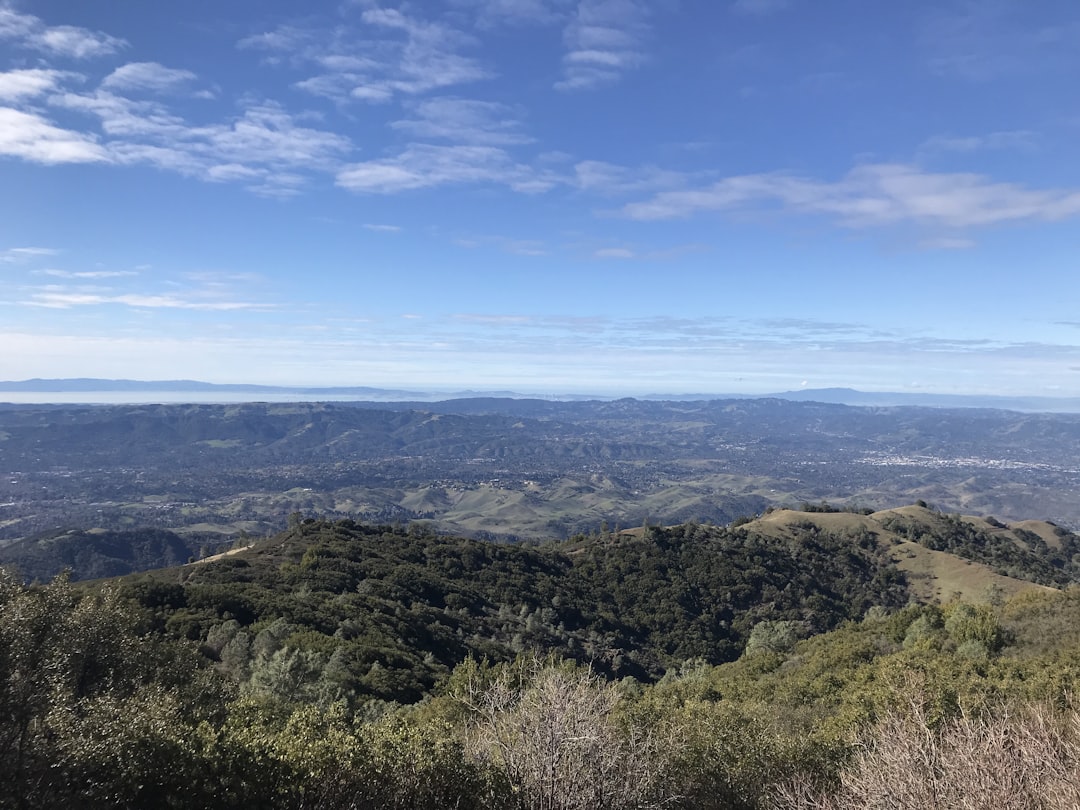
Look, nobody wants to start their adventure by circling for forty minutes, right? At popular spots like Chantry Flat, peak-hour parking turnover routinely exceeds 90 minutes per vehicle on weekends, so arriving later than 6:45 AM virtually guarantees you're waiting 20 minutes plus for a spot. And speaking of timing, we often assume the heat peaks at three in the afternoon, but that’s wrong, especially inland; in the deep San Gabriel canyons, the air temperature actually peaks closer to 4:15 PM because those massive canyon walls spend all day absorbing and re-radiating solar energy back out. That late afternoon sun also means you have to deal with intense solar glare, and hiking between 10 AM and 2 PM often creates such poor trail visibility contrast that you really need lenses rated to transmit less than 18% Visible Light Transmission (VLT) just for eye safety and clarity. On the gear front, let’s pause for a moment on water filters; most modern systems use a 0.1-micron hollow fiber membrane—that’s great because it physically blocks 99.9999% of bacteria and protozoa—but you need to remember they are totally ineffective against tiny viruses smaller than 0.02 microns unless you add chemical treatment. Another complex variable we overlook is shoe lifecycle: the EVA foam commonly used in midsoles degrades significantly after only about 400 miles, and that breakdown means a measurable 20 to 30% loss in Shore A Durometer hardness, seriously reducing impact absorption and putting more mechanical strain on your joints. Also, a quick note on vehicle clearance: many fire road gates in the Angeles National Forest are set to a mandatory 14-foot vertical requirement for USFS fire trucks, often making rooftop cargo boxes incompatible with designated parking areas. And finally, if you rely on standard 2-watt FRS radios, know that diffraction causes severe signal attenuation—over 40 dB—when you try to communicate around the sharp canyon bends common in the Santa Monicas.
Research Methodology & Editorial Standards
We begin by defining the specific objectives the reader needs to accomplish. Primary product documentation and authoritative secondary sources inform every guide before drafting begins.
Figures and rules are checked against the sources available at the time of publication. Travel pricing changes constantly — always confirm current fares, rates, and terms with the provider before booking.