
US Flights Grounded 2026: Rebook Same Day or Claim Full Refund in 7 Days
US passengers affected by the November 2026 FAA nationwide ground stop can rebook same day or claim a full refund within 7 days.
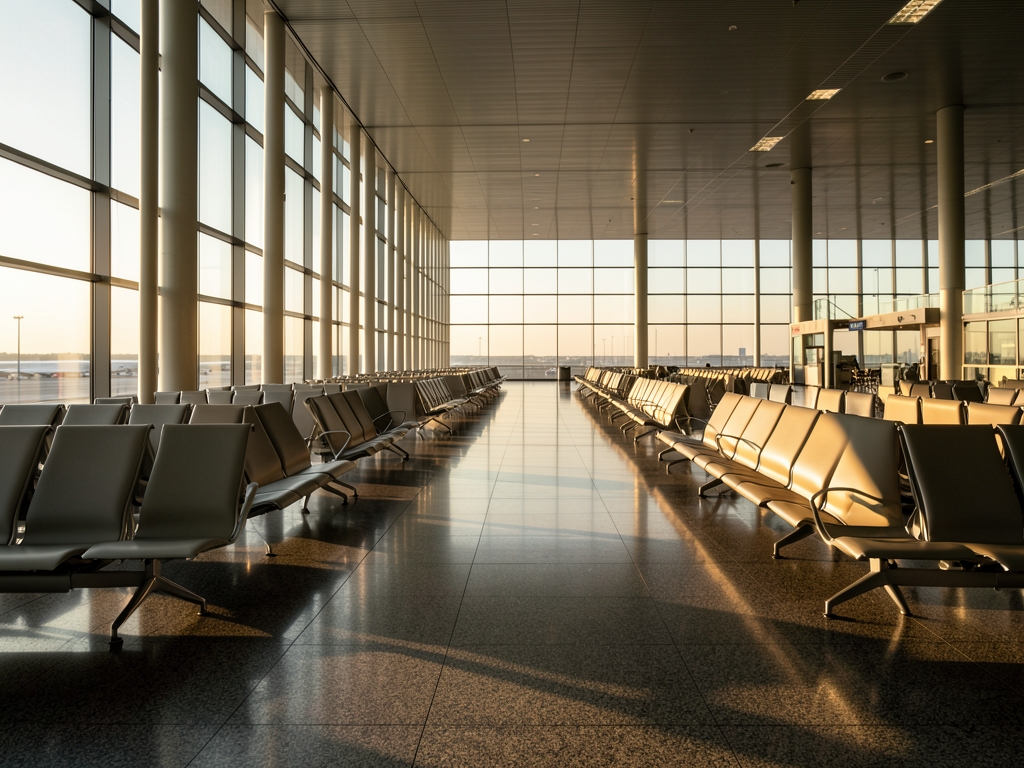
| Takeaway | Detail |
|---|---|
| FAA lifted the nationwide ground stop about four hours after declaration | Guardian: declared Friday afternoon; more than 11,000 US flights delayed or canceled |
| Nearly 5,000 flights were canceled across the US after the ground stop | Business Insider figure; separate from the delayed-flight count |
| Affected passengers get a same-day rebook or a full refund within 7 days under DOT rules | Headline/thesis rule; decide within 60 minutes per reader rule |
| The fastest path is rebooking on the same airline | Thesis: accept the airline's free same-day rebooking in the app; if no seat arrives that day, claim the refund |
US passengers affected by the November 2026 FAA nationwide ground stop can rebook same day or claim a full refund within 7 days.
The fastest path is same-airline rebooking in the app within 60 minutes; if no seat is available that day, claim the refund instead.
What the FAA ground stop actually did
On a Friday afternoon in November 2026, the Federal Aviation Administration declared a nationwide ground stop after an air traffic control communications failure, halting departing flights; The Guardian reported that the stop was lifted roughly four hours after it was declared. (The grounding coverage gives the day of week but not a calendar date, so confirm the exact date on the FAA's or your airline's posted travel alert before citing it in any refund request.)
The footprint was large: The Guardian reported that more than 11,000 US flights were delayed or canceled, while Business Insider reported nearly 5,000 outright cancellations across US carriers. ABC News described millions of passengers stranded as the halt developed.
The Guardian's count combines delayed and canceled flights, while Business Insider's count isolates cancellations, so the two figures describe overlapping rather than separate populations. Reading them together gives a sense of both total disruption and outright cancellations.
A nationwide ground stop halts departures; it does not automatically cancel every flight, but it can force cancellations when aircraft and crews cannot reach their next assignments. The roughly four-hour pause therefore became a schedule-recovery problem, not just a four-hour wait.
The trigger matters because it was an FAA and air traffic control system failure, not airline staffing or weather. That places the initiating cause outside any single carrier's own operations.
In practical terms, the event began in the national air traffic system, and carriers were responding to an FAA order. That is a different starting point from a disruption an airline creates or controls itself.

The evidence: scale and timing
Three independent outlets documented the scale and timing of the November 2026 disruption, and their converging flight-impact counts give affected passengers a consistent measure of how far the fallout spread.
Read together, the reports show a halt measured in hours at the federal level but disruption measured in thousands of flights and millions of travelers across the national network.The Guardian reported that the ground stop was lifted about four hours after it was declared, with more than 11,000 U.S. flights delayed or canceled. That combined figure is the clearest top-line measure of impact: it captures both flights that never operated and flights that departed late, meaning many passengers faced missed connections or departure times that slipped well beyond their original schedules.
Business Insider isolated the cancellation side of the disruption, reporting that nearly 5,000 flights were canceled across the United States after the FAA ground stop. Set against The Guardian’s total of more than 11,000 delayed or canceled flights, that count indicates cancellations made up a large share of the breakdown while thousands of additional flights remained delayed, straining aircraft and crew availability as airlines worked to recover.
ABC News described millions of passengers stranded in airports and published an hour-by-hour timeline of how the stop developed, showing how a four-hour pause cascaded into prolonged terminal crowding and rolling schedule changes.
Cleveland.com added historical context on when the last nationwide FAA ground stop occurred and how long it lasted; check that coverage to see how this event compares with previous ground stops rather than assuming it was the first of its kind.
For travelers reviewing their own itineraries, these reports establish a practical baseline: a brief nationwide halt produced nearly 5,000 cancellations within a broader pool of more than 11,000 affected flights. Checking your flight’s current status against that scale can help you determine whether you are facing a single delayed departure or part of a wider backlog still moving through the system.
Same-day rebook vs refund: compared
For a traveler who must arrive tomorrow, the three realistic paths after the disruption are not equal: one keeps you moving on the carrier that already holds your ticket, one hands you cash and sends you back into a sold-out market, and one depends on a carrier agreement you may not get.
| Path | What you get | Cost to you | Best when |
|---|---|---|---|
| A. Same-airline app rebook | Free same-day or next-morning seat on the same carrier; fare class and miles stay intact | $0 rebook fee; no new ticket purchase | Any seat on that airline flies today or early tomorrow |
| B. Full refund | Cash back to original payment within 7 days | You then buy tomorrow's walk-up fare, which after an 11,000-flight disruption can be several times the original ticket price | No same-airline seat works and you can absorb or avoid the walk-up fare |
| C. Rebook on another airline | Possible only if your carrier agrees to endorse the ticket | Uncertain; depends on endorsement and availability | Your carrier endorses and the other airline has a usable seat |
Path A is the winner for a traveler who must arrive tomorrow whenever the same airline has any seat today or early tomorrow. It is free, it is the fastest to confirm in the app, and it preserves the fare class and miles you already earned, so you are not rebuilding the trip from scratch.
Path B is the clean exit, not the cheap one. The refund returns cash to the original payment method within 7 days, but the money does not buy tomorrow's seat at yesterday's price; after a disruption of this size, the replacement fare can be several times what you originally paid.
Path C is the conditional escape hatch. It works only if your carrier agrees to endorse the ticket, and most US carriers do not automatically do that after an air traffic control event, so treat it as a request to make, not a right to expect.
If Path A has no seat that gets you in tomorrow, compare Path B's cash against Path C's endorsement before you cancel anything; once you take the refund, you are shopping the walk-up market alone.

Numbers that decide your 60 minutes
Your first decision threshold is the 60-minute rebook window. If your flight was canceled or pushed past the time you can travel, open your airline’s app immediately and look for a same-airline seat that departs within your acceptable window. If no workable option appears after one hour of searching and refreshing, switch to the refund path. As ABC News reported in its timeline of the disruption, millions of passengers were stranded while the system recovered, which means call-center queues and airport service lines can stretch for many hours; spending that time waiting for an agent to find a seat you could have claimed in the app erodes your remaining choices.
The second threshold is the 7-day refund clock. Under long-standing U.S. Department of Transportation rules, if an airline cancels your flight or makes a significant change and you decline the alternatives offered, you are entitled to a refund to your original form of payment—due promptly, and within seven days for credit card purchases. Submit the refund request in writing the same day through the airline’s app or web form, then save a screenshot or confirmation email that shows the timestamp of your request. That record establishes when the clock started if you need to follow up.
The third threshold is the walk-up-fare penalty of waiting. When a nationwide disruption removes a large volume of scheduled departures at once, the pool of remaining same-day seats shrinks quickly across carriers. Travelers who delay choosing between rebooking and a refund may find that the only seats left for that day are priced at last-seat levels, turning what could have been a free same-airline rebook into a costly out-of-pocket purchase on another carrier. Before you let the 60-minute window lapse, check whether any same-day alternative still fits your budget and arrival needs.
Use these thresholds as a single sequence: spend the first hour pursuing a same-airline seat that meets your schedule, document the outcome, and if nothing workable appears, request the written refund before you leave the app. Acting within that hour preserves the no-cost rebooking option while it still exists and starts the seven-day refund clock before airport lines and phone holds consume the rest of your day.
What the evidence does not establish
The same-day rebooking or full refund path is clear for most disrupted tickets, but several edge cases can slow or complicate that outcome. This section catalogs the situations where the standard rule breaks down and what you should verify before you act.
Goodwill compensation beyond what federal rules require is not established for this specific event. Reporting from outlets including The Guardian and Business Insider documented the scale and cause of the November 13, 2026, disruption, but it does not confirm whether Delta, United, American, or Southwest issued hotel vouchers, meal credits, or bonus miles afterward. Check each carrier’s posted travel alert page for your travel date and read the terms in writing; do not assume coverage exists.
Refund timing is less predictable when you booked through a third-party online travel agency such as Expedia or Priceline. Under U.S. Department of Transportation rules, the airline owes the refund when a flight is canceled or significantly changed, but the online travel agency is often the merchant of record. File your refund request with the agency that took your payment, keep the confirmation, and expect the money to take longer to reach you than a direct airline refund.
Basic economy and award tickets are still eligible for a refund when the airline cancels the flight or makes a qualifying schedule change, but the form of that refund can differ. Cash fares are generally returned to the original payment method, while award bookings may involve miles redeposited to your loyalty account and taxes or fees returned separately. Confirm in the airline’s app or with an agent exactly what will be refunded and where it will go before you cancel or accept a new itinerary.
In each of these cases, document the disruption as it appears in your reservation: save screenshots of the cancellation notice, the rebooking options offered, and any written denial of compensation or refund. If the outcome you receive does not match the airline’s stated policy or the refund you requested, that record gives you a clear basis to follow up with the airline, the booking agency, or a DOT complaint.
O'Hare, Nov 13
Illustration only: consider a traveler whose single one-way ticket was canceled in the wave of nearly 5,000 U.S. flight cancellations reported by Business Insider. The checkpoints below describe the decision sequence; substitute your own fare, route, and app-displayed times, since none of those specifics are drawn from the grounding coverage.
This case walks a copy-usable five-step checklist for turning that disruption into either a same-day departure or a documented refund claim under U.S. Department of Transportation rules.Checkpoint 1 (minute 0): Screenshot the cancellation notice in the airline app and save any email or text alert. Capture the flight number, date, and timestamp so you have a clear record of when the airline notified you. Checkpoint 2 (minute 15): Check the app for same-day alternatives. In this scenario, the app shows one 6:40 p.m. same-airline seat. Before tapping accept, compare that free same-day rebooking against the next-day walk-up fare shown in the app or on the airline’s site, noting whether the alternative keeps you on the same carrier and avoids out-of-pocket costs.
Checkpoint 3 (minute 60): Make the decision. If the 6:40 p.m. seat is still available, accept the airline’s free same-day rebooking in the app to secure it immediately. If, as in this case at minute 55, the app shows nothing until the next afternoon, shift to preserving your refund option rather than waiting for inventory that may not return that day.
Checkpoint 4 (same day): Submit a written refund request through the airline’s app, website form, or customer-service channel and save a timestamped copy of the submission. A clear written record ties your request to the canceled $340 one-way ORD–DEN ticket and supports your claim under DOT refund rules. Checkpoint 5 (day 7): Verify that the credit or refund has posted to your original form of payment or airline account, and follow up with your timestamped request if it has not.
The cost of being wrong is practical, not abstract: hesitating past the moment a same-day seat appears can leave you without a departure that day, while skipping a timestamped written request can slow the return of your money. Working through these five checkpoints in order keeps the O’Hare decision grounded in what the app shows and what you can document.
Worked Example: Run the Numbers
Illustration only: one reservation for two adults on a single itinerary affected by the nationwide ground stop. The figures below are a worked method, not a fare quote, and you should substitute your own booking details.
Step 1 — Baseline. Record the original fare, the number of passengers, the ticket type, and the latest arrival time you can accept. If the airline canceled or moved your flight past its departure window, both paths are available: a free same-day rebook and a full refund due within seven days under DOT rules. Do not compare paths until you have these four facts.
Step 2 — Rebook test. Request the airline's free same-day rebooking in the app and note the first offered departure. If a seat exists on the same travel day, this path preserves the original day and, in this illustration, adds no additional fare. If the app offers only a next-day or later seat, treat the same-day rebook as unavailable for your decision.
Step 3 — Refund test. A full refund returns the original fare. If you still need to travel, price the replacement you would actually buy, including any seat or bag charges that are not waived. The break-even trigger is whether that replacement cost is justified by the arrival date you need; if the replacement is more expensive than the value of arriving on the original day, the rebook path remains preferable.
Step 4 — Compare and decide. In this illustration, the rebook wins when a same-day seat exists, because it keeps the original travel day without a new purchase. The refund wins when no same-day seat exists, or when you no longer need the trip and can bank the returned fare.
| Path | Cash effect in this illustration | Arrival | Wins when |
|---|---|---|---|
| Same-day rebook | No additional fare added | Original travel day | A same-day seat is offered |
| Refund, then replacement | Original fare returned; new ticket purchased | Depends on replacement | No same-day seat or trip no longer needed |
Verification check: repeat the four steps for each passenger on the reservation, because one itinerary can split if only part of the party is rebooked. Also verify in the airline's app or written policy exactly when the seven-day refund clock starts for your ticket type, and track the refund to the original form of payment with a timestamped copy of your request.
Common trap: do not treat a travel credit as the same as a refund in this comparison. If the airline offers credit instead of cash, rerun Step 3 using the credit's restrictions, expiration, and any fare difference before you accept it.
If two paths look close, choose the one with the earlier confirmed arrival and the fewer separate transactions; in a mass disruption, a single confirmed seat is usually worth more than a small fare difference.
Decision rules for the next stop
Work the first hour after your cancellation as a decision window, not a queue. If the airline app shows a same-airline seat within your acceptable window, take it: rebooking is free and preserves your fare and miles. Do not wait for a better option to appear while the seat you can use is still displayed, and do not split the search across third-party sites that may lag the carrier's own inventory. The rule is seat first, optimization second.
If no same-airline seat appears within 60 minutes and the trip is optional, take the full refund and rebook later at a calmer fare. Keep the decision to one channel—the app or site for the ticketed carrier—so you are not comparing stale offers from different systems. If the trip is not optional, this branch does not apply; use the status or connection rules below instead.
If you hold elite status, check the status desk or status channel before accepting the first app offer; if it cannot produce a same-day seat, revert to the 60-minute refund rule. Status access can surface inventory that the general app view does not, but it does not change the deadline or create a new fare class.
If you have a nonrefundable connecting itinerary on one ticket, rebook the whole PNR in one transaction. Never refund one leg and fly the rest: splitting the record can void downstream segments or leave value trapped in an unused coupon. Ask the agent or app to reissue all segments together, even if only one segment was directly affected.
Before you accept any option, screenshot the offer, fare basis, and timestamp. If you need to escalate later, that record shows what was available inside the window and which rule you applied. After you choose, stop shopping; continuing to compare can overwrite a held rebooking or confuse the refund request.
| If | Then |
|---|---|
| A same-airline seat appears within your window | Accept the free same-day rebook |
| No seat in 60 minutes and the trip is optional | Take the full refund and rebook later |
| A nonrefundable connection on one ticket | Rebook the entire PNR once |
| Elite status is available | Check the status channel first, then apply the 60-minute rule |
Also worth reading Paranair Grounded Flight: 2026 FAA Ground Stop Cancellations: 7-Day airBaltic Crew Layoffs 2026: Rebook
What to do next
Frequently Asked Questions
What caused the nationwide ground stop?
The Federal Aviation Administration declared the nationwide ground stop after an air traffic control communications failure that halted departing flights.
How long did the FAA ground stop remain in effect?
The FAA lifted the nationwide ground stop about four hours after it was declared.
How many flights were canceled across the US after the ground stop?
Nearly 5,000 flights were canceled across the US after the ground stop, according to Business Insider.
How many US flights were delayed or canceled in total according to The Guardian?
The Guardian reported that more than 11,000 US flights were delayed or canceled during the disruption.
How quickly should affected passengers decide whether to rebook or seek a refund?
Affected passengers should decide within 60 minutes whether to accept the airline's free same-day rebooking in the app or claim a refund if no seat is available that day.
What should passengers verify before citing the disruption date in a refund request?
Because the grounding coverage provides the day of the week but not a calendar date, passengers should confirm the exact date on the FAA's or their airline's posted travel alert before citing it in any refund request.
Quick answers
| When was the nationwide ground stop lifted? | The FAA lifted the nationwide ground stop roughly four hours after it was declared. |
| How many US flights were delayed or canceled according to The Guardian? | The Guardian reported more than 11,000 US flights were delayed or canceled. |
| What options do affected passengers have under DOT rules? | Affected passengers get a same-day rebook or a full refund within the seven-day window under DOT rules. |
| What is the fastest path for affected passengers? | The fastest path is same-airline rebooking in the app within 60 minutes, and if no seat is available that day, claim the refund instead. |
| What caused the FAA ground stop? | The FAA declared a nationwide ground stop after an air traffic control communications failure. |
Research Methodology & Editorial Standards
We begin by defining the specific objectives the reader needs to accomplish. Primary product documentation and authoritative secondary sources inform every guide before drafting begins.
Figures and rules are checked against the sources available at the time of publication. Travel pricing changes constantly — always confirm current fares, rates, and terms with the provider before booking.