
Singapore Airlines double bed suite: $1.6B 2026 redesign, book or wait?
Singapore Airlines’ reported $1.6B double-bed Suite redesign is real as a cabin program, but not universally bookable yet.

| Takeaway | Detail |
|---|---|
| $1.6B is the confirmed redesign budget. | Singapore Airlines’ cabin overhaul is reported as a $1.6 billion redesign program. |
| A paired double or queen bed is the stated Suites feature. | Reports cite the 'largest double bed in the sky' and a queen bed planned for First Class Suites. |
| Book only if the seat map shows the paired double-bed Suite. | Do not assume fleetwide availability—verify the operating flight’s seat map for a paired double-bed Suite before booking. |
| Require an exact price at or under your ceiling. | Check the exact cash fare or KrisFlyer award plus taxes for that same flight; if either is missing or above your ceiling, wait. |
Singapore Airlines’ reported $1.6B double-bed Suite redesign is real as a cabin program, but not universally bookable yet.
The book-or-wait decision hinges on whether a specific flight’s seat map shows the paired double-bed Suite and its exact cash or KrisFlyer award plus taxes clears your ceiling.
How the Double-Bed Suite Reaches You
The proof standard is simple: a marketed “new Suites” promise is not bookable until the operating flight’s seat map shows the double-bed Suite. Treat Singapore Airlines’ $1.6 billion redesign, described by Condé Nast Traveler as unveiling the “largest double bed in the sky,” as a fleet-and-cabin program rather than a guarantee for any route or date; Wikipedia notes that Singapore Airlines flies a diverse fleet of 160 Airbus and Boeing passenger and freighter aircraft, so a cabin program can be loaded aircraft by aircraft. Before paying, check Singapore Airlines’ own booking flow for the exact flight number and the seat map attached to that flight.
The double bed is a function of the paired or convertible First Class Suite product shown in the new cabin, not a label that automatically follows the word “Suites.” Hypebeast describes the new First Class Suites as able to convert into the largest double bed in commercial aviation, while rustourismnews frames the possibility as a true double suite. Verify the seat-map label or pairing symbol for two adjacent suites that convert, rather than relying on a marketing rendering or cabin photograph.
If the booking screen says Suites but the seat map shows a single-suite layout, the redesign is not loaded for that aircraft. In that case, do not pay a “new Suites” premium for that flight; the Suites name alone does not establish that the paired double-bed product is available. Wait for a flight whose seat map displays the paired double-bed Suite and whose exact cash fare or KrisFlyer award plus taxes is visible.
Apply the test to one flight at a time: flight number, aircraft, seat map, and price must all agree. If the seat map lacks the paired double-bed Suite, or if the exact cash or award price plus taxes is not visible for that same flight, the proof standard is not met and the answer is to wait.
Record the evidence before checkout: note the flight number, any aircraft type shown, the seat-map pairing symbol, and the fare or award price plus taxes. That record makes the decision falsifiable later if the operating aircraft changes or the price moves.
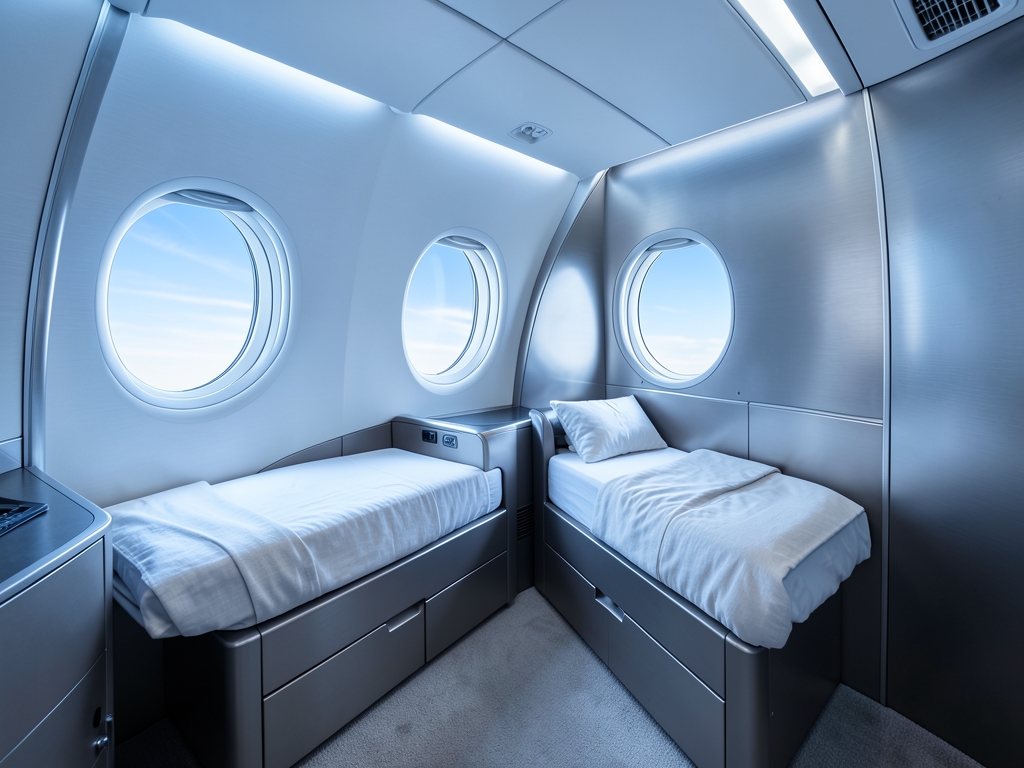
Three Sources, One $1.6B Claim
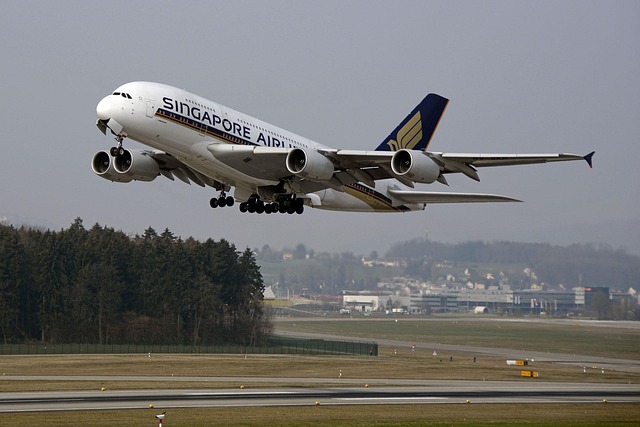
Named outlets describe the same Singapore Airlines cabin program with different cabin words, but they agree on one number: $1.6 billion. Condé Nast Traveler frames it as a “$1.6 billion redesign” that unveils the “largest double bed in the sky”; Hypebeast describes the new First Class Suites as able to convert into the largest double bed in commercial aviation; stupidDOPE calls it a “$1.6B cabin redesign” with a queen bed in First Class. The shared figure is the announced size of the program, not a statement about any aircraft, route, or flight.
That distinction is the myth to kill. A $1.6B headline can sound like proof that the double-bed Suite is already flying on your route, but the number is a program cost. It does not say how many aircraft are converted, which routes are assigned, or when a specific flight will show the paired Suite. Program-level reporting and flight-level equipment are different claims, and only the latter matters at booking.
| Source | Reported cabin language | Shared figure | What it does not establish |
|---|---|---|---|
| Condé Nast Traveler | “largest double bed in the sky” in a “$1.6 billion redesign” | $1.6B program size | Which aircraft or flight has the Suite |
| CNN | “$1.6-billion cabin overhaul” with “revamped first-class suites” | $1.6B program size | A bookable double-bed Suite on a given route |
| stupidDOPE | “$1.6B cabin redesign” with a queen bed in First Class | $1.6B program size | Availability, fare, or award price for a flight |
The wording also varies in ways that matter. Condé Nast Traveler and Hypebeast both use “largest double bed” language, while stupidDOPE uses “queen bed.” Those are marketing descriptions, not seat-map labels, cabin dimensions, or booking codes. Convergence on $1.6B therefore tells you that multiple outlets are repeating the same announced investment; it does not tell you that two adjacent Suites can be combined on the flight you are pricing.
Use the table as a source check, not as a booking trigger. If a fare, award, or headline leans on the $1.6B figure, ask which source supports the flight-level claim and whether that claim names an aircraft, route, date, or price. If it does not, the $1.6B remains context: a real announced program whose passenger-facing proof still has to be verified flight by flight.
Book vs Wait: The Seat-Map Test Wins
The only bookable option is the one where the operating flight's seat map shows the new double-bed Suite and the fare or award is visible for that same flight number.
Start with the flight number, not the campaign. A cabin program can be real while the aircraft assigned to your date is not yet the one with the Suite, so the flight number is the anchor for every later check.
| Option | Verdict | Reason |
|---|---|---|
| Book on marketing promise | Loser | No seat-map proof; cash/award risk is high |
| Book when seat map shows the double-bed Suite and price clears ceiling | Winner | Risk is controllable because proof and price are visible |
| Wait and set alert | Acceptable fallback | Preserves optionality if inventory is not yet confirmed |
The losing move is paying a premium before the seat map confirms the Suite. Without that proof, the cash or award outlay is exposed to a cabin that may not be the one you priced, and the price you saw may not be the price you pay.
Set your ceiling before searching, then compare the visible price to it. A visible price above the ceiling means wait, even if the Suite is shown; a visible price at or below it means book only after the seat map also shows the paired Suite.
Waiting is not failure; it is the fallback that keeps optionality alive when inventory is not yet confirmed. Set an alert for the specific flight number and re-check when the seat map changes.
The test is falsifiable: if the seat map does not show the paired double-bed Suite, or the exact cash or award price is not visible for that flight, the answer is wait.
The Numbers That Decide Cash vs Award
When deciding between cash and a KrisFlyer award for Singapore Airlines' Suites, treat the widely reported $1.6 billion redesign—cited by Condé Nast Traveler—as context only. The comparison itself needs discipline: pick one unit and stick to it. Either compare a round-trip cash fare with a round-trip award's miles plus taxes/fees, or a one-way cash fare with a one-way award's miles plus taxes/fees. Never divide a round-trip cash total by a one-way mileage figure, as mismatched units make any "value per mile" calculation unverifiable before you pay.
For a cash ticket, do not stop at the headline total. Before paying for a specific itinerary, record its fare basis and its change or cancel rules on that exact checkout screen. Those rules are not a footnote: a more flexible fare basis can be worth more than a cheaper, nonrefundable Suite fare if circumstances change, but that tradeoff is only measurable if the rules are visible at the time of booking. If the screen does not display them for that fare, the cash side is not yet comparable, no matter how close it is to your ceiling.
For an award, separate components rather than bundling them. Record miles and taxes/fees as two distinct line items for the same unit you chose for cash, and confirm both are displayed before ticketing. Available public sources offer no verified, route-wide taxes/fees or award ranges for the reported double-bed Suite, so there is no safe figure to recall or estimate. The check is procedural: if either component is missing from the award checkout screen for that exact flight, treat the award as unpriceable for comparison purposes.
Before committing to either side, set a written ceiling for that single unit in advance. Compare only visible totals against that ceiling, and do not let a partially displayed price cross it by assumption. This is an arithmetic task, not a judgment of the redesign's scale: with no published fare matrix in the available sources, your constraint is visibility of numbers and rules, not a market average.
Ultimately, cash versus award is a comparison of two fully specified offers, not a contest between a headline price and a headline mileage amount. If, for a specific flight, you can match units, record a fare basis with its rules (cash) or miles plus taxes/fees (award), and both fall at or under a pre-set ceiling, a comparison is possible. If any of those items is absent from the booking path, the correct response is not to guess—it is to wait.
What the $1.6B Headline Does Not Prove
The $1.6 billion headline attached to Singapore Airlines’ reported cabin program, cited by Condé Nast Traveler and stupidDOPE, confirms the scale of the redesign but leaves four critical gaps: no route list, no delivery schedule, no fare or award chart, and no guaranteed aircraft. A headline figure and a product rendering can signal intent, yet they do not tell you which flight on which date will actually operate with the new double-bed Suite. Treat the announcement as context, not as evidence that a specific booking will deliver the redesigned cabin.
These gaps matter because cabin rollouts rarely happen all at once. Without a published route list or delivery schedule, you cannot assume that a city pair or departure window will feature the new Suite. Without a fare or award chart tied to the product, you cannot judge whether a premium is justified. And without a guaranteed aircraft assignment, even a promising itinerary can change before departure due to operational swaps. The only reliable check is the information shown for the exact flight you intend to ticket.
Apply this test at the point of purchase, not after reading promotional coverage. Search your intended date and route, open the flight details, and confirm what the booking flow actually displays for that operating flight. If the seat map is missing, the layout looks unchanged, or the full cash or award total is not visible, the headline has not translated into a bookable outcome you can verify.
In practice, the $1.6 billion investment explains what Singapore Airlines is building, but it does not close any of the four gaps on its own. Until a specific flight shows the new Suite and a complete, acceptable price, the disciplined choice is to wait rather than pay for a promise the booking screen cannot yet substantiate.
Worked Check: Three Points Before You Pay
Before you pay any premium tied to Singapore Airlines’ redesigned Suites, run this three-checkpoint worksheet on the exact flight you intend to ticket. Treat it as a pass-fail record: you should book only when the seat map confirms the paired double-bed Suite and the exact cash fare or award total is at or below your personal ceiling. If any field cannot be verified for that specific flight, stop and recheck later rather than relying on marketing language or a generic cabin image.
Checkpoint 1 — Seat map: Open Singapore Airlines’ booking flow for the exact flight number and date, then review the seat-selection display for that operating aircraft. Confirm that the Suite layout shown for that flight depicts the convertible double bed you intend to book. If the seat map shows a different layout, or if only a generic cabin image appears, record “N” and do not treat the flight as a confirmed double-bed booking.
Checkpoint 2 — Cash fare: On the same flight, capture the exact cash fare and label the unit clearly as one-way or round-trip. Record the fare basis and the change or refund rules displayed at checkout, because flexibility can change the real cost of committing early. A low headline fare is not sufficient on its own; the price must be visible for that same flight and meet or fall below the ceiling you set in advance.
Checkpoint 3 — Award: Check the KrisFlyer redemption for the identical flight and record the miles required with the unit labeled as one-way or round-trip. Separately record the taxes and fees shown for that redemption, and keep them distinct from the mileage amount. Compare the full, visible award outlay against your ceiling using the same standard you applied to the cash fare.
Four If/Then Rules for 2026 Booking
Rule one follows the seat-map and exact-price test above: both proofs must be present before booking; a marketed “new Suites” promise is not a substitute for the seat map.
Rule two protects against cabin-label optimism: if the booking screen shows Suites but you cannot see the paired double-bed layout, wait. A refit promise or future cabin program is not proof that your specific flight will have the layout, so do not pay a premium on that basis.
Rule three uses fare flexibility as a timing signal. If the cash fare is refundable or carries a low change fee and the award taxes are modest, booking earlier can be reasonable once seat-map proof exists; if the fare is nonrefundable and taxes are high, wait for seat-map proof before committing cash or miles.
Rule four is the hold-and-refund check before ticketing: re-open the same flight’s seat map and fare rules immediately before payment, confirm the double-bed Suite is still displayed, and confirm the exact cash or award price plus taxes still clears your ceiling. If the layout disappears, the price moves, or the rules worsen, do not ticket; wait and recheck.
Also worth reading Singapore Airlines Unveils 7 New Air France Unveils Premium Economy Qatar Qsuites to Maldives: 70K
What to do next
Frequently Asked Questions
What bed feature is reported for the redesigned Suites?
Reports cite the 'largest double bed in the sky' and a queen bed planned for First Class Suites.
When should I book a double-bed Suite?
Book only if the seat map shows the paired double-bed Suite.
Can I assume every Singapore Airlines flight has the new Suite?
Do not assume fleetwide availability—verify the operating flight’s seat map for a paired double-bed Suite before booking.
What price rule applies before booking?
Require an exact price at or under your ceiling.
What should I check about fare or award pricing?
Check the exact cash fare or KrisFlyer award plus taxes for that same flight; if either is missing or above your ceiling, wait.
Is the redesign already bookable on every route?
Singapore Airlines’ reported double-bed Suite redesign is real as a cabin program, but not universally bookable yet.
Quick answers
| What is the stated Suites feature? | A paired double or queen bed is the stated Suites feature. |
| What must be verified before booking? | Verify the operating flight’s seat map for a paired double-bed Suite before booking. |
| What price check is required? | Check the exact cash fare or KrisFlyer award plus taxes for that same flight; if either is missing or above your ceiling, wait. |
| Is the redesign universally bookable? | Singapore Airlines’ reported $1.6B double-bed Suite redesign is real as a cabin program, but not universally bookable yet. |
| How should the redesign be treated? | Treat the $1.6B redesign budget as a fleet-and-cabin program rather than a guarantee for any route or date. |
Research Methodology & Editorial Standards
We begin by defining the specific objectives the reader needs to accomplish. Primary product documentation and authoritative secondary sources inform every guide before drafting begins.
Figures and rules are checked against the sources available at the time of publication. Travel pricing changes constantly — always confirm current fares, rates, and terms with the provider before booking.