
Seattle to Tokyo Business Class: When 60,000 Miles Beat $4,200
For a 2026 Seattle-to-Tokyo business-class trip, 60,000 Alaska miles one-way can beat a $4,200 cash round-trip only in limited cases.

| Takeaway | Detail |
|---|---|
| 60,000 Alaska miles one-way can beat a $4,200 cash round-trip only in limited cases | The comparison applies to a 2026 Seattle-to-Tokyo business-class trip and requires a true one-way travel need. |
| The one-way cash fare must clear about $2,100 plus award taxes and fees | Use 60,000 Alaska miles one-way only if the same-date one-way cash business fare is at least that amount plus taxes and fees. |
| Price the exact same-date one-way cash business fare before booking | Compare the actual one-way fare, not the round-trip price, against 60,000 miles plus award taxes and fees. |
| United lists 90,000 miles for Japan business-class redemptions | This is a separate mileage benchmark from the 60,000-mile Alaska one-way partner award. |
For a 2026 Seattle-to-Tokyo business-class trip, 60,000 Alaska miles one-way can beat a $4,200 cash round-trip only in limited cases.
It requires a same-date one-way cash fare of at least about $2,100 plus award taxes and fees and a genuine one-way need.
How Partner Awards And Distance Bands Work
Alaska Mileage Plan partner awards are inventory-controlled seats rather than a published cash fare. Before comparing any mileage figure with cash, confirm the current award chart, the operating partner, and the cabin shown for each segment on the live award calendar; the chart or partner may not price or release the seat you are checking.
For the 2026 trip, check Tokyo pricing on the live Alaska award calendar for the exact date, route, operating carrier, and cabin rather than assuming a flat global rate. If the live calendar shows a different mileage price or no partner business space, the assumed 60,000-mile one-way price is not available for that date.
When searching Alaska Mileage Plan, enable partner or all-airlines results and verify that the business award shown is on partner metal. An Alaska-operated or mixed-cabin result is a different product and should not be treated as the same partner award. Check the operating carrier and cabin for every segment, not just the headline price.
Record the taxes and fees line separately from the miles. Do not compare an award that includes a fee line to a cash fare until that fee line is separated; otherwise the comparison mixes a mileage price with a cash surcharge. Keep the miles, the fee line, and the cash fare in separate columns so the units do not blur.
A distance band is a pricing rule, not an availability promise. It tells you how many miles the route should cost if partner inventory exists, but it does not create that inventory. Therefore, the award search result and the chart rule must be checked together.
Because partner space is inventory-controlled, a displayed business award is a snapshot rather than a guaranteed fare. Recheck the same search before relying on it, and treat any change in cabin, carrier, or fee line as a new comparison. The live result, not the chart's distance band alone, determines what can actually be booked.

Three Sources, One Unit Check
| Source | Program benchmark | Unit | Taxes and fees |
|---|---|---|---|
| Alaska Mileage Plan | 60,000 miles | One-way | Plus partner charges |
| Chatflights (ANA Mileage Club) | 75,000–90,000 miles | Round-trip, per person | About $350–$500 in taxes/fuel surcharges |
| BusinessClassTravel.us (Iberia Plus) | 50,000 Avios | One-way | About $250 in fees |
The Alaska figure is the most frequent source of unit confusion. At 60,000 miles one-way, the same pricing basis requires 120,000 miles for a round-trip itinerary, so do not treat the 60,000-mile quote as a round-trip Tokyo ticket. Check the live Alaska award calendar or booking screen for whether the displayed price is one-way or round-trip, and add any partner charges before comparing it to cash.
ANA’s benchmark, as reported by Chatflights, moves in the opposite direction: North America–Japan business class costs 75,000–90,000 miles round-trip per person depending on seasonality, plus about $350–$500 in taxes and fuel surcharges. Because the mileage and surcharge figures already cover both directions, they cannot be lined up against Alaska’s 60,000-mile quote without first doubling the Alaska mileage and accounting for each program’s separate fees.
Iberia Plus provides a third reference point: BusinessClassTravel.us notes 50,000 Avios one-way with about $250 in fees on a U.S.–Madrid business-class redemption. While it is a different route, it reinforces the same unit check—one-way award pricing must be labeled and totaled separately from round-trip programs.
Before committing miles or cash, write each option on a single line with four fields: program, miles or Avios, one-way or round-trip, and taxes/fees. If any field is missing, confirm it on the program’s booking page or a named source before treating the options as comparable.

Options Compared: Which Ticket Wins?
| Option | Cost | Best for |
|---|---|---|
| Alaska Mileage Plan partner award | 60,000 miles one-way + award taxes and fees | True one-way trip when the same-date one-way cash fare is at least $2,100 plus those fees |
| Cash ticket | $4,200 round-trip | Round-trip travel, or when partner business award space is unavailable |
| ANA Mileage Club award | 75,000–90,000 miles round-trip + $350–$500 (ChatFlights) | Round-trip travel when ANA award space is available and the mileage total fits your balance |
The Alaska option loses its edge on a round-trip itinerary because the pricing does not scale as a single discounted bundle. A traveler flying both directions needs 120,000 Alaska miles plus two separate award tax and fee lines, not 60,000 miles plus one fee line. Before treating it as a round-trip substitute, double the mileage requirement and account for fees on each direction to compare it on equal terms.
The $4,200 cash round-trip ticket wins when the trip requires a return, when partner business space cannot be confirmed for the needed dates, or when the full cost of 120,000 Alaska miles plus two sets of award taxes and fees outweighs the certainty of a paid fare. Cash also simplifies the decision when you need predictable ticketing without relying on limited award availability.
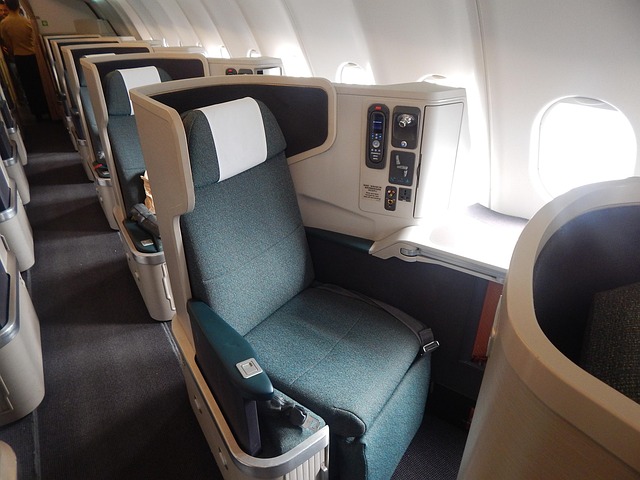
Break-Even Math And The 40% Bonus Trap
The break-even test is (cash fare minus award taxes and fees) divided by miles, then multiplied by 100, giving cents per mile. For the one-way Alaska award, that is (one-way cash fare minus Alaska taxes and fees) divided by 60,000, times 100. At a $2,100 one-way cash fare and $100 in award taxes and fees, the 60,000-mile one-way award returns 3.33 cents per mile.
The same formula works only when both sides use the same trip shape. For a round-trip comparison, use ($4,200 round-trip cash fare minus two-way award taxes and fees) divided by 120,000, times 100. At $700 in total award taxes and fees, 120,000 miles returns 2.92 cents per mile. Because the fee total is subtracted before division, a higher fee total can make the award look worse even when the cash fare is unchanged.
| Comparison | Formula | Example result |
|---|---|---|
| One-way award | ($2,100 − $100) ÷ 60,000 × 100 | 3.33 cents per mile |
| Round-trip award | ($4,200 − $700) ÷ 120,000 × 100 | 2.92 cents per mile |
If you are buying Alaska miles, treat any current purchase bonus as a cash-cost input, not as an award discount. A bonus, if offered, changes the effective purchase price; it does not reduce the miles required for the award. Cap any purchase at the break-even spread: buy only if the effective cost per mile is below the cents-per-mile value produced by the formula above, and verify the current purchase terms before relying on a bonus.
Run the formula with the actual taxes and fees from the booking screen, not an estimate, and keep one-way and round-trip figures separate. A one-way cash fare and a round-trip cash fare are different units; dividing a round-trip fare by one-way miles, or a one-way fare by round-trip miles, produces a misleading break-even.

What The Evidence Does Not Prove
No source provides a Seattle–Tokyo cash fare, live Alaska partner space, or exact SEA–TYO award taxes and fees. That gap is the main limit on the thesis: the comparison can be framed as a rule, but it cannot be validated from the cited material alone. A traveler must price the exact same-date SEA–TYO business fares and obtain the award's live fee quote before treating the 60,000-mile one-way as the better buy.
The available sources do not provide a Seattle-specific cash fare. Price SEA–TYO one-way and round-trip separately on the same dates, and do not estimate a one-way fare by dividing a round-trip quote.
The award side is equally unverified. No source confirms live Alaska partner business space on SEA–TYO, and no source gives the exact award taxes and fees for that route. Therefore the fee threshold and space condition in the reader rule are checks to run at booking, not facts established by the sources.
The edge cases show where the rule survives and where it fails. The rule still wins when a confirmed partner business award exists, the same-date one-way cash fare clears the threshold plus award taxes and fees, and the traveler truly needs a one-way. It breaks when a round trip is needed, no partner business space exists, or the same-date one-way cash fare is below that threshold plus fees.
Practical test: search the exact same-date one-way cash business fare, confirm partner space, and get the fee quote. Label every quote one-way or round-trip, and never divide mismatched units. If any of those three items is missing, the award advantage is unproven and the cash round-trip or another award should be treated as the safer baseline.

Also worth reading How the April 2025 Alaska Mileage United saver awards 2026: which Seattle to Tokyo Business Class
60K One-Way Vs $4,200
Run the comparison in one unit before booking. The Alaska award is 60,000 miles one-way plus taxes and fees T; the cash benchmark is $4,200 round-trip. A round-trip award is 120,000 miles plus 2T, not 60,000 miles plus T. The expensive error is booking the wrong unit: pricing a one-way award against a round-trip cash fare, or assuming 60,000 miles covers both directions.
First, confirm the award is partner business class, not economy or a mixed cabin; cabin and operating carrier can change the value of the same mileage price. Second, price the exact same-date one-way cash business fare for the same route and cabin; do not estimate it by splitting the round-trip fare.
Third, add T to the 60,000-mile one-way award and compare that total with the same-date one-way cash fare. Use the 60,000-mile one-way award only when that one-way cash fare is at least about $2,100 plus T. If the one-way cash fare is lower, the award is not the better one-way buy.
Fourth, if the trip is round-trip, compare the full 120,000 miles plus 2T with the $4,200 round-trip cash fare. Use actual taxes and fees for each direction if they are not identical; do not compare 60,000 miles plus T with $4,200. Fifth, if Star Alliance space is available, cross-check ANA at 75,000–90,000 miles round-trip plus $350–$500 against both the Alaska round-trip total and the $4,200 cash fare.
Frequently Asked Questions
What type of travel need is required for using 60,000 Alaska miles to make sense on this route?
Using 60,000 Alaska miles one-way is only worthwhile if you have a genuine one-way travel need.
Why should you avoid comparing the mileage redemption to the round-trip cash price?
You must compare the actual same-date one-way cash business fare, not the round-trip price, against 60,000 miles plus award taxes and fees.
How many miles does United list for Japan business-class redemptions as a separate benchmark?
United lists 90,000 miles for Japan business-class redemptions, which is a separate mileage benchmark from the 60,000-mile Alaska one-way partner award.
Are Alaska Mileage Plan partner awards priced and available like published cash fares?
Alaska Mileage Plan partner awards are inventory-controlled seats rather than a published cash fare.
What details should you confirm on the live award calendar before comparing mileage to cash?
Before comparing any mileage figure with cash, you should confirm the current award chart, the operating partner, and the cabin shown for each segment on the live award calendar.
Can the award chart guarantee that a partner seat will be priced or released as expected?
Even when checking the award chart, the chart or partner may not price or release the seat you are checking.
Quick answers
| When can 60,000 Alaska miles one-way beat the $4,200 cash round-trip? | Only in limited cases for a 2026 Seattle-to-Tokyo business-class trip with a true one-way travel need. |
| What one-way cash fare threshold is mentioned for using 60,000 Alaska miles one-way? | The same-date one-way cash business fare must be at least about $2,100 plus award taxes and fees. |
| What should be compared against 60,000 miles plus award taxes and fees? | The actual same-date one-way cash business fare, not the round-trip price. |
| What separate mileage benchmark does United list? | United lists 90,000 miles for Japan business-class redemptions. |
| What should be confirmed before comparing mileage with cash for partner awards? | The current award chart, operating partner, and cabin shown for each segment on the live award calendar. |
Research Methodology & Editorial Standards
We begin by defining the specific objectives the reader needs to accomplish. Primary product documentation and authoritative secondary sources inform every guide before drafting begins.
Figures and rules are checked against the sources available at the time of publication. Travel pricing changes constantly — always confirm current fares, rates, and terms with the provider before booking.