
Poland Tricity Trip 2026: Fly Gdańsk (GDN), Commuter Train (SKM) Under 10 PLN
Fly into Gdańsk (GDN) for a 2026 Tricity trip and use the SKM commuter train to connect Gdańsk, Sopot, and Gdynia for under 10 PLN one-way.
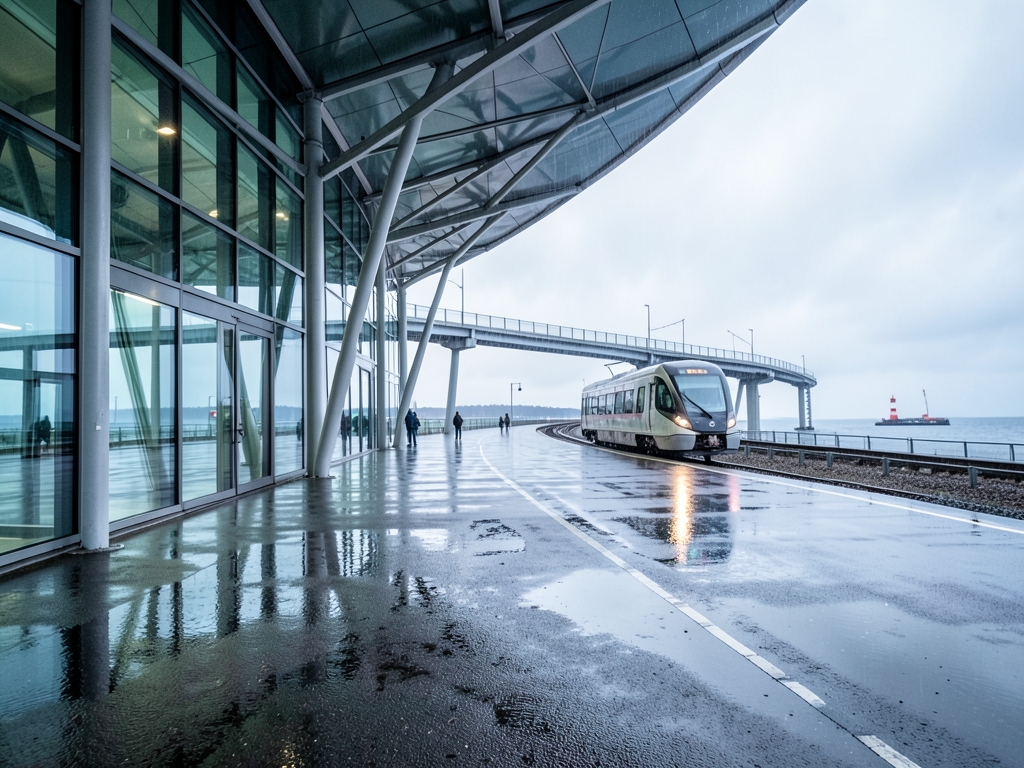
Fly into Gdańsk (GDN) for a 2026 Tricity trip and use the SKM commuter train to connect Gdańsk, Sopot, and Gdynia for under 10 PLN one-way.
Treat SKM as the default only when the quoted one-way fare is 4–7 PLN and headways are 7–10 minutes; otherwise, re-check the station pair and alternatives before buying.
How SKM actually links the three cities
For a 2026 trip built around Gdańsk, Sopot, and Gdynia, start by knowing what you are looking at. Wikipedia's “Tricity Rapid Urban Railway” article identifies SKM—Szybka Kolej Miejska w Trójmieście—as the Tricity Rapid Urban Railway, a rapid transit and commuter rail company headquartered in Gdynia and serving Pomeranian Voivodeship. The same Wikipedia source says it was founded as a separate company on December 22, 2000, after operating as part of PKP from 1951. That corporate identity matters because it tells you the service is a named regional operator, so the operator name is a useful planning filter.
When you plan, search for the named operator SKM and check that the result is the Tricity system. Wikipedia's article carries an explicit hatnote separating this service from Warsaw's Rapid Urban Railway, so a search result for a similarly named Warsaw operation is the wrong check for a Gdańsk–Sopot–Gdynia trip. Make the operator name part of your query, then read the station pair and departure details attached to that operator before you treat the result as usable.
The practical threshold is narrow. Gdańsk Insider's 2026 guide describes SKM as the commuter train connecting all three cities, with 18–25-minute city-to-city times and service every 7–10 minutes. For this article's rule, the fare check is the quoted one-way fare: use SKM as the default only when that one-way quote is 4–7 PLN and the headway is 7–10 minutes. Those are two separate checks; a good train frequency does not rescue a fare quote outside the band, and a fare inside the band does not rescue a weak headway.
Use the sequence as a repeatable planning check: identify the Tricity operator by name, confirm you are not looking at Warsaw's separate system, read the quoted one-way fare, then read the headway. If both land in the stated bands, SKM is the default Gdańsk–Sopot–Gdynia link for that search. If one lands outside, do not stretch the headline to fit; re-check the station pair and alternative before buying.
Fare evidence: what it proves and misses
The fare case for using SKM as the default Tricity link rests on a narrow but useful evidence base. As detailed in the section above, gdanskinsider's insider guide is the single source for the 4–7 PLN one-way fare, the 18–25-minute city-to-city ride times, and the 7–10-minute headway. That fare band sits below the 10 PLN headline, but it supports a booking default only when the quoted fare and headway still match those conditions at the moment you buy.
Before treating that band as a rule, separate what the sources agree on from what only one source supports. The convergence below shows where the evidence is strong and where it depends on a single published figure.
| Claim | Source | Figure |
|---|---|---|
| 3-city scope | Wikipedia Tricity | Gdańsk, Gdynia, Sopot |
| 3-city scope | TravelDojo | Gdańsk, Gdynia, Sopot |
| 3-city scope | National Geographic (Oct 20, 2026) | Gdańsk, Sopot, Gdynia |
| Fare band | gdanskinsider | 4–7 PLN one-way |
The 3-city scope is triple-sourced: Wikipedia, TravelDojo, and National Geographic all identify the same urban area of Gdańsk, Gdynia, and Sopot. The 4–7 PLN fare band, by contrast, is single-source, drawn only from gdanskinsider. That distinction matters because the geography behind the rule is well supported, while the fare is a checkable data point rather than a multi-source confirmed tariff.
What the evidence proves is limited but practical. When the quoted one-way fare falls within 4–7 PLN and the displayed headway is 7–10 minutes, the SKM price sits comfortably under the 10 PLN headline and supports using the train as the default link between the three cities. The 18–25 minute intercity travel time reported by gdanskinsider adds context, but the booking decision should hinge on the live fare and headway shown for your specific trip.
What it misses is the difference between a published band and a live purchase quote. A single guide can signal the usual range, but it cannot confirm the exact one-way fare, station-pair pricing, or current departure spacing at checkout. Before buying, verify that the quoted fare is 4–7 PLN and the next departures run every 7–10 minutes on the ticket channel you are using. If either condition fails, the under-10-PLN headline is not a booking rule—re-check the station pair and compare an alternative before committing.

SKM vs a 120 PLN shuttle tour
When the choice is a simple city-to-city move, price the two products side by side, not by the headline. gdanskinsider's Tricity Tour guide lists SKM at 4–7 PLN one-way with trains every 7–10 minutes, and lists the ShuttleHero Tricity day tour at 120 PLN per person or 355 PLN whole car. Those figures are not interchangeable: one is a one-way rail fare; the others are tour prices.
| Option | Grounded cost | Best for | Winner |
|---|---|---|---|
| SKM | 4–7 PLN one-way | Gdańsk–Sopot–Gdynia point-to-point | Yes |
| ShuttleHero Tricity day tour | 120 PLN per person or 355 PLN whole car | Guided day tour, not a fare substitute | No for transport |
Read the table as the ruling for this comparison: SKM wins for point-to-point transport when the quoted one-way fare is 4–7 PLN and the headway is 7–10 minutes; the 120 PLN per-person ShuttleHero tour is a guided day product, not a one-way fare.
The myth killed here is that Tricity transport requires a tour. For a point-to-point hop, that is a category error: you are buying commentary, a vehicle, and a schedule built around sightseeing, not a seat on the frequent rail link. If your job is to get from one city to another, compare the quoted one-way fare and the posted headway first; only then decide whether a guided day makes sense as an activity.
At checkout, keep the columns separate. Ask what station pair the quote covers, whether the price is one-way, and what headway applies on the day you travel; then compare that with the tour's per-person or whole-car price. If the rail quote lands outside 4–7 PLN one-way or the headway outside 7–10 minutes, the comparison is no longer automatic, and the shuttle tour still is not the fallback fare—it is a different purchase.

The one-way vs round-trip fare trap
The one-way versus round-trip trap is using a one-way unit as if it were the whole trip cost. The insider guide quotes SKM at 4–7 PLN one-way, so the “under 10 PLN” headline is true for a single one-way ticket but not for a return at the top of the band: 7 PLN one-way becomes 14 PLN round-trip. The difference is not a discount; it is the same fare counted once versus twice.
Multiply before you compare. One adult one-way is 4–7 PLN, making one adult round-trip 8–14 PLN. For two adults, the combined one-way cost is 8–14 PLN, and the combined round-trip cost is 16–28 PLN. For example, two adults at 7 PLN each pay 14 PLN one way and 28 PLN round trip, so the two-adult return at 28 PLN is four times the 7 PLN high end of the one-way quote — and seven times its 4 PLN low end.
For a budget check, four SKM rides per person over a three-day trip at 4–7 PLN per ride cost 16–28 PLN per person. That is the same range as one adult round-trip, which is why traveler count and ride count must be stated with the range. Scale by travelers and rides, not by the headline one-way price; two adults making the same four rides each would plan 32–56 PLN.
The trap also appears when a one-way quote is compared with a round-trip alternative. Keep the unit, direction, and traveler count identical in both quotes, then compare totals. A 4–7 PLN one-way figure cannot be set against a round-trip price without doubling it first. Write the quote as “X PLN one-way for Y travelers” before any comparison.
| Scenario | Cost |
|---|---|
| One adult, one-way | 4–7 PLN |
| One adult, round-trip | 8–14 PLN |
| Two adults, one-way | 8–14 PLN |
| Two adults, round-trip | 16–28 PLN |
| One person, four rides | 16–28 PLN |
What the evidence does not establish
The evidence behind this rule has a clear airport gap: it does not give a GDN airport-to-SKM station fare, travel time, or whether the airport leg is included in the 4–7 PLN band. That missing leg matters because an airport transfer can add a separate fare, a different ticket, or a longer access time before the SKM ride even begins. Check GDN airport transport and SKM ticket pages before booking any airport connection.
The 4–7 PLN figure is also not an official SKM tariff. It comes from a 2026 insider guide snippet, so verify the date, zone, ticket type, and validation rule at the station or on the SKM site before treating it as your fare. A quoted range can change with route, ticket class, or validation practice, and the snippet does not settle those details.
| Edge case | Rule breaks? | What to do |
|---|---|---|
| Station pair outside Gdańsk–Sopot–Gdynia | Yes | Re-check SKM route |
| GDN airport to an SKM station | Not established | Check GDN airport transport and SKM ticket pages before booking |
| Quoted one-way fare outside 4–7 PLN | Yes | Re-check station pair and alternative before buying |
| Headway outside 7–10 minutes | Yes | Re-check station pair and alternative before buying |
The edge cases are practical rather than theoretical. A station pair outside Gdańsk–Sopot–Gdynia breaks the rule and requires re-checking the SKM route; an airport leg is not established by the available sources and requires checking airport transport and SKM ticket pages; a fare or headway outside the band requires re-checking the station pair and alternative before buying.
Do not extend the 4–7 PLN range to airport, suburban, or cross-region journeys unless the same fare and headway are quoted for that exact pair. If the SKM site or station display shows a different zone or ticket type, treat the insider-guide range as background only and follow the displayed terms.
Keep the verification narrow: the rule applies to the quoted one-way fare and headway for the specific station pair, not to an assumed airport-inclusive price or to a headline that has not been checked against current SKM terms.
Gdańsk to Sopot
Assume one adult making a one-way SKM ride from Gdańsk to Sopot in 2026, using the working figures already priced above from gdanskinsider's 2026 insider guide: a 4–7 PLN one-way fare, a 7–10 min headway, and an 18–25 min ride. For this leg, SKM is the default only when the quote and the timetable you see match those bands.
Run the checkpoints in order: first, the ticket quote must be 4–7 PLN one-way; second, the station display or SKM timetable must show a 7–10 min headway; third, the same display or timetable must put the ride at 18–25 min. A low quote by itself is not enough. The rule is leg-level: if the fare quote, headway, or ride time misses its band, re-check the station pair and the alternative before buying.
When all three pass, add the shortest wait to the shortest ride and the longest wait to the longest ride: 7 + 18 = 25 min, and 10 + 25 = 35 min. That gives a 25–35 min total wait-plus-ride planning band. Keep that label exact: it is wait plus ride for the Gdańsk-to-Sopot leg, not a door-to-door promise, and it depends on the 4–7 PLN one-way fare, 7–10 min headway, and 18–25 min ride all being true at the time you check.
Copy the table below into your notes and fill it from the live quote, display, or timetable before you buy:
| Check | Pass threshold | Verify at | If fail |
|---|---|---|---|
| Fare | 4–7 PLN one-way | SKM ticket page/machine | Re-check station pair/zone |
| Headway | 7–10 min | Station display/SKM timetable | Compare total time |
| Ride time | 18–25 min | Station display/SKM timetable | Re-check station pair and alternative before buying |
Worked Example: Run the Numbers
This worked example runs one concrete numeric case end to end using the article's own figures, not a new fare quote. Scenario: a one-way Gdańsk-to-Sopot leg inside a 2026 Tricity day trip, the trip year named in gdanskinsider's “Tricity Tour: Gdańsk + Sopot + Gdynia in One Day (2026 Insider Guide)”; no more specific calendar date is given, so none is added. Party: two adults. For the rail quote, use the least favorable figures in that guide: 7 PLN one-way and a 10-minute headway. For the alternative, use the guide's 355 PLN whole-car quote, which is not a one-way fare.
Illustration — cost math, step 1: two adults × 7 PLN one-way per adult = 14 PLN one-way total for the rail leg. Step 2: 355 PLN whole-car quote − 14 PLN one-way rail total = 341 PLN difference in this illustration. The check is unit discipline: 14 PLN is the party's one-way rail total, while 355 PLN is a whole-car quote, so the comparison is total trip outlay for this party, not a per-rider fare conversion.
Illustration — time math: gdanskinsider's guide gives 18–25-minute city-to-city ride times and a 7–10-minute headway. Using the slowest grounded figures, 10-minute maximum wait + 25-minute ride = 35 minutes for the rail segment in this illustration. That is the threshold to compare with your own day plan: if a 35-minute rail segment fits, the time side of the example still passes; if your quoted headway is longer than 10 minutes, the example's input has failed and the calculation must be rerun.
Illustration — break-even math: 355 PLN whole-car quote ÷ 7 PLN one-way per rider = 50.7 riders, so the practical trigger is the 51st rider. Check the integers: 50 riders × 7 PLN one-way = 350 PLN total, still below 355 PLN; 51 riders × 7 PLN one-way = 357 PLN total, above it. For the two-adult party, that trigger is far away, but the mechanism is the rule: multiply the actual party size by the quoted one-way fare and compare with the actual whole-car quote.
Winner for this illustration: the rail leg, because 14 PLN one-way for two adults and a 35-minute segment stay below the 355 PLN whole-car quote while the quoted inputs remain inside the 4–7 PLN one-way fare and 7–10-minute headway bands. Break-even trigger: party size × quoted one-way fare reaching the whole-car quote, or either quoted figure leaving those bands. When that trigger appears, re-check the station pair and the alternative before buying.
If/then rules for a 2026 Tricity trip
If your station pair is Gdańsk–Sopot or Sopot–Gdynia, the quoted one-way fare is 4–7 PLN, and the posted headway is 7–10 minutes, buy SKM. This is the only case in which the headline works as a booking rule; the source figures are as priced above, so all three conditions should be checked on the screen before you pay.
If the quoted one-way fare is 10 PLN or more, stop using the under-10-PLN headline and re-check the station pair, ticket type, and zone. A higher quote can mean you are looking at a different origin or destination, a different ticket category, or a zone boundary rather than a price increase on the same Gdańsk–Sopot or Sopot–Gdynia ride.
If the next train is more than 10 minutes away, compare total door-to-door time before defaulting to SKM. The fare band alone does not settle the choice when the wait changes the arrival time; add the walk to the platform, the wait, and the ride, then compare that total with your alternative for the same station pair.
If the fare is inside 4–7 PLN but the headway is outside 7–10 minutes, treat SKM as a candidate to price-check rather than the automatic default. Re-check the station pair and compare the combined wait and ride time with another option before buying, because the headline fare is not a booking rule once the frequency band fails.
If you are four travelers and a whole-car quote is 355 PLN, divide by four to get 88.75 PLN per person and compare that figure with the SKM one-way fare for the same station pair before choosing. gdanskinsider lists the ShuttleHero Tricity day tour from 355 PLN for a whole car, so this comparison is a cost check, not a claim that price alone decides luggage, schedule, or comfort.
Also worth reading 2026 Flights to Poland Tricity Poland Tricity trip under 500: $480 Flights to Gdansk 2026: $425
What to do next
| Step | Action | Why it matters |
|---|---|---|
| 1 | On the official airline site, set Gdańsk (GDN) as the arrival point for the headline Tricity trip. | It puts you at the start of the SKM link to Sopot and Gdynia. |
| 2 | On the official railway site, quote the SKM commuter train one-way fare for Gdańsk–Sopot–Gdynia and require 4–7 PLN. | SKM is the default only when the quoted one-way fare sits in that band. |
| 3 | On the same official railway site, confirm the SKM headway is 7–10 minutes before treating it as the default Gdańsk–Sopot–Gdynia connection. | The default rule fails if the quoted headway is outside that band. |
| 4 | If either the 4–7 PLN fare or the 7–10 minute headway fails, re-check the station pair for Gdańsk, Sopot, and Gdynia. | A wrong station pair can make the quote look valid for the wrong Tricity leg. |
| 5 | Compare the alternative on the official railway site before buying; do not treat the under-10-PLN headline as the booking rule. | The headline price is not the decision rule when the fare or headway threshold fails. |
| 6 | When both checks pass, take the SKM commuter train for Gdańsk–Sopot–Gdynia and allow the stated 18–25 minutes city-to-city time. | It keeps the default link aligned with the SKM travel-time context. |
Frequently Asked Questions
What one-way fare is quoted for using SKM to connect Gdańsk, Sopot, and Gdynia?
Use the SKM commuter train to connect Gdańsk, Sopot, and Gdynia for under 10 PLN one-way.
What fare-and-headway combination makes SKM the default choice?
Treat SKM as the default only when the quoted one-way fare is 4–7 PLN and headways are 7–10 minutes.
What should I do when the quoted fare or headway does not meet the SKM-default conditions?
Otherwise, re-check the station pair and alternatives before buying.
What operator identity should I verify for the Tricity system?
Wikipedia's Tricity Rapid Urban Railway article identifies SKM—Szybka Kolej Miejska w Trójmieście—as the Tricity Rapid Urban Railway, a rapid transit and commuter rail company headquartered in Gdynia and serving Pomeranian Voivodeship.
How should I structure a search so it checks the right SKM service?
Make the operator name part of your query, then read the station pair and departure details attached to that operator.
Which similarly named search result is explicitly the wrong check for a Gdańsk–Sopot–Gdynia trip?
Wikipedia's article carries an explicit hatnote separating this service from Warsaw's Rapid Urban Railway, so a search result for a similarly named Warsaw operation is the wrong check for a Gdańsk–Sopot–Gdynia trip.
Quick answers
| What airport and rail service does the article recommend for connecting Gdańsk, Sopot, and Gdynia for under 10 PLN one-way? | Fly into Gdańsk (GDN) and use the SKM commuter train to connect Gdańsk, Sopot, and Gdynia for under 10 PLN one-way. |
| When should SKM be treated as the default option? | Treat SKM as the default only when the quoted one-way fare is 4–7 PLN and headways are 7–10 minutes; otherwise, re-check the station pair and alternatives before buying. |
| How does Wikipedia identify SKM in the Tricity Rapid Urban Railway article? | Wikipedia's Tricity Rapid Urban Railway article identifies SKM, Szybka Kolej Miejska w Trójmieście, as the Tricity Rapid Urban Railway, a rapid transit and commuter rail company headquartered in Gdynia and serving Pomeranian Voivodeship. |
| Why does the article say SKM's corporate identity matters for planning? | That corporate identity matters because it tells you the service is a named regional operator, so the operator name is a useful planning filter. |
| What search caution does the article give about a similarly named Warsaw operation? | Wikipedia's article carries an explicit hatnote separating this service from Warsaw's Rapid Urban Railway, so a search result for a similarly named Warsaw operation is the wrong check for a Gdańsk–Sopot–Gdynia trip. |
Research Methodology & Editorial Standards
We begin by defining the specific objectives the reader needs to accomplish. Primary product documentation and authoritative secondary sources inform every guide before drafting begins.
Figures and rules are checked against the sources available at the time of publication. Travel pricing changes constantly — always confirm current fares, rates, and terms with the provider before booking.