
Madrid to Barcelona in 2026: Book Renfe or redeem Avios above 1.5 cents?
For Madrid–Barcelona in 2026, pay cash when your Avios redemption is below 1.5 cents per Avios. The call changes if the same-seat, same-date cash fare divided by required Avios is at least 1.5 cents.
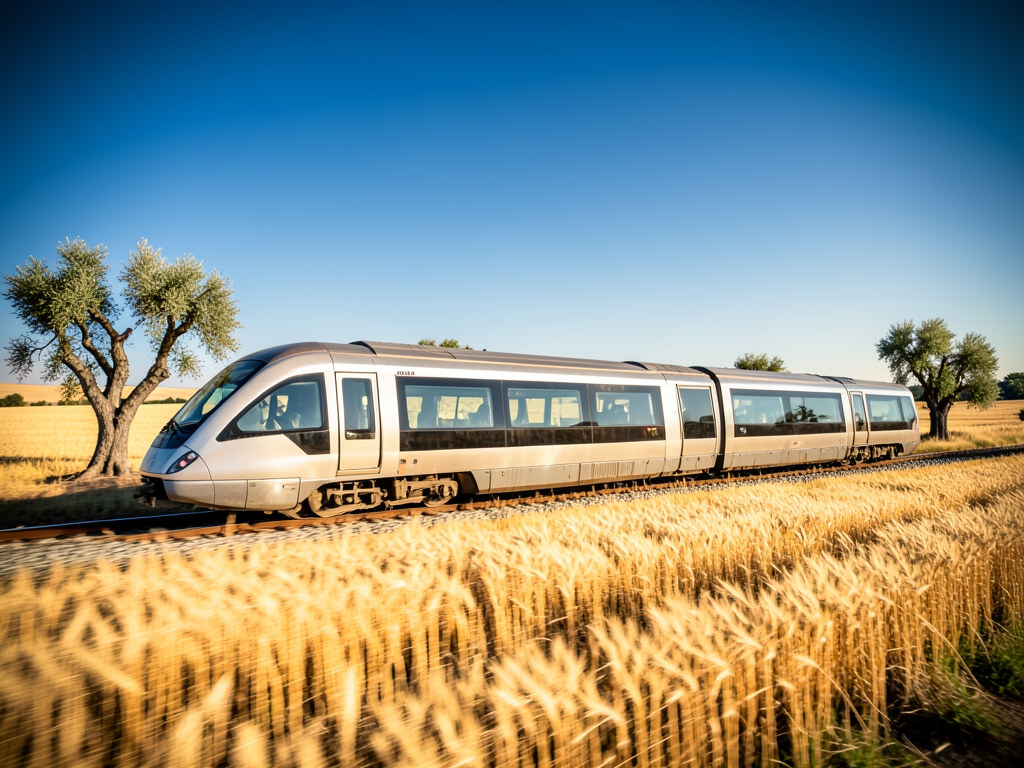
For Madrid–Barcelona in 2026, pay cash when your Avios redemption is below 1.5 cents per Avios.
The call changes if the same-seat, same-date cash fare divided by required Avios is at least 1.5 cents.
Four operators set the cash baseline
The Madrid Atocha–Barcelona Sants corridor is served by four competing high-speed operators: Renfe AVE alongside low-cost rivals iryo, OUIGO and Avlo. That matters because your cash baseline should come from the whole corridor, not from Renfe alone — all four compete for the same one-way seat on the same date, so your booking decision should start from all four, not just Renfe's own site.
Pull the one-way cash fare for each operator on your exact travel date. Use renfe.com for the Renfe side and each rival’s own site for iryo, OUIGO and Avlo, keeping the departure station, arrival station and travel date identical across all four checks. Do not mix a Madrid–Barcelona fare from one operator with a different city pair, a round-trip price, or a nearby date; the denominator has to match the seat you would actually buy.
Competition on this route means the cheapest cash fare — not Renfe’s cash fare — is the correct denominator. If Renfe prices above a rival for the same one-way journey, the rival’s fare is the one that sets the baseline for the cash-versus-points decision. That is the point of checking all four operators before you commit: a lower cash price changes the value you are getting from any points redemption, even if you personally prefer one operator’s brand or loyalty program.
At checkout, record the fare class and the change and cancel conditions shown for each quote. Two one-way fares that look identical on a results page can carry different rules once you click through, and those rules belong in your comparison notes. Write down the operator, the fare class, the one-way cash price, and the change/cancel language exactly as displayed before you move to the next operator’s site.
Keep the four quotes side by side in the same currency and with the same one-way unit. If a site shows taxes or fees separately, note them as shown and do not relabel them as part of the base fare; use the total you would actually pay for that one-way seat as the cash figure. The goal here is a clean, same-date, same-route cash baseline that you can defend when you compare it against the points required for that same seat.
Compute your cents per Avios
I use one deliberately narrow calculation before I book a Madrid–Barcelona seat: the cash fare I would actually pay, one-way, in euros, divided by the Avios required for that same one-way seat on the same train and date. Convert euros to cents first, then divide by the Avios amount. If the result is under 1.5 cents per Avios redeemed, pay cash and stop there.
The unit match is where this check usually breaks. Never divide a round-trip cash fare by a one-way award price; mismatched units are the most common error on this route. If you are pricing a return journey, do each direction as its own one-way calculation, or use a round-trip cash total only against a round-trip Avios total. Same train, same date, same direction, same class: if one of those changes, the number is no longer answering your question.
For the Avios side, log into your Iberia Plus or Avios account and run the same date and train through the program's book-with-points flow. Record the exact Avios amount and any cash co-pay shown. Treat the co-pay as an out-of-pocket item to note beside the quote; the Avios figure is the denominator. Because program pricing varies by train and date, check it per booking, not as a fixed chart you carried over from another search.
On the cash side, use the final one-way euro total for the seat you would really buy: on renfe.com for Renfe, or on the operator's own booking page for the train you are considering. Do not use a different departure, a different fare condition, or a round-trip total because it is convenient. If the cash page and the points flow show different conditions, line them up before you calculate; otherwise you are comparing two different products.
Then do the arithmetic in a way you can audit later: write down the one-way cash euros, the one-way Avios, the cash co-pay, and the result. Before you trust the result, confirm that the cash amount was converted to cents and that the Avios figure came from the same seat. If the result lands below that line, book the cash ticket. If it lands at or above that line, keep the award quote in play for the next comparison, but do not promote it just because the points number looked familiar.
Cash vs points: the comparison grid
Run the same comparison for each of the four operators on your exact train and date: take the one-way cash fare you would actually pay and the Avios required for that same one-way seat, compute cents per Avios for each, and act on whichever row clears the 1.5¢ rule. The winner is a decision, not a brand preference. As a worked illustration using the article's own example figures: a €49.00 one-way cash fare against 4,000 Avios gives 4,900¢ ÷ 4,000 = 1.225¢ per Avios, below the floor, so cash wins that row.
Make the comparison auditable by screenshotting both checkout screens for the identical train and fare bucket: the cash checkout and the points checkout. If either price moves before you pay, rerun that row from the new screens instead of relying on an earlier capture.
On a corridor where several operators sell the same city pair, cheap promotional cash buckets can make the cash row win even when an Avios redemption looks convenient. The table keeps that possibility visible instead of letting a points balance decide the booking by default.
Do not write down a quotient until you have both checkout screens open for the identical seat; a half-checked comparison invites a guess. The comparison is a working document for one booking, not a permanent price list — recheck it whenever either price moves.
Before you pay, check that the Avios figure is for the same fare bucket and the same one-way seat as the cash figure. If the train, date, cabin, or fare family changed on either screen, the row is stale and should be rebuilt before you choose a winner.
When you finish, keep the screenshots with the completed table. That record is what lets you defend the booking if the fare or Avios price changes between comparison and payment.

What this guide cannot tell you
No Avios price for a specific Madrid–Barcelona train can be quoted in advance here, because program pricing varies by train and date. Treat every program-specific number in this guide as a prompt to verify live before you commit to a booking, not as a settled fact.
Four program-specific items are not established here. First, the actual Avios required for any specific Madrid–Barcelona train is not available in the reviewed evidence; read it from the redemption flow for the exact one-way seat you intend to book. Second, Renfe's current award-partner rules are not documented in these sources, so confirm directly in the program terms which partners can book the train you want and under what conditions. Third, dynamic pricing behavior on peak dates is not established here, which means an Avios quote you see on one date or departure time cannot be assumed to hold for another. Fourth, no published 2026 program change appears in the available evidence, so verify the current rules in the program's own booking flow at the time of purchase rather than relying on older summaries.
The fastest verification is to run the same search twice in the official booking flow: once for a cash ticket and once for an award redemption, keeping the operator, date, departure, and fare conditions identical. Record the one-way cash total you would actually pay at checkout, including any mandatory charges shown before payment, and record the one-way Avios required for that same seat. If the program displays taxes or fees separately on an award ticket, keep them separate from the base fare so you are comparing like with like. Only a same-seat, same-train check produces usable inputs.
Two common edge cases can make a live check inconclusive. If you hold elite status or a co-branded card that changes what you earn on a cash ticket or what you pay out of pocket, adjust the cash side to reflect your actual net cost before using it in any comparison. If the only remaining seats on your preferred departure are in a fare bucket with no award inventory, the redemption comparison cannot be completed for that train; in that case, check another departure, another operator, or evaluate the cash option on its own terms. In both situations, the missing input is not a minor detail but the deciding variable, so do not substitute an assumption for a live figure.
Worked Example: Run the Numbers
Illustration only: one adult, one-way, Madrid Atocha to Barcelona Sants, on a date you are actually pricing, with the same train and date used for both the cash fare and the Avios price. The figures below are hypothetical — replace both inputs with the live cash fare and live Avios price for your exact seat before you decide.
Start with the cash seat you would actually buy across the corridor, not the first headline fare you see, and record that euro amount. Then record the Avios required for the identical seat. Keep the units matched: one-way cash against one-way Avios, same train, same date, same passenger count.
Convert euros to cents before dividing, because the result is cents per Avios. In this illustration, €49.00 becomes 4,900 cents, and 4,900 ÷ 4,000 Avios = 1.225 cents per Avios. If your cash figure includes a fee you would not actually pay, remove it; if Avios carries a separate cash surcharge, decide once whether to include it and apply that rule every time.
| Step | Illustration |
|---|---|
| Cash fare, one-way | €49.00 = 4,900 cents |
| Avios required, same seat | 4,000 |
| Cents per Avios | 4,900 ÷ 4,000 = 1.225 |
| Winner | Cash, because the result sits below the break-even trigger |
For this illustration, cash wins: 1.225 cents per Avios sits below the break-even trigger from the prior section. Points would win only if the same seat required fewer Avios or the cash fare were higher; with 4,000 Avios, the break-even cash fare is €60.00.
Run the same arithmetic on your live quote before booking, and write down both inputs so you can recheck them. If your result is below the trigger, book cash; if it is above, use Avios. Recheck if either price changes, because a fare sale or an award-price change can flip the winner without changing the route.
Do not compare a round-trip cash fare with a one-way Avios price, and do not compare different cabins or trains. The only valid comparison is the seat you would actually take, priced both ways on the same day.
And booking checklist
Here is the copy-usable five-step worksheet I run before any Madrid–Barcelona booking, with the cost of getting the call wrong written out so you can see what is at stake. It takes about five minutes on renfe.com, and you can repeat the same steps against iryo, OUIGO, or Avlo screens before you commit.
Step 1: pull the cash fare you would actually pay, one-way, for your exact train and date. Step 2: pull the Avios required for that same one-way seat on that same train and date. Step 3: convert the cash fare to cents. Step 4: divide cents by Avios. Step 5: compare the result with the 1.5¢ floor and book accordingly. Keep both inputs one-way; mixing a round-trip cash price with a one-way award figure breaks the calculation.
Worked example with illustrative inputs you must replace with your live figures: suppose the same one-way AVE seat costs €60 cash or 6,000 Avios. That is 6,000¢ ÷ 6,000 = 1.0¢ per Avios, below the 1.5¢ floor, so pay cash. If the same €60 cash fare instead requires 3,500 Avios, the quotient is 6,000¢ ÷ 3,500 ≈ 1.714¢ per Avios, above the floor, so redeem. Same seat, same date, opposite decision — the quotient alone flips it.
The wrong-decision cost is concrete. Redeeming at 1.0¢ on that €60 trip spends 6,000 Avios to avoid €60, when the 1.5¢ benchmark would justify only 4,000 Avios for the same €60 (6,000¢ ÷ 1.5¢ = 4,000). You burned 2,000 extra Avios, roughly a third more than the floor justifies. On the other side, if your observed quotient is 2.0¢ and you hoard the points instead, you forfeit double the benchmark value: 6,000¢ ÷ 2.0¢ = 3,000 Avios would have covered the seat, so holding out cost you the €60 cash plus the 3,000 Avios you could have preserved for a better redemption.
Run the worksheet once per operator screen and write the quotient next to each fare before you click buy. The operator with the lowest cash fare is not automatically the right cash booking, and the operator with the lowest Avios price is not automatically the right redemption — the division decides, not the sticker price. If a screen will not show both figures for the identical one-way seat, treat that as a failed check and move to the next operator rather than guessing.
Keep a short log of the date, train, one-way cash fare in cents, one-way Avios, and quotient for each check. That log is what makes the five-minute routine repeatable: next time you see the same route, you are comparing a fresh quotient against your own recorded ones instead of relying on memory of what a seat "used to cost."
Also worth reading Iberia Plus devaluation: verify How to check live United Japan Rail Pass vs point-to-point
What to do next
| Step | Action | Why it matters |
|---|---|---|
| 1 | Select the exact one-way Madrid–Barcelona train, date, and seat you plan to book on Renfe, iryo, OUIGO, or Avlo. | The cash-versus-Avios comparison only works when both prices apply to the same seat on the same departure. |
| 2 | On renfe.com or the official operator site, note the cash fare you would actually pay for that same seat. | Using the real payable fare, rather than a different fare type, keeps your calculation tied to the booking you would make. |
| 3 | Check the Avios required to redeem that same seat on the same date. | Matching the redemption to the identical seat and date ensures you are comparing like for like. |
| 4 | Divide the cash fare by the Avios required. | This gives you the cents-per-Avios value needed to apply the decision rule before booking. |
| 5 | Compare the result to the 1.5-cents-per-Avios threshold. | If the result is below 1.5 cents per Avios, paying cash preserves your Avios; if it is above, redeeming Avios delivers better value for that Madrid–Barcelona seat. |
Frequently Asked Questions
At what Avios redemption rate should I pay cash instead of redeeming for Madrid–Barcelona?
For Madrid–Barcelona in 2026, pay cash when your Avios redemption is below 1.5 cents per Avios.
When does the cash-versus-Avios call change in favor of redeeming?
The call changes if the same-seat, same-date cash fare divided by required Avios is at least 1.5 cents.
Which operators should I check to establish the cash baseline on this route?
The Madrid Atocha–Barcelona Sants corridor is served by four competing high-speed operators: Renfe AVE alongside low-cost rivals iryo, OUIGO and Avlo.
Why shouldn't I use only Renfe's own site to price the cash alternative?
Your cash baseline should come from the whole corridor, not from Renfe alone, because all four compete for the same one-way seat on the same date.
Where should I pull the one-way cash fare for each operator?
Use renfe.com for the Renfe side and each rival’s own site for iryo, OUIGO and Avlo, keeping the departure station, arrival station and travel date identical across all four checks.
If Renfe is more expensive than a rival for the same journey, which fare sets the baseline?
If Renfe prices above a rival for the same one-way journey, the rival’s fare is the one that sets the baseline for the cash-versus-points decision.
Quick answers
| For Madrid–Barcelona in 2026, when should you pay cash instead of redeeming Avios? | Pay cash when your Avios redemption is below 1.5 cents per Avios. |
| When does the cash-versus-points call change? | The call changes if the same-seat, same-date cash fare divided by required Avios is at least 1.5 cents. |
| Which operators set the cash baseline on the Madrid Atocha–Barcelona Sants corridor? | Four operators set the cash baseline: Renfe AVE alongside low-cost rivals iryo, OUIGO and Avlo. |
| Why should the cash baseline come from the whole corridor rather than Renfe alone? | All four compete for the same one-way seat on the same date, so your booking decision should start from all four, not just Renfe's own site. |
| Which cash fare is the correct denominator for the cash-versus-points decision? | Competition on this route means the cheapest cash fare — not Renfe’s cash fare — is the correct denominator. |
Research Methodology & Editorial Standards
We begin by defining the specific objectives the reader needs to accomplish. Primary product documentation and authoritative secondary sources inform every guide before drafting begins.
Figures and rules are checked against the sources available at the time of publication. Travel pricing changes constantly — always confirm current fares, rates, and terms with the provider before booking.