
London to Dumfries train vs fly-drive: £70 in bags and rental can flip the 2026 cost
For 2026 London–Dumfries travel, the train is the default choice unless fly-drive remains cheaper after adding £70 for bags and rental extras.
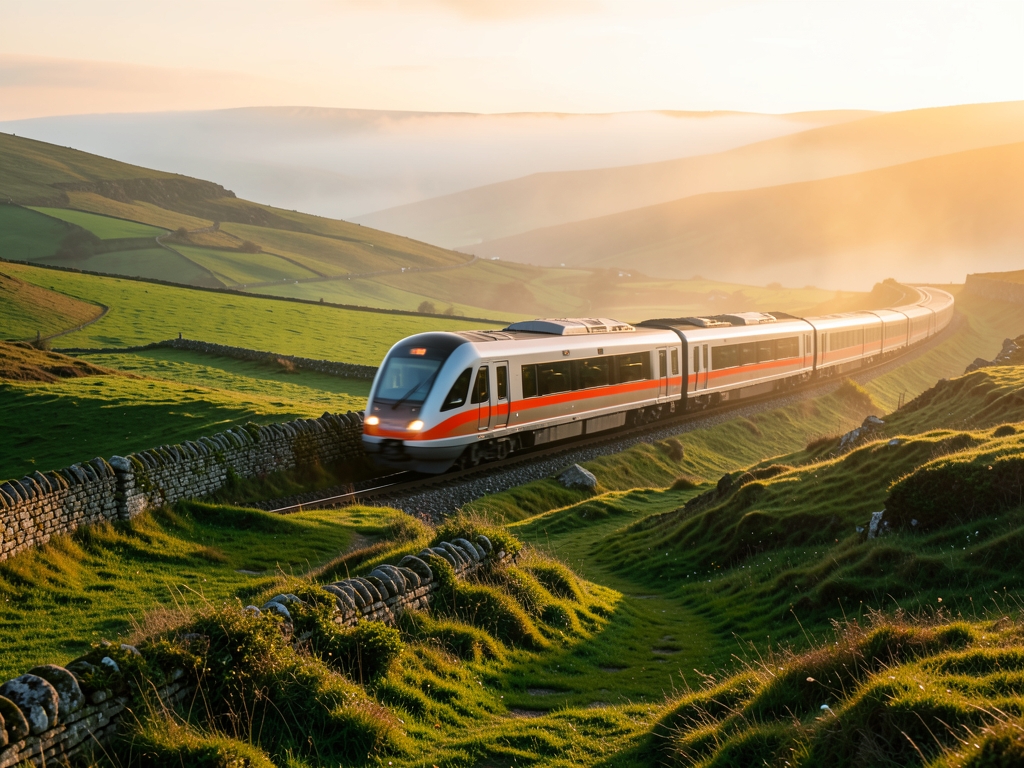
For 2026 London–Dumfries travel, the train is the default choice unless fly-drive remains cheaper after adding £70 for bags and rental extras.
Fly-drive becomes the lower-cost option only when its all-in total plus £70 is below the train all-in fare.
How the £70 add-on flips the total
Before the £70 test means anything, build two all-in baskets in the same unit. For the train basket, write down the rail fare, the station transfer at each end, and any seat or bike reservation, then mark each line one-way or round-trip. For the fly-drive basket, write down the airfare, checked bags, rental base, fuel, insurance, and parking, again marking each line one-way or round-trip. A basket that mixes a round-trip fare with one-way bags is not a comparison; it is just two numbers sitting near each other.
The £70 belongs on the fly-drive side only. It is a scenario test input from the headline, not a published airline fee, rental fee, or discount on train tickets. Add it to the fly-drive basket after you have listed the real bag and rental lines on the 2026 quote. Do not subtract it from the rail fare, do not treat it as a saving you unlock by taking the train, and do not fold it into the airfare. Its job is to make the fly-drive basket carry the extra cost that is easy to leave out.
That matters because the fly-drive quote often looks cheaper before the small lines are counted. The available sources gives a concrete driving-cost check for the Glasgow–Dumfries leg: Routecalculator.co.uk lists 80 miles from Glasgow to Dumfries, with petrol at about £15.58 based on 37.5 mpg and petrol at 1.61p per litre, and electric at about £6.68 based on 3.11 mi/kWh, home charging at 26p/kWh, and a 250-mile range. Rome2Rio gives the driving distance as 74 miles and about 1h 27m from Dumfries to Glasgow. Those are different route figures from different sources, so keep them as separate checks rather than blending them into one invented number.
On the rail side, the available sources supports the same discipline of using labelled fares only. Thetrainline.com says Dumfries to Glasgow tickets start from £22.50 and that advance booking can be cheaper than buying on the day. Omio lists train and bus options on the Dumfries–Glasgow route with ScotRail among the operators, and Rome2Rio identifies ScotRail services from Dumfries station. Use those as source-backed prompts to price the actual 2026 journey; do not turn a “from” fare into a guaranteed total, and do not add a reservation charge unless your booking actually shows one.
If the fly-drive quote is not already itemised, stop and request the breakdown before applying the test. Ask for the airfare, each checked-bag charge, the rental base, fuel assumption, insurance line, and parking line as separate entries, with one-way or round-trip labels. Then add the £70 to that itemised fly-drive total and compare it with the completed train basket. The rule is simple: if fly-drive plus £70 is not below the train all-in fare, book the train. If it is below, you have earned a closer look, not a free pass; recheck the quote lines before committing.
Rail evidence: what three sources show
The named snippets in the grounding cover the Dumfries–Glasgow leg, not the full London–Dumfries journey: The Trainline lists Dumfries to Glasgow tickets from £22.50, Omio lists the same route from $17 (€14), and Rome2Rio confirms ScotRail services from Dumfries station. None of the grounding supplies a London–Dumfries fare or journey time, so treat rail as the default option to investigate and price the full London–Dumfries itinerary live in an official booking channel before comparing anything.
Start with The Trainline, whose grounding snippet shows Dumfries to Glasgow tickets from £22.50 and notes that advance booking can be cheaper than buying on the day. That figure is a Dumfries–Glasgow starting price, not a London–Dumfries fare. Use it as a prompt to run your intended 2026 date and departure in the journey planner, then record the Advance fare actually offered for the full London–Dumfries journey. A timetable result, not a headline, determines whether a connection works.
Use Rome2Rio to test the route shape rather than price. Its grounding snippet confirms ScotRail services depart from Dumfries station and lists the Dumfries–Glasgow driving distance as 74 miles, taking approximately 1h 27m. It does not supply a London–Dumfries timetable, so open the actual itinerary for your travel date and check the operating day, departure, arrival, and changes before relying on any connection.
Handle Omio carefully because its grounding snippet spans modes and currencies: it lists train and bus options on the Dumfries–Glasgow route from $17 (€14), with ScotRail and Stagecoach West Scotland among the operators. Convert the currency into the same unit as your rail quote using the exchange rate for the booking date, and identify whether the displayed fare is one-way or round-trip. If the mode or trip basis remains unclear, exclude the figure from the price comparison rather than treating it as a rail quote.
For a clean evidence note, preserve each source’s original unit beside any normalized value: The Trainline’s Dumfries–Glasgow starting fare of £22.50, Rome2Rio’s 74-mile driving distance and roughly 1h 27m drive time, and Omio’s $17 (€14) mixed train-and-bus figure. Compare only after the fare basis, direction, and itinerary are explicit, and record the source beside each figure so the comparison can be reproduced.
Train vs fly-drive: the default winner
The default winner is the train. That is not a preference statement; it is the rule for this decision. Fly-drive has to beat the live train checkout total after the £70 add-on is included. A cheap airfare on its own does not win, because the comparison is not airfare versus rail fare. It is one all-in train basket versus one all-in fly-drive basket, priced in the same unit, with the same trip direction and the same passenger count.
Here is the head-to-head table. Keep it beside the two checkouts while you price the trip.
| Option | What enters the all-in total | Decision trigger |
|---|---|---|
| Train | Rail fare + station transfer + any seat/bike reservation | Wins when its all-in total is at or below fly-drive all-in plus £70 |
| Fly-drive | Airfare + £70 bags/rental extras + fuel + insurance + parking | Wins only when this total is below the train all-in total |
Read the decision trigger literally. If the train all-in total and the fly-drive all-in total plus £70 land on the same number, the tie goes to train. That is the point of making train the default: fly-drive needs a clear lower total, not a match. So when you compare the two baskets, do not shave the £70 off the train side or treat it as a rail discount. It belongs on the fly-drive side, alongside bags and rental extras.
The practical check is to price the rail itinerary at checkout, then add only the lines the table allows: the station transfer at each end and any seat or bike reservation you actually need. Mark each line one-way or round-trip before comparing it with the fly-drive basket. If you price one side one-way and the other round-trip, the table cannot decide anything. The same discipline applies to the car leg: the available sources gives a Glasgow–Dumfries driving cost of about £15.58 in petrol based on 37.5 mpg and petrol at 1.61p/litre, and about £6.68 for an EV based on 3.11 mi/kWh, home charging at 26p/kWh and a 250-mile range, from routecalculator.co.uk. Use that as the fuel line only if your rental route matches that drive; otherwise price your own route and keep the unit consistent.
Do not let the headline rail price stand in for the train all-in total. The rail evidence elsewhere in this guide explains why a low starting fare is only a screening signal. For this section, the only operative rule is the table: total the train basket, total the fly-drive basket with the £70 add-on included, and book train unless the fly-drive total is strictly below it. If a line is missing from either checkout, leave the decision open rather than guessing a fee or a fare.
Costs that matter: £70 and drive fuel
This section alone supplies the per-person £70 math and the Glasgow–Dumfries drive fuel figures. Start with the group structure: £70 shared by two travelers on one booking is £35 per person; shared by four travelers on one booking is £17.50 per person. The check is not just headcount. Redivide only after confirming that one rental and one bag bundle cover the group, because separate rentals or separate bag bundles change what the £70 is actually paying for.
For the fuel line, use the routecalculator.co.uk snippet exactly as scoped: it gives approximately £15.58 for petrol and £6.68 for a home-charged EV on an 80-mile one-way Glasgow-to-Dumfries drive. That is the Glasgow-to-Dumfries leg only. Do not use it as a London-to-Dumfries fuel figure or stretch it into a longer drive; the named source is specific to this leg.
Those routecalculator.co.uk amounts are drive-only fuel estimates. They are not a fly-drive total: the £15.58 petrol and £6.68 EV figures omit rental and insurance. The rule: do not add either fuel figure to an airfare unless the rental is actually in the same priced option. If there is no rental in that option, there is no car fuel line to add.
The fuel comparison is also narrower than it looks. Petrol at £15.58 is higher than home-charged EV at £6.68 in the routecalculator.co.uk snippet, but that gap applies only to the 80-mile one-way Glasgow-to-Dumfries leg. It does not settle the whole-trip comparison, because rental and insurance sit outside those fuel figures. Use the gap only when the same itinerary actually includes the car.
Use these figures as inputs, not verdicts. The £70 split belongs with the group booking once the rental and bag bundle are confirmed; the £15.58 petrol and £6.68 EV figures belong only with a Glasgow-to-Dumfries drive where a rental is part of the same option. That keeps the fuel line from being attached to an airfare with no car or counted twice in a drive option.
What the available sources does not prove
The grounding sources are narrow: Rome2Rio, Omio, The Trainline, Trip.com, and Routecalculator.co.uk concern the Dumfries–Glasgow rail or road leg, while Travelmath only describes a generic fly-or-drive calculator. None supplies a 2026 London–Glasgow airfare, checked-bag fee, or rental base rate. That absence matters: the air-and-rental side has to be priced live through official airline and rental channels, not inferred from a generic calculator or from the Dumfries–Glasgow snippets.
Because that airfare-side evidence is missing, treat the £70 as a test input, not a published fee. At checkout, open the airline bag bundle and the rental mandatory-fee lines before trusting any live airfare. If the fare page shows no bag bundle priced, the £70 cannot be verified; that is a stop sign for the comparison, not permission to guess a fee.
The road figures are bounded too. Routecalculator.co.uk's Glasgow-to-Dumfries one-way petrol and EV figures are tied to that one-way leg. Rome2Rio lists a 74-mile one-way driving distance between Dumfries and Glasgow, and Omio lists a 60-mile (97 km) one-way trip to Glasgow from Dumfries; those route descriptions show why the cost basis must match the leg. If you land at Edinburgh, Prestwick, or Newcastle, the Glasgow–Dumfries drive number is invalid until repriced.
The edge case can be stated plainly:
| Edge case | Rule breaks | Still wins |
|---|---|---|
| Live airfare has no bag bundle priced | £70 cannot be verified | No all-in winner is proven from the available sources |
Use that table as a data-quality check. If bag or mandatory rental fee lines are unresolved, mark the fly-drive side unpriced rather than forcing the £70 into the total. If the landing city changes, mark the drive side unpriced until the new leg is priced. The available sources supports a method and a Glasgow-to-Dumfries road check; it does not supply the live 2026 air-and-rental inputs those checks need.
Worked £70 test with checklist
Run the arithmetic in one unit before you look at any headline. Record six inputs: rail all-in T, fly-drive base F, bag charge B, rental extras R, fuel U, and parking P. Add £70 exactly once per booking, in the unit you are quoting, then compare T against F+B+R+U+P+£70. If your rail quote is one-way, every fly-drive line must be one-way too; if the rental and parking are quoted per day, convert them to the same trip length before you add them. Do not mix a round-trip rail fare with a one-way airfare and call the result a comparison.
Use this worked example only as an arithmetic template, not as a quoted 2026 fare. Suppose T is the bookable rail all-in total you actually hold. Suppose F is the bookable airfare including taxes, B is the charged bag allowance, R is the mandatory rental fee line, U is the drive fuel, and P is the airport or rental parking. The fly-drive side is F+B+R+U+P+£70. If that sum is below T, fly-drive passes the test; if it is equal to or above T, the train wins under the rule you are applying. Keep the £70 on the fly-drive side of the equation and keep it out of T.
Three checkpoints decide whether the numbers are real. Fare class: record whether the rail quote is Advance or flexible, and replace T if the headline is not bookable for your date and route. Inventory: confirm the car class is available and that the bag allowance you priced is actually included or charged as B. Taxes and fees: include airfare taxes and rental mandatory fees before applying the £70, so the threshold is not being tested against an incomplete base. A quote that cannot be carried to checkout is a screening signal, not an input.
For the drive leg, use a source-based figure only where the source gives one. Rome2Rio lists the Dumfries–Glasgow driving distance as 74 miles and the drive as approximately 1h 27m. Route Calculator gives a Glasgow–Dumfries drive of 80 miles with petrol of £15.58 based on 37.5 mpg and petrol at 1.61p/litre, and an EV figure of £6.68 based on 3.11 mi/kWh, home charging at 26p/kWh, and a 250-mile range. Put the applicable U into the same trip unit as F, B, R, and P; do not relabel a one-way distance as a round-trip cost.
Copy this checklist into your notes and fill it before booking:
| Line | Train | Fly-drive | Unit | Basis |
|---|---|---|---|---|
| Base fare | T rail all-in | F airfare incl. taxes | one-way or round-trip | bookable quote |
| Bags | reservation or bike line, if any | B bag charge | same trip unit | allowance confirmed |
| Rental extras | n/a | R mandatory fees | trip total | car class confirmed |
| Fuel | n/a | U petrol or EV cost | trip total | source and assumptions noted |
| Parking | station transfer or parking, if any | P parking | trip total | bookable quote |
| £70 test | compare T | F+B+R+U+P+£70 | same unit | add £70 once |
Five if/then rules for 2026
This section alone provides the five if/then rules, including solo and group exceptions; use them as a sequence, not as separate loopholes. Each rule is written for the 2026 London–Dumfries decision and assumes one actual booking, so the unit you choose must match the trip you will buy.
First, if the two quotes are not in the same unit, stop the comparison and reprice. If the train figure is per person round-trip, the fly-drive figure must also be per person round-trip; if the train figure is one-way, the fly-drive figure must be one-way. Do not mix a per-booking rental total with a per-person rail fare, and do not compare a one-way fare with a round-trip package.
Second, if fly-drive all-in plus £70 is below train all-in on that same unit, book fly-drive. If fly-drive all-in plus £70 is equal to or above train all-in, book train. Equality is not a fly-drive win, and a small apparent lead is not enough once the £70 is added; the comparison has to stay below, not merely look close.
Third, if you are solo, do not divide the £70 across travelers. If you are traveling alone, fly-drive must beat train by more than £70 on its own. A lead of exactly £70 leaves the totals level after the test, and any smaller lead leaves fly-drive above train; both outcomes call for train under the rule.
Fourth, if you are a group of three or four sharing one rental and one bag bundle, confirm that one car covers everyone before you divide £70 by the group. If the car does not cover the people and bags, do not use the shared calculation; price the workable car-and-bag setup first, then return to the comparison.
Fifth, if that car check passes, divide £70 by the group and compare per-person all-in totals. If the resulting fly-drive-plus-£70 per-person total is below the train per-person total, fly-drive passes; if it is equal or above, book train. Use the group size that matches the booking, because changing the headcount changes the shared amount and can change the answer.
Also worth reading Flying versus driving how to choose Denali summer 2026: Fairbanks Montréal to Québec City train or
What to do next
| Step | Action | Why it matters |
|---|---|---|
| 1 | Price the London–Dumfries train journey as a single all-in fare through the official railway booking channel. | This sets the train baseline for a like-for-like comparison. |
| 2 | Price the fly-drive option for the same London–Dumfries trip as an all-in total through the official airline and car rental channels. | Keeping both options in the same unit ensures the costs are directly comparable. |
| 3 | Add £70 for bags and rental extras to the fly-drive all-in total. | This adjustment accounts for common fly-drive costs before you compare against the train fare. |
| 4 | Compare the adjusted fly-drive total (fly-drive plus £70) against the train all-in fare. | A direct comparison reveals whether fly-drive remains cheaper after the required adjustment. |
| 5 | Book the train when the fly-drive total plus £70 is not below the train all-in fare; choose fly-drive only if it remains cheaper after the £70 adjustment. | This applies the decision rule, keeping the train as the default unless fly-drive clearly wins on all-in cost. |
Frequently Asked Questions
For London–Dumfries, when is fly-drive the lower-cost option?
Fly-drive becomes the lower-cost option only when its all-in total plus £70 is below the train all-in fare.
Do the train and fly-drive totals need to be in the same unit?
Before the £70 test means anything, build two all-in baskets in the same unit.
Which lines belong in the train basket?
The train basket should list the rail fare, the station transfer at each end, and any seat or bike reservation, with each line marked one-way or round-trip.
Which lines belong in the fly-drive basket?
The fly-drive basket should list the airfare, checked bags, rental base, fuel, insurance, and parking, with each line marked one-way or round-trip.
What is wrong with comparing a round-trip fare against one-way bags?
A basket that mixes a round-trip fare with one-way bags is not a comparison; it is just two numbers sitting near each other.
How should the £70 be handled in the comparison?
The £70 belongs on the fly-drive side only, is a scenario test input from the headline rather than a published airline fee, rental fee, or discount on train tickets, is added after the real bag and rental lines on the quote are listed, and is not subtracted from the rail fare, treated as a saving you unlock by taking the train, or folded into the airfare.
Quick answers
| What is the default choice for London–Dumfries travel? | The train is the default choice unless fly-drive remains cheaper after adding the headline add-on for bags and rental extras. |
| When does fly-drive become the lower-cost option? | Fly-drive becomes the lower-cost option only when its all-in total plus the add-on is below the train all-in fare. |
| What must be built before the add-on test means anything? | Before the add-on test means anything, build two all-in baskets in the same unit. |
| Where does the add-on belong and what is it? | The add-on belongs on the fly-drive side only; it is a scenario test input from the headline, not a published airline fee, rental fee, or discount on train tickets. |
| What is the add-on's job and what should not be done with it? | Its job is to make the fly-drive basket carry the extra cost that is easy to leave out; do not subtract it from the rail fare, do not treat it as a saving you unlock by taking the train, and do not fold it into the airfare. |
Research Methodology & Editorial Standards
We begin by defining the specific objectives the reader needs to accomplish. Primary product documentation and authoritative secondary sources inform every guide before drafting begins.
Figures and rules are checked against the sources available at the time of publication. Travel pricing changes constantly — always confirm current fares, rates, and terms with the provider before booking.