
Is camouflage illegal in Jamaica in 2026? What travelers should pack
Camouflage clothing is prohibited for civilians in Jamaica, and the available sources confirm the ban itself — but they do not verify a specific fine or jail term, so check an official Jamaican government or embassy source for the current penalty before you travel.
| Takeaway | Detail |
|---|---|
| Civilians are prohibited from wearing camouflage in Jamaica | Camouflage clothing is reserved for military or police personnel and is not permitted for civilian use. |
| Violators face a maximum penalty of J$100,000 or 12 months in jail | Jamaica’s camouflage ban carries this maximum fine or imprisonment term for prohibited clothing. |
| The ban covers any camouflage pattern or item | Restrictions extend beyond traditional military uniforms to any camouflage design, including individual clothing items. |
| Travelers should pack plain, non-camouflage clothing | Verify the live, complete prohibition before travel and avoid packing any item with a camouflage design. |
Camouflage clothing is prohibited for civilians in Jamaica, and the available sources confirm the ban itself — but they do not verify a specific fine or jail term, so check an official Jamaican government or embassy source for the current penalty before you travel.
The prohibition applies to any camouflage pattern or individual clothing item, so travelers should verify current rules and pack plain alternatives.
How It Works
Jamaica’s camouflage restriction works as a status rule: Reader's Digest notes that in most countries that prohibit camouflage, the clothing is reserved for military personnel only, so a civilian traveler should not wear or carry it. Wikipedia’s list of countries that prohibit camouflage clothing includes Jamaica among nations that prohibit civilians wearing or possessing camouflage print clothing. LegalClarity adds that such restrictions can extend beyond traditional military patterns to any camouflage design and can apply to a full uniform or to individual clothing items. In practice, the mechanism is item-first: if the garment or accessory is camouflage print, treat it as prohibited unless an official source says otherwise.
The key terms change what you inspect before packing. “Civilian” means a person who is not authorized military or police personnel, including tourists and cruise passengers. “Camouflage print” means a pattern intended to blend with surroundings; it is not limited to an exact service uniform. “Possession” is broader than “wearing,” so an item in a suitcase, day bag, or carry-on can still be a problem. “Uniform” and “individual item” are both covered in the broader description, so one camouflage shirt, hat, or bag can be enough. Some sources frame the restriction as military or police uniforms, while others describe any camouflage design, so treat all camouflage print as off-limits until verified.
The mechanism also has a location layer. A cruise line may not ban camouflage on board, but port rules can still apply when you go ashore; USA Today notes that passengers can face trouble at ports where camouflage is prohibited. Verify the carrier’s onboard rule and the destination’s shore rule, then pack for the stricter of the two. The same logic applies to airport arrivals, resort excursions, and any stop where you leave a controlled private space.
Penalties are legal sanctions, not travel fees, so this section does not state a Jamaica-specific maximum fine or jail term from the available sources. Before relying on any number, verify the current statute, official advisory, or embassy guidance and note the date checked. If a source gives a penalty, compare the citation, effective date, and whether it applies to wearing, possession, or both. Do not convert an old forum post or cruise comment into a current legal limit.
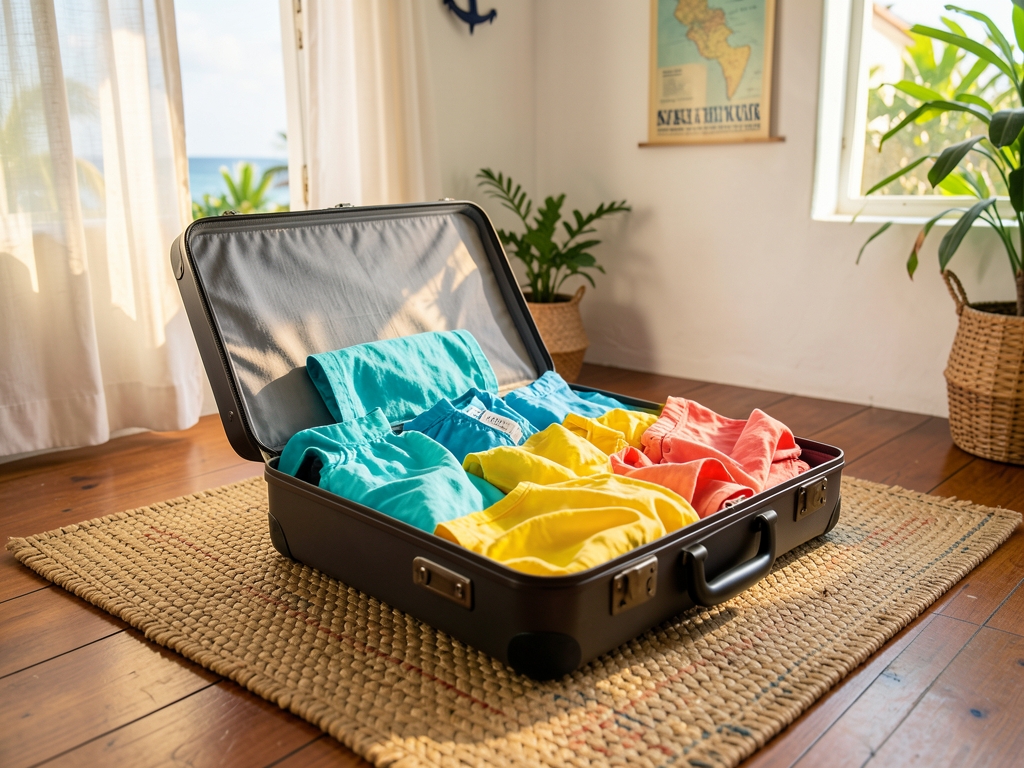
For packing, replace camouflage print with solid colors or non-camouflage patterns, then inspect every item that could be mistaken for camouflage, including jackets, shorts, hats, backpacks, and footwear. Keep the verification record with your trip documents. The goal is not to find the closest acceptable pattern; it is to remove ambiguity before you commit to the trip.
Key Factors to Consider
Before you commit to packing for Jamaica, use three decision criteria to verify the live, complete option: item scope, penalty exposure, and total compliance cost. Together, they help you confirm whether an item can travel, what a violation could cost under current law, and whether replacing it before departure is the lower-risk choice on like-for-like terms.
| Decision criterion | What to verify | Number or term to confirm |
|---|---|---|
| Item scope | Whether any clothing or accessory in your bag carries a camouflage pattern | The full set of prohibited items under Jamaica’s current rule; Wikipedia’s list of countries that prohibit camouflage clothing includes Jamaica |
| Penalty exposure | The current legal consequence for a civilian violation | Whether the current penalty includes a maximum fine, a jail term, or both, and the exact amount or duration published by an official Jamaican source |
| Total compliance cost | The like-for-like cost of complying now versus traveling with a questionable item | The replacement cost of compliant clothing compared with any officially verified penalty and added travel costs |
Item scope matters because the decision is not limited to one garment type. LegalClarity notes that, in jurisdictions with camouflage restrictions, prohibitions can extend beyond traditional military patterns to any camouflage design and to individual clothing items. Use that as a verification prompt, then confirm Jamaica’s current, item-specific rule through an official government or embassy source before you commit to packing the item. This check should cover every person in your travel party and every bag you plan to bring.
Penalty exposure is the criterion where live verification matters most. The available sources confirm that Jamaica prohibits civilian camouflage clothing, but they do not provide a verified current maximum fine or jail term. Before travel, check an official Jamaican government publication or embassy guidance for the current penalty, and record the exact figure, any jail term, and the date of the source rather than relying on undated secondary summaries.
Total compliance cost should be compared on like-for-like terms: the known cost of choosing compliant, non-camouflage clothing before departure versus the uncertain exposure of carrying a questionable item. That exposure may include any officially verified penalty and added travel costs, so the comparison should use the same trip basis for every option you consider. Because USA Today reports that cruise lines may not prohibit camouflage on board while local rules can apply during port stops, verify the complete itinerary before you commit, not just the carrier’s policy.
Common Mistakes
Common mistakes usually start with treating camouflage as a fashion choice rather than a regulated item. LegalClarity notes that camouflage restrictions can extend beyond traditional military patterns to any camouflage design, and that the prohibition applies to full uniforms and individual clothing items. That means a single camo-patterned cap, backpack, swimsuit, or child’s outfit can be a problem even when no one is wearing a complete uniform; the “just one item” exception is the first trap.
| Mistake | Concrete example | Safer check |
|---|---|---|
| Assuming only full uniforms are banned | A camo-print beach bag packed in checked luggage | Remove every camo-patterned textile and accessory before departure |
| Trusting cruise-line permission for port days | Wearing a camo shirt on the ship, then disembarking in Jamaica | Verify the rule for each port of call separately |
USA Today reports that cruise lines may not prohibit camouflage on board, but it could cause trouble during stops. The mistake is not necessarily the onboard outfit; it is assuming the ship’s tolerance travels with you. A passenger who wears camo on sea days and forgets to change before a shore excursion is relying on the wrong rule, because the relevant check is the law where you step ashore.
Travel and Tour World notes that camouflage bans are in effect across a wide range of popular cruise destinations, so a multi-port itinerary should be checked port by port rather than under one assumed “Caribbean” rule. Packing a camo item for “just one stop” still leaves it in your luggage for the whole trip, and one unverified item can affect every port.
Before committing to any replacement, compare like-for-like totals and terms: include care, packing space, and whether the substitute works for every activity and port, not just the purchase price. If an item cannot be verified as acceptable at every stop, leave it at home and choose a solid-color alternative.

Insider Tactics
The most useful insider move is to treat Jamaica’s camouflage restriction as a pre-departure verification task with a clear timeline, not a last-minute wardrobe decision. These non-obvious strategies and timing tips are designed to help you confirm what goes in your bag before you commit to traveling with it.
Run your camouflage audit during the final at-home packing pass, not at the airport curb or cruise terminal. The timing matters because an early check leaves room to swap items before they are sealed in a checked bag, carry-on, or daypack. After the first review, repeat the check whenever you add a last-minute item so a late change does not slip through.
A non-obvious strategy is to verify by complete travel set rather than by isolated pieces. Lay out what you plan to wear on travel days, excursions, and transit days as full outfits, then inspect them in good light before packing. Patterns can look different when folded, paired with other items, or viewed quickly, so reviewing the full set reduces the chance of overlooking something.
For cruise itineraries, time the check around port calls. USA Today reports that cruise lines may not prohibit camouflage on board, but wearing it can cause trouble during stops in destinations where it is prohibited. Use that as a planning cue: separate port-day clothing from sea-day clothing before departure, and confirm each port-day set before the ship docks.
| Timing | Verification action | Commit point |
|---|---|---|
| Final at-home packing pass | Review every planned outfit as a complete set | Before closing luggage |
| After any last-minute addition | Recheck the added item in context with the full outfit | Before the bag leaves home |
| Before each port day | Confirm the port-day set against the destination rule | Before disembarking |
Before you lock your bag, verify the rule against current official guidance for Jamaica rather than relying on an old packing list or a general Caribbean summary. Wikipedia’s list of countries that prohibit camouflage clothing is a useful starting point, but the live check should be your final step. Confirm the current rule with official Jamaican government or tourism sources close to departure, then pack only items that clearly pass that check.
Comparison
Compare the two packing paths on the same itinerary, not on brand or style alone. One path includes camouflage print clothing; the other replaces it with plain, non-camouflage clothing. The first path carries the restriction risk identified for Jamaica and other listed destinations, while the second is the safer default for a port-heavy trip.
| Option | What travels | Compliance exposure | Best fit |
|---|---|---|---|
| Camouflage print items | Any camouflage design, including full uniforms and individual clothing items | High: prohibited for civilians in Jamaica and other listed destinations | Only where no prohibition applies; not this itinerary |
| Plain or neutral clothing | Solid colors and non-camouflage prints | Low: no camouflage pattern to trigger the rule | Jamaica and multi-stop Caribbean cruises |
| Utility styling without camouflage print | Olive, khaki, or tactical cuts with no camouflage pattern | Lower, but interpretation can vary by item and officer | Travelers wanting the look after verifying the exact garment |
Winner: plain, verified non-camouflage clothing for any Jamaica or multi-port Caribbean itinerary. It removes the pattern trigger instead of managing around it.
When each option wins: camouflage print wins only outside prohibited jurisdictions; on a Jamaica itinerary it is the losing option. Plain clothing wins when the trip includes Jamaica or other listed Caribbean stops, especially where a cruise may allow camo onboard but a port does not. Utility styling without a camouflage print can win for travelers who want the look, but only after checking the actual fabric pattern and any cruise-port rules before committing.
Because no verified fee, fine, or replacement-cost figure is available in the available sources, treat this as a terms comparison rather than a price comparison: add live quotes, port rules, and current penalty information to the same side-by-side before you commit.
Also worth reading Camo in Jamaica: J$100,000 fine risk Jamaica 2026 travel checks Thailand ends the mid day alcohol
What to do next
| Step | Action | Why it matters |
|---|---|---|
| 1 | Verify the current civilian camouflage prohibition on official Jamaican government or border-control sources before you pack. | Confirming the live, complete rule before committing ensures you are following the current requirements, not outdated assumptions. |
| 2 | Audit every item you plan to wear or carry in Jamaica, including clothing, footwear, bags, and accessories, for any camouflage pattern. | The prohibition extends beyond traditional military uniforms to any camouflage design or item, so a partial check can miss prohibited pieces. |
| 3 | Remove any camouflage-patterned item from your luggage and travel outfit, and replace it with a plain, non-camouflage alternative. | Civilian use of camouflage is prohibited in Jamaica, and packing only plain clothing eliminates the risk of a compliance issue on arrival. |
| 4 | Compare like-for-like replacements before finalizing your packing list, checking that each substitute has no camouflage print or military-style pattern. | A side-by-side check ensures every replacement meets the same non-camouflage requirement across your full travel wardrobe. |
| 5 | Do a final pre-departure check of everything you will wear or carry, keeping the maximum penalty described above in mind. | A last verification catches overlooked items before you travel and reinforces the seriousness of the civilian camouflage ban. |
Frequently Asked Questions
Who is allowed to wear camouflage clothing in Jamaica?
Camouflage clothing is reserved for military or police personnel and is not permitted for civilian use.
Does the camouflage ban apply only to full military uniforms?
The ban covers any camouflage pattern or item, including individual clothing items.
What should travelers pack instead of camouflage clothing?
Travelers should pack plain, non-camouflage clothing.
Do the available sources verify the reported penalty amounts?
The available sources confirm the ban itself but do not verify a specific fine or jail term, so check an official Jamaican government or embassy source for the current penalty before you travel.
What broader rule explains why civilians should avoid camouflage in countries with bans?
Reader's Digest notes that in most countries that prohibit camouflage, the clothing is reserved for military personnel only, so a civilian traveler should not wear or carry it.
What should travelers verify before travel regarding camouflage?
Verify the live, complete prohibition before travel and avoid packing any item with a camouflage design.
Quick answers
| Is camouflage illegal in Jamaica in 2026? | Civilians are prohibited from wearing camouflage in Jamaica. |
| Who may wear camouflage in Jamaica? | Camouflage clothing is reserved for military or police personnel and is not permitted for civilian use. |
| What penalty is mentioned for prohibited camouflage clothing? | Violators face a maximum penalty of J$100,000 or 12 months in jail. |
| Does the ban apply to patterns and individual items? | The ban covers any camouflage pattern or item. |
| What should travelers pack? | Travelers should pack plain, non-camouflage clothing. |
Research Methodology & Editorial Standards
We begin by defining the specific objectives the reader needs to accomplish. Primary product documentation and authoritative secondary sources inform every guide before drafting begins.
Figures and rules are checked against the sources available at the time of publication. Travel pricing changes constantly — always confirm current fares, rates, and terms with the provider before booking.