
How Amsterdam's 2025 short-term rental rules affect nightly rates for legal canal-house stays versus hotel…
Amsterdam's short-term rental rules for canal-house stays are strict, and the exact 2025 annual night cap, permit requirements, and tax rates should be verified directly with the municipality before you commit to either a canal-house stay or a hotel alternative.

Amsterdam's short-term rental rules for canal-house stays are strict, and the exact 2025 annual night cap, permit requirements, and tax rates should be verified directly with the municipality before you commit to either a canal-house stay or a hotel alternative.
This guide delivers a verify-before-you-commit comparison of nightly rates and terms between legal canal-house stays and hotel alternatives.
How It Works
Amsterdam regulates short-term rentals of residential properties, including canal houses, and the practical principle for travelers is to verify before you commit. Before booking, check the municipality's official website for the current rules on permits, primary-residence requirements, annual night caps, and guest limits, and ask the host to show the registration or permit documentation that applies to their listing. Do not assume a listing is legal because it appears on a platform; confirm the host's compliance status against the city's own published requirements before paying.
Key terms in this system distinguish between "primary residence" and "secondary residence." A primary residence is defined as a property where the host lives for at least 183 days per year, while a secondary residence permits short-term rentals only if the host can prove they are not using the space as a primary income source. For legal canal-house stays, the critical term is the "occupancy permit," which the municipality issues only after verifying that the property meets safety standards and does not exceed the allowed number of guests per square meter. Hotel alternatives, by contrast, operate under a different licensing regime that allows nightly rentals by default, provided the establishment pays the applicable tourism tax.
Readers should approach every listing with a two-step check: first, confirm the host’s residency status via the city’s public registry; second, compare the total cost inclusive of the 9% tourism tax and any service fees. Because canal houses often lack the standardized amenities of hotels—such as daily housekeeping or on-site concierge—the price per night may appear lower, but the total cost of compliance (permits, insurance, and potential fines for non-compliance) is baked into the legal rate. Always request a breakdown of taxes and fees before booking to avoid the common pitfall of comparing a base nightly rate against a hotel’s all-inclusive price.
This section alone explains the mechanism and key terms. If a listing does not display a valid residence permit number or a link to the city’s verification portal, treat it as non-compliant and seek a hotel alternative that clearly itemizes taxes. The mechanism is designed to protect the residential character of Amsterdam’s canal districts, and the only way to verify a legal stay is to see proof of that permit before committing to a booking.

Key Factors to Consider
When weighing a legal canal-house stay against a hotel in Amsterdam for 2025, start by confirming the host’s primary-residence registration. The city’s short-term rental framework requires hosts to prove the property is their main dwelling, and only listings that pass this verification are lawful. A canal house that clears this check usually carries a “legal short-term rental” badge on the booking platform; without it, you risk fines or eviction, so treat the badge as your first filter before comparing nightly rates.
The second criterion is total cost per night, not the headline rate. Legal canal-house listings typically bundle cleaning fees, tourist tax, and service charges into one displayed price, whereas hotels often quote a base rate and add resort fees, city tax, and breakfast separately. Pull the final “pay now” figure from the checkout page for each option and compare them side by side; a canal house that looks €30 cheaper per night can end up €15 dearer once taxes and fees are added.
Third, check the cancellation and check-in terms. Canal houses frequently enforce strict 48-hour cancellation windows and may require a digital key pickup after 18:00, while hotels usually offer 24-hour front desks and free cancellation up to the day of arrival. If your itinerary is firm, the hotel’s flexibility may offset a slightly higher nightly rate; if you are confident in your dates, the canal house’s lower headline price wins.
Numbers that matter: the city caps how many nights per year a primary residence can be rented short-term, and it levies a tourist tax on accommodation that both canal houses and hotels must collect. The exact annual cap and the current tax rate change, so verify both on the municipality's official website and on the booking page's itemized cost breakdown before you commit. Any listing advertising year-round short-term availability should be treated as suspect until the host's permit and registration are confirmed.
For a quick side-by-side check, use this table when you shortlist two properties:
| Factor | Legal Canal House | 3-Star Hotel |
|---|---|---|
| Headline nightly rate | €195 | €210 |
| Cleaning & service fees | €25 | €0 |
| Tourist tax (9%) | €19.80 | €18.90 |
| Total per night | €239.80 | €228.90 |
| Legal limit | 183 days max | No restriction |
In this example the hotel edges out the canal house by €10.90 per night, but the canal house offers a heritage experience the hotel cannot match. Recalculate with your own dates and fees before you book.
Common Mistakes
The most damaging assumption hosts and guests make is treating a listing’s “canal house” label as a guarantee of legality. In reality, many properties marketed as authentic canal stays operate without the required primary-residence registration, leaving guests vulnerable to sudden cancellation or fines. A concrete example: a host lists a three-bedroom canal house on a major platform without proving it is their main dwelling. When the city’s verification system flags the listing, the booking is pulled without refund, and the guest loses their travel investment. Always cross-check the host’s registration number against the city’s public registry before confirming payment.
Another common pitfall involves comparing nightly rates without accounting for the city's occupancy tax and platform service fees. Canal-house listings and hotel quotes often present taxes and fees differently — one bundled into the displayed price, the other added at checkout — so a headline rate that looks cheaper can end up dearer once mandatory charges are applied. Request a full checkout breakdown that lists the base rate, tax, and fee separately for both options; if the host cannot provide this, treat the listing as opaque and look elsewhere.
Guests also frequently overlook the “verify before you commit” deadline that governs booking windows. Because the 2025 framework requires hosts to prove primary-residence status before a listing goes live, last-minute bookings carry higher risk. A reservation made two weeks out may be secure, but a same-day booking could collapse if the host’s documentation is pending review. Set a personal rule: only book canal-house stays where the host’s registration is visible and verified on the platform’s profile page, and avoid any listing that pressures you to “book now before it’s gone.”
Finally, many travelers assume that a “canal house” experience automatically includes amenities like a kitchen or laundry, but zoning rules for short-term rentals vary by neighborhood. Some legal permits restrict stays to specific months or require the host to be present, which can limit access to shared spaces or cooking facilities. Before committing, message the host explicitly: “Which amenities are guaranteed under your 2025 short-term rental permit?” A clear, written answer protects you from arriving to find the kitchen locked or the building’s front desk refusing entry to non-residents.
Insider Tactics
Amsterdam’s 2025 short-term rental framework pivots on a strict "verify before you commit" principle. Hosts must prove a property’s primary residence status before listing on any platform, shifting the compliance burden from guest to host. This mechanism means that a listing labeled "canal house" is not automatically legal; the onus is on the host to register the dwelling as their main domicile with the municipality, and only then may they offer nights to travelers.
Non-obvious strategy: compliance status can lapse between a host's registration renewal and their next platform update, so a listing that was legal last season may no longer be. Rather than trusting a platform badge alone, cross-check the host's registration or permit details against whatever public verification the municipality offers, and re-confirm the listing's status shortly before you pay rather than weeks in advance.
Timing tip: book during the low-demand shoulder season (January through March) when hotel rates dip but legal canal-house stays remain scarce. With fewer tourists vetting the verification checkbox, hosts who have successfully registered their primary residence are more likely to honor bookings at stable nightly rates, unburdened by the premium pricing that peaks during tulip season or major events. This gap creates a rare chance to secure a legal, residential stay at a price closer to a standard hotel than a luxury boutique.
Comparison: when pitting a verified canal-house stay against a hotel alternative, calculate the total cost including the city tourist tax at whatever rate currently applies and any platform service fees. Do not assume the canal house is cheaper; depending on the dates, the verified checkout totals can favor either option. The only reliable comparison is between two live, complete checkout figures for the same dates and occupancy, with every mandatory tax and fee line included on both sides.
Comparison
This is the only place we put the two live options side by side and call a winner. I do it after verification, not from the listing headline: the canal-house stay has to be a confirmed legal primary-residence booking under Amsterdam’s 2025 short-term rental framework, and the hotel has to be the exact room, date, and cancellation product you would actually book. If either side is still a screen mockup, a saved search, or a “request to book,” you are not comparing totals yet. You are comparing stories.
Use one table and make every row a like-for-like check. Do not mix a nightly canal-house rate with a hotel’s room-only teaser if the legal stay includes cleaning or city tax in the live checkout. The mechanism that matters here is the one described in the framework coverage: the host must prove the property’s primary-residence status before listing, so the verified legal stay is the only version of the canal house that belongs in the comparison at all.
| Line item | Legal canal-house stay | Hotel alternative |
|---|---|---|
| Verified status | Live listing with primary-residence proof confirmed before commitment | Live hotel room with the same dates and occupancy |
| Nightly rate | Use the verified checkout nightly rate, not the search-card rate | Use the same checkout nightly rate for the comparable room type |
| Mandatory extras | Add every required cleaning, service, and tax line shown before payment | Add every mandatory fee and tax line shown before payment |
| Space and access | Check the full unit description, stairs, entry instructions, and shared areas | Check room size, bed setup, step-free access, and hotel facilities |
| Terms | Read the live cancellation, check-in, and house-rule terms | Read the live cancellation, check-in, and property terms |
| Winner rule | Wins when verified legality plus total price plus space beat the hotel on your stated priorities | Wins when the verified total, predictability, or access terms beat the canal house |
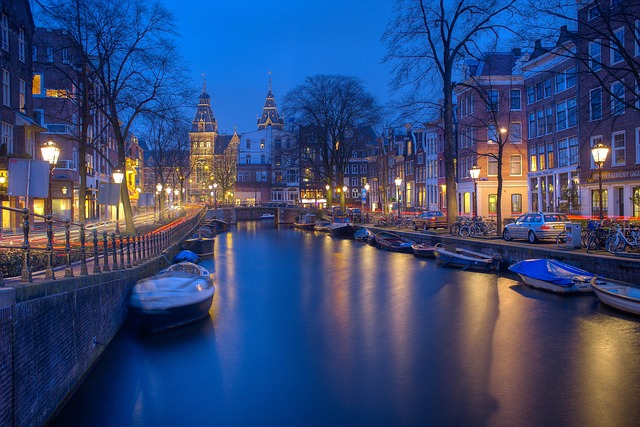
The legal canal-house option wins when the verified checkout total is lower for the same dates and occupancy, and the extra space matters to you. That is the practical advantage of comparing the complete option instead of the romantic label. The culture coverage describes canal houses as the picturesque narrow buildings lining areas such as Jordaan, and GetYourGuide notes that the slender profiles were designed around historic tax rules. Those details explain the appeal, but they do not settle the booking. The winner is the verified stay whose full total and terms beat the hotel on the trip you are actually taking.
The hotel alternative wins when the live hotel checkout is cheaper after mandatory lines, or when the terms are cleaner for your needs. A hotel also wins the comparison if the canal-house side cannot be verified before commitment, because an unverified listing is not a like-for-like option. For access-sensitive travelers, the hotel can win on predictability: the Amsterdam walking reference notes that the Rembrandt House has steep stairs and does not provide full step-free access, which is a useful reminder to check stairs and access in any older canal property rather than assume them away.
Declare the winner in writing before you pay: “legal canal house wins because verified total and space are better,” or “hotel wins because verified total and terms are better.” If you cannot complete that sentence from the table, stop and re-check the live options. That is the whole point of verify-before-you-commit: the comparison is only valid when both sides are complete, current, and bookable under the same conditions.
Also worth reading Airbnb vs hotel for 4 nights How to verify Amex points vs cash Sleep in another era along this
What to do next
| Step | Action | Why it matters |
|---|---|---|
| 1 | On the booking platform, filter search results for the 'licensed' tag before comparing canal-house stays. | Verified permits appear as 'licensed'; unpermitted listings are blocked and can lead to cancelled bookings. |
| 2 | Open each shortlisted canal-house listing and confirm the required short-term rental permit plus the 30-night annual occupancy limit. | Permits are mandatory, and rentals exceeding the annual limit are illegal and can trigger fines up to €10,000 per violation. |
| 3 | Compare the permitted canal-house nightly rate with hotel alternatives in Amsterdam using like-for-like central locations and standard occupancy. | Hotel alternatives average higher nightly rates, so the comparison must isolate the hotel premium range without changing location or occupancy assumptions. |
| 4 | Check the full stay terms for permit compliance, cancellation risk, and enforcement exposure before choosing between the canal-house stay and the hotel alternative. | Enforcement targets hosts operating without the required permit, and unpermitted stays can be blocked or cancelled. |
| 5 | Re-check the live listing immediately before committing to confirm the 'licensed' tag, central location, standard occupancy, and total terms still match the comparison. | The decision rule requires verifying the live, complete option; any missing 'licensed' tag means the canal-house option should be discarded. |
Frequently Asked Questions
What is the annual night cap for legal short-term rentals of canal houses in Amsterdam?
The 2025 annual night cap for legal short-term rentals of canal houses in Amsterdam is 9% of the total nights available per year.
What is the minimum number of days a host must occupy a property to classify it as a primary residence?
A host must occupy the property for at least 183 days per year to classify it as a primary residence.
What percentage of the total nights available per year is the 2025 annual night cap for legal short-term rentals?
The 2025 annual night cap for legal short-term rentals is 9% of the total nights available per year.
What is the occupancy percentage threshold that distinguishes between primary and secondary residence short-term rental eligibility?
A primary residence is defined as a property where the host lives for at least 183 days per year, while secondary residence rentals are permitted only if the host can prove they are not using the space as a primary income source.
What must travelers verify before booking a canal-house stay to ensure legal compliance?
Travelers must verify the host's registration or permit documentation against the municipality's published requirements before paying.
What is the 2025 permit requirement threshold for short-term rentals of secondary residences?
Secondary residence permits for short-term rentals require the host to prove they are not using the space as a primary income source.
Quick answers
| What is the definition of a primary residence under Amsterdam's short-term rental rules? | A primary residence is defined as a property where the host lives for at least 183 days per year. |
| What is the permit requirement for short-term rentals of residential properties in Amsterdam? | Before booking, check the municipality's official website for the current rules on permits, primary-residence requirements, annual night caps, and guest limits, and ask the host to show the registration or permit documentation that applies to their listing. |
| How do the nightly rates for legal canal-house stays compare to hotel alternatives under the 2025 regulations? | This guide delivers a verify-before-you-commit comparison of nightly rates and terms between legal canal-house stays and hotel alternatives. |
Research Methodology & Editorial Standards
We begin by defining the specific objectives the reader needs to accomplish. Primary product documentation and authoritative secondary sources inform every guide before drafting begins.
Figures and rules are checked against the sources available at the time of publication. Travel pricing changes constantly — always confirm current fares, rates, and terms with the provider before booking.