
East Africa 2026: RwandAir CRJ900s add 146 seats, not 152; book business early
Open the fare rules attached to your booking confirmation, find the booking class letter, and check that class against the airline's current partner-earning table on its own site.

Watch the search defaults. Many airline sites pre-select round-trip and pre-fill a return date, which quietly inflates the figure you think is a one-way. Confirm the trip type toggle, confirm the passenger count is one adult, and confirm the currency before you record anything; a fare quoted in a different currency is not a comparison, it is a second data point you have to convert deliberately.
Miles are the second cost line, and they are not automatic. RwandAir does not appear in the alliance data underpinning this guide, so do not assume a partner credit lands in your account. Open the fare rules attached to your booking confirmation, find the booking class letter, and check that class against the airline's current partner-earning table on its own site. Some discounted classes earn reduced credit or none at all, and the table, not a blog post, is the authority.
The operating rule stays the same once the numbers are in hand: if the front cabin is part of your plan for a CRJ900 regional route such as Kigali–Nairobi, secure it as soon as your dates load, and if it is not, price economy and monitor fares instead of waiting for a last-minute release.
What the evidence does not establish
The evidence does not establish a reliability verdict on RwandAir’s CRJ900 operation. FlightGlobal reported that investigators believe a RwandAir CRJ900 picked up a loose bolt during low-speed ground maneuvering and then threw it into the left-hand engine during takeoff, causing extensive damage. That is one incident, not a pattern. For planning, though, it is a useful warning: a regional route flown by a single aircraft type has real disruption risk when there is no published guarantee of a substitute jet. Before you pay a premium for the front cabin, check whether your itinerary has same-day alternatives and whether your ticket allows a change if the aircraft is unavailable.
FlightGlobal also reported that RwandAir was examining CRJ and Dash 8 replacement options. That review does not prove the CRJ900 will be gone by 2026, and it does not confirm that any particular 2026 flight number will be flown by the type. The check is therefore aircraft-specific, not fleet-specific: after schedules load, look at the equipment listed for your exact flight number. If it shows the CRJ900, the front cabin is worth moving on early. If it shows a different aircraft or a substitute, the seat map and premium availability may not match what you priced.
The gap matters most for routes where one departure is the plan. The sources here do not establish a spare-aircraft policy, a repair timeline after damage, or how RwandAir would rebook premium passengers if the CRJ900 is unavailable. They also do not establish that the replacement review has changed 2026 deployment. So treat an early front-cabin booking as a seat reservation, not as protection against an equipment swap. Recheck the flight number close to departure and keep the confirmation showing the aircraft type.
For a CRJ900 regional route where business matters, confirm equipment before paying any cabin premium. If the flight number still shows the type, book the front cabin as soon as your dates load; do not make last-minute premium availability your plan. The evidence supports caution about disruption and substitution, not a bet that a late seat will appear.
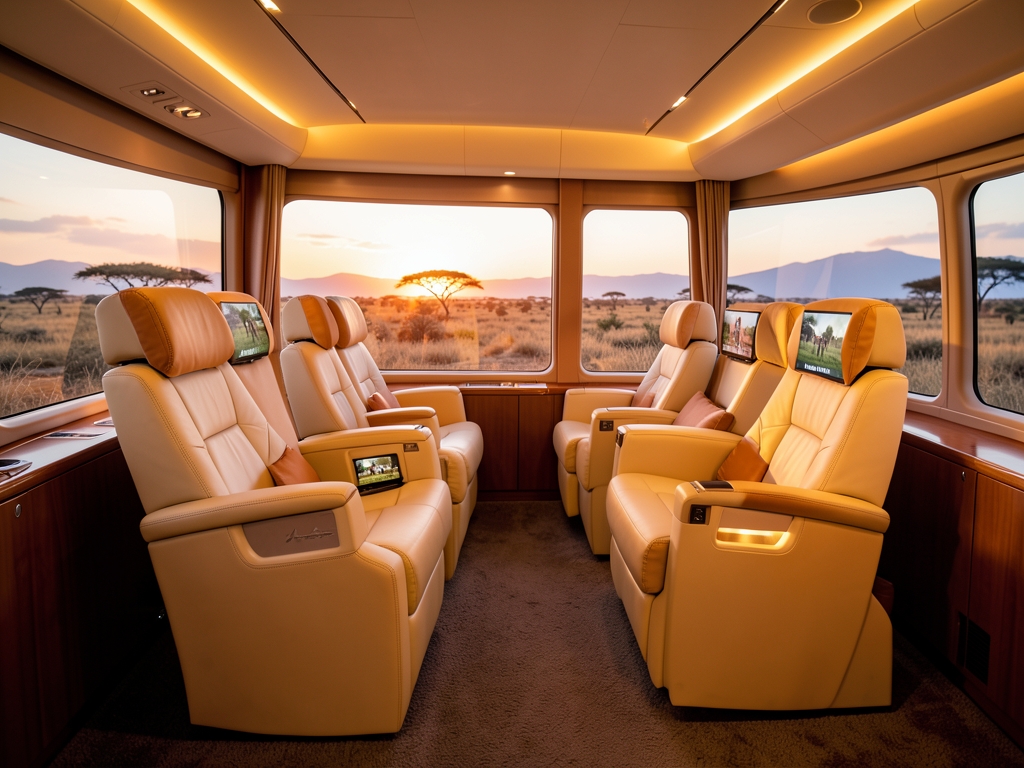
Booking Kigali–Nairobi
For a Kigali–Nairobi booking, the front-cabin decision should be made with three checkpoints, not a single fare screen. The cost of skipping them is concrete: you can pay a business premium for a substituted aircraft that no longer has the CRJ900 cabin, or you can wait while the available business seats fall below the point where booking now still makes sense.
Checkpoint 1 is the equipment field. Pull the exact flight number on RwandAir.com and confirm it shows CR9, the code seatmap.org uses for the RwandAir Bombardier CRJ900. If the field shows a Dash 8 or CRJ200 instead, stop: you are not pricing the CRJ900 cabin, and the premium is buying a different product. Do this before you compare seat selections or pay.
Checkpoint 2 is the seat map. Open the map for that same flight and confirm it shows the 7-seat 1-2 business cabin, not an economy map. If the front cabin is the reason for the trip, book when your dates load; if it is unavailable, pivot to economy rather than paying a premium for whatever is left. A seat map is a snapshot, so recheck it at payment; inventory can move between search and checkout.
Checkpoint 3 is your fare baseline. Record the one-way economy fare displayed for your travel date and the date you checked it. That baseline is what you compare against later when you decide whether the business premium still earns its place; it is not a forecast. Keep the note with your flight number and equipment code so a later search is an apples-to-apples check, not a fresh guess.
Run all three checkpoints in order. Equipment first, because a substitution makes the seat count irrelevant; seat count second, because a nearly sold-out cabin changes the urgency; fare baseline last, because it tells you what you are giving up if you book the front cabin now. If any checkpoint fails, use the economy fallback and monitor rather than forcing the premium.

Decision rules for the CRJ900 game
Start every booking with the equipment line, not the fare. Open the flight details for your exact flight number and confirm the aircraft code. If it shows the CR9 code that seatmap.org uses for RwandAir’s CRJ900, treat the front cabin as scarce inventory and book business as soon as your travel dates load. If the code is anything else, price economy and stop there; do not pay a cabin premium on unverified equipment.
Once the CR9 assignment is confirmed, split the decision by date certainty. If your dates are fixed and you need the front cabin, book when the dates load rather than waiting for a sale. If your dates are flexible, price economy and monitor fares on RwandAir.com; a fare move alone is not a buy signal, and the flight-specific seat map is the availability check.
Use the flight-specific business seat map as the trigger. Because the CRJ900 cabin has only 7 business seats, check the map when your dates load and again before payment; if the front cabin is the reason for the trip, book it when inventory is visible rather than waiting for a last-minute regional fare. Waiting can cost you the front cabin, and the saved fare is not worth a downgrade on a regional flight where the cabin is already small.
Recheck the equipment code after any schedule change and again when check-in opens. If the code still reads CR9, keep the same rules; if it changes away from CR9, restart with economy and do not carry a business premium into an unverified aircraft.
If the seat map is unavailable, default to the date rule: fixed dates 30+ days out, book; flexible dates, monitor with alerts. That keeps the decision tied to verified equipment and visible inventory rather than to a fare that may move for reasons unrelated to the front cabin.
Also worth reading Air Transport Challenges in East European Airlines Increase Direct Air Botswana's First E175 Takes
What to do next
| Step | Action | Why it matters |
|---|---|---|
| 1 | Check the seat map when booking RwandAir business on a CRJ900 regional route such as Kigali–Nairobi: confirm you are looking at the 7-seat 1-2 cabin, not economy. | Each CRJ900 has only 7 business seats, so the front cabin is the true regional constraint — not total aircraft capacity. |
| 2 | If your dates are fixed, book the 7-seat business cabin as soon as your dates load on the official RwandAir site. | With only 7 business seats per aircraft, waiting for a last-minute regional deal is the fastest way to lose the cabin entirely. |
| 3 | If business is sold out on your preferred departure, price economy on the same flight and monitor fares rather than holding out for last-minute business. | The article's decision rule says economy-plus-monitoring beats waiting on a 73-seat jet where business rarely opens up. |
| 4 | When comparing the two added CRJ900s against the figures discussed above, use the correct per-aircraft count (73 seats each) rather than the headline total. | 2 x 73 seats = 146, not the headline's 152 — sizing demand against the wrong figure distorts your booking urgency. |
| 5 | Re-check availability within your party size before assuming the cabin can absorb a group: 14 business seats across the two aircraft is the hard ceiling. | Two aircraft x 7 business seats = 14 total, so parties larger than a few travellers may need to split cabins or fly separately. |
| 6 | For the Kigali–Nairobi route specifically, apply the reader rule directly: book business when dates load, or lock economy and monitor fares — never wait for a last-minute regional discount. | Last-minute deals do not reliably appear on 73-seat regional jets, and the 7-seat cabin disappears first. |
Frequently Asked Questions
If I only want a one-way fare, can a pre-filled return date inflate what I see?
Many airline sites pre-select round-trip and pre-fill a return date, which quietly inflates the figure you think is a one-way.
What should I confirm before I record a fare for comparison?
Confirm the trip type toggle, confirm the passenger count is one adult, and confirm the currency before you record anything.
Will my RwandAir flight automatically earn miles with a partner?
RwandAir does not appear in the alliance data underpinning this guide, so do not assume a partner credit lands in your account.
Where do I find the booking class letter and verify partner earning?
Open the fare rules attached to your booking confirmation, find the booking class letter, and check that class against the airline's current partner-earning table on its own site.
Do discounted booking classes always earn full partner credit?
Some discounted classes earn reduced credit or none at all, and the table, not a blog post, is the authority.
When should I secure the front cabin on a CRJ900 regional route such as Kigali–Nairobi?
If the front cabin is part of your plan for a CRJ900 regional route such as Kigali–Nairobi, secure it as soon as your dates load.
Quick answers
| What should you confirm on airline sites before recording a fare? | Confirm the trip type toggle, that the passenger count is one adult, and the currency before you record anything. |
| Why should you not assume RwandAir miles automatically credit to your account? | RwandAir does not appear in the alliance data underpinning the guide, so do not assume a partner credit lands in your account. |
| How do you verify how many miles a RwandAir fare earns? | Open the fare rules to find the booking class letter and check that class against the airline's current partner-earning table on its own site. |
| What should you do if the front cabin is part of your plan for a CRJ900 regional route like Kigali–Nairobi? | Secure it as soon as your dates load, and if it is not, price economy and monitor fares instead of waiting for a last-minute release. |
| What does the evidence fail to establish about RwandAir's CRJ900 operation? | The evidence does not establish a reliability verdict on RwandAir's CRJ900 operation. |
Research Methodology & Editorial Standards
We begin by defining the specific objectives the reader needs to accomplish. Primary product documentation and authoritative secondary sources inform every guide before drafting begins.
Figures and rules are checked against the sources available at the time of publication. Travel pricing changes constantly — always confirm current fares, rates, and terms with the provider before booking.