
Dayton Air Force Museum: Check 2026 Hours Before Booking a Free Trip
A free-entry, one-day National Museum of the United States Air Force visit focused on Memphis Belle and B-2 still requires a separate check for daily hours.

| Takeaway | Detail |
|---|---|
| Free admission is the only museum-controlled cost; verify posted hours for your exact 2026 date before nonrefundable airfare or hotel. | No ticket price is charged; the risk is a changed schedule after nonrefundable bookings. |
| Save a dated screenshot of the museum's own hours page for your exact calendar date. | Use the museum's own page, not a third-party listing, and keep the date visible. |
| Price the identical trip as a total from DAY, CVG, and CMH before booking. | Compare all three airports; book DAY unless an exception applies. |
| Plan the route as one day covering Memphis Belle and B-2. | Free entry applies; daily hours must be confirmed for that date. |
A free-entry, one-day National Museum of the United States Air Force visit focused on Memphis Belle and B-2 still requires a separate check for daily hours.
Apply the first takeaway's date-check rule before any nonrefundable airfare or hotel night is booked.
Free Entry Still Needs a Date Check
Admission is the only cost line the museum itself controls, so a free-entry offer still needs a date check before you commit money elsewhere. Open the museum’s own hours page and select your exact 2026 calendar date. Read the entry tied to that date, including any holiday or closure notice. A general “open daily” line elsewhere on the site is not confirmation for a holiday week or a maintenance closure.
Treat the date entry as a go/no-go check. Look for posted hours, a closure, a holiday exception, or no entry at all. If the page does not clearly show your date as open, mark the visit unconfirmed rather than filling the gap from the museum’s usual schedule. Do not assume that an entry for a nearby date applies to yours.
When the exact-date entry confirms an open day, save it before buying nonrefundable airfare or a hotel night. Take a screenshot with the browser timestamp visible and keep the date-specific hours in the frame; if your browser does not show a timestamp, use a capture tool that adds the date and time. Save the page address with the image. The artifact to preserve is the exact-date hours entry, not the site-wide “open daily” banner: the dated capture records what the museum published when you committed money.
Apply a hard stop if the page shows a closure, a holiday exception, or no entry for your date. Do not buy nonrefundable airfare or a nonrefundable hotel night until the museum’s page shows your date as open. Either choose another date and repeat the check, or wait for the museum to publish the missing entry. An unconfirmed visit should not enter the booking flow.
Before departure, reopen the museum’s hours page and compare the current exact-date entry with your saved capture. If the status has changed, decide whether the trip still works using the newer information, and retain both versions. This final check keeps a later closure from surfacing only after you arrive. The sequence is fixed: verify the date, save the evidence, then commit nonrefundable travel.

Three Sources, One Confirmed Open Day
This source audit ranks the evidence in a fixed order: the museum’s official hours page first, its published aircraft list second, and third-party visit reports third. The official hours page is the only source here that can confirm open/closed status for your exact date; the other sources answer narrower questions. Keep opening status separate from whether a particular aircraft is displayed when you arrive.
For the opening check, select the exact calendar date in the official hours page rather than relying on a general schedule or summary. Read the result attached to that date, including any closure or changed-hours language. If the page does not provide a clear status, treat the question as unresolved and contact the museum before committing to the visit.
For the aircraft check, distinguish collection membership from display. A dated collection record establishes that an entry exists; it does not establish current gallery placement or guarantee that the aircraft will be on view during your trip. Ask the museum for current display information and note when the answer was provided.
Treat third-party reports as leads, not verdicts. Match each report to its publication date and separate a visitor’s observation from an official museum statement. A report may help you frame a question, but it cannot settle the exact-date opening or prove current aircraft placement. If reports conflict, the official hours page controls the opening question; aircraft location still requires separate confirmation.
Apply a simple evidence threshold: proceed only when the official hours page gives a clear open status for your exact date, and label any aircraft expectation unconfirmed until the museum supplies current display information. This prevents a historical collection record from becoming a viewing promise and keeps anecdotal reports from substituting for official schedule evidence.

DAY vs CVG vs CMH: Which Airport Wins
Choosing between Dayton International Airport (DAY), Cincinnati/Northern Kentucky International Airport (CVG), and John Glenn Columbus International Airport (CMH) requires one apples-to-apples total, not a side-by-side fare screenshot. For identical 2026 travel dates, price each airport as a complete trip: round-trip airfare, hotel nights, a rental car or rideshare, and parking. The airport with the lowest advertised fare can lose once the full itinerary is on paper, so the comparison only counts when every input matches.
Keep the units clean. Compare round-trip airfare to round-trip airfare, never a one-way fare against a round-trip fare, and never split a bundled quote into pieces that hide fees. If one airport changes the number of hotel nights, the ground transportation method, or the parking plan, reprice the other two airports with those same assumptions. The goal is a complete trip total for each option, calculated on identical terms.
DAY wins by default because it removes the longest ground leg to the museum. CVG or CMH only wins if its complete trip total is lower after you add the ground cost that DAY avoids. Price that ground cost yourself: include the rental car, rideshare, fuel, tolls, or airport parking charges that apply to your plan. Do not assume a distant airport's fare discount covers the transfer; the math has to show the saving.
Use a simple decision rule once the three totals are in front of you. If DAY is the lowest complete total, book DAY. If CVG or CMH is lower, confirm that the saving remains after every added ground cost is included, then confirm the itinerary still preserves a full museum visit. A fare gap that disappears after ground transportation, parking, or an extra hotel night is not a saving; it is an incomplete quote.
Before booking, check the return-leg departure time against the museum's posted closing time for your chosen date. A cheap early return can erase usable museum time and make a lower total less valuable in practice. Treat any itinerary that forces you to leave before you can complete your visit as a different trip, not an equivalent alternative. When the totals are close, the default remains DAY because the shorter ground leg reduces both cost uncertainty and schedule risk.

The Five Cost Lines Behind a Free Museum
Free entry is easy to mistake for a cheap day, but a zero-dollar ticket does not produce a zero-dollar trip. After admission, the budget rests on five non-admission cost lines you control: round-trip airfare, hotel nights, ground transport, parking, and food. The free line is the smallest part of the budget, so the only useful comparison is the full cost of the same trip. If you compare only the ticket price, you are comparing the one line that does not change.
| Cost line you control | What to record | Comparison rule |
|---|---|---|
| Round-trip airfare | Total round-trip price for the same passengers, dates, and baggage assumptions | Never compare a one-way fare to a round-trip fare |
| Hotel nights | Total stay cost for the nights required within a short drive of the museum gate | Compare by night count, not by nightly rate alone |
| Ground transport | Full-route cost for a rental car, rideshare, or personal vehicle | Include every airport, hotel, and museum leg |
| Parking | Current airport and museum parking rules or charges | Add both ends of the trip before totaling |
| Food | Per-person plan for meals, snacks, and drinks on the travel day | Use the same plan across every itinerary |
Start with round-trip airfare and label every fare before you compare it. A one-way fare and a round-trip fare are different units, so they should never be divided against each other or placed in the same column as if they were equivalent. Record the total round-trip airfare for the same passengers, travel dates, and baggage assumptions. A lower-looking fare can distort the trip total when it covers only one direction or excludes bags that another option includes.
Price hotel nights by the number of nights your itinerary actually requires within a short drive of the museum gate, not by the lowest advertised nightly rate. Count nights first, then compare properties on the same night count. A room that looks cheaper can add ground-transport cost, and a flight schedule that forces an extra night can outweigh a small rate difference. The right question is the total stay cost for the itinerary, not the price shown for a single night.
Ground transport, parking, and food complete the five-line budget. Confirm whether you need a rental car, rideshare, or personal vehicle, and check current parking rules at both the airport and the museum before you total the trip. For food, set a simple per-person plan for the travel day so airport meals, snacks, and drinks are counted in the comparison instead of treated as incidental. These lines are easy to ignore individually, but together they can decide which itinerary is actually cheaper.
Where the Free-Entry Plan Breaks
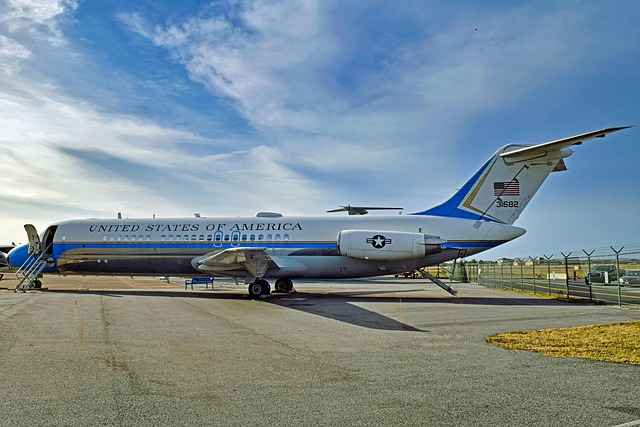
Even a careful date check can fail at the edges. This section covers the cases where the verify-then-book rule stops working: holiday hours, aircraft moves, gate security and ID rules, and display status for the Memphis Belle and the B-2. Each case requires a separate confirmation because an open door does not guarantee the visit you planned.
Holiday and closure exceptions are the first break point. A confirmed weekday operating window does not automatically carry over to a holiday week, a special event, or a temporary closure. Treat any earlier confirmation as provisional and re-verify the same calendar date within 24 hours of departure rather than trusting a screenshot saved 30 days earlier. If the museum's official hours page shows a changed schedule, pause before committing money to nonrefundable travel components.
Aircraft moves and gallery rotation create a different kind of failure: the museum may be open, but the specific aircraft you planned around may not be on the floor. The museum's published aircraft list functions as a collection record, not a real-time floor map. Before building a route around a particular exhibit, verify display status separately from the hours check. For the Memphis Belle and the B-2, confirm current location or display status through the museum's official website or a direct inquiry, because a move, restoration, or gallery rotation can change what visitors can see without changing operating status.
Gate security and ID requirements are the third edge case. Access conditions can change, so check the museum's official visit page before departure for current entry rules, identification expectations, bag restrictions, and any security screening procedures. Do not rely on a prior visit, a third-party blog post, or a general travel forum for day-of entry requirements; the museum's own visit guidance is the controlling source for what you must bring and what you may carry inside.
| Edge case | What can break | What to verify |
|---|---|---|
| Holiday or closure exception | A previously confirmed date changes | Re-check the official hours page for the exact date close to departure |
| Aircraft move or gallery rotation | A target aircraft is not on display | Confirm Memphis Belle and B-2 display status separately from hours |
| Gate security and ID rules | Entry requirements differ from expectations | Review the official visit page for current ID, screening, and bag rules |
Worked Route: One Day, Three Checkpoints
Use a hypothetical two-adult, one-night, one-museum-day itinerary: choose your origin city, pick a non-holiday weekday in 2026, and treat every cost except admission as a variable to price later. No fare figures are quoted here; record whether each price is for one traveler or two.
At T-30 days, open the museum's hours page for the exact calendar date and save a dated screenshot of the posted open and close window. Price the identical itinerary as a total from DAY, CVG, and CMH, and label each figure one-way or round-trip before you compare anything. If a quote is per person, note that so two-adult totals are not mixed with one-adult quotes.
At T-7 days, re-pull the same exact-date hours entry and confirm the hotel's cancellation deadline. If the posted window changed, update the screenshot and re-check the three airport totals before any nonrefundable purchase; also confirm the change terms on any fare you already hold and whether the hotel still allows free cancellation.
At T-24 hours, do a final hours re-check and a final total check. If the museum's posted window or any travel cost has moved, make the go or no-go decision while cancellation rights still exist, and record the reason with your dated screenshot.
Keep the dated screenshot and your three-airport totals as your decision record. Do not commit nonrefundable airfare or a hotel night until the exact-date hours check and all three airport totals are confirmed; if any check is missing, the trip is not yet verified.
If/Then Rules Before You Book Dayton
Before any nonrefundable dollar leaves your account, run these five if/then rules in order. Each one converts a piece of evidence you already gathered — the dated screenshot of the museum's hours page, the three-airport totals — into a booking decision. Skip a rule and you're gambling; run them all and the trip books itself.
Rule one: if the hours page has no entry for your exact 2026 calendar date, then book refundable airfare and a cancelable hotel, or move the date. Do not gamble on the site-wide "open daily" banner, and do not treat a generic banner as confirmation. The banner is not the artifact; the date-specific entry is. If the entry simply isn't posted yet, either wait and re-check, or price the trip entirely in refundable terms until the entry appears. A refundable fare costs more up front, but it converts an unconfirmed open day into a risk you can walk away from at zero loss.
Rule two: if the hours page changes inside 24 hours of your departure — a closure, a shortened day, a special event that eats gallery hours — then invoke the refundable-fare fallback. This is why rule one matters: if you booked refundable and cancelable, a last-minute hours change costs you a rebooking, not the whole fare. If you booked nonrefundable against an unconfirmed date, you have no fallback at all. The screenshot with its visible date is your record of what the museum promised and when.
Rule three: if DAY's total trip cost exceeds the CVG or CMH total by more than the added ground cost you priced, then take the cheaper airport; otherwise take DAY. Run this as an arithmetic check, not a vibe: total each airport's trip — airfare plus parking or rideshare plus drive time cost — and compare the deltas. DAY wins by default only when its total is at or below the alternative plus the ground difference. If the math flips, flip with it.
Rule four: if your only affordable round-trip lands after the museum's posted closing time, then add a night or drop the museum day. A same-day arrival that misses closing is a wasted fare — you pay for a hotel night anyway, but you've burned the museum day that justified the trip. Price the extra night against the value of the museum day and decide deliberately, not by default.
Rule five: if any two rules conflict — say, the cheapest airport arrival forces a late landing that breaks rule four — then the hours rule wins. The museum's confirmed open day is the anchor of the trip; everything else is routing. Re-run the airport comparison with a next-morning arrival priced in, and book the combination that preserves the confirmed day at the lowest verified total.
Also worth reading Visiting the US Air Force Museum: $0 Incredible military planes you must US officials warn Americans to leave
What to do next
| Step | Action | Why it matters |
|---|---|---|
| 1 | Pull the museum's own hours page for your exact 2026 calendar date and save a dated screenshot with the date visible. | Free admission is fixed, but posted hours can change; this is the verification step before any nonrefundable airfare or hotel. |
| 2 | If that page shows no entry for your date, buy only refundable or 24-hour-cancelable inventory. | It limits loss if the schedule changes after booking. |
| 3 | Price the identical one-day Memphis Belle and B-2 route as a total from DAY, CVG, and CMH, including ground cost you price yourself. | It makes the airport comparison decision-specific rather than fare-only. |
| 4 | Book DAY unless another airport's total saving exceeds the extra ground cost you priced yourself. | DAY is the default unless the exception is met. |
| 5 | After hours are confirmed, lay out the visit as one day covering Memphis Belle and B-2. | It keeps the free-entry plan aligned with the verified daily hours. |
| 6 | Keep the dated screenshot and use the museum's own page, not a third-party listing, as your reference. | It preserves proof of the hours you verified for that exact date. |
Frequently Asked Questions
Can I use a third-party website to check the museum's hours?
Use the museum's own page, not a third-party listing, and keep the date visible.
What should I save after checking the museum's hours for my planned visit date?
Save a dated screenshot of the museum's own hours page for your exact calendar date.
Does a general “open daily” notice guarantee the museum is open during a holiday week?
A general “open daily” line elsewhere on the site is not confirmation for a holiday week or a maintenance closure.
What is the financial risk of booking nonrefundable travel before confirming the museum schedule?
No ticket price is charged; the risk is a changed schedule after nonrefundable bookings.
Which airports should I compare when pricing the total trip cost?
Price the identical trip as a total from DAY, CVG, and CMH before booking, and book DAY unless an exception applies.
Can I see the Memphis Belle and B-2 in a single day at the museum?
Plan the route as one day covering Memphis Belle and B-2.
Quick answers
| What does a free-entry offer still need before you commit money elsewhere? | Admission is the only cost line the museum itself controls, so a free-entry offer still needs a date check before you commit money elsewhere. |
| What should you save from the museum's own hours page? | Save a dated screenshot of the museum's own hours page for your exact calendar date. |
| What should you read on the hours page? | Read the entry tied to that date, including any holiday or closure notice. |
| Which airports should be priced as identical trip totals before booking? | Price the identical trip as a total from DAY, CVG, and CMH before booking. |
| What does a free-entry, one-day National Museum of the United States Air Force visit focused on Memphis Belle and B-2 still require? | A free-entry, one-day National Museum of the United States Air Force visit focused on Memphis Belle and B-2 still requires a separate check for daily hours. |
Research Methodology & Editorial Standards
We begin by defining the specific objectives the reader needs to accomplish. Primary product documentation and authoritative secondary sources inform every guide before drafting begins.
Figures and rules are checked against the sources available at the time of publication. Travel pricing changes constantly — always confirm current fares, rates, and terms with the provider before booking.