
Cruise Protest Delays 2026: Claim $200/Day After 6-Hour Wait
This guide explains how cruise passengers affected by protest barricades can evaluate trip delay coverage, including the 6-hour wait threshold and up to $200 per day reimbursement.
| Takeaway | Detail |
|---|---|
| Trip delay coverage may apply after a 6-hour wait | Confirm your policy's minimum delay threshold is met before filing a claim for protest-related disruptions. |
| Eligible claims may reimburse up to $200 per day | Review your policy's daily limit, covered expenses, and required documentation to calculate your potential reimbursement. |
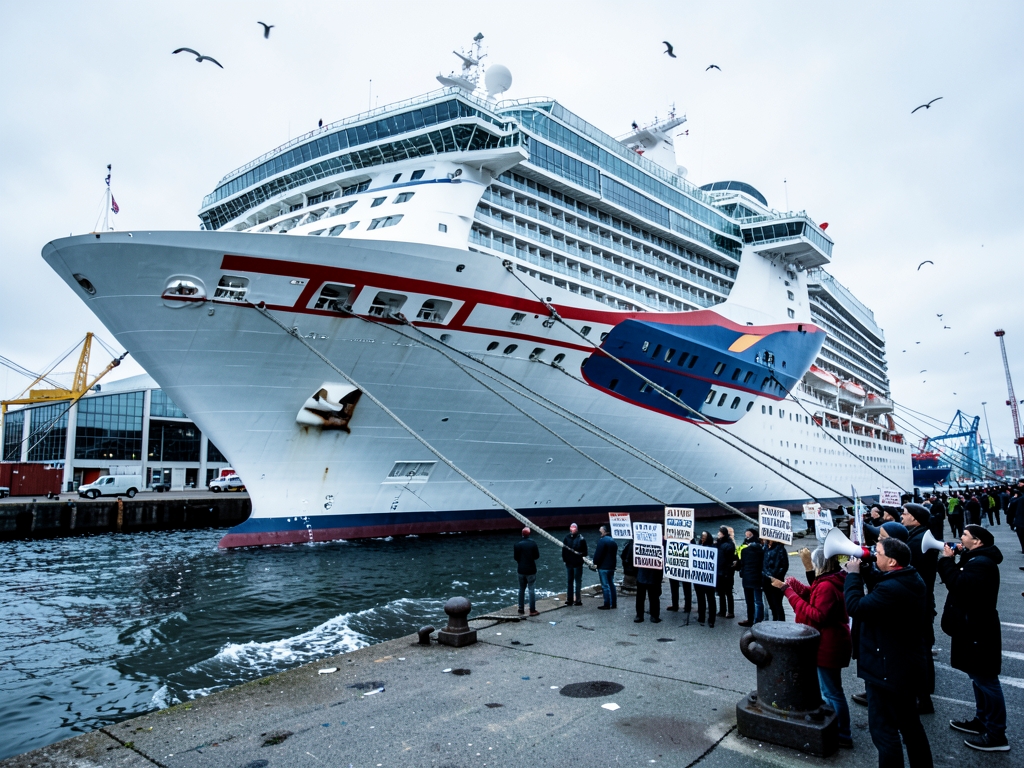
| Barcelona port workers blocked a cruise terminal on Oct 29, 2026 | Protesters set barricades ablaze near the terminal, forcing thousands of cruise passengers to haul luggage on foot (Fox News). |
| Verify live policy terms before committing to a claim | Compare like-for-like totals, coverage limits, and exclusions across your travel insurance documents and cruise line policies. |
This guide explains how cruise passengers affected by protest barricades can evaluate trip delay coverage, including the 6-hour wait threshold and up to $200 per day reimbursement.
It outlines what to verify in your policy documents and how to compare like-for-like terms before filing a claim.
How It Works
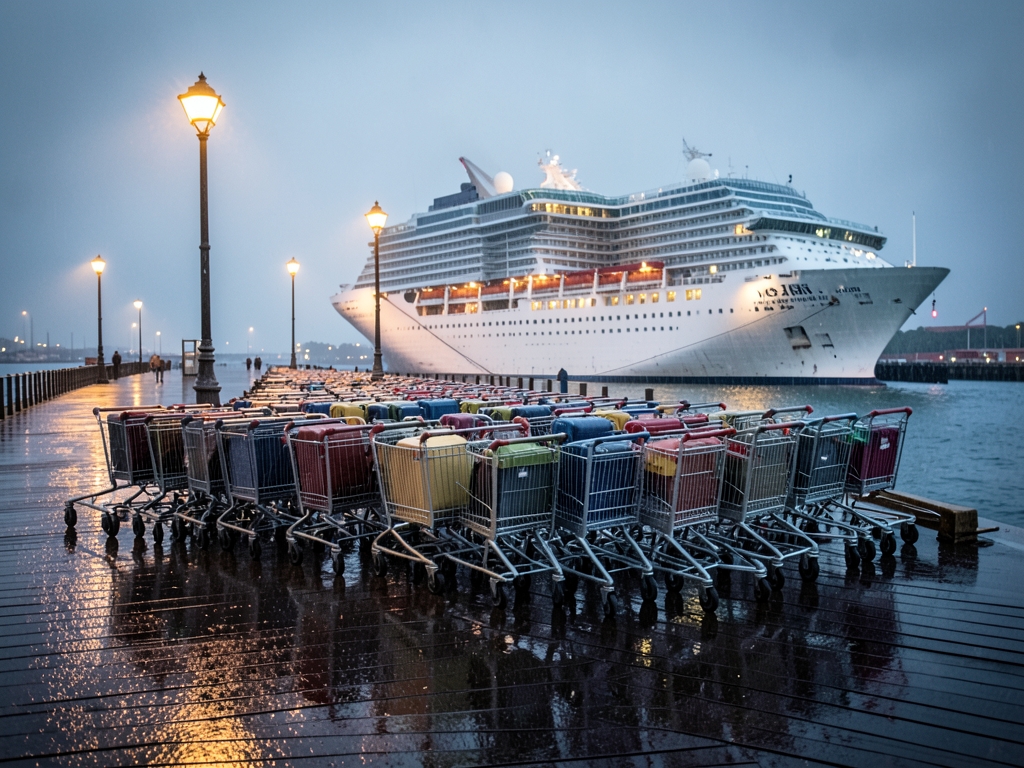
When protest barricades block access to a cruise terminal, trip delay coverage is designed to reimburse certain out-of-pocket costs you incur while waiting to join your sailing or continue your itinerary. In October 2026, Fox News reported that Barcelona port workers protesting salary cuts set barricades ablaze near a cruise terminal, forcing thousands of cruise passengers to haul luggage on foot. In a disruption like that, the mechanism is straightforward: you pay for reasonable expenses during the delay, keep documentation, and submit a claim to the travel insurance provider that issued your policy. Before you commit to any purchase or filing strategy, verify the live, complete terms in your policy certificate, because benefit triggers and limits vary by plan.
Trip delay coverage is a benefit that reimburses eligible expenses when a covered trip is delayed for a reason listed in your policy. Common covered reasons in many travel insurance contracts include strikes or civil commotion, but you must confirm the exact definition in your own documents. The coverage typically applies when you are traveling on a common carrier—a company that transports passengers for a fee, such as a cruise line, airline, or ferry—or when a covered event prevents you from reaching that carrier on time. Check your policy’s “covered reasons” and “definitions” sections to confirm whether a protest barricade qualifies.
Two key terms control when money becomes available: the waiting period (also called the delay threshold) and the benefit limit. The waiting period is the minimum length of delay that must pass before reimbursement begins; the benefit limit is the maximum the insurer will pay, often expressed as a per-day amount and sometimes capped by an aggregate maximum for the entire delay. If you have seen a plan advertise a specific daily amount after a specific number of hours, treat those figures as policy-specific and verify them in the certificate of insurance or schedule of benefits for the exact plan you hold or are considering.
Covered expenses are the costs the policy agrees to reimburse during a qualifying delay. These commonly include meals, lodging, local transportation, and essential personal items, but only when they are reasonable and directly related to the delay. To make the mechanism work, collect itemized receipts, proof of payment, and evidence of the delay such as a written statement from the cruise line, port authority notice, or contemporaneous news report. Match each receipt to the dates and times of the disruption so the insurer can connect the expense to the covered event.
To verify your coverage before you commit, locate three items in your policy documents: the trip delay benefit description, the definitions of “common carrier” and covered delay causes, and the claims instructions. Confirm whether the delay must occur during a covered trip segment, whether you must first seek assistance from the carrier, and what documentation format the insurer requires. Reading these terms in full ensures you understand how the benefit operates for your specific situation rather than relying on a headline figure alone.
Key Factors to Consider
This section alone lists the top decision criteria and numbers to verify before you commit to a trip delay claim after protest barricades block access to a cruise terminal. Focus on three checks: whether the disruption qualifies under your policy, whether your delay meets the plan’s trigger and cap, and whether your receipts match the plan’s eligible-expense rules. Confirm each item in your certificate of insurance or plan documents before you spend money you expect to recover.
Criterion 1: Covered reason and proof. Verify that a civil disturbance, protest, or similar event is listed as a covered reason for trip delay in your policy wording. Fox News reported in October 2026 that Barcelona port workers protesting salary cuts set barricades ablaze near a cruise terminal, forcing thousands of cruise passengers to haul luggage on foot; use that type of third-party reporting, along with official notices from the port, cruise line, or local authorities, to document what happened, where it happened, and how it affected your access. Check whether your plan requires written confirmation from the cruise line or a common carrier before it will review the claim.
Criterion 2: Delay trigger and benefit cap. Confirm the minimum delay trigger and the maximum daily benefit printed in your certificate of insurance, and verify whether the cap applies per person or per insured trip. Compare the policy’s definition of when the delay clock starts and ends with your actual timeline, including the time you were prevented from reaching the terminal and the time you were able to board or rejoin your itinerary. If the document states a waiting period, calculate your total delay using the same start and end points the policy uses so you do not assume eligibility based on a different clock.
Criterion 3: Eligible expenses and reimbursement basis. Review the list of reimbursable expenses and any exclusions before you pay out of pocket. Check whether meals, lodging, local transportation, and communication costs are covered, whether the plan reimburses only reasonable and necessary expenses, and whether you must pay first and submit receipts for reimbursement. Confirm required documentation for each expense, such as itemized receipts, proof of payment, and a copy of your original and revised travel itinerary.
| Decision criterion | What to verify in your plan documents | Evidence to gather |
|---|---|---|
| Covered reason | Policy language for protests, civil disorder, or blocked access | News report (e.g., Fox News), port or cruise line notice, photos or timestamps |
| Trigger and cap | Minimum delay requirement, daily limit, per-person or per-trip basis | Certificate of insurance, travel timeline, boarding or rebooking records |
| Eligible expenses | Covered categories, exclusions, receipt and payment requirements | Itemized receipts, proof of payment, original and updated itinerary |
Common Mistakes
One common mistake is treating a protest-related disruption as automatically covered without confirming how your policy defines a qualifying delay. Trip delay benefits often hinge on specific triggers, required delay lengths, and exclusions that vary by plan. Before you book a hotel, pay for meals, or arrange alternate transportation, pull your certificate of insurance and locate the sections on covered reasons, waiting periods, and excluded events. Concrete example: A cruise passenger is stopped by barricades near the terminal and spends the night in a nearby hotel. When they file, the insurer asks whether the delay was caused by a covered common-carrier issue or a listed hazard under the plan. If the traveler never checked that language, they may discover too late that their documentation does not match the policy’s requirements. Verify the exact covered-reason wording and the minimum delay threshold in your own documents before you commit to nonrefundable expenses.
A second pitfall is assuming the daily benefit amount and the waiting period in marketing materials will apply to your claim without checking the limits in your specific policy. Plans can differ on per-day caps, total maximums, and when the clock starts. Concrete example: Two travelers on the same sailing expect the same reimbursement, but one purchased a basic plan and the other bought an upgraded plan through a different provider. The first traveler submits expenses that exceed their plan’s per-day limit and learns that only a portion is eligible. Before you spend, confirm the per-day cap, the aggregate maximum, and whether the waiting period is measured from the scheduled departure, the start of the blockage, or another defined moment.
Many claims also fail because travelers cannot prove the delay lasted long enough or cannot tie their expenses to the disruption. Insurers typically look for a clear timeline and reasonable, itemized costs. Concrete example: A passenger pays for a taxi, snacks, and a last-minute room but keeps only a bank statement showing lump-sum charges. They have no photos, messages, or official notices showing when access was blocked and when they were finally able to proceed. Build your file as the delay unfolds: save itemized receipts, record times and locations, and keep any written updates from the cruise line, port authority, or local officials that document the barricade and its impact.
Another avoidable error is mixing expenses that may be eligible with costs that are usually outside trip delay coverage. Reimbursement is generally limited to reasonable, necessary expenses incurred because of the delay, not every cost associated with a disrupted trip. Concrete example: A traveler adds souvenir shopping and an upgraded dinner to their claim alongside a basic meal and transportation to a hotel. The insurer may request clarification or deny portions of the submission. Before you pay, ask yourself whether each expense is directly caused by the delay and whether you can explain that connection in one sentence.
Finally, do not wait until after you return home to clarify the claims process. Missing a filing step, using the wrong claim form, or failing to notify the assistance provider when required can slow or jeopardize reimbursement. Before you commit to major out-of-pocket spending, confirm the claim submission channel, required documents, and any notice obligations listed in your policy so you can collect the right evidence in real time.
Insider Tactics
When barricades cut off access to a cruise terminal, the strongest claims are built in real time. A non-obvious strategy is to create a timestamped evidence chain that ties your delay to the disruption itself, not just to a missed boarding. At the scene, capture photos or short videos that show the blocked route, signage, and your position relative to the terminal, then save screenshots of maps or ride-share attempts that document reroutes. The October 29, 2026, Fox News report on Barcelona port workers setting barricades ablaze near a cruise terminal illustrates the kind of access disruption that can leave passengers hauling luggage on foot; use that same level of specificity in your own record by noting the location, time, and what prevented you from reaching check-in.
Timing matters as much as documentation. Start your delay log the moment you are prevented from reaching the terminal or completing check-in, and record each blocked attempt with the exact time and any instructions you receive from port staff, local authorities, or the cruise line. Do not wait until the ship departs to begin tracking. If you can, contact your insurer or claims administrator the same day to confirm the correct claim channel, required forms, and how they want time-stamped evidence submitted. Treat that call as a verification step: ask the representative to identify what documents must show and whether digital uploads are accepted.
Another non-obvious tactic is to separate expenses by category as they happen. Pay for meals, lodging, and local transport with a card that produces itemized records, and photograph any paper receipts immediately in case they fade or are lost. When possible, ask vendors for invoices that include the date, time, and business location. Keeping each cost tied to a specific point in your delay timeline makes it easier for a reviewer to match receipts to the period you were stranded, without forcing you to reconstruct the sequence days later.
Before you leave the area, ask cruise line port staff or guest services for a written incident note or a reference number related to the access disruption. If no document is available, record the staff member’s name or role, the time of the conversation, and what you were told. Once you have your final receipts and travel records, assemble the claim package in chronological order and submit it through the channel your insurer confirmed. Verify the filing window and any follow-up deadlines directly with the insurer before you consider the claim complete.
Comparison
When protest barricades cut off access to a cruise terminal, you usually have three practical paths: file a trip delay claim under your travel insurance, request assistance or rebooking help from the cruise line or port operator, and pay out of pocket to work around the disruption. The October 2026 incident in Barcelona, where Fox News reported that port workers protesting salary cuts set barricades ablaze near a cruise terminal and forced thousands of cruise passengers to haul luggage on foot, shows how quickly a terminal-area blockage can turn into a same-day logistics problem. Comparing these paths before you spend money helps you choose the option most likely to recover costs.
| Option | What it can reimburse or provide | What you must verify before committing | Speed of relief | Winner when... |
|---|---|---|---|---|
| Trip delay insurance claim | Eligible delay-related expenses, subject to your policy’s covered reasons, waiting period, and per-day or total caps | Confirm the cause is covered, the delay clock is documented, and receipts match covered expense categories | Often paid after the trip, once documentation is reviewed | You can document the blockage and your extra costs clearly |
| Cruise line or port assistance | Operational help such as directions, alternate transfer guidance, or itinerary adjustments, depending on what the operator offers | Ask what assistance is available right now and whether any costs you incur will be credited or refunded | Can be immediate if staff and alternatives are available | You need real-time instructions more than later reimbursement |
| Self-funded workaround | No reimbursement by default; you control the timing and route | Compare the total outlay against what you can realistically recover and whether the workaround gets you to the ship or next stop | Immediate, but financially risky | The delay is short, alternatives are clear, and recovery is unlikely |
Trip delay insurance is the winner when your main goal is to recover documented, eligible expenses after a protest-related blockage. In a scenario like the Barcelona terminal disruption reported by Fox News in October 2026, a traveler who keeps time-stamped proof of the obstruction and itemized receipts is better positioned to use insurance than someone who pays first and sorts out coverage later. This option loses on speed, because reimbursement typically follows review rather than solving the problem on the spot.
Cruise line or port assistance wins when the immediate priority is access and instructions. If staff can confirm an alternate route, a revised meeting point, or an operational adjustment, that guidance can be more valuable in the moment than any post-trip claim. Self-funding wins only in narrow cases: the workaround is straightforward, the added cost is manageable, and you do not expect another channel to offset it. In that situation, paying for a direct solution can beat waiting for help that may not arrive in time.
To pick a winner before you commit, compare like-for-like totals: the cash you will spend now, the portion you can document for recovery, and the value of getting moving immediately. Use the Barcelona example as a reminder that barricades can create both physical access barriers and unplanned expenses at the same time. The best option is the one that matches your urgency, your documentation, and the support actually available while the disruption is unfolding.
Also worth reading Flight Gate Standoff Chinese Hawaii Cruise Ship Tax Blocked But Cruise Ends Abruptly: Verify Your
What to do next
| Step | Action | Why it matters |
|---|---|---|
| 1 | Confirm that your total wait at the Barcelona cruise terminal met the minimum delay threshold stated in your travel insurance policy. | Trip delay coverage typically applies only after the policy’s required waiting period is reached, so verifying this first prevents filing an ineligible claim. |
| 2 | Collect documentation from the Barcelona port disruption, including photos or videos of barricades and access issues, timestamps, receipts for meals, lodging, or transport, and any messages from your cruise line. | Clear evidence links your expenses to the protest-related delay and supports the reimbursement amount you request. |
| 3 | Review your travel insurance policy for the daily reimbursement limit, covered expense categories, required proof, and any exclusions related to protests or civil unrest. | Understanding the exact terms helps you calculate a realistic claim and avoid surprises during review. |
| 4 | Check your cruise line’s official guest communications and care policies for any compensation, refunds, or assistance offered for the Barcelona terminal disruption. | Cruise line remedies may affect what your insurer will reimburse and help you compare like-for-like totals and terms. |
| 5 | Compare the coverage, limits, exclusions, and documentation requirements in your travel insurance policy against any cruise line offer before committing to a claim path. | A side-by-side comparison ensures you choose the option that provides the most complete and applicable recovery for your delay. |
| 6 | Submit your claim through your insurer’s official claims channel with complete documentation, and keep copies of all forms, receipts, and correspondence. | Filing through the official process with organized records reduces delays and strengthens your position if follow-up is needed. |
Frequently Asked Questions
What caused the cruise terminal disruption in Barcelona?
Barcelona port workers protesting salary cuts set barricades ablaze near a cruise terminal, blocking access for passengers.
What must passengers confirm before filing a trip delay claim for protest-related disruptions?
Passengers must confirm that their policy's minimum delay threshold is met before filing a claim.
What types of costs can trip delay coverage reimburse during a protest-related wait?
Trip delay coverage is designed to reimburse certain out-of-pocket costs incurred while waiting to join your sailing or continue your itinerary.
What should passengers review to calculate their potential reimbursement amount?
Passengers should review their policy's daily limit, covered expenses, and required documentation to calculate their potential reimbursement.
How were cruise passengers affected when access to the Barcelona terminal was blocked?
Thousands of cruise passengers were forced to haul their luggage on foot after barricades blocked access to the terminal.
What should passengers compare before committing to a trip delay claim?
Passengers should compare like-for-like totals, coverage limits, and exclusions across their travel insurance documents and cruise line policies.
Quick answers
| When may trip delay coverage apply during the 2026 cruise protest delays? | Trip delay coverage may apply after a 6-hour wait, so you should confirm your policy's minimum delay threshold is met before filing a claim. |
| How much can eligible claims reimburse per day for the 2026 cruise protest delays? | Eligible claims may reimburse up to $200 per day, depending on your policy's daily limit, covered expenses, and required documentation. |
| What happened at the Barcelona cruise terminal during the 2026 protest? | Barcelona port workers blocked a cruise terminal and set barricades ablaze near the terminal, forcing thousands of cruise passengers to haul luggage on foot. |
| What should passengers verify before committing to a claim for the 2026 cruise protest delays? | Passengers should verify live policy terms before committing to a claim by comparing like-for-like totals, coverage limits, and exclusions across their travel insurance documents and cruise line policies. |
| What costs does trip delay coverage reimburse when protest barricades block a cruise terminal? | Trip delay coverage is designed to reimburse certain out-of-pocket costs you incur while waiting to join your sailing or continue your itinerary. |
Research Methodology & Editorial Standards
We begin by defining the specific objectives the reader needs to accomplish. Primary product documentation and authoritative secondary sources inform every guide before drafting begins.
Figures and rules are checked against the sources available at the time of publication. Travel pricing changes constantly — always confirm current fares, rates, and terms with the provider before booking.