
Alaska Airlines business class to Europe in 2026: 9-hour flight, splurge or save?
For a 9-hour Alaska Airlines business-class flight to Europe in 2026, splurge only if the verified round-trip premium is no more than $2,700 over 18 hours—$150 per flight hour.
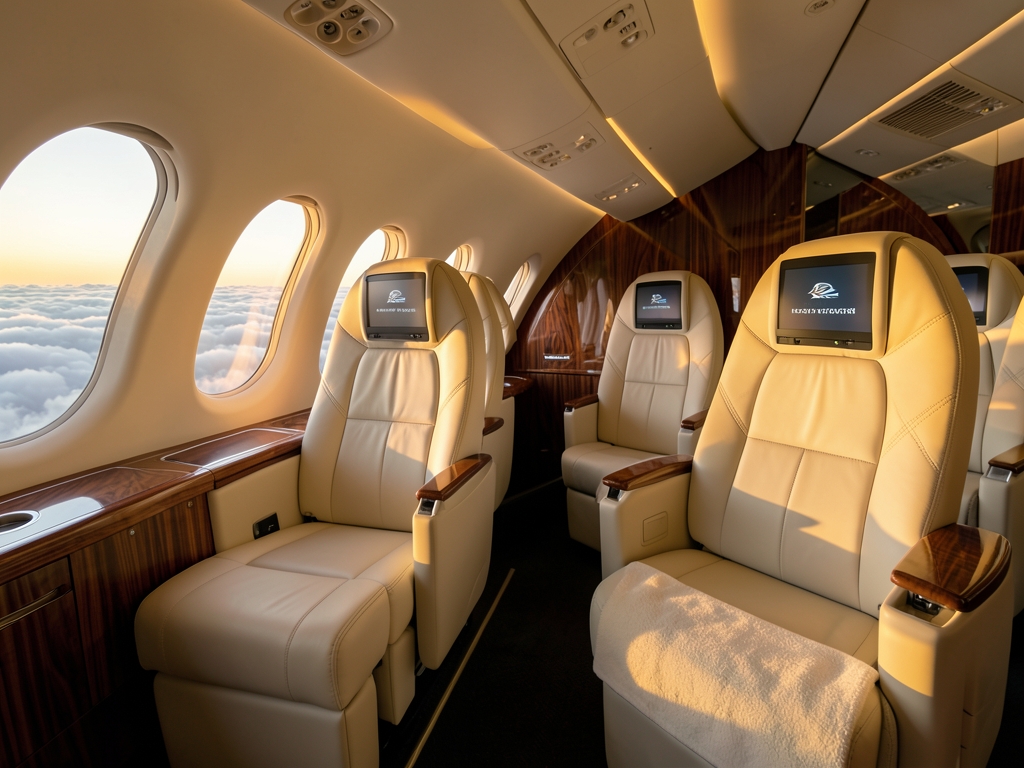
For a 9-hour Alaska Airlines business-class flight to Europe in 2026, splurge only if the verified round-trip premium is no more than $2,700 over 18 hours—$150 per flight hour.
Choose economy instead if the premium exceeds that ceiling or the ticket does not confirm lie-flat seating and lounge access.
What Alaska Business Actually Buys
Start at alaskaair.com before you compare cabins. Alaska Airlines' official site says it sells flights with Alaska Airlines, oneworld Alliance member airlines, and Global Partners. That means the Alaska-branded page is a starting point, not proof of the seat you will get. On the 9-hour segment, identify the entity that actually operates the flight. Before you judge the cabin, make three checkout confirmations: operating carrier, lie-flat seat, and oneworld/Global Partner ticketing.
At checkout, require the words "lie-flat" or "flat bed" on every long segment. A field that says Business only gives you a cabin label; it does not verify a bed. If the seat description is vague, open the segment details and look for the exact seat language before treating the long-haul splurge as verified. If the words are missing, the check fails even if the fare summary uses Business.
Use the operating carrier's page for lounge access and baggage, not the marketing page. Alaska's site may sell a partner-operated flight with different cabin rules, so the useful comparison is between the checkout details and the operator's own Business terms. Check whether lounge entry is tied to the purchased cabin, the operating carrier, or a separate program status, and check the baggage allowance under the same operator. Do not carry over an assumption from an Alaska-marketed page.
The ticketing check is separate from the seat check. Because Alaska Airlines' official site names oneworld Alliance member airlines and Global Partners as part of what it sells, the checkout should make clear whether the ticket is being issued through Alaska or through a partner relationship. That matters when you later read the rules: a partner ticket can point you to the partner's conditions even though you started on alaskaair.com. Capture the ticketing entity with the same care you use for the operating carrier.
Make this a short pre-purchase audit before you commit: write down what the checkout proves and what it leaves open. If the bed language, lounge terms, baggage terms, or ticket identity is missing, treat the product as unverified. This is a checkout discipline, not a promise about soft service or a specific aircraft. Keep the evidence attached to the itinerary you are buying, not to the brand that displayed it.

Three Reviews, One Verification Job
This section alone treats AFAR, Points Talk Squad, and the London suite review as cabin or route evidence, not fare evidence. A published review can show what a cabin felt like on a given path, but it does not set the cash price for your dates. Use those write-ups to understand product context, then rely on the live booking flow for money and seat facts.
A published review of an Alaska Airlines route to Europe can function as route and cabin evidence, but no specific review date or city pair is verified here. Read any such write-up for service and layout impressions, not for what you will pay. For any trip you consider, pull the same round-trip date set on alaskaair.com and use those live results as your fare basis, not the review.
A published booking review of a long-haul suite is inventory evidence only from the moment it was written; no specific review date is verified here. It can signal what appeared bookable then, but it is not a guarantee of today’s cabin layout. Before you trust any “suite” label, open the seat map during checkout and confirm the seat is shown as lie-flat for your operating flight.
Use the table below to separate what each source proves from what you must still verify yourself.
Treat each source as a narrow lens: one describes a route and cabin, one reflects past booking inventory, and one offers a preview. Your decision still depends on the fare gap you calculate from live round-trip results and on what the checkout screen confirms for that flight.

Splurge vs Save: The Options Table
Price economy, premium economy, and business on the same round-trip dates and record each total cash amount, including taxes and fees. Keep the itinerary, passenger count, and dates identical so the comparison measures cabin price rather than route or timing differences. Use the final checkout total, not a headline fare, because fees can change the gap. Compare only after all three totals are recorded; do not let a partial quote or upgrade offer substitute for a full round-trip business fare.
Treat economy as the default winner. It is the lowest verified cash baseline, so any higher cabin must earn its place by clearing the method ceiling rather than by comfort claims.
| Option | Total round-trip cash | Winner rule |
|---|---|---|
| Economy | total round-trip cash | default winner |
| Premium economy | total round-trip cash | wins if business gap exceeds the method ceiling |
| Business | total round-trip cash | wins only if the gap passes the method ceiling and lie-flat is confirmed |
Premium economy is the middle test. It wins when business does not clear the method ceiling, because it may capture part of the comfort gain without the full business premium. If business clears the ceiling, premium economy is not the winner even if it looks close.
Business wins only in the narrow case where its incremental gap passes the method ceiling and lie-flat is confirmed. On this table, the winner is save unless business passes the method ceiling.
If premium economy is within $300 round-trip of business, re-run the math with premium economy as the baseline. The smaller gap can change whether business clears the ceiling, so the original economy comparison is no longer the deciding test. Recompute the subtraction and per-flight-hour division instead of eyeballing the difference.
The table is a decision aid, not a price quote: fill it with your own verified totals for your dates, then apply the same rule to every new search. If the three totals are not available for the exact same dates, stop and reprice before using the table. Do not carry over a winning result from one date set to another; reprice each trip.

The Number That Kills the Splurge
The myth is that a nine-hour flight automatically makes business class worth it. It doesn’t. Duration tells you how long you’ll sit; it doesn’t tell you what the upgrade costs on your dates. The kill number is the method ceiling: $150 per flight hour × 18 round-trip flight hours = $2,700 maximum incremental round-trip premium. If the verified business-minus-economy difference exceeds that, the splurge fails before comfort enters the conversation.
Here’s the arithmetic on a real-shaped comparison. If the round-trip business fare is $3,600 and the round-trip economy fare is $700, the incremental round-trip cost is $2,900. Divide $2,900 by 18 round-trip flight hours and you get $161 per flight hour. That misses the $150/hour ceiling by $11 an hour, or $200 across the full round trip. A long flight did not rescue it; the price did.
Now move the same comparison down. A $3,300 round-trip business fare against a $700 round-trip economy fare produces a $2,600 incremental round-trip premium. Divide $2,600 by 18 round-trip flight hours and you get $144 per flight hour. That clears the ceiling by $6 an hour, or $100 across the round trip. Same route length, same method, opposite answer.
Do the pricing on alaskaair.com for the identical round-trip dates in both cabins, then subtract the economy total from the business total. Alaska Airlines’ own site says it sells flights with Alaska Airlines, oneworld Alliance member airlines, and Global Partners, so treat the Alaska-branded result as the place to start the comparison, not as permission to skip the subtraction. Keep the units matched: round-trip business minus round-trip economy, divided by 18 round-trip flight hours.
The ceiling is deliberately blunt. It kills the lazy “nine hours, therefore splurge” story with one number you can check before you read a single seat review. If your calculated hourly premium lands at or below $150, the fare survives this test. If it lands above $150, the extra cash buys a nicer seat but breaks the rule this section is built to enforce.
Where the Rule Breaks
The per-hour ceiling is only the first gate. Even when the round-trip cash premium passes that test, three edge cases can override the decision: a partner-operated recliner, an award ticket, and schedule risk created by a restrictive fare or a tight connection.
The hardware exception is the easiest to miss. On a nine-hour segment, a recliner changes what the upgrade actually buys, even when the price looks acceptable. Before paying, check the seat map for every long-haul segment in both directions on the itinerary you are booking through alaskaair.com. Do not assume a partner-operated business cabin matches another carrier’s bed; aircraft and seat layouts vary. If any nine-hour segment shows a recliner rather than a lie-flat bed, the rule breaks: save the cash or rebook onto a flight with the bed you expected.
| Edge case | Rule breaks | Rule wins |
|---|---|---|
| Partner-operated recliner | Save even if the price passes | Only if the seat map shows lie-flat on every nine-hour segment |
| Award ticket | Cash-per-hour math is invalid | Compare round-trip taxes and fees and miles separately |
| Tight connection | Nonrefundable business adds schedule risk | If a changeable economy ticket costs more than the verified round-trip business premium |
Award tickets break the math because the ceiling is built on round-trip cash fares. When miles are involved, the cash-per-hour calculation is invalid. Compare the award price in miles for economy and business on the same dates, then compare round-trip taxes and fees for each cabin separately. Keep miles and cash in separate columns in your own comparison; do not divide one by the other or treat taxes and fees as the fare. If the miles premium is small but the cash fees rise, or the reverse, evaluate each cost on its own terms.
Schedule risk is the third override. A nonrefundable business ticket can magnify the cost of a missed connection, while a flexible economy ticket may preserve options. Before choosing, read the change and cancellation terms for both cabins on the same round-trip itinerary and consider how much disruption the trip can tolerate. The rule breaks when the business fare adds rigidity you cannot absorb. It holds only when a changeable economy ticket costs more than the verified round-trip business premium, or when the business fare provides the flexibility the trip requires.
$2,650 Gap
Price the same round-trip dates on alaskaair.com before deciding whether a business-class upgrade earns its premium. In this worked example, economy totals $700 round-trip, including taxes and fees, while business totals $3,350 round-trip, including taxes and fees. The incremental cash cost is $2,650 round-trip, the difference between the two totals for the same itinerary. Keep the comparison tight: the dates, passenger count, and cash-total basis must match, or the gap is not a real upgrade price.
Divide that $2,650 round-trip increment by 18 flight hours for a 9-hour flight in each direction. The result is $147.22 per flight hour, which passes the $150-per-hour method ceiling. The calculation is simple, but it only works when the denominator reflects the actual long-haul time you will fly. If the itinerary changes, rerun the division with the updated flight hours and cash totals before you compare cabins.
The cost of being wrong cuts both ways. Splurging on a recliner at $3,350 round-trip wastes the full $2,650 increment over the $700 round-trip economy fare, because you pay a business-class price without getting the long-haul cabin you planned for. Saving the $2,650 by booking the $700 round-trip economy fare when the business ticket passes the $147.22-per-hour math and every checkout item is confirmed means passing up a verified upgrade at a price that met your ceiling. In both cases, the error comes from skipping the same discipline: compare matching totals, divide by 18, and verify the ticket before paying.
Treat the $147.22-per-hour result as a date-specific snapshot, not a standing fare rule. Recalculate on the live alaskaair.com totals at checkout, because a higher business total, a lower economy total, or a different flight duration changes the per-hour cost. If the math still passes, use the checklist to confirm the ticket details before purchase. If any input fails, run the comparison again with current numbers before committing the cash.
Worked Example: Run the Numbers
Illustrative inputs, not a live fare quote: one traveler compares economy and business on Alaska Airlines’ booking site, alaskaair.com, for the same round-trip dates in 2026 on an Alaska Airlines itinerary to Europe. The scenario uses a nine-hour flight each way, so the round trip contains 18 flight hours. No verified calendar dates or cabin totals are supplied, so the date inputs are the identical outbound and return dates used in both searches; insert the actual pair before booking rather than inventing dates.
Run the economy search first and record the final round-trip cash total for that traveler as E. Repeat with business class on precisely the same dates and record B. Use the checkout totals, not a headline starting fare, and keep both figures on the same round-trip, per-traveler basis. The incremental round-trip cash cost is B − E.
Next, divide that difference by the 18 flight hours: (B − E) ÷ 18. For a concrete break-even illustration, suppose the verified premium equals the stated ceiling: B − E = $2,700. The arithmetic is $2,700 ÷ 18 = $150 per flight hour. This illustrates the threshold; it does not claim that a live itinerary currently carries that premium.
Price winner for this example: business class, because the illustrated premium is exactly at the ceiling and passes the “at or below” test. Its break-even trigger is a verified round-trip premium of $2,700. Any verified premium above $2,700 makes the quotient exceed $150 per flight hour and changes this example’s price winner to economy. Do not round a failing quotient down to make it pass.
Before treating the result as bookable, confirm that both searches cover the same traveler, dates, and round-trip scope, then complete the article’s separate checkout checks. If the live premium differs from the illustration, rerun the subtraction and division. The decision follows the verified cash difference, not the sample threshold.
If/Then Rules for 2026 Booking
If the verified incremental round-trip cash cost is at or below $2,700 and the seat map confirms lie-flat, book business; if the incremental cost is above $2,700, the premium fails the $150-per-flight-hour ceiling, so keep economy, wait for a fare drop, or price the trip with miles instead. Before you commit, recompute the subtraction and the division by 18 from the two fare quotes, and keep both quotes in the same screenshot so the math can be checked later. A fare that looks close to the ceiling should be rechecked on the same day, because partner inventory and cabin labels can change between searches.
If the checkout page says Business but the seat map shows a recliner, save; do not pay a lie-flat premium for a recliner. The cabin label alone does not tell you what you will sleep on, so let the seat map, not the marketing name, decide whether the premium is earned. If the map is unclear, save the quote and search again later rather than guessing that a recliner will be upgraded.
If you are using miles, compare the award taxes and fees plus the mileage against the same $2,700 cash ceiling, and do not mix one-way miles with round-trip cash. Convert the comparison to one currency for the whole trip, then decide whether the award is actually cheaper than the cash fare you priced. If the award requires more miles than the cash ceiling implies, keep the cash comparison as your baseline and do not let a large mileage balance make the award look free.
If you book business and a lower business fare appears before the cancellation window closes, screenshot both the original checkout and the lower fare, then reprice or cancel and rebook while you still can. Save the timestamps with the screenshots, because the window is defined by the booking terms, not by when you notice the drop. Do not assume the lower fare will be honored after the window closes; act on the screenshot while the booking is still changeable.
If none of the conditions above is met — the premium exceeds $2,700, the seat map shows a recliner, or the award math does not clear — default to economy and revisit the search later; the method ceiling is a gate, not a suggestion. Record the date, route, and incremental cost you found so the next comparison starts from evidence instead of a vague memory of a good fare. Economy is the default not because business is bad, but because the premium has not passed the test you set before searching.
Also worth reading Alaska Mileage Plan Europe: Verify Business Class to Europe: 88,000 Book Air France Business Class
What to do next
Frequently Asked Questions
How do I apply the premium test to the 9-hour Europe flight?
Splurge only if the verified round-trip premium is no more than the ceiling over 18 hours and no more than the per-flight-hour threshold.
When should I choose economy instead of the long-haul splurge?
Choose economy instead if the premium exceeds that ceiling or the ticket does not confirm lie-flat seating and lounge access.
Should I start at alaskaair.com and trust the Alaska-branded page?
Start at alaskaair.com before you compare cabins, but because Alaska Airlines' official site says it sells flights with Alaska Airlines, oneworld Alliance member airlines, and Global Partners, the Alaska-branded page is a starting point, not proof of the seat you will get.
What should I confirm at checkout on the 9-hour segment?
Before you judge the cabin, make three checkout confirmations: operating carrier, lie-flat seat, and oneworld/Global Partner ticketing.
What exact seat wording should I require, and what if it is vague or missing?
At checkout, require the words "lie-flat" or "flat bed" on every long segment, because a field that says Business only gives you a cabin label and does not verify a bed; if the seat description is vague, open the segment details and look for the exact seat language before treating the long-haul splurge as verified, and if the words are missing, the check fails even if the fare summary uses Business.
Where should I verify lounge access and baggage for a partner-operated flight?
Use the operating carrier's page for lounge access and baggage, not the marketing page, because Alaska's site may sell a partner-operated flight with different cabin rules.
Quick answers
| When is the business-class splurge justified for this 9-hour flight? | Only if the verified round-trip premium is no more than $2,700 over 18 hours—$150 per flight hour. |
| What should you choose if the premium exceeds the ceiling or the ticket lacks confirmations? | Choose economy instead. |
| What three checkout confirmations are needed before judging the cabin? | Operating carrier, lie-flat seat, and oneworld/Global Partner ticketing. |
| What exact seat words must appear at checkout on every long segment? | The words "lie-flat" or "flat bed". |
| Whose page should be used for lounge access and baggage? | The operating carrier's page, not the marketing page. |
Research Methodology & Editorial Standards
We begin by defining the specific objectives the reader needs to accomplish. Primary product documentation and authoritative secondary sources inform every guide before drafting begins.
Figures and rules are checked against the sources available at the time of publication. Travel pricing changes constantly — always confirm current fares, rates, and terms with the provider before booking.